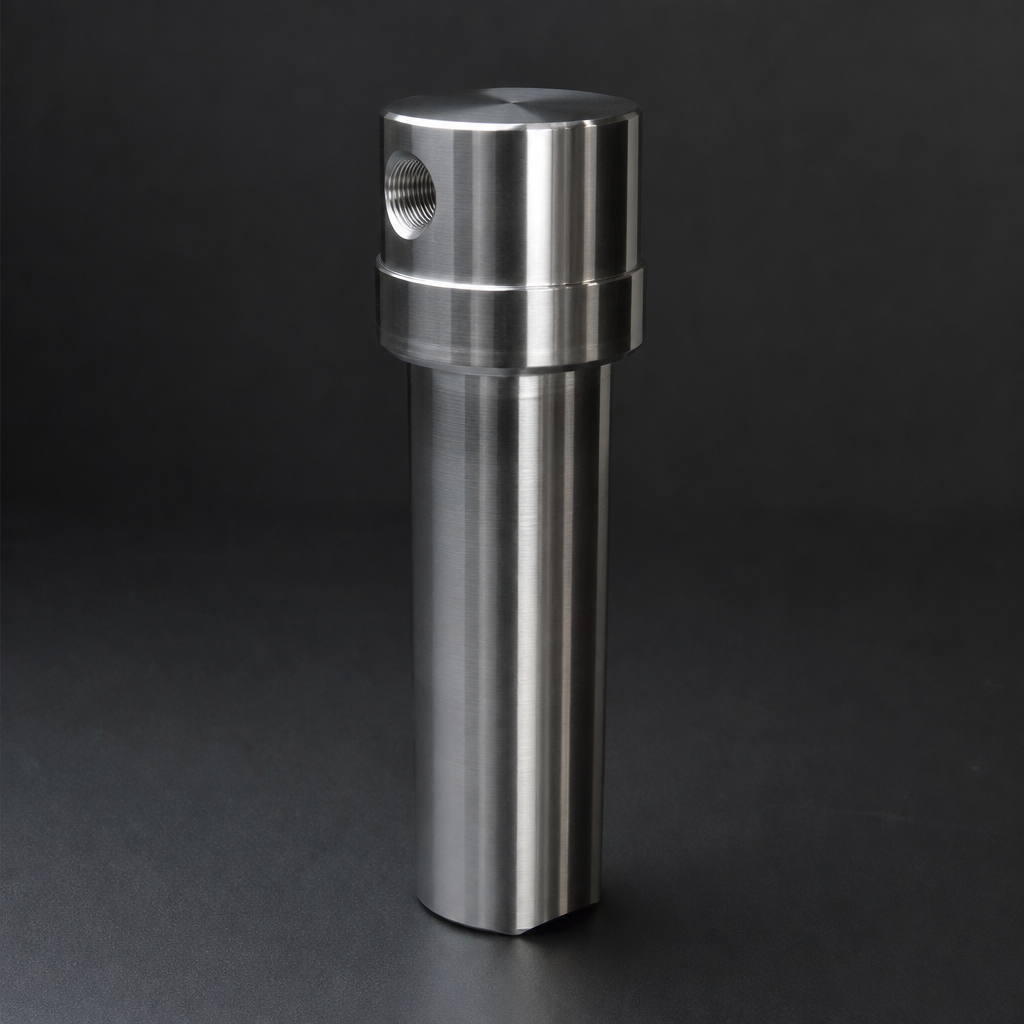
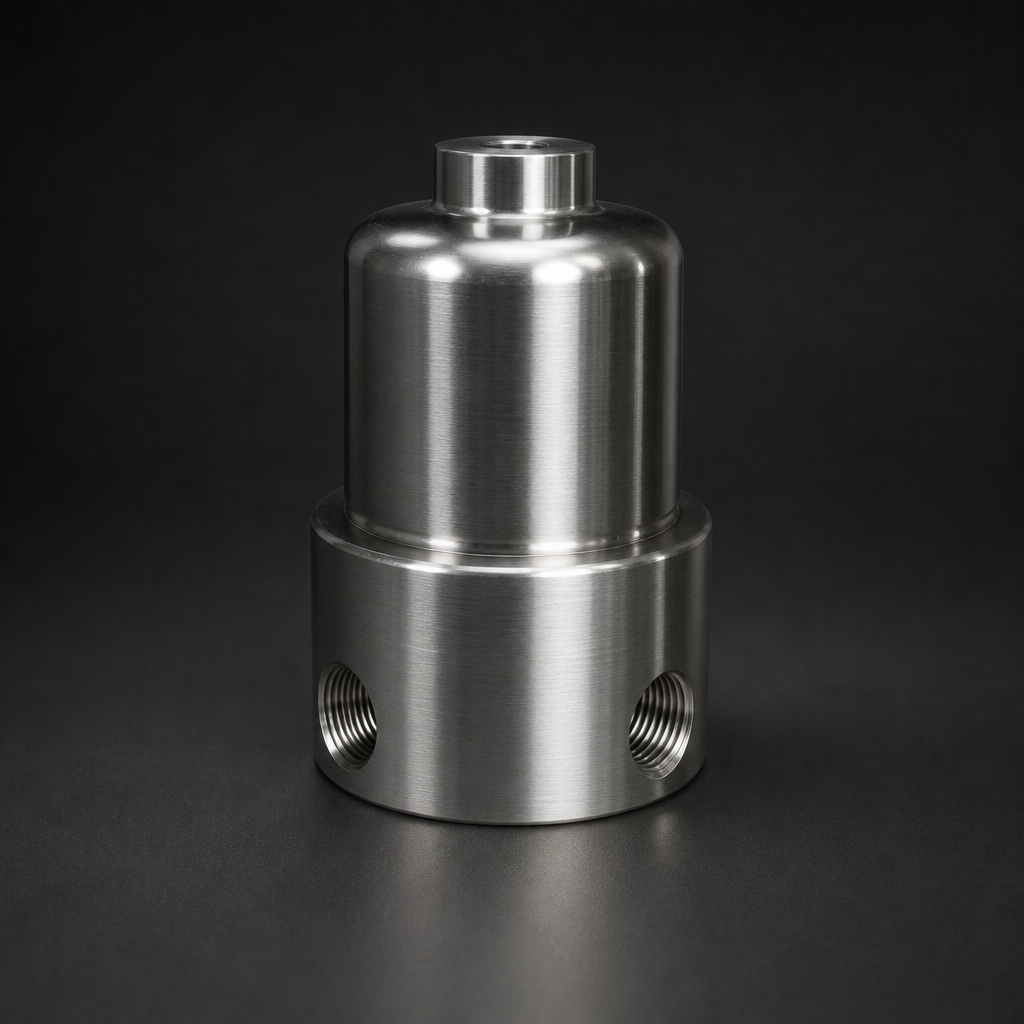
Diesel exhaust and emission monitoring systems face a challenge that most compressed-air filtration engineers never encounter: the sample gas must stay hot. Drop below the dew point of the exhaust stream — typically 120–180 °C for diesel combustion gases — and condensate forms inside the filter housing, dilutes the sample, corrodes the internals, and renders the analyser reading worthless. A standard stainless-steel housing with an ambient-temperature element simply cannot do the job. What you need is a heated filter housing engineered specifically for sample conditioning in emission analyser systems.
Why Condensation Is the Enemy of Accurate Emission Measurement
Emission monitoring regulations — from EU Directive 2010/75/EU to ISO 16911 and EN 15267 — require continuous, representative sampling of exhaust gases. The moment water vapour condenses inside the sample line or filter housing, you lose SO₂, HCl, and NH₃ to dissolution, and particulate readings shift as droplets carry fine particles out of suspension. For diesel engine test cells, marine exhaust monitoring, and stationary combustion plant CEMS (Continuous Emission Monitoring Systems), this is not a theoretical risk — it is the most common cause of analyser drift and regulatory non-compliance.
The solution is a filter housing with an integrated or clamped heating element — a heating band, heating jacket, or cartridge heater — that keeps the housing body, the filter element, and the outlet connection at a controlled temperature above the dew point. R+F FilterElements offers a range of instrumentation and analyser-protection filter housings suited to this duty, including variants designed for heated sample conditioning lines.
Key Design Features of Heated Filter Housings
Heating Method: Band, Jacket, or Cartridge
Three heating approaches are used in practice. Heating bands clamp around the outside of the housing body and are the most common retrofit solution — they are easy to fit, replace, and control via an external thermostat. Heating jackets enclose the entire housing in an insulated shell and provide more uniform temperature distribution, which is important when the housing is exposed to cold ambient conditions (outdoor CEMS cabinets in northern European winters, for example). Cartridge heaters are embedded in the housing wall during manufacture and offer the most compact, integrated solution, but require factory installation.
For most diesel exhaust analyser applications, a 100–200 W heating band combined with a PID temperature controller and a Type-K thermocouple mounted on the housing body is sufficient to maintain 160–180 °C at ambient temperatures down to −20 °C.
Housing Material and Pressure Rating
Diesel exhaust sample lines typically operate at low gauge pressures — 0.5 to 3 bar — but the housing must withstand the thermal cycling that comes with daily start-stop operation of the engine or plant. 316L stainless steel is the standard choice: it resists the sulphuric and nitric acid condensate that forms during cold starts, and it tolerates the 200 °C operating temperatures that some high-load diesel applications demand.
The RF-H-150 and RF-H-160 series housings from R+F FilterElements are manufactured in 316L stainless steel with pressure ratings of 100 bar and 250 bar respectively — far in excess of what sample conditioning requires, which means the housing wall thickness provides excellent thermal mass and temperature stability when heated.
Quick-Release Heads for Fast Element Servicing
In a heated filter housing, element change intervals are typically shorter than in ambient-temperature service because the elevated temperature accelerates particulate loading and can cause some element media to degrade faster. A quick-release head — a bayonet or interrupted-thread closure that allows the bowl to be removed without tools — is therefore not a luxury but a practical necessity for CEMS installations where downtime must be minimised.
R+F FilterElements' instrumentation housings are designed with this in mind: the bowl can be removed, the element replaced, and the housing reassembled in under five minutes, even when wearing heat-resistant gloves. This is a significant advantage over housings that require a spanner and a full cool-down period before servicing.
Selecting the Right Filter Element for Heated Exhaust Service
Standard borosilicate glass microfibre elements — such as the RF-C coalescing elements — are rated to 100 °C in their standard form and 200 °C in the S-type variant. For heated diesel exhaust service at 160–180 °C, the RF-C S-type element is the correct choice. It uses the same borosilicate glass microfibre media but with a high-temperature binder and FKM/Viton seals rated to 200 °C.
For applications where the primary concern is particulate removal rather than aerosol coalescence — for example, protecting a laser-based opacity analyser from soot — the RF-P S-type particulate element offers 99.99% efficiency at ≥ 0.3 µm at temperatures up to 200 °C. Where even higher temperatures are encountered (diesel particulate filter regeneration events can briefly reach 600 °C), sintered metal elements rated to 450 °C are available.
Need help selecting the right heated filter housing?
Comparing Heated Housing Configurations for Diesel Exhaust Applications
| Parameter | Heating Band | Heating Jacket | Cartridge Heater |
|---|---|---|---|
| Temperature uniformity | Moderate | High | High |
| Retrofit suitability | Excellent | Good | Factory only |
| Typical power (W) | 100–200 W | 150–400 W | 50–150 W |
| Cold-climate performance | Adequate | Excellent | Good |
| Element access | Easy (band removal) | Moderate (jacket removal) | Easy (no heater removal) |
Use our free Engineering Tool to get a filtration recommendation for your specific application in under 2 minutes.
Installation Considerations for CEMS and Engine Test Cells
Positioning the heated filter housing as close as possible to the sample probe minimises the length of unheated sample line and reduces the risk of condensation upstream of the filter. In practice, the housing is often mounted directly on the sample probe assembly or within 300 mm of it, with the heated sample line running from the housing outlet to the analyser cabinet.
Electrical connections to the heating element must be rated for the operating temperature and protected against vibration — a common failure mode in engine test cell installations where the housing is mounted on or near the engine block. Use mineral-insulated cable (MI cable) or high-temperature silicone-insulated wire, and secure all connections with vibration-resistant fittings.
For emission compliance monitoring applications, the temperature of the heated filter housing should be logged continuously alongside the analyser data. Most CEMS data acquisition systems have spare analogue inputs for this purpose. A temperature drop below the set point — indicating heater failure or insulation damage — should trigger an alarm and flag the associated analyser data as invalid.
The RF-H-150 process gas housing is particularly well-suited to heated diesel exhaust service: its compact 316L stainless steel body, 100 bar pressure rating, and compatibility with S-type elements make it a robust choice for both engine test cell and stationary CEMS applications. The RF-H-160, with its 250 bar rating, is the preferred option where higher-pressure sample extraction is used.
Maintenance and Element Change Intervals
In diesel exhaust service, element loading rates depend heavily on the engine type, load cycle, and whether a diesel particulate filter (DPF) is fitted upstream. For a modern Euro VI engine with a DPF, element change intervals of 3–6 months are typical. For older engines without aftertreatment, or for marine two-stroke engines burning heavy fuel oil, monthly element changes may be necessary.
The quick-release head design of R+F FilterElements' instrumentation housings makes this practical: the housing can be serviced during a scheduled maintenance window without removing it from the sample line. The used element is disposed of as contaminated waste (it will contain soot, heavy metals, and potentially carcinogenic compounds), and the new element is installed dry — no pre-wetting or conditioning is required.
For guidance on selecting the correct element grade and change interval for your specific application, the R+F Engineering Sizing Tool allows you to input your exhaust gas composition, flow rate, and temperature to receive a recommended housing and element specification.
- Emission monitoring regulations — from EU Directive 2010/75/EU to ISO 16911 and EN 15267 — require continuous, representative sampling of exhaust gases.
- Three heating approaches are used in practice.
- Standard borosilicate glass microfibre elements — such as the RF-C coalescing elements — are rated to 100 °C in their standard form and 200 °C in the S-type variant.
- Positioning the heated filter housing as close as possible to the sample probe minimises the length of unheated sample line and reduces the risk of condensation upstream of the filter.
Related Reading
- Coalescing vs Particulate Filter Elements: Which Do You Need?
- ISO 8573-1 Compressed Air Quality Classes Explained
- Oxygen Filtration Safety: What Every Engineer Must Know
Try our Engineering Sizing Tool → or discuss your requirements with our team.