Industrial processes that generate hot gas streams — cement kilns, electric arc furnaces, waste incineration plants, and gas turbine exhausts — present one of the most demanding filtration challenges in process engineering. The gas arrives laden with fine ash, metal oxide fumes, soot particles, and condensable aerosols, often at temperatures that would destroy conventional polymer-based filter media within minutes. Selecting the wrong filter medium means premature failure, unplanned shutdowns, and potential regulatory non-compliance on particulate emissions.
Borosilicate glass microfibre has been the workhorse of high-temperature gas filtration for decades, and for good reason. Understanding its properties — and where it sits relative to competing technologies — allows engineers to make confident, cost-effective filter selections for their specific duty.
What Makes Borosilicate Glass Microfibre Suitable for Hot Gas Duty?
Borosilicate glass is an inorganic, amorphous material with a softening point above 820 °C. When drawn into microfibres with diameters typically between 0.5 µm and 6 µm, it forms a three-dimensional matrix that captures particles by inertial impaction, interception, and diffusion — the same mechanisms that govern all depth-filtration media. What distinguishes borosilicate from organic alternatives is its behaviour under heat:
- Thermal stability to ~500 °C continuous service — the glass matrix does not soften, shrink, or off-gas at process temperatures encountered in most industrial hot gas streams.
- Resistance to thermal cycling — unlike sintered metal elements, borosilicate media does not undergo significant dimensional change between ambient and operating temperature, reducing the risk of bypass leakage at seal faces.
- Chemical inertness — resistant to most acids, alkalis, and oxidising atmospheres encountered in combustion and metallurgical off-gas streams.
- Low pressure drop — the open, tortuous fibre matrix achieves high efficiency at lower differential pressure than ceramic candle or sintered metal alternatives of equivalent rating.
For process gas filtration duties where the gas temperature sits between 150 °C and 500 °C, borosilicate elements represent the optimum balance of performance, service life, and capital cost.
Key Performance Data
Typical Hot Gas Filtration Applications
Cement Works and Kiln Off-Gas
Cement kilns generate large volumes of hot gas carrying fine calcium oxide dust, alkali sulphates, and chloride compounds at temperatures between 200 °C and 450 °C. Borosilicate elements handle this duty reliably, capturing sub-micron clinker dust that would pass through coarser media. The chemical inertness of glass is particularly valuable here, as the gas stream can be mildly acidic due to SO₂ and HCl content.
Metallurgy and Electric Arc Furnace Off-Gas
Electric arc furnace (EAF) steelmaking produces off-gas rich in iron oxide fumes, zinc oxide (from galvanised scrap), and fine metallic particulate. Gas temperatures at the filter inlet typically range from 150 °C to 350 °C after primary cooling. Borosilicate media captures these sub-micron metal oxide fumes efficiently, protecting downstream equipment and meeting emission limits for fine particulate matter.
Waste Incineration and Thermal Treatment
Municipal solid waste (MSW) and hazardous waste incineration plants must meet stringent emission standards for particulate, dioxins, and heavy metals. Borosilicate filter elements, often used in combination with activated carbon injection upstream, provide the final particulate barrier before the cleaned gas reaches the stack. The thermal stability of the media ensures consistent performance even during combustion upsets that temporarily elevate gas temperature.
Power Generation and Turbine Exhaust
Gas turbine exhaust streams and combined heat and power (CHP) plant off-gas require filtration of fine soot and combustion particulate before heat recovery or catalytic treatment. Borosilicate elements operating at 300–500 °C provide the necessary efficiency without the high capital cost of ceramic candle systems.
Soot and carbonaceous particulate
Comparing Hot Gas Filter Media Technologies
| Parameter | Borosilicate Glass | Sintered Metal | Ceramic Candle | PTFE Membrane |
|---|---|---|---|---|
| Max temperature | ~500 °C | 800–1,000 °C | 900 °C+ | 260 °C |
| Efficiency ≥ 0.1 µm | 99.99% | 99.9% | 99.9% | 99.99% |
| Pressure drop | Low | Medium–High | Medium | Low–Medium |
| Relative capital cost | Low | Very High | High | Medium |
| Thermal cycling resistance | Excellent | Good | Fair (brittle) | Good |
| Chemical resistance | Excellent | Good (alloy-dependent) | Good | Excellent |
The comparison makes clear that borosilicate glass microfibre occupies a unique position: it delivers the highest efficiency at the lowest cost and pressure drop for the 150–500 °C temperature window. Sintered metal and ceramic candle elements are justified only when temperatures consistently exceed 500 °C or when the process requires pulse-jet cleaning with back-pressure that would fracture glass fibre media.
Use our free Engineering Tool to get a filtration recommendation for your specific application in under 2 minutes.
R+F FilterElements Hot Gas Filter Products
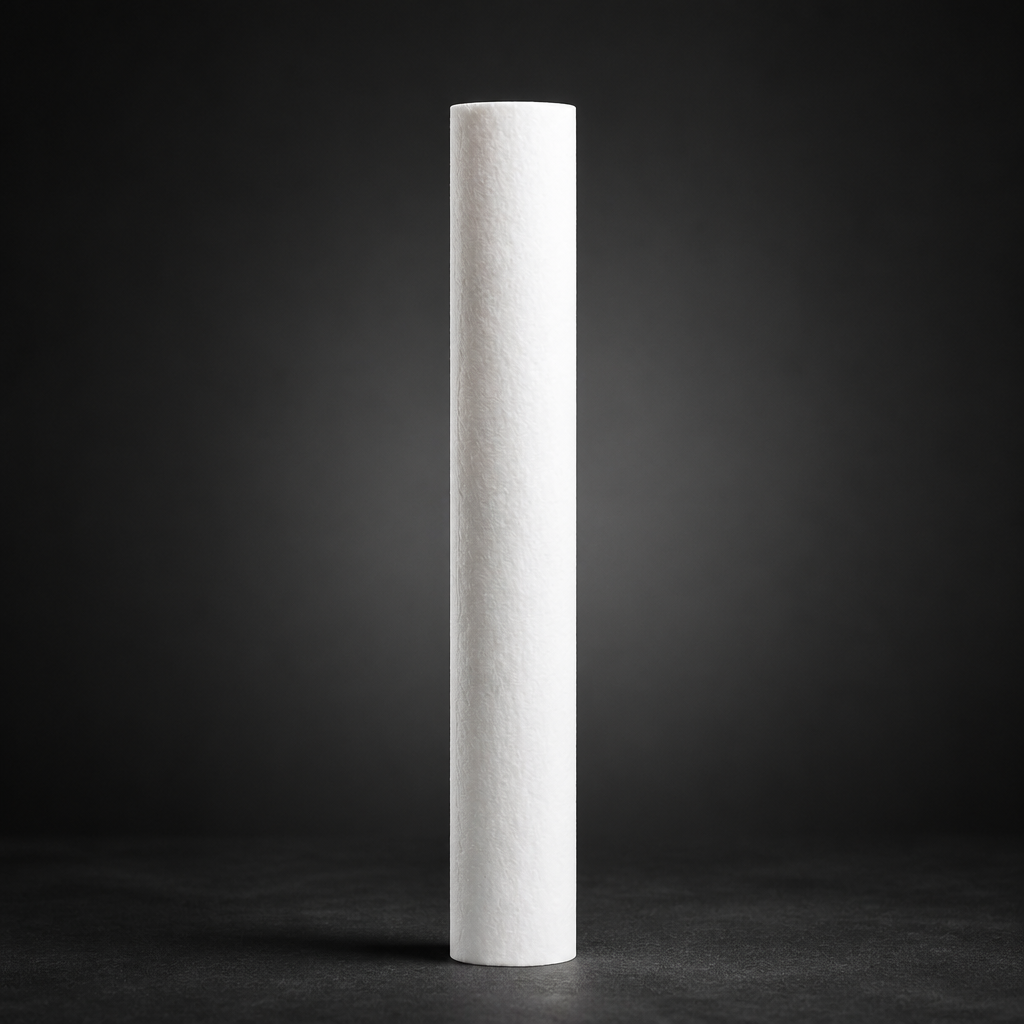
R+F FilterElements offers borosilicate-based filter elements and compatible stainless steel housings for hot gas duties. The RF-C series coalescing elements use borosilicate glass microfibre as the primary filtration layer, achieving 99.99% efficiency at ≥ 0.1 µm. For high-temperature process gas streams, the RF-C-25064 and RF-C-51230 elements are available in S-type configuration rated to 200 °C continuous service with silica binder, and in sintered metal variants for duties up to 450 °C.
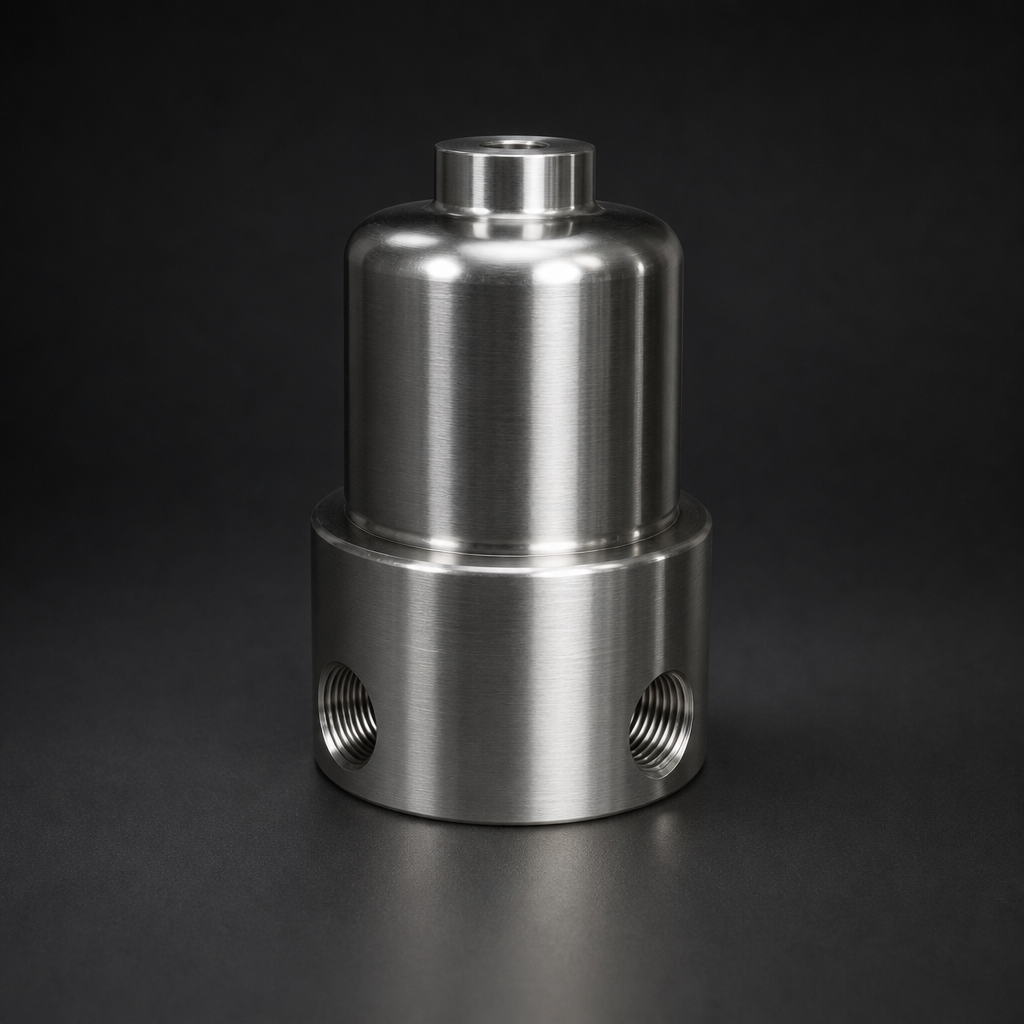
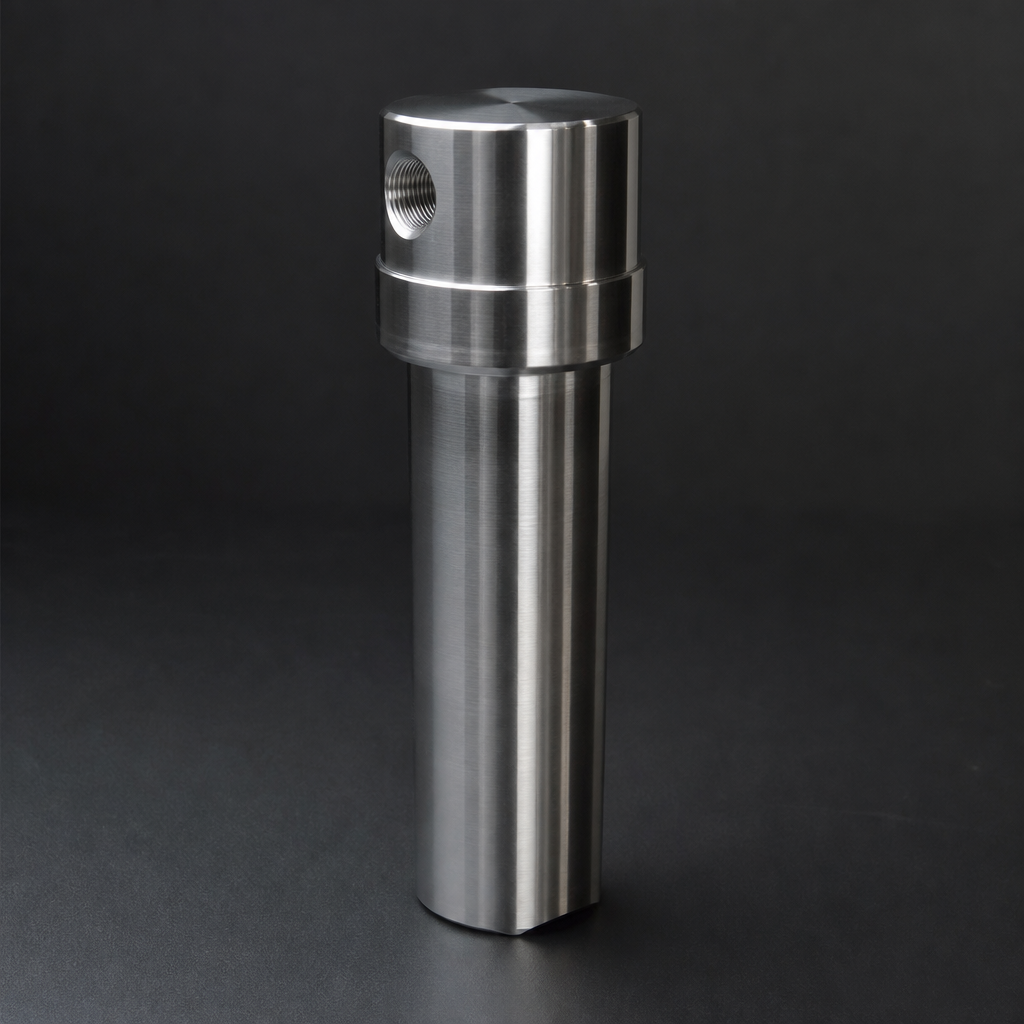
Compatible housings from the RF-H-150 process gas range are constructed from 316L stainless steel and rated to 100 bar, making them suitable for pressurised hot gas streams in syngas, biogas upgrading, and natural gas processing applications. For higher-pressure duties, the RF-H-160 (250 bar) and RF-H-170 (400 bar) housings extend coverage to the most demanding process conditions.
Where the primary concern is fine dust and dry particulate rather than liquid aerosol coalescence, RF-P particulate elements in borosilicate construction offer 99.99% efficiency at ≥ 0.3 µm with a slightly lower pressure drop profile — useful when minimising energy consumption across the filter stage is a priority.
Contaminant Types in Hot Gas Streams
Hot gas filtration must address a range of contaminant types simultaneously:
- Fly ash and mineral dust — coarse to sub-micron particles from combustion of solid fuels; captured by inertial impaction and interception in the borosilicate matrix.
- Metal oxide fumes — sub-micron particles formed by condensation of vaporised metals (iron, zinc, lead); captured primarily by diffusion in the fine fibre layers.
- Soot and carbonaceous particulate — chain-aggregate particles from incomplete combustion; efficiently captured by the tortuous fibre matrix.
- Condensable aerosols — liquid droplets formed as gas cools below dew point; coalesced and drained by the borosilicate coalescing layer.
For streams containing both particulate and condensable aerosols — common in incineration and metallurgical off-gas — a two-stage approach using a borosilicate coalescing element upstream of a particulate element provides the most robust protection for downstream equipment. See our guide on coalescing vs particulate filter elements for a detailed comparison of the two filtration mechanisms.
- Thermal stability to ~500 °C continuous service
- Cement kilns generate large volumes of hot gas carrying fine calcium oxide dust, alkali sulphates, and chloride compounds at temperatures between 200 °C and 450 °C.
- The comparison makes clear that borosilicate glass microfibre occupies a unique position: it delivers the highest efficiency at the lowest cost and pressure drop for the 150–500 °C temperature window.
- R+F FilterElements offers borosilicate-based filter elements and compatible stainless steel housings for hot gas duties.
Sizing Considerations for Hot Gas Filter Systems
Correct sizing of a hot gas filter system requires accounting for the elevated gas viscosity and reduced density at operating temperature. Gas viscosity increases with temperature — air at 400 °C has approximately twice the viscosity of air at ambient — which increases pressure drop across the filter element for a given face velocity. Engineers should use the actual volumetric flow at operating temperature (not the ambient-condition flow) when sizing filter housings and selecting element counts.
For pressurised hot gas streams, the R+F Engineering Sizing Tool allows engineers to input operating temperature, pressure, flow rate, and gas composition to generate a recommended housing and element configuration. This avoids the common error of undersizing filter systems based on ambient-condition flow data.
Pressure drop monitoring is particularly important in hot gas service. As the element loads with captured particulate, differential pressure rises. Establishing a change-out differential pressure limit — typically 0.5–1.0 bar above the clean element pressure drop — and fitting a differential pressure gauge or transmitter across the filter housing allows planned element replacement before the element reaches its structural limit.
Try our Engineering Sizing Tool → or discuss your requirements with our team.