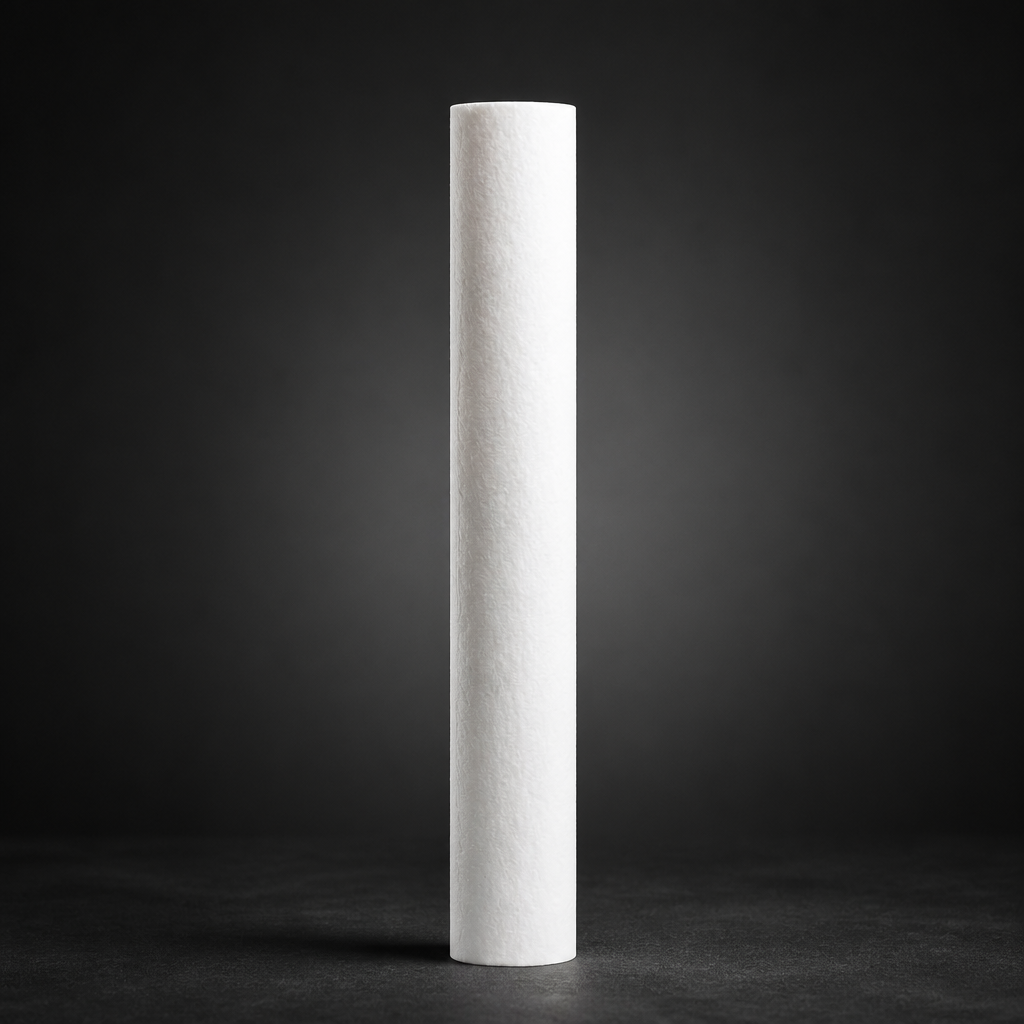
Ordering a replacement filter element should be straightforward — yet it is one of the most common sources of costly mistakes in industrial gas and compressed-air systems. A filter element that is even a few millimetres too long, or that has the wrong end-cap configuration, will either fail to seat correctly or allow unfiltered gas to bypass the media entirely. This step-by-step guide shows you exactly how to measure a filter element for cross-referencing, so you can identify a direct replacement with confidence.
Why Accurate Measurement Matters
Many filter housings accept elements from multiple manufacturers, and cross-reference databases are not always up to date. If you are replacing an element whose original part number is no longer available — or if you have inherited a system with no documentation — physical measurement is the only reliable starting point. Even when a cross-reference chart exists, verifying the dimensions yourself protects against catalogue errors and ensures the replacement element will seal correctly inside the housing.
For process gas and compressed-air applications, a poorly fitting element is not merely inefficient — it can allow oil aerosols, particulates, or moisture to pass downstream, contaminating instrumentation, damaging compressors, or creating safety hazards. The R+F FilterElements range is designed to precise dimensional tolerances, making accurate measurement the essential first step in any cross-referencing exercise.
Tools You Will Need
- Vernier calliper or digital calliper (resolution ≥ 0.1 mm)
- Steel rule or tape measure (for overall length)
- Notepad or measurement sheet
- Camera or phone (to photograph end-cap details)
Step 1 — Measure the Outer Diameter (OD)
Place the calliper jaws around the widest part of the filter media body, avoiding any end-cap flanges or sealing lips. Take three readings at different points along the length and record the average. Most compressed-air and process-gas elements fall into standard OD families: 32 mm, 51 mm, 64 mm, or 76 mm. If your reading falls between standard sizes, measure again — a worn or compressed element may read slightly smaller than its nominal OD.
Ignoring the end-cap seal groove depth:
Step 2 — Measure the Inner Diameter (ID)
The ID is the bore through the centre of the element. Use the internal jaws of your calliper to measure across the inner bore at the open end of the element. For elements with a closed end-cap on one side, measure from the open end only. Common IDs for compressed-air elements are 20 mm, 25 mm, and 40 mm. The ID determines which centre tube or inner support cage the element fits over inside the housing — a mismatch here will prevent correct seating.
Step 3 — Measure the Overall Length
Stand the element upright on a flat surface and measure from the base of the bottom end-cap to the top of the upper end-cap, including any protruding sealing lips or spigots. Do not compress the element during measurement. Record the length to the nearest millimetre. Note that some housings use a spring-loaded retainer that accommodates a small length tolerance (typically ±5 mm), but it is always safer to match the nominal length exactly.
Step 4 — Identify the End-Cap Type
End-cap configuration is as important as the three main dimensions. Photograph both ends of the element before you discard it. The most common configurations are:
- Open/Open (O/O): Both ends open — used in housings with a centre bolt or tie-rod.
- Open/Closed (O/C): One open end (inlet) and one closed end-cap — the most common configuration for coalescing and particulate elements.
- Spigot/Flat: One end has a moulded spigot that locates into a recess in the housing base.
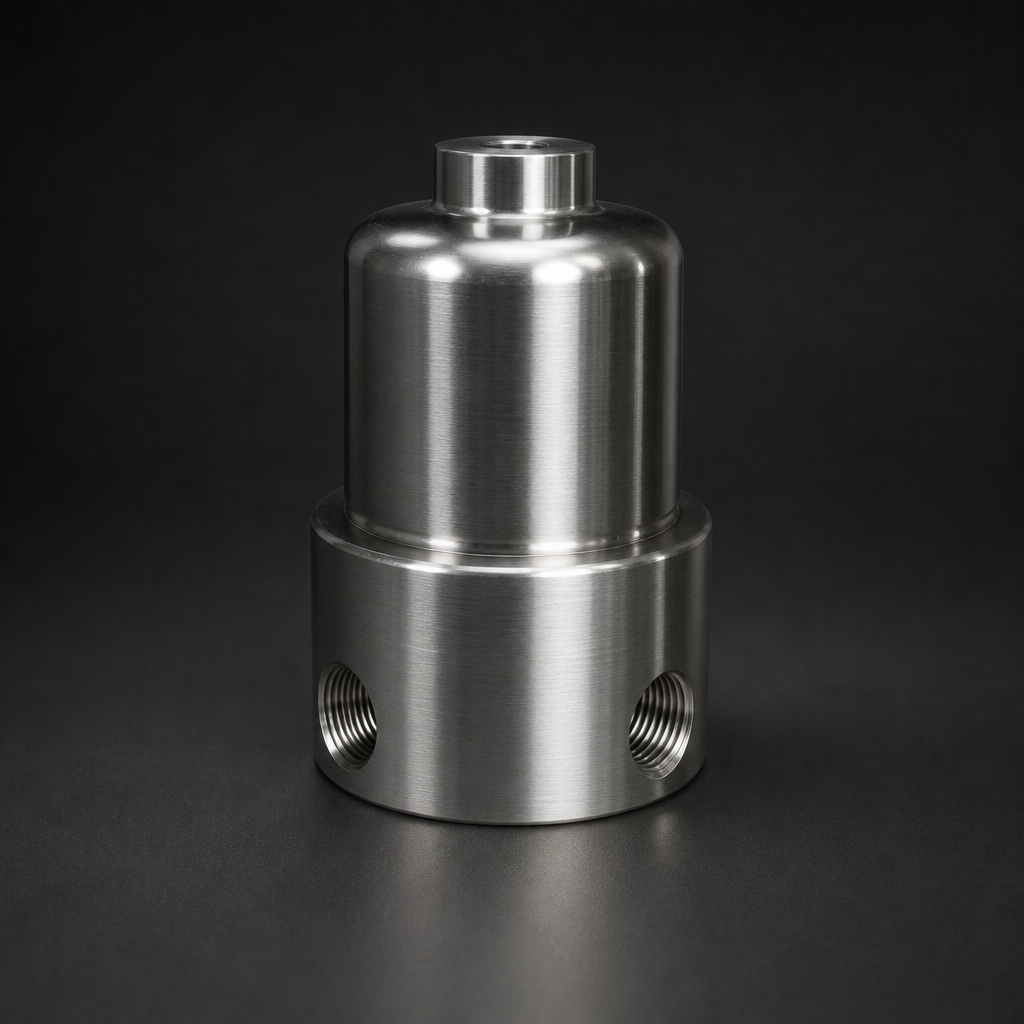
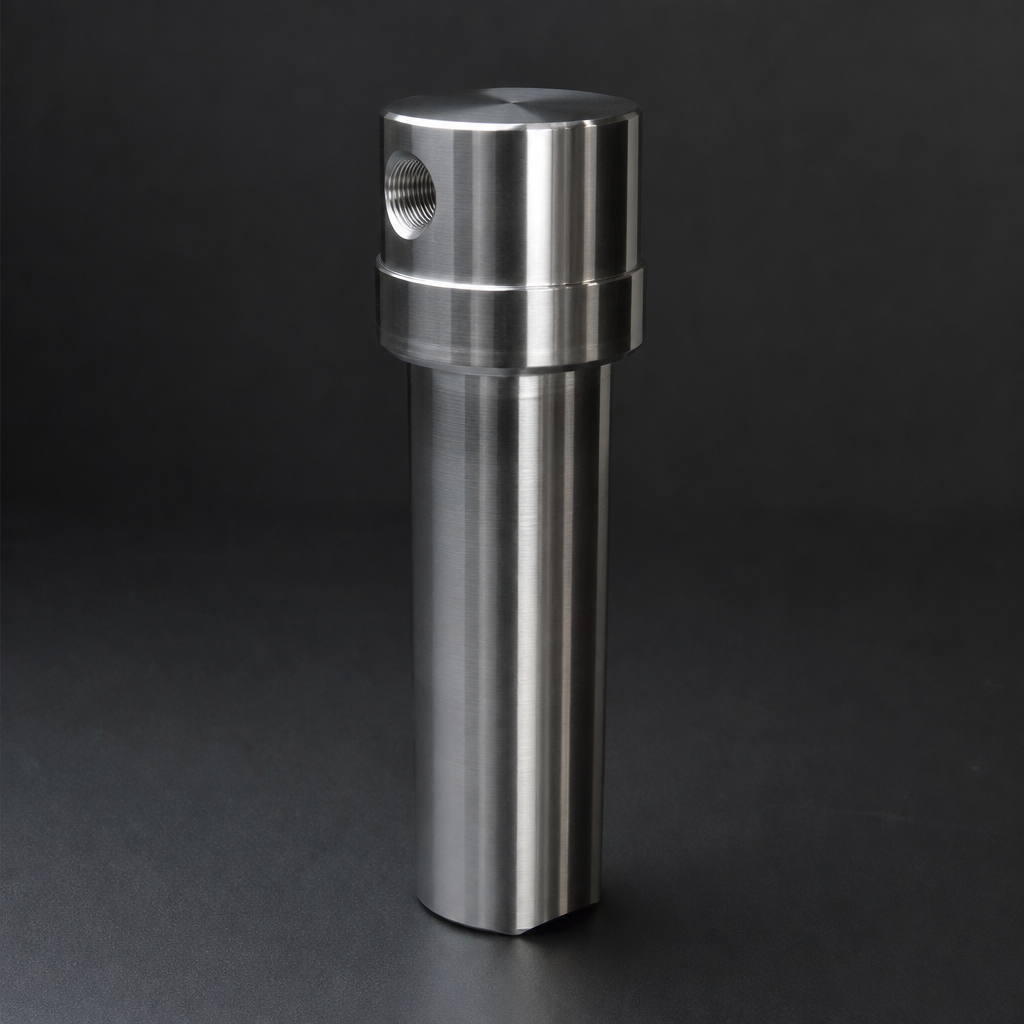
- Double Open with O-ring grooves: Used in high-pressure and process-gas housings such as the RF-H-150 and RF-H-160 series.
Use our free Engineering Tool to get a filtration recommendation for your specific application in under 2 minutes.
Step 5 — Identify the Filter Media Type
The media type determines the element's filtration grade and compatibility with your process gas. Inspect the element body and any remaining markings:
- Borosilicate glass microfibre (white or off-white pleated or wound media): coalescing or particulate duty. R+F RF-C coalescing elements achieve 99.99% efficiency at ≥ 0.1 µm.
- Activated carbon granules or impregnated media (dark, heavier element): adsorption duty for oil vapour and odour removal. See the RF-AC and RF-DIL range.
- Sintered metal or ceramic: high-temperature or aggressive-media duty, rated to 450 °C.
- PTFE membrane: absolute liquid barrier, used in the RF-GMS-170 membrane separator.
Step 6 — Record the Seal Material
Check the end-cap seals and O-rings. Colour coding is not standardised across manufacturers, so note the material if it is marked on the element or housing documentation:
- NBR (Buna-N): standard compressed air, up to 100 °C
- FKM/Viton: aggressive gases, up to 200 °C
- EPDM: oxygen service
- PTFE: ultra-pure and semiconductor applications
Matching Your Measurements to R+F Element Codes
R+F FilterElements uses a structured article-number system that encodes OD, length, and media type. Once you have your four measurements (OD, ID, length, end-cap type) and media type, you can cross-reference directly against the R+F element range. The table below shows how common element dimensions map to R+F article codes:
| OD (mm) | Length (mm) | Media Type | R+F Article Code | Typical Housing |
|---|---|---|---|---|
| 32 | 57 | Coalescing (glass microfibre) | RF-C-12032 | RF-H-310 to RF-H-320 |
| 32 | 57 | Particulate | RF-P-12032 | RF-H-310 to RF-H-320 |
| 51 | 230 | Coalescing (glass microfibre) | RF-C-51230 | RF-H-350 to RF-H-360 |
| 51 | 476 | Coalescing (glass microfibre) | RF-C-51476 | RF-H-370 to RF-H-385 |
| 25 | 178 | Activated carbon | RF-AC-25178 | RF-H-340 to RF-H-345 |
Common Pitfalls to Avoid
Even experienced maintenance engineers make these mistakes when cross-referencing filter elements:
- Measuring a compressed or deformed element: Used elements may have shrunk or deformed. Always measure a new element if one is available, or use the housing cavity dimensions.
- Ignoring the end-cap seal groove depth: Two elements with identical OD, ID, and length may have different O-ring groove depths, causing a leak path in the housing.
- Confusing nominal and actual OD: Some manufacturers quote nominal OD (e.g. "2-inch element") rather than actual measured OD. Always verify with a calliper.
- Overlooking the media grade: A particulate element (RF-P) and a coalescing element (RF-C) may share identical dimensions but have completely different filtration duties. Substituting one for the other will compromise downstream air or gas quality.
- Not checking the housing pressure rating: A replacement element must be rated for the same or higher operating pressure as the housing. For high-pressure process gas applications, consult the process gas housing specifications before ordering.
If you are working with a system that has no documentation and the original element markings are illegible, the coalescing vs particulate guide can help you identify the media type from visual inspection. For ISO 8573-1 quality class requirements, see our ISO 8573-1 compressed air quality guide.
- Many filter housings accept elements from multiple manufacturers, and cross-reference databases are not always up to date.
- Place the calliper jaws around the widest part of the filter media body, avoiding any end-cap flanges or sealing lips.
- The ID is the bore through the centre of the element.
- Stand the element upright on a flat surface and measure from the base of the bottom end-cap to the top of the upper end-cap, including any protruding sealing lips or spigots.
When to Contact an Engineer
If your measurements do not match any standard element in the R+F range, or if you are dealing with a high-pressure process gas application (above 100 bar), it is worth speaking to a filtration specialist before ordering. Non-standard dimensions sometimes indicate a custom or OEM-specific element that requires a bespoke cross-reference. The R+F Engineering Sizing Tool can help narrow down the correct element for standard applications, and our team is available for more complex enquiries.
Related Reading
- Coalescing vs Particulate Filter Elements — Which Do You Need?
- ISO 8573-1 Compressed Air Quality Classes Explained
- Filtration for Hydrogen Electrolysis Systems
Try our Engineering Sizing Tool → or discuss your requirements with our team.