Poor indoor air quality costs organisations far more than most facility managers realise. In a hospital, an inadequately filtered ventilation system can spread airborne pathogens between wards. In a data centre, particulate contamination accelerates hard-drive failure and shortens server life. In a pharmaceutical cleanroom, a single filter bypass event can invalidate an entire production batch. The common thread is filtration — specifically, the correct selection of EPA, HEPA, or ULPA filter classes for the application at hand.
This guide explains the classification system, the media science behind it, and how the same borosilicate glass microfibre technology that protects building occupants also underpins precision process gas filtration in industrial settings.
The E10–U17 Classification Scale
European standard EN 1822 (and its successor ISO 29463) defines three tiers of high-efficiency air filtration based on particle capture efficiency at the most penetrating particle size (MPPS), typically 0.1–0.3 µm:
| Class | Tier | Integral Efficiency | Typical Application |
|---|---|---|---|
| E10 | EPA | ≥ 85% | General ventilation pre-filtration |
| E11 | EPA | ≥ 95% | Offices, airports, commercial HVAC |
| E12 | EPA | ≥ 99.5% | Hospitals (general wards), data centres |
| H13 | HEPA | ≥ 99.95% | Operating theatres, isolation rooms, labs |
| H14 | HEPA | ≥ 99.995% | Pharmaceutical cleanrooms, semiconductor fabs |
| U15 | ULPA | ≥ 99.9995% | ISO Class 4 cleanrooms, nuclear facilities |
| U16 | ULPA | ≥ 99.99995% | Advanced semiconductor, nanotechnology |
| U17 | ULPA | ≥ 99.999995% | Highest-grade research, radiopharmaceutical |
The Media Science: Borosilicate Glass Microfibre
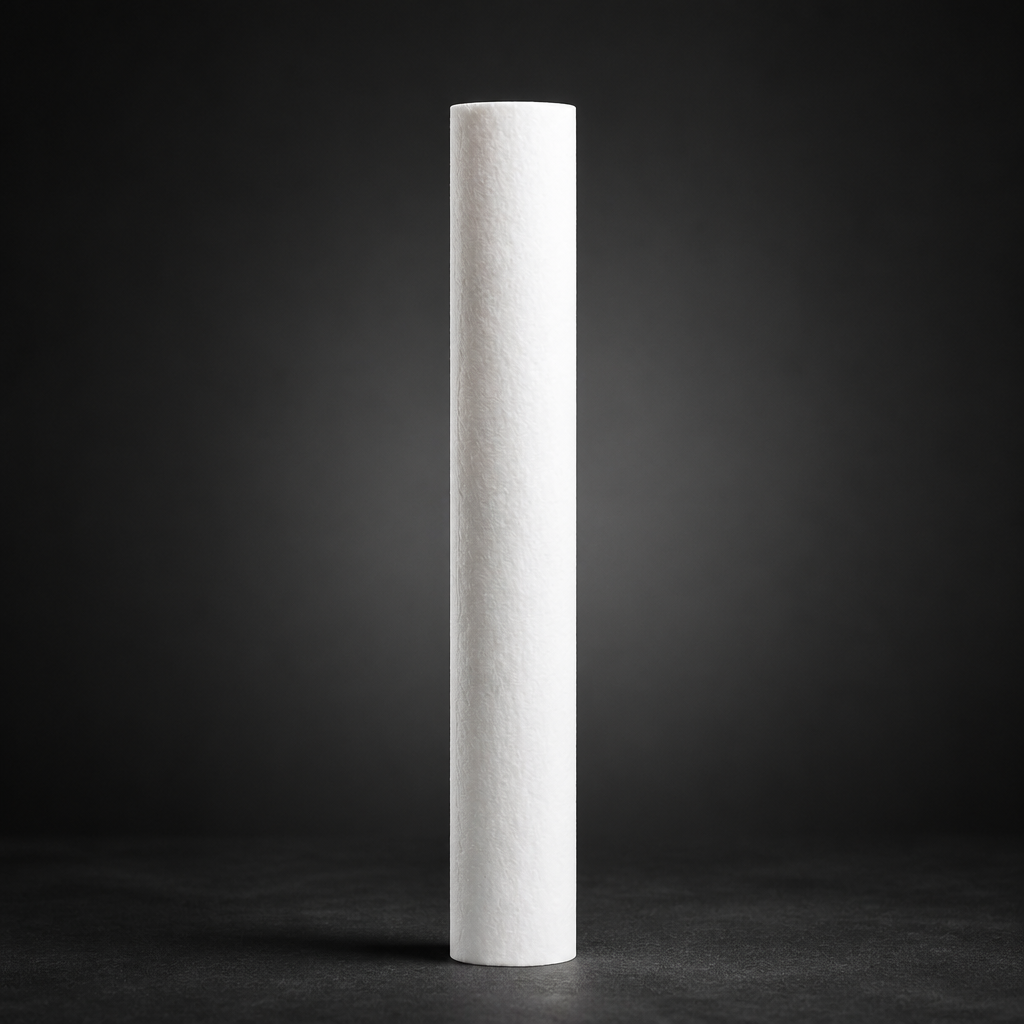
Every filter class from E10 to U17 relies on the same fundamental material: borosilicate glass microfibre. Fibres with diameters of 0.3–3 µm are laid down in a random, three-dimensional matrix to create a depth-loading medium that captures particles through four mechanisms — inertial impaction, interception, diffusion, and electrostatic attraction.
What makes borosilicate glass the material of choice is its combination of properties: chemically inert, thermally stable to over 200 °C, dimensionally consistent, and capable of being drawn to sub-micron diameters without losing structural integrity. The same properties that make it ideal for a ceiling-mounted HEPA terminal unit also make it the preferred media for high-performance process gas filter elements.
Application-Specific Requirements
Hospitals and Healthcare Facilities
Healthcare HVAC design is governed by HTM 03-01 (UK) and equivalent national standards. Operating theatres typically require H14 terminal HEPA filters with unidirectional (laminar) airflow at 0.3–0.5 m/s. Isolation rooms for immunocompromised patients or infectious disease containment require H13 minimum, with negative pressure differentials of 8–12 Pa relative to adjacent corridors. General ward ventilation is typically served by E12 filters as a final stage.
Data Centres
ASHRAE TC 9.9 defines contamination limits for data centre environments. Particulate contamination — especially conductive particles — causes short circuits on exposed PCBs and accelerates corrosion on copper interconnects. E11 or E12 filtration at air handling unit (AHU) level, combined with positive pressurisation, is standard practice. High-density compute environments with open-frame racks may specify H13 at the rack level.
Airports and Transport Hubs
High occupancy, continuous operation, and variable outdoor air quality make airports demanding HVAC environments. E11 filtration is the baseline for terminal buildings, with E12 in medical centres and first-aid rooms. The challenge is balancing filtration efficiency against pressure drop across very large air volumes — a consideration that drives media selection and pleat geometry design.
Laboratories and Cleanrooms
ISO 14644-1 cleanroom classifications drive filter selection from H14 (ISO Class 5–6) through U15–U16 (ISO Class 3–4). Biological safety cabinets (BSCs) use H14 HEPA as a minimum. Pharmaceutical manufacturing under EU GMP Annex 1 requires H14 terminal filters for Grade A and B environments, with full integrity testing (DOP/PAO scan) after installation.
What is the acceptable pressure drop budget?
Use our free Engineering Tool to get a filtration recommendation for your specific application in under 2 minutes.
The Bridge to Process Gas Filtration
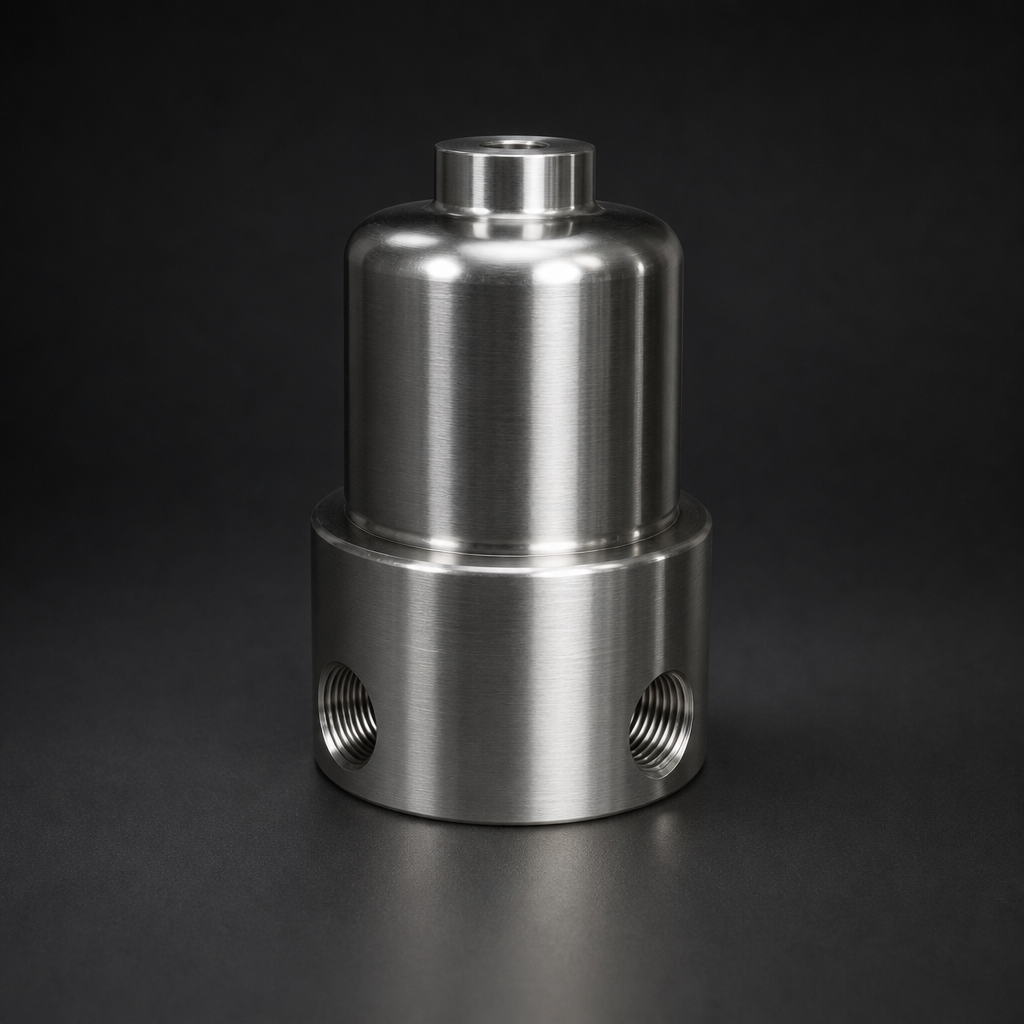
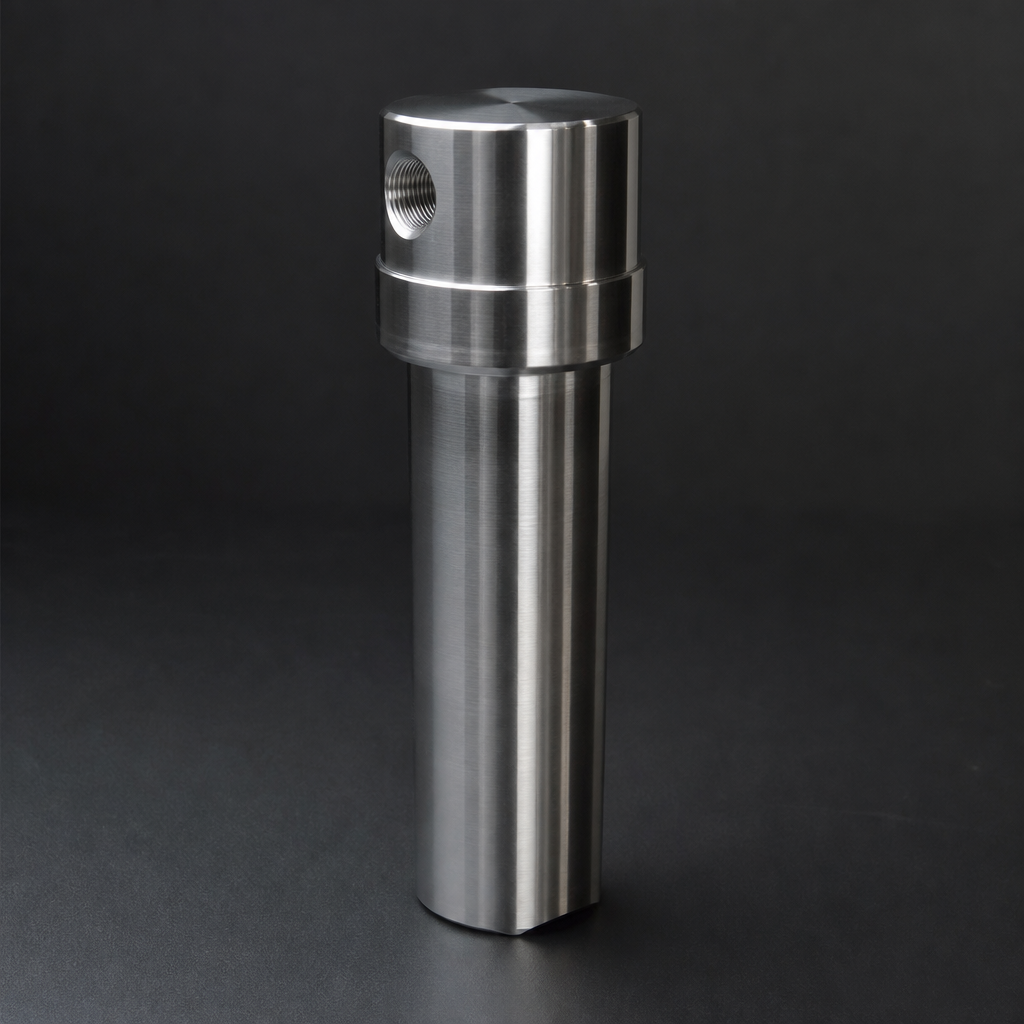
The connection between building HVAC filtration and industrial process gas filtration is more than conceptual — it is material. The borosilicate glass microfibre media in an H14 HEPA terminal unit and the media in an RF-C coalescing filter element share the same base composition and fibre architecture. The difference lies in form factor, housing design, and the specific contaminants being targeted.
In process gas applications, the same 99.99% efficiency at ≥ 0.1 µm that defines HEPA performance is achieved by R+F branded RF-C coalescing elements operating under pressure — removing liquid aerosols and sub-micron particulates from compressed air, nitrogen, hydrogen, and other process gases. The RF-DIL disposable inline filter extends this capability to point-of-use applications where a compact, maintenance-free solution is required.
For facilities that operate both HVAC systems and process gas infrastructure — pharmaceutical plants, food and beverage manufacturers, electronics fabs — understanding this material continuity helps procurement teams standardise on proven media technology across both domains. Explore the full compressed air filter range or the process gas housing range to see how the same filtration principles apply under pressure.
Selecting the Right Filter Class: A Practical Framework
When specifying HVAC filtration for a new or retrofit project, work through these four questions:
- What is the regulatory or standards requirement? HTM 03-01, ISO 14644-1, EU GMP Annex 1, and ASHRAE 170 each specify minimum filter classes for defined spaces. Start here.
- What is the outdoor air quality? High particulate outdoor environments (urban, industrial) require more robust pre-filtration stages to protect the final HEPA/ULPA filter and extend its service life.
- What is the acceptable pressure drop budget? Higher efficiency filters have higher initial resistance. ULPA filters at U16–U17 can impose 400–600 Pa initial pressure drop, which must be accommodated in fan selection and energy budgets.
- What is the maintenance and replacement strategy? HEPA and ULPA filters are not washable. Replacement intervals depend on dust loading, which varies significantly between a rural hospital and an urban airport terminal.
For process gas systems operating alongside HVAC infrastructure, the R+F Engineering Sizing Tool provides flow-based element selection across the full RF-C and RF-P range, helping engineers match filter performance to process conditions without manual calculation.
- European standard EN 1822 (and its successor ISO 29463) defines three tiers of high-efficiency air filtration based on particle capture efficiency at the most penetrating particle size (MPPS), typically 0.
- Every filter class from E10 to U17 relies on the same fundamental material: borosilicate glass microfibre.
- Healthcare HVAC design is governed by HTM 03-01 (UK) and equivalent national standards.
- The connection between building HVAC filtration and industrial process gas filtration is more than conceptual — it is material.
Related Reading
- Coalescing vs Particulate Filter Elements — Which Do You Need?
- ISO 8573-1 Compressed Air Quality Classes Explained
- Filtration Requirements for Hydrogen Electrolysis Systems
Try our Engineering Sizing Tool → or discuss your requirements with our team.