Isolators and Restricted Access Barrier Systems (RABS) are the backbone of modern aseptic pharmaceutical manufacturing. Whether you are filling vials, syringes, or cartridges under Grade A conditions, the quality of the gas supply entering — and exhausting from — these contained environments is a critical process parameter. A single contamination event can invalidate a batch, trigger a regulatory investigation, and cost far more than the filtration system that could have prevented it.
This article explains the filtration requirements for isolator and RABS gas supply, covers pressure cascade design, and identifies the specific R+F FilterElements products suited to sterile inline and exhaust filtration in pharmaceutical contained environments.
Why Gas Supply Quality Matters in Isolators and RABS
An isolator creates a physically separated, controlled environment around the critical zone. RABS achieve a similar result through a combination of fixed barriers and unidirectional airflow. In both cases, the gas supply — typically sterile compressed air or nitrogen — must meet the same microbiological and particulate standards as the Grade A zone itself.
Contamination can enter through three routes: particulate carry-over from the compressed air system, moisture ingress that supports microbial growth, and residual oil aerosols from compressor lubrication. Each of these must be addressed by the filtration train upstream of the isolator inlet.
The exhaust side is equally important. Positive-pressure isolators vent continuously to maintain the pressure cascade. That exhaust stream must be filtered to prevent cross-contamination between the isolator interior and the surrounding cleanroom environment. For containment isolators handling potent compounds (OEB 4–5), the exhaust filter becomes a primary containment device.
Pressure Cascade Design and Its Filtration Implications
A correctly designed pressure cascade is the primary physical barrier against contamination in an isolator. The isolator interior is maintained at a higher pressure than the surrounding Grade B or C cleanroom, so any leak flows outward rather than inward. For containment isolators, the cascade is inverted: the interior is held at negative pressure to prevent potent compound escape.
The filtration system must support this cascade without introducing pressure drop that destabilises the differential. This means selecting filters with low differential pressure at the design flow rate, and sizing them generously to account for element loading over the service interval. Undersized filters that load quickly will cause the pressure differential to drift — a deviation that must be investigated and documented under GMP.
Point-of-use filtration is the preferred approach for isolator gas supply. Rather than relying solely on a central compressed air treatment system, a dedicated sterile filter is installed as close as possible to the isolator inlet. This eliminates the risk of recontamination from pipework downstream of the central system. R+F inline filters are designed specifically for this point-of-use role.
Recommended Filtration Train for Isolator Gas Supply
A robust filtration train for pharmaceutical isolator gas supply typically comprises three stages:
- Coalescing pre-filter: Removes bulk liquid water and oil aerosols upstream of the dryer or adsorber. Protects downstream elements from premature loading.
- Activated carbon adsorber: Eliminates residual oil vapour and odour. Essential when the compressed air source is an oil-lubricated compressor.
- Sterile point-of-use filter: Final barrier immediately upstream of the isolator inlet. Must achieve ≥ 99.9999% efficiency at 0.2 µm (sterilising grade).
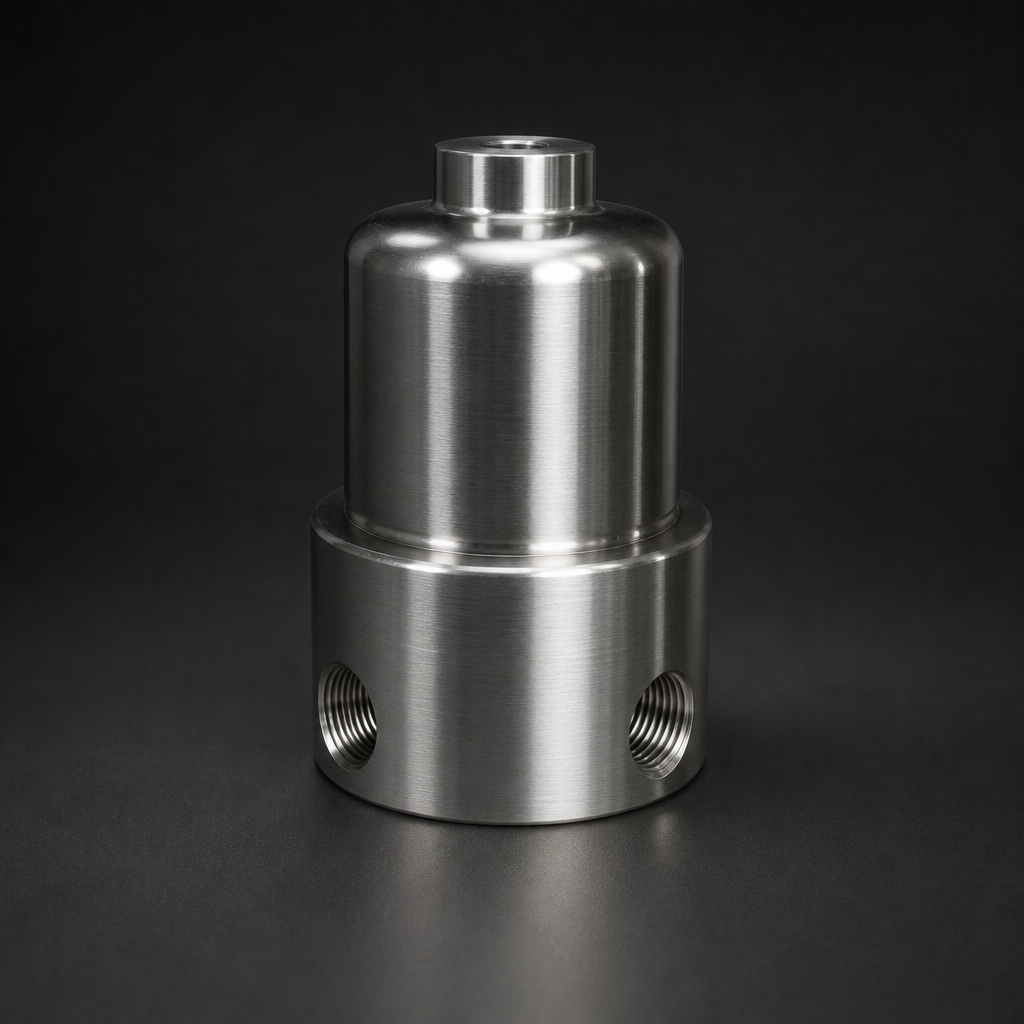
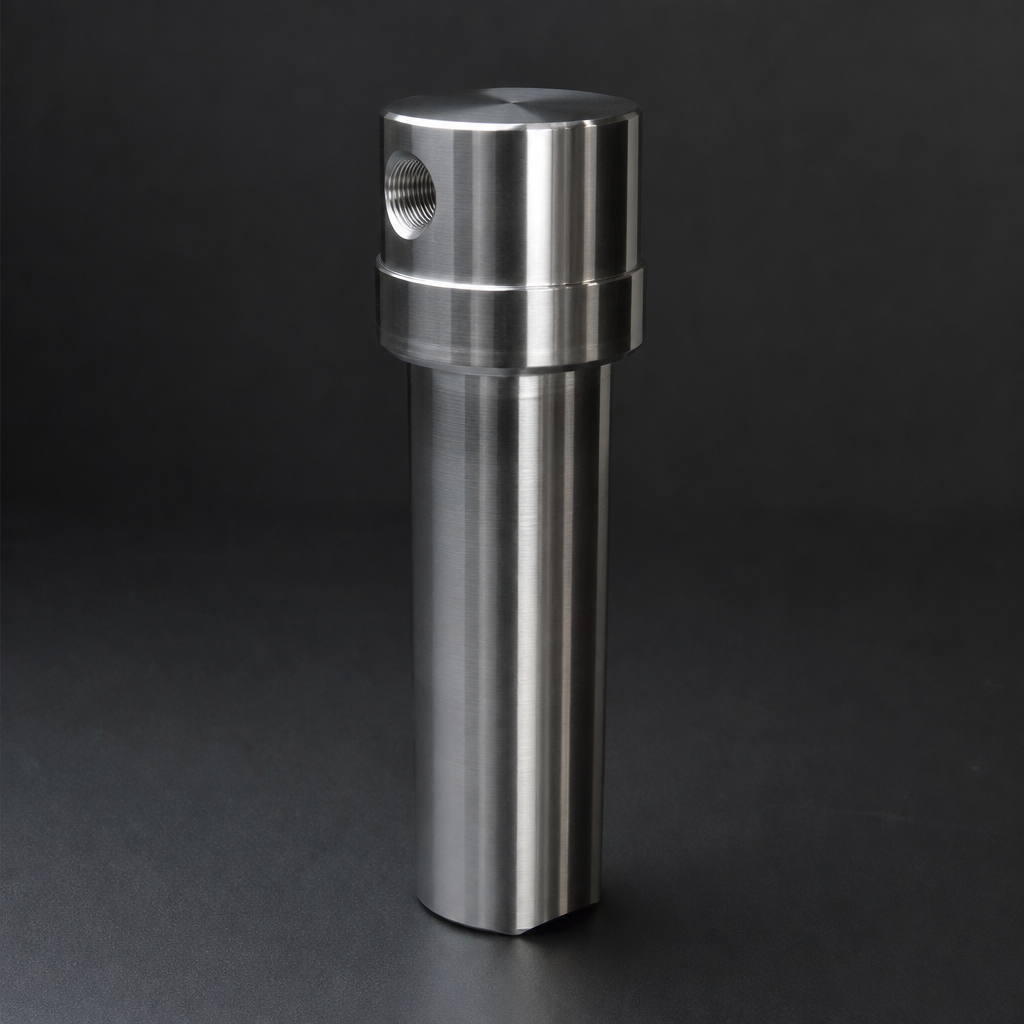
For the coalescing stage, the RF-H-310 to RF-H-395 series housings fitted with RF-C coalescing elements provide 99.99% efficiency at ≥ 0.1 µm and reduce liquid aerosol carry-over to < 0.01 mg/m³. The RF-C elements use borosilicate glass microfibre media and are available in six standard sizes to match flow rates from a few Nm³/h up to 12,000 Nm³/h.
For the point-of-use sterile filtration stage, the RF-DIL disposable inline filter range from R+F FilterElements provides a compact, validated solution. These single-use units eliminate the need for in-situ steam sterilisation (SIP) of the filter housing, simplifying validation and reducing downtime between batches. Each unit is supplied pre-assembled and integrity-tested.
Need help selecting the right filter for your isolator or RABS gas supply?
Exhaust Filtration: Protecting the Cleanroom and the Product
The exhaust stream from a positive-pressure isolator carries the same particulate and microbial burden as the interior atmosphere. Without adequate exhaust filtration, this stream would contaminate the surrounding Grade B cleanroom, undermining the entire environmental control strategy.
For standard aseptic isolators, a HEPA-grade exhaust filter is the minimum requirement. For containment isolators handling cytotoxic or highly potent APIs, a double-filter arrangement with a safe-change mechanism is standard practice. The outer filter can be removed and disposed of without exposing maintenance personnel to the retained compound.
The RF-P particulate filter elements available from R+F FilterElements achieve 99.99% efficiency at ≥ 0.3 µm and are compatible with the RF-H-310 to RF-H-395 series housings. For exhaust applications requiring higher temperature resistance — for example, where the exhaust stream passes through a heat-based decontamination unit — S-type elements rated to 200 °C are available.
Where liquid carry-over in the exhaust stream is a concern (e.g., from cleaning-in-place or vaporised hydrogen peroxide bio-decontamination cycles), the RF-GMS-170 PTFE hydrophobic membrane separator provides an absolute liquid barrier while maintaining gas flow. This is particularly relevant for isolators that undergo VHP decontamination cycles, where condensed peroxide can accumulate at low points in the exhaust pipework.
Use our free Engineering Tool to get a filtration recommendation for your specific application in under 2 minutes.
Filter Selection Comparison: Supply vs. Exhaust Duty
| Parameter | Supply Filter (Point-of-Use) | Exhaust Filter (Standard Isolator) | Exhaust Filter (Containment) |
|---|---|---|---|
| Filtration grade | Sterilising (≥ 0.2 µm) | HEPA / 99.99% @ 0.3 µm | HEPA, double-stage, safe-change |
| R+F product | RF-DIL disposable inline | RF-P in RF-H-310 to RF-H-395 | RF-P (S-type) + RF-GMS-170 |
| Integrity test required | Yes — pre- and post-use | Yes — periodic | Yes — before each safe-change |
| Max operating temp. | 120 °C (standard) | 100 °C (standard) / 200 °C (S-type) | 200 °C (S-type) |
| VHP compatibility | Check element material | FKM seals recommended | PTFE seals + RF-GMS-170 |
Validation and Regulatory Considerations
Pharmaceutical isolator gas supply filtration is subject to regulatory scrutiny under EU GMP Annex 1 (2022 revision), FDA 21 CFR Part 211, and the PIC/S PE 009 guide. The 2022 Annex 1 revision places particular emphasis on Contamination Control Strategy (CCS) documentation, which must include a risk assessment of all gas supply and exhaust filtration points.
Key validation activities include filter qualification (IQ/OQ/PQ), integrity testing method validation, and extractables/leachables assessment for filters in direct contact with the gas stream entering the isolator. R+F FilterElements can supply material certificates, extractables data, and filter-specific documentation packages to support your validation dossier. Visit the solutions pages or contact our engineering team to request documentation.
Change control is another critical area. Any modification to the filter type, element grade, or housing configuration must be assessed under your site change control procedure. Using R+F branded elements that are direct replacements for the original qualified elements simplifies this process — the element geometry, media specification, and performance data remain consistent across supply batches.
For a broader overview of compressed air quality standards applicable to pharmaceutical manufacturing, see our guide to ISO 8573-1 compressed air quality classes. If your process also involves coalescing versus particulate element selection, the article on coalescing vs. particulate filter elements provides a detailed comparison.
- An isolator creates a physically separated, controlled environment around the critical zone.
- A correctly designed pressure cascade is the primary physical barrier against contamination in an isolator.
- Coalescing pre-filter:
- The exhaust stream from a positive-pressure isolator carries the same particulate and microbial burden as the interior atmosphere.
Related Reading
- ISO 8573-1 Compressed Air Quality — A Practical Guide
- Coalescing vs. Particulate Filter Elements: Which Do You Need?
- Oxygen Filtration Safety in Pharmaceutical and Industrial Applications
Try our Engineering Sizing Tool → or discuss your requirements with our team.