Fibre lasers have transformed metal cutting — faster speeds, lower running costs, and the ability to process a wider range of materials than ever before. But one factor that consistently undermines cut quality is often overlooked during machine commissioning: the purity of the assist gas. Whether you are cutting stainless steel with nitrogen or mild steel with oxygen, contamination in the gas supply causes dross, discolouration, nozzle blockage, and ultimately scrapped parts. This guide explains what purity levels are required, what contamination does to your cuts, and how to protect your laser with the right filtration.
Why Assist Gas Purity Matters
Assist gas serves two functions in laser cutting: it blows molten material out of the kerf, and — in the case of oxygen — it drives an exothermic reaction that adds energy to the cut. Both functions are sensitive to contamination. Even trace levels of moisture, oil aerosol, or particulate can disrupt the gas jet, contaminate the lens, or react with the workpiece in ways that degrade the cut edge.
For nitrogen cutting of stainless steel and aluminium, the goal is an inert atmosphere that prevents oxidation of the cut edge. Any oxygen contamination — even at 100 ppm — will cause a yellowish oxide layer on the cut face, requiring additional finishing. Moisture above the dew point of the process will cause similar discolouration and can promote corrosion on the freshly cut surface. For oxygen-assisted cutting of mild steel, the purity requirement is different but equally strict: excess nitrogen or argon dilutes the reactive gas and reduces cutting speed and edge quality.
Contamination sources in a typical laser gas supply include: compressor oil carry-over, moisture from bulk storage cylinders or on-site generation, particulate from pipework corrosion, and hydrocarbon vapour from flexible hoses. Each of these requires a different filtration strategy. Learn more about the general principles of coalescing versus particulate filter elements and how they address different contamination types.
Purity Requirements by Laser Type and Material
The table below summarises the assist gas purity requirements for the most common laser cutting applications. These figures are based on ISO 8573-1 quality classes and laser OEM recommendations.
| Application | Gas | Purity / Class | Max Moisture (dew point) | Max Oil |
|---|---|---|---|---|
| Stainless steel (fibre laser) | N₂ | 99.999% (5.0) | −40 °C PDP | < 0.01 mg/m³ |
| Aluminium (fibre laser) | N₂ | 99.999% (5.0) | −40 °C PDP | < 0.01 mg/m³ |
| Mild steel (O₂ assist) | O₂ | 99.95% (3.5) | −20 °C PDP | < 0.1 mg/m³ |
| CO₂ laser (mixed gas) | CO₂/N₂/He | 99.995% (4.5) | −60 °C PDP | < 0.003 mg/m³ |
Note that CO₂ laser resonator gas has the most demanding specification — any hydrocarbon contamination degrades the laser medium and shortens tube life significantly. For CO₂ systems, an activated carbon adsorber stage is essential in addition to coalescing and particulate filtration. See our process gas filtration range for housing options suited to high-purity gas supply.
What Contamination Does to Your Cuts
Understanding the failure modes helps you diagnose problems and justify the cost of proper filtration to management. The three most common contamination-related defects are:
Dross and Burr Formation
Particulate contamination in the gas jet disrupts the laminar flow through the nozzle, causing turbulence that prevents clean ejection of molten material. The result is dross — solidified metal adhering to the underside of the cut. Even 5 µm particles at concentrations above ISO 8573-1 Class 2 (≥ 1 mg/m³) are sufficient to cause visible dross on 3 mm stainless steel at typical cutting speeds.
Oxidised and Discoloured Edges
Moisture and oxygen contamination in nitrogen cutting gas cause heat tinting on the cut face. On stainless steel, this appears as a gold-to-blue colour progression depending on temperature reached. On aluminium, moisture causes a white oxide bloom. Both require additional finishing operations that add cost and time.
Nozzle Blockage and Lens Damage
Oil aerosol and particulate accumulate on the cutting nozzle and protective lens. Oil polymerises under the intense heat of the laser beam, forming a carbonised deposit that is extremely difficult to remove without damaging the lens coating. Nozzle blockage alters the gas jet geometry, causing asymmetric cuts and increased kerf width. Replacement lenses for high-power fibre lasers typically cost £300–£800 each.
Need help selecting the right filter for your laser cutting gas supply?
Key Performance Figures
Use our free Engineering Tool to get a filtration recommendation for your specific application in under 2 minutes.
Recommended Filtration Configuration for Laser Cutting
A robust laser assist gas filtration train typically consists of three stages, installed as close to the laser machine as practical to minimise the risk of downstream contamination from pipework.
Stage 1 — Coalescing Filter
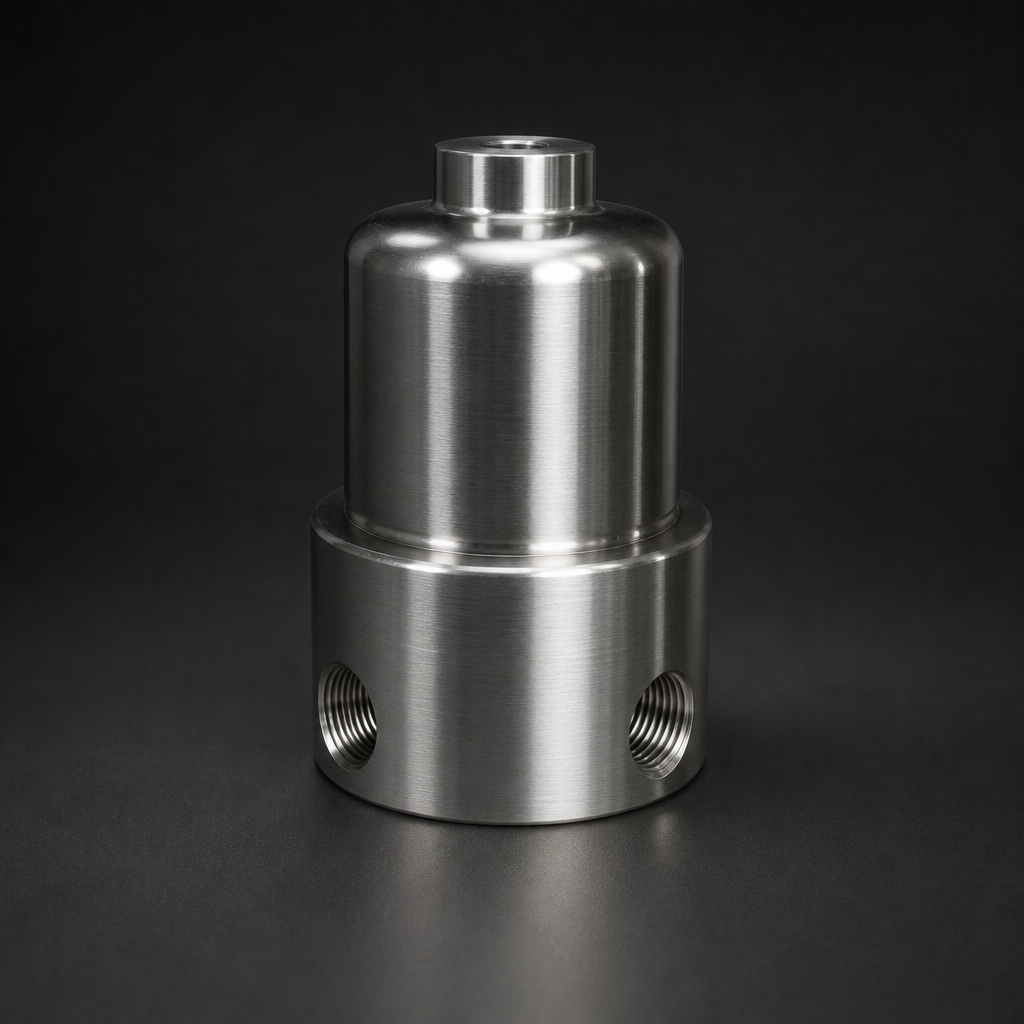
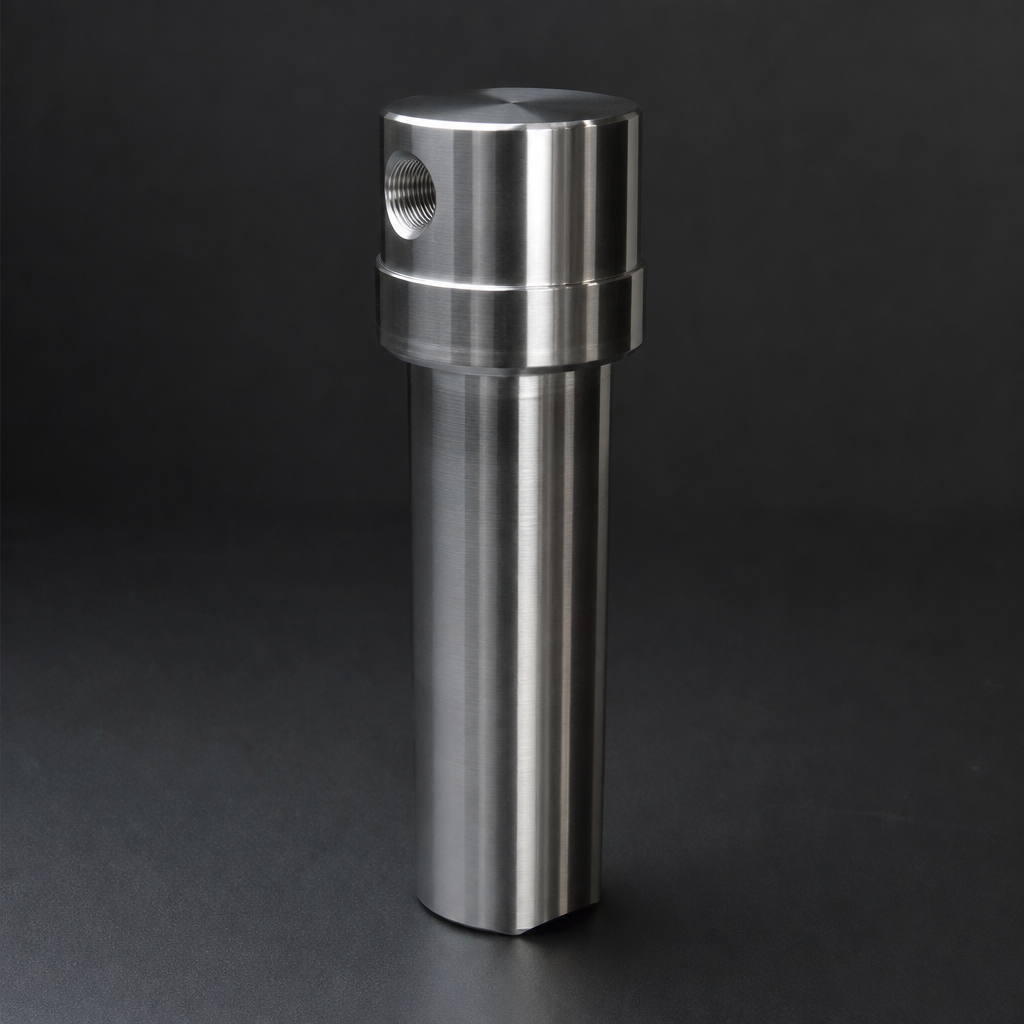
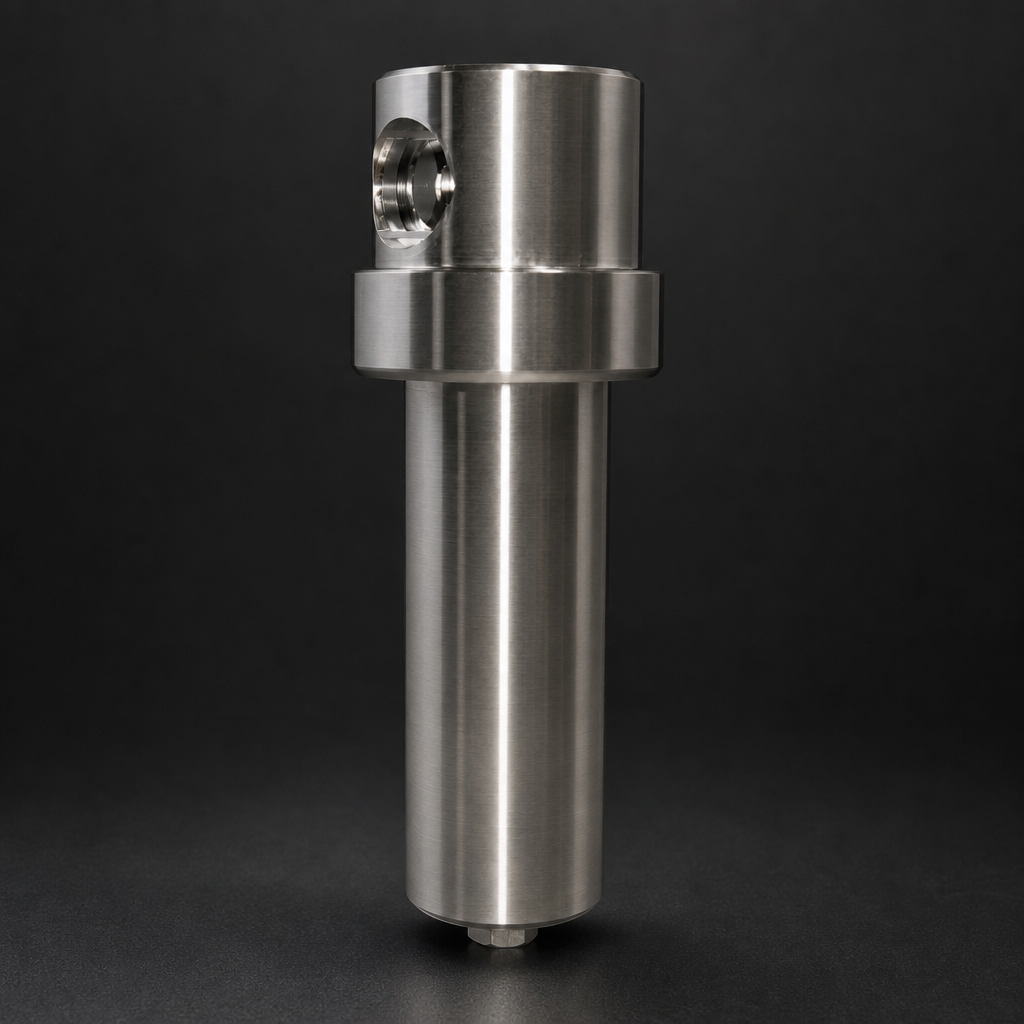
The first stage removes bulk liquid water and oil aerosol. R+F FilterElements offers the RF-H-150 compact process gas housing rated to 100 bar, fitted with RF-C coalescing elements achieving 99.99% efficiency at ≥ 0.1 µm. For nitrogen supply from a bulk liquid tank or PSA generator, this stage handles any moisture carry-over and compressor oil from the booster pump.
Stage 2 — Activated Carbon Adsorber
The second stage removes hydrocarbon vapour and residual oil mist that passes through the coalescing stage. The RF-AC activated carbon element, available in the same RF-H-150 housing, reduces residual oil to below 0.003 mg/m³ — meeting the most demanding CO₂ laser resonator gas specifications. For oxygen assist gas, this stage must use oxygen-compatible materials; consult our team before specifying. See our oxygen filtration safety guide for critical compatibility information.
Stage 3 — Point-of-Use Particulate Filter
Immediately before the laser machine, an RF-DIL disposable inline particulate filter provides a final barrier against any particulate shed by the pipework or pressure regulators. These compact, low-cost units are replaced on a scheduled basis rather than monitored, eliminating the risk of a forgotten filter change causing a lens failure. Browse the full inline filter range for sizing options.
For installations where the gas supply pressure exceeds 100 bar — for example, direct from high-pressure nitrogen cylinders — the RF-H-160 housing rated to 250 bar provides the same filtration performance at elevated inlet pressures. This is particularly relevant for high-power fibre lasers with cutting heads requiring 20–25 bar assist gas pressure, where the supply cylinder pressure may be 200 bar or above.
For a complete system design, use our Engineering Sizing Tool to select the correct housing, element type, and flow capacity for your specific laser and gas supply configuration.
On-Site Nitrogen Generation vs. Cylinder Supply
Many high-volume laser cutting operations have moved to on-site PSA (pressure swing adsorption) or membrane nitrogen generators to reduce gas costs. These systems can deliver nitrogen at 99.999% purity, but they introduce their own contamination risks: compressor oil from the feed air compressor, particulate from the molecular sieve beds, and moisture if the dryer is undersized or poorly maintained.
The filtration train described above is equally applicable to PSA-generated nitrogen. In fact, the coalescing stage is arguably more important for PSA systems than for cylinder supply, because the feed air compressor is a continuous source of oil aerosol. A properly maintained filtration system upstream of the PSA generator, combined with point-of-use filtration at the laser, provides the most reliable protection. Explore our industrial gas solutions for further application guidance.
- Assist gas serves two functions in laser cutting: it blows molten material out of the kerf, and — in the case of oxygen — it drives an exothermic reaction that adds energy to the cut.
- The table below summarises the assist gas purity requirements for the most common laser cutting applications.
- Understanding the failure modes helps you diagnose problems and justify the cost of proper filtration to management.
- A robust laser assist gas filtration train typically consists of three stages, installed as close to the laser machine as practical to minimise the risk of downstream contamination from pipework.
Related Reading
- Coalescing vs Particulate Filter Elements — Which Do You Need?
- ISO 8573-1 Compressed Air Quality Classes Explained
- Oxygen Filtration Safety — What Every Engineer Must Know
Try our Engineering Sizing Tool → or discuss your requirements with our team.