Nitrogen blanketing and inerting are among the most widely used protective techniques in the chemical, pharmaceutical, and food-processing industries. By displacing oxygen and moisture from storage tanks, reactors, and transfer lines, nitrogen prevents oxidation, suppresses flammable vapour formation, and protects sensitive products from contamination. Yet the nitrogen itself is rarely as clean as it appears. Particulate matter, compressor oil carry-over, and pipeline debris can enter the process stream and undermine the very protection that blanketing is meant to provide. Understanding the purity requirements for nitrogen blanketing filtration — and selecting the right N2 inerting gas filter — is therefore essential for any facility that relies on inert gas protection.
Why Nitrogen Purity Matters in Blanketing and Inerting Applications
Nitrogen used for tank blanketing is typically supplied from one of three sources: bulk liquid nitrogen (LIN) that is vaporised on site, on-site pressure swing adsorption (PSA) generators, or membrane separation units. Each source introduces its own contamination risks:
- Liquid nitrogen vaporisers can introduce particulate matter from the vaporiser heat exchanger, pipeline scale, and rubber or PTFE seal fragments dislodged during pressure cycling.
- PSA generators produce nitrogen by cycling compressed air through molecular sieve beds. Sieve dust, compressor oil aerosols, and water vapour are all potential carry-over contaminants if the upstream compressed air is not adequately treated.
- Membrane separators are generally cleaner but can shed membrane fibres over time, particularly as modules age or are subjected to pressure surges.
In pharmaceutical manufacturing, even trace particulate contamination in a blanketing gas can violate Good Manufacturing Practice (GMP) requirements and trigger batch failures. In fine chemical synthesis, particles can act as unwanted catalysts or introduce metallic impurities that alter reaction selectivity. In food and beverage applications, contaminated nitrogen can compromise product shelf life and regulatory compliance.
The consequence is clear: tank blanketing nitrogen quality must be actively managed, not assumed.
Particle Specifications for Nitrogen Blanketing
There is no single universal standard that governs nitrogen purity for blanketing applications across all industries. However, several reference frameworks are widely applied:
- ISO 8573-1 (compressed gases — contaminants and purity classes) is frequently used as a reference even for nitrogen, particularly in pharmaceutical and food-grade applications. Class 1 for particles (≤ 0.1 µm, maximum 20,000 particles per m³) is the most demanding tier.
- European Pharmacopoeia (Ph. Eur.) monograph for Nitrogen specifies limits for oxygen, carbon monoxide, carbon dioxide, and water, but does not set explicit particle counts — making downstream filtration the primary control mechanism for particulate quality.
- EIGA (European Industrial Gases Association) guidelines recommend point-of-use filtration for nitrogen entering critical processes, with a typical target of ≤ 1 µm absolute filtration at the final connection point.
In practice, most chemical and pharmaceutical facilities specify nitrogen blanketing filtration to achieve ≤ 1 µm or ≤ 0.3 µm particle removal at the point of use, with oil-free performance where PSA or compressor-derived nitrogen is in use.
How Pipeline Contamination Reaches the Tank
Even when the nitrogen source is clean, the distribution pipework between the supply point and the blanketing connection is a significant contamination source. Common pipeline contaminants include:
- Iron oxide and mill scale from carbon steel pipework
- Weld spatter and flux residues from installation or maintenance
- Thread sealant fragments from fittings and valve packing
- Rubber particles from flexible hose connections and diaphragm valves
- Moisture and condensate in low-point sections of the distribution header
Pressure transients — caused by valve opening, pressure regulator hunting, or sudden demand changes — can dislodge settled debris and carry it forward into the blanketing connection. This is particularly problematic during start-up after maintenance, when disturbed pipework releases accumulated contamination in a single slug.
Point-of-use inert gas filtration is therefore not a luxury but a practical necessity, even in facilities that maintain rigorous nitrogen supply quality.
EIGA (European Industrial Gases Association) guidelines
Selecting the Right N2 Inerting Gas Filter
The choice of filter for nitrogen blanketing and inerting depends on several process parameters: flow rate, operating pressure, required filtration grade, and whether the application demands oil-free performance. The following table summarises the key selection criteria:
| Parameter | Typical Range for Blanketing | Filter Requirement |
|---|---|---|
| Operating pressure | 0.5–10 bar g (blanketing headers) | Housing rated ≥ 16 bar g recommended for safety margin |
| Flow rate | 1–500 Nm³/h (varies by tank size) | Match housing size to flow; avoid excessive velocity |
| Particle removal | ≤ 1 µm or ≤ 0.3 µm absolute | RF-P particulate element (99.99% ≥ 0.3 µm) |
| Oil aerosol removal | Required if PSA/compressor source | RF-C coalescing element (99.99% ≥ 0.1 µm) |
| Point-of-use installation | Final connection to tank or reactor | RF-DIL disposable inline filter |
| Material compatibility | Nitrogen (inert, dry or slightly moist) | 316L stainless steel or aluminium; FKM or PTFE seals |
R+F FilterElements Solutions for Nitrogen Blanketing Filtration
R+F FilterElements offers a range of filtration products specifically suited to nitrogen blanketing and inerting duties. The selection spans from compact point-of-use devices to full-sized process gas housings, allowing engineers to match the filter to the application rather than compromise on performance.
RF-DIL Disposable Inline Filters
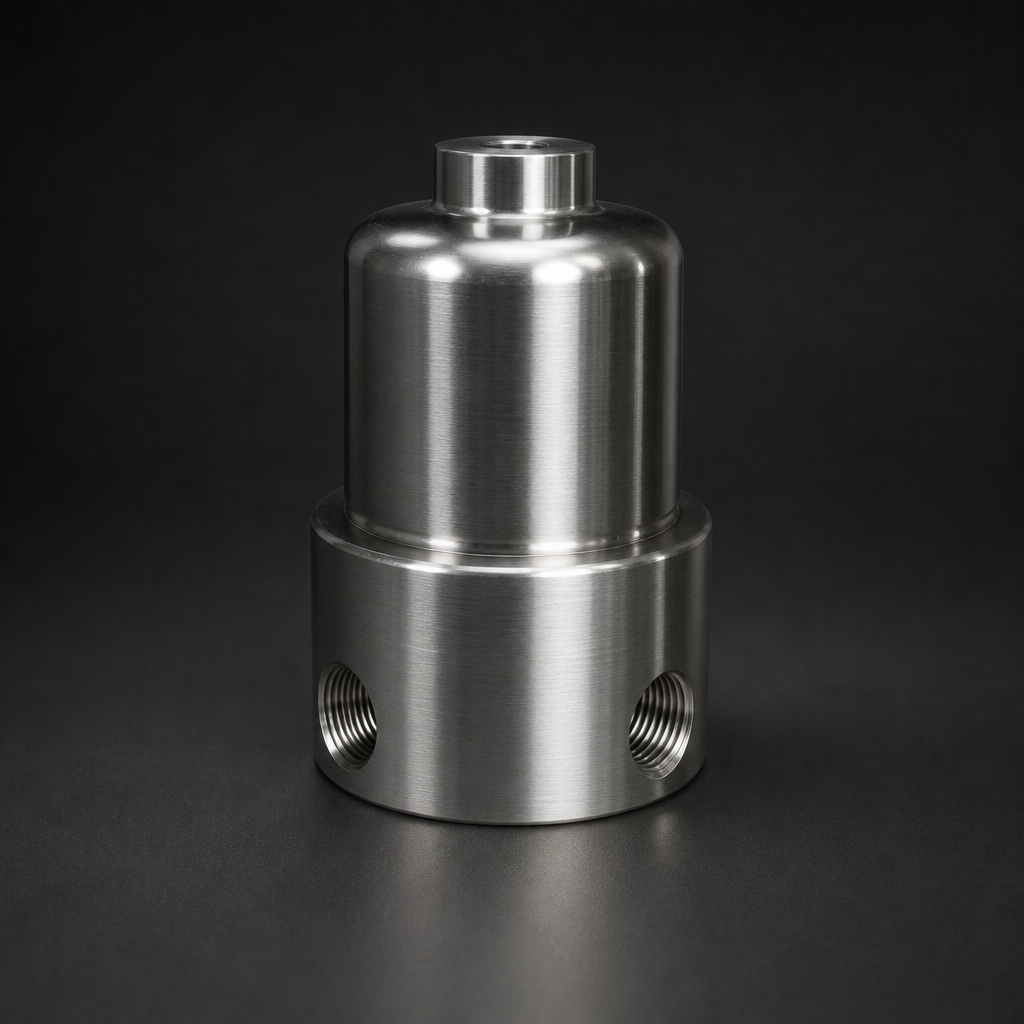
For point-of-use nitrogen blanketing filtration, the RF-DIL series of disposable inline filters provides a compact, cost-effective solution. These units are installed directly at the tank blanketing connection or at the inlet to a reactor vessel, providing a final barrier against particulate contamination regardless of what has occurred upstream in the distribution system.
The RF-DIL is available in particulate grades down to 0.3 µm absolute, making it suitable for pharmaceutical and fine chemical applications where GMP compliance demands documented point-of-use filtration. The disposable design eliminates the need for element change-out procedures and reduces the risk of contamination during maintenance — a significant advantage in cleanroom or contained environments.
Key features of the RF-DIL for nitrogen blanketing applications include:
- Compact body suitable for direct connection to tank nozzles or instrument tees
- 316L stainless steel construction for compatibility with pharmaceutical and food-grade environments
- PTFE or FKM seal options for broad chemical compatibility
- Available with NPT or BSP connections to suit existing pipework
For applications requiring activated carbon adsorption — for example, where trace hydrocarbon or odour removal is needed in food-grade nitrogen — the RF-DIA disposable inline adsorber provides the same compact form factor with an activated carbon or molecular sieve bed.
RF-H-150 Process Gas Housing with RF-P Elements
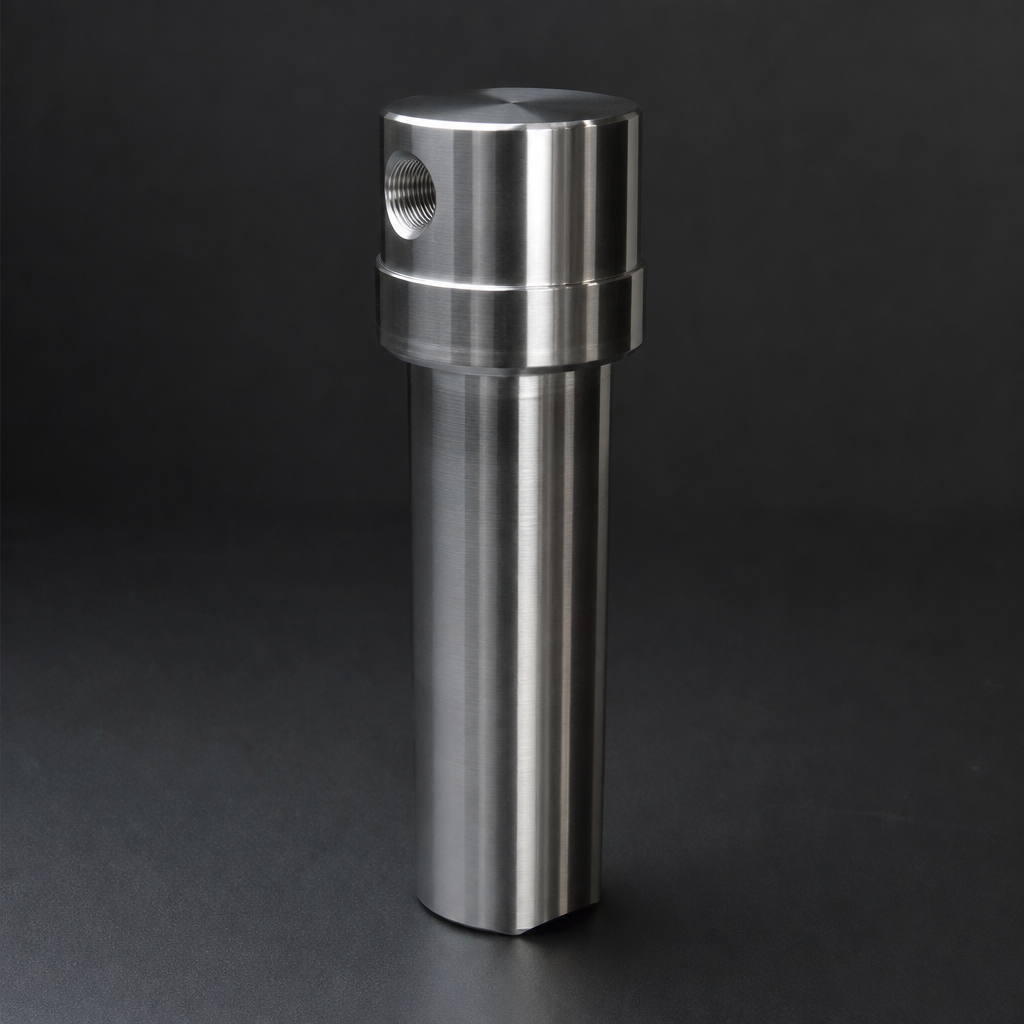
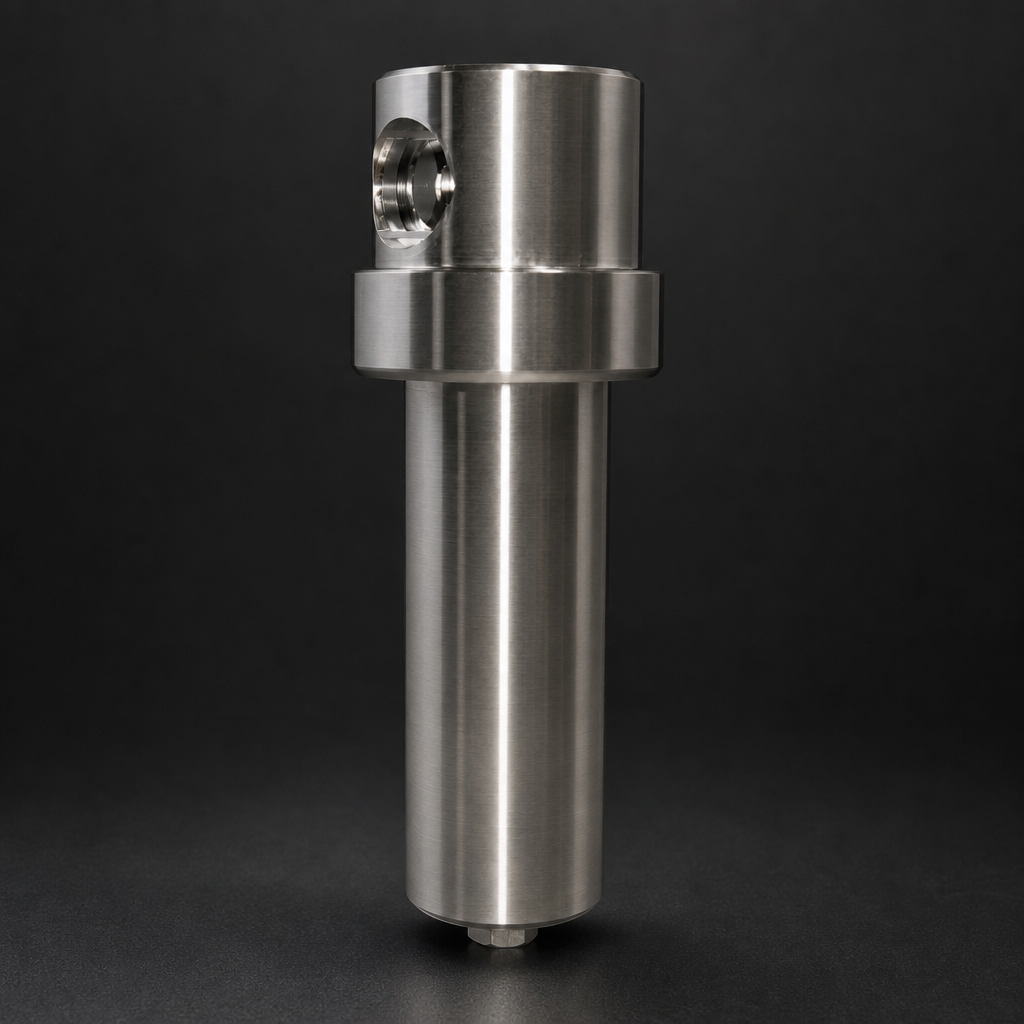
Where higher flow rates or more demanding service conditions require a full-sized filter housing, the RF-H-150 process gas filter housing is well suited to nitrogen blanketing duties. Constructed from 316L stainless steel and rated to 100 bar, the RF-H-150 provides a robust, serviceable housing that can be fitted with RF-P particulate filter elements for high-efficiency particle removal.
The RF-P element achieves 99.99% efficiency at ≥ 0.3 µm, meeting the most stringent inert gas filtration specifications. For applications where oil aerosol removal is also required — such as nitrogen derived from oil-lubricated compressors or PSA systems with inadequate upstream treatment — the RF-H-150 can be configured with RF-C coalescing elements to achieve residual oil content below 0.01 mg/m³.
The RF-H-150 is available from R+F FilterElements as part of the process gas filter range, with options for manual or automatic drain, differential pressure indicators, and a range of connection sizes to suit existing pipework.
Use our free Engineering Tool to get a filtration recommendation for your specific application in under 2 minutes.
Designing a Nitrogen Blanketing Filtration System
A well-designed nitrogen blanketing filtration system typically incorporates filtration at two points: a main-line filter on the nitrogen supply header, and a point-of-use filter at each tank or reactor connection. This two-stage approach provides defence in depth — the main-line filter removes bulk contamination from the supply, while the point-of-use filter catches any debris generated within the distribution system itself.
For pharmaceutical applications, the point-of-use filter should be validated as part of the process qualification, with documented filter integrity testing and change-out intervals. R+F FilterElements can provide filter validation support documentation for RF-DIL and RF-H-150 installations on request.
When sizing the main-line filter, engineers should consider not only the steady-state blanketing flow but also the peak demand during tank filling or product transfer, when nitrogen consumption can increase significantly. The R+F FilterElements sizing wizard can assist with housing and element selection based on actual flow and pressure conditions.
Pressure Drop Considerations
Nitrogen blanketing systems typically operate at low differential pressures across the filter — often less than 0.1 bar at normal flow. However, as the filter element loads with particulate matter over time, pressure drop increases. In blanketing applications where the nitrogen supply pressure is already close to the minimum required to maintain a positive tank pressure, excessive filter pressure drop can compromise the blanketing function.
It is therefore important to specify filters with adequate element area for the expected service life, and to install differential pressure indicators or transmitters to provide early warning of element loading. R+F FilterElements housings are available with differential pressure gauge ports as standard, allowing straightforward monitoring without additional pipework modifications.
Regulatory and Documentation Considerations
In pharmaceutical manufacturing, nitrogen used for blanketing is classified as a process gas and is subject to GMP requirements under EU GMP Annex 15 (qualification and validation) and relevant pharmacopoeial monographs. Filtration at the point of use is typically required as a critical process control, and the filter must be included in the facility's equipment qualification programme.
For food and beverage applications, nitrogen blanketing filtration must comply with applicable food contact material regulations, including EU Regulation 1935/2004 on materials in contact with food. R+F FilterElements can provide material declarations and food-contact compliance documentation for relevant products.
In chemical processing, the primary regulatory driver is typically process safety — ensuring that the blanketing function is maintained reliably to prevent flammable atmosphere formation. Filter selection should be documented in the process hazard analysis (PHA) or HAZOP study, with appropriate inspection and maintenance intervals defined.
Maintenance and Element Change-Out
For serviceable filter housings such as the RF-H-150, element change-out should be performed at intervals determined by differential pressure monitoring rather than fixed time periods, as contamination loading varies significantly between installations. A typical change-out trigger is a differential pressure of 0.5–1.0 bar across the element, though this should be confirmed against the specific housing and element combination.
For disposable RF-DIL inline filters, the entire unit is replaced rather than the element, eliminating the risk of contamination during maintenance and simplifying the change-out procedure. This is particularly advantageous in pharmaceutical environments where element handling must be minimised to prevent contamination of the clean side of the filter.
R+F FilterElements recommends maintaining a stock of replacement elements or RF-DIL units on site to avoid production interruptions. Replacement elements for the RF-H-150 and other housings in the R+F filter elements range are available with short lead times from the Hildesheim facility.
Summary: Key Takeaways for Nitrogen Blanketing Filtration
- Nitrogen for tank blanketing and inerting is rarely as clean as assumed — particulate contamination from supply systems and distribution pipework is a genuine risk.
- Point-of-use inert gas filtration to ≤ 0.3 µm absolute is the most effective control measure, regardless of upstream nitrogen quality.
- The RF-DIL disposable inline filter provides a compact, GMP-compatible solution for pharmaceutical and food-grade applications.
- The RF-H-150 process gas housing with RF-P or RF-C elements suits higher-flow or more demanding service conditions.
- Two-stage filtration — main-line plus point-of-use — provides defence in depth and is recommended for critical applications.
- Differential pressure monitoring is essential to ensure filter performance is maintained throughout the service life.
For guidance on selecting the right nitrogen blanketing filtration solution for your application, contact R+F FilterElements at process-gas-filter.com/contact or email [email protected]. Our engineering team can advise on housing selection, element grade, and system design to meet your specific purity and regulatory requirements.
- Liquid nitrogen vaporisers
- European Pharmacopoeia (Ph. Eur.) monograph for Nitrogen
- Even when the nitrogen source is clean, the distribution pipework between the supply point and the blanketing connection is a significant contamination source.
- The choice of filter for nitrogen blanketing and inerting depends on several process parameters: flow rate, operating pressure, required filtration grade, and whether the application demands oil-free performance.