Why consider alternative replacement elements?
Original equipment manufacturers (OEMs) design their filter housings around proprietary element dimensions, connection styles, and media specifications. This creates a captive aftermarket: once you have installed a particular housing, you are expected to buy replacement elements exclusively from the OEM — often at premium prices and with lead times that do not align with your maintenance schedule.
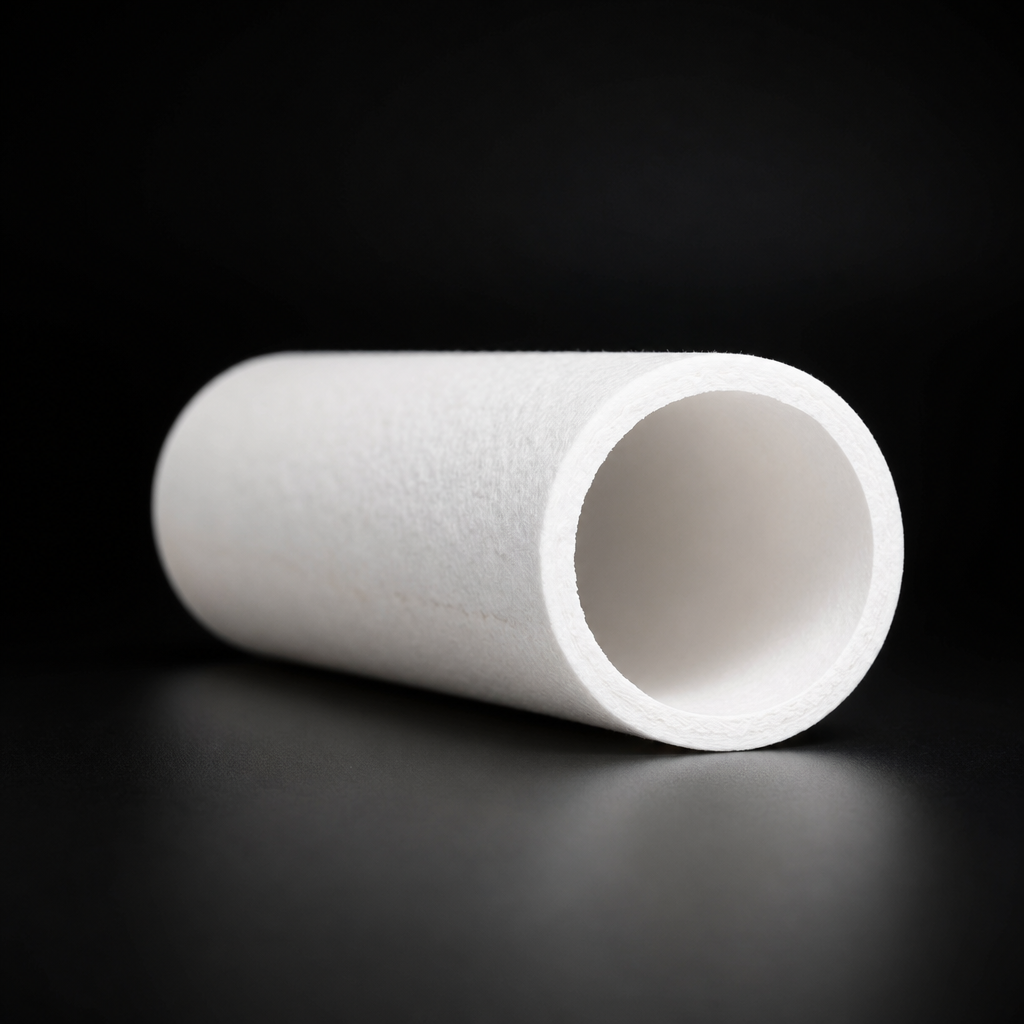
Alternative replacement elements — also called compatible, equivalent, or interchangeable elements — are engineered to match the OEM element's critical dimensions, seal interfaces, and performance characteristics. When specified correctly, they deliver equal or superior separation performance at a lower cost and with faster availability.
The key word is correctly. A poorly matched alternative can leak past the seals, underperform on separation, or physically damage the housing internals. This guide explains the five critical parameters you must verify before substituting.
Key Takeaway
- Five parameters determine whether a replacement element is truly compatible: outer diameter, length, end-cap/seal configuration, media grade, and differential pressure rating.
- Dimensional match alone is not sufficient — the seal interface and media specification must be verified independently.
- A reputable alternative supplier provides a documented cross-reference with test data, not just a dimensional match chart.
The five critical cross-reference parameters
Outer Diameter (OD)
The element must fit inside the housing bore with the correct clearance. Too large, and it will not insert. Too small, and bypass flow around the element defeats the filtration. Measure to ±0.5 mm and verify against the housing datasheet.
Element Length
Overall length determines whether the element seats correctly against the housing internal stops and whether the drain or outlet port aligns. Variations of even 2–3 mm can prevent proper sealing or leave dead space that accumulates condensate.
End-Cap / Seal Configuration
This is the most frequently overlooked parameter. End-cap styles include bayonet, threaded, flat-gasket, double O-ring, and proprietary snap-lock designs. The seal type (NBR, FKM, PTFE) must also match the gas compatibility requirements. A dimensional twin with the wrong end-cap is useless.
Media Grade & Type
A coalescing element rated at 0.01 mg/m³ residual oil cannot be replaced with a particulate element of the same dimensions — they serve entirely different functions. Verify the media type (borosilicate microfibre, PTFE membrane, sintered metal) and the rated separation efficiency.
Differential Pressure Rating
The element must withstand the same maximum ΔP as the OEM original without collapse or media migration. Check both the clean ΔP (to confirm equivalent flow capacity) and the collapse pressure (to confirm structural integrity at change-out conditions).
How to identify your current element
Before requesting a cross-reference, gather as much of the following information as possible:
- OEM part number — Usually printed or stamped on the element end-cap. This is the single most useful data point.
- Housing model and manufacturer — If the element number is illegible, the housing model often narrows down the element family.
- Physical measurements — OD, length, inner diameter (ID), and photographs of both end-caps.
- Application data — Gas type, pressure, temperature, and required purity. This helps verify that the media grade is correct, not just the dimensions.
Send this information to our team, and we will provide a documented cross-reference within 24 hours, including a side-by-side comparison of key specifications.
Beware of 'equivalent' claims without data
Some aftermarket suppliers list elements as “equivalent” based solely on outer dimensions. Without documented media performance data (DOP efficiency, oil carryover, or bacterial retention tests), a dimensional match is not a functional match. Always request test certificates.
Our cross-reference range
The RF-series element catalogue covers replacements for the most widely installed OEM housings in compressed air, process gas, and vacuum service. Our range includes:
- RF-C series — Coalescing elements for oil-aerosol removal, compatible with major European and North American housing brands.
- RF-P series — Particulate elements for dry-dust and scale removal in standard and high-temperature variants.
- RF-H series — High-pressure elements rated to 350 bar(g) for hydrogen, helium, and natural-gas service.
- RF-V series — Vacuum-rated elements designed for exhaust filtration on rotary-vane and dry-screw pumps.
Each cross-reference is backed by a technical datasheet listing all five critical parameters, material certifications, and — where applicable — third-party test reports.
Quality assurance
Every RF-series replacement element is manufactured under ISO 9001:2015 and tested to the same standards as the OEM original. We provide a certificate of conformance with every shipment, including material heat numbers and lot-specific test results.
Need a cross-reference?
Send us your OEM part number or housing model and we will return a documented cross-reference within 24 hours — including specifications, pricing, and stock availability.
Related reading
- Coalescence Filters Explained — Understand how coalescing elements work and why media grade matters.
- Pressure Drop & Filter Sizing — Learn how ΔP affects element selection and replacement intervals.
- Particulate Filter Elements — Explore our full particulate element range.