When a filter element reaches the end of its service life, the procurement decision seems straightforward: order the OEM part number and move on. But with lead times stretching to weeks and OEM pricing climbing year on year, many plant engineers are asking a harder question — does the OEM badge actually guarantee better performance, or is a quality aftermarket element just as good?
This guide examines the real differences between OEM and aftermarket filter elements, uses the GE gas turbine inlet filter FLT486 as a concrete case study, and explains how to evaluate drop-in replacements without compromising filtration integrity or voiding warranties.
What "OEM" Actually Means for Filter Elements
Original Equipment Manufacturer (OEM) filter elements are supplied by the company that built the host equipment — or, more commonly, by a filtration supplier contracted to produce elements under the OEM's part number. In many cases, the OEM does not manufacture the element at all; it sources from a specialist filtration company and applies its own label and markup.
This matters because it means the OEM part number is primarily a commercial designation, not a unique technical specification. The underlying media, pleat geometry, and end-cap dimensions are often shared with aftermarket equivalents — sometimes produced on the same production line.
The FLT486 Case Study: GE Gas Turbine Inlet Filtration
The FLT486 is a widely used inlet filter element for GE gas turbines, specified to remove particulate contamination from combustion air before it reaches the compressor stage. Turbine inlet filtration is safety-critical: ingested particles cause blade erosion, reduce efficiency, and can trigger unplanned outages.
OEM FLT486 elements are available directly from GE or authorised distributors, but lead times of 8–16 weeks are common, and unit prices have risen sharply since 2022. For operators running multiple turbines, this creates both a cost and a supply-chain risk.
Aftermarket alternatives for the FLT486 are available from several European filtration specialists. The key question is whether they meet the same performance criteria. For the FLT486, the critical parameters are:
- Filtration efficiency: ≥ 99.97% at 0.3 µm (F9 / HEPA-equivalent for inlet air)
- Pressure drop at rated flow: within ±10% of OEM specification
- Dimensional compatibility: flange diameter, element length, and seal type must match exactly
- Media integrity: no fibre shedding under vibration or high-velocity flow
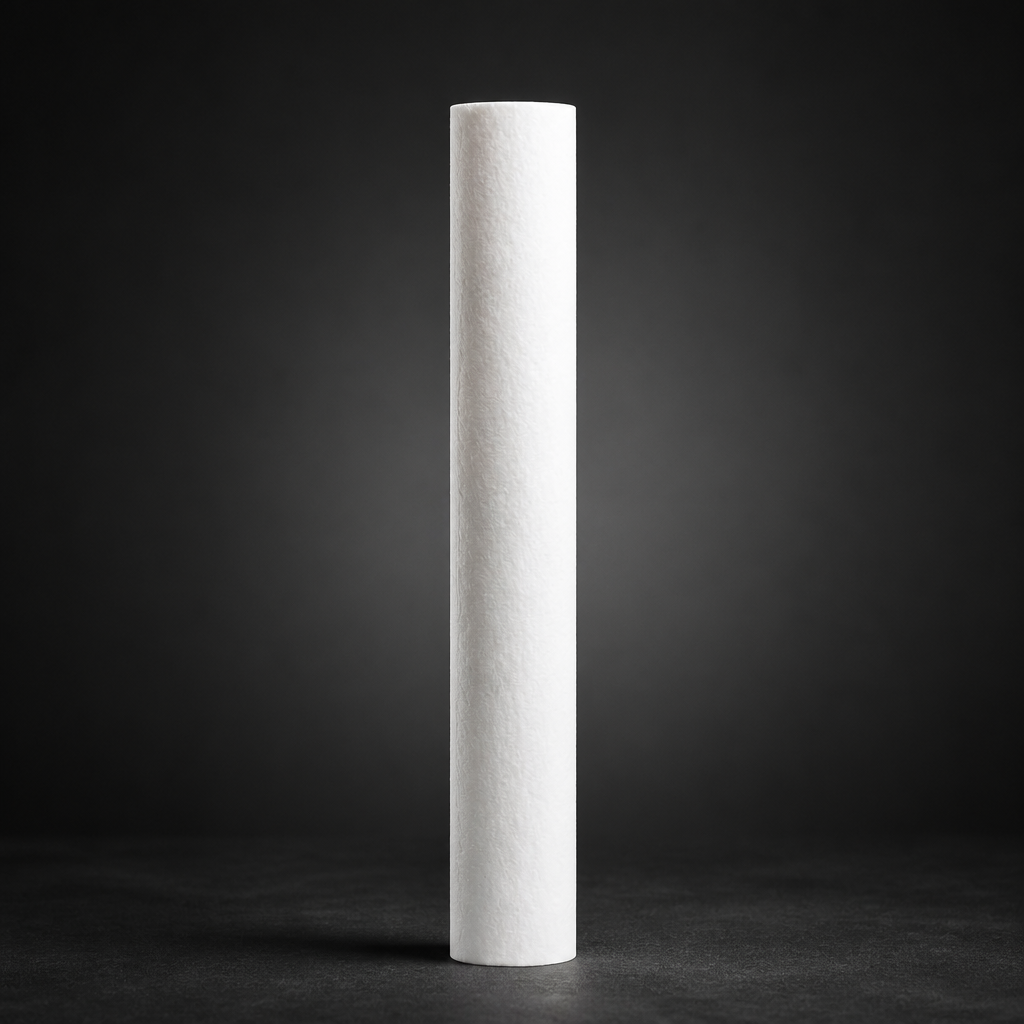
A quality aftermarket FLT486 replacement — such as those available from R+F FilterElements' GE turbine filter range — is manufactured to the same dimensional and media specification, tested to EN 1822 or equivalent, and supplied with a full test certificate. The element fits the existing housing without modification and delivers the same inlet air quality class.
Key Differences: OEM vs. Aftermarket Elements
| Factor | OEM Element | Quality Aftermarket | Low-Cost Aftermarket |
|---|---|---|---|
| Filtration efficiency | Certified to spec | Certified to same spec | Often unverified |
| Dimensional accuracy | Guaranteed fit | Verified cross-reference | Risk of mismatch |
| Lead time | 8–16 weeks (typical) | 1–3 weeks from stock | Variable |
| Unit cost | High (OEM margin) | 20–40% lower | Very low (risk) |
| Test certificate | Yes | Yes (EN 1822 / ISO) | Rarely provided |
| Warranty impact | None | Minimal if documented | High risk |
Need help selecting the right replacement filter element?
Performance Numbers That Matter
Use our free Engineering Tool to get a filtration recommendation for your specific application in under 2 minutes.
Coalescing and Particulate Elements: The Same Logic Applies
The OEM vs. aftermarket question is not limited to turbine inlet filters. It applies equally to coalescing and particulate filter elements used in compressed air and process gas systems. OEM housings from major brands — including those using UF-compatible element sizes — are often supplied with elements that have direct aftermarket equivalents.
R+F FilterElements offers its own range of replacement filter elements engineered to fit OEM housings from leading compressed air and process gas equipment manufacturers. The RF-C coalescing element series uses borosilicate glass microfibre media with 99.99% efficiency at ≥ 0.1 µm — meeting or exceeding the performance of many OEM coalescing elements. The RF-P particulate series delivers 99.99% efficiency at ≥ 0.3 µm for solid particle removal.
For applications requiring activated carbon adsorption — such as oil vapour removal to ISO 8573-1 Class 1 — the RF-AC adsorption element achieves residual oil content below 0.003 mg/m³, matching the specification of OEM adsorption stages from major compressed air system manufacturers.
Warranty Considerations
A common concern when switching to aftermarket elements is the impact on equipment warranty. In the European Union, the Magnuson-Moss equivalent principle (and analogous national legislation) means that an OEM cannot void a warranty solely because an aftermarket part was used — provided the aftermarket part meets the same specification and the failure is not attributable to the replacement part.
In practice, the safest approach is to document the cross-reference: retain the aftermarket element's test certificate, dimensional drawing, and the cross-reference to the OEM part number. If a warranty claim arises, this documentation demonstrates that the replacement met the required specification. For critical applications, consult your equipment manufacturer's maintenance agreement before switching.
For guidance on selecting the right element grade for your application, the coalescing vs. particulate filter elements guide explains the technical differences between element types and when each is appropriate. For compressed air quality classification, the ISO 8573-1 compressed air quality guide provides a full breakdown of purity classes.
How to Evaluate an Aftermarket Replacement
Before approving an aftermarket element for use, apply this checklist:
- Dimensional verification: Compare end-cap outer diameter, inner diameter, element length, and seal groove dimensions against the OEM drawing. A 3D model or dimensional drawing from the aftermarket supplier is essential.
- Media grade confirmation: Request the filtration efficiency test certificate (EN 1822, ISO 16890, or equivalent). The efficiency class must match or exceed the OEM specification.
- Pressure drop data: Confirm that the clean pressure drop at rated flow is within ±10% of the OEM value. Higher pressure drop increases energy consumption; lower may indicate insufficient media area.
- Seal material compatibility: Verify that the O-ring or gasket material is compatible with the process fluid and temperature. NBR suits most compressed air applications to 100 °C; FKM/Viton is required above 100 °C or with hydrocarbon-rich gases.
- Supplier traceability: The aftermarket supplier should be able to provide batch traceability and a declaration of conformity. Avoid suppliers who cannot provide these documents.
R+F FilterElements provides full dimensional cross-references, EN-certified test data, and batch traceability for all replacement elements. The instrumentation filter range and process gas filter range pages list compatible OEM housings and the corresponding R+F element codes.
- Original Equipment Manufacturer (OEM) filter elements are supplied by the company that built the host equipment — or, more commonly, by a filtration supplier contracted to produce elements under the OEM's part number.
- The FLT486 is a widely used inlet filter element for GE gas turbines, specified to remove particulate contamination from combustion air before it reaches the compressor stage.
- A common concern when switching to aftermarket elements is the impact on equipment warranty.
- Dimensional verification:
Related Reading
- Coalescing vs. Particulate Filter Elements: Which Do You Need?
- ISO 8573-1 Compressed Air Quality Classes Explained
- Filtration Requirements for Hydrogen Electrolysis Systems
Try our Engineering Sizing Tool → or discuss your requirements with our team.