Desiccant air dryers are among the most effective tools for achieving very low dew points in compressed air systems — but they are also among the most sensitive. A single contamination event upstream can permanently degrade the desiccant bed, turning a capital investment into a costly maintenance headache. The solution is straightforward: correct pre-filtration and after-filtration, specified and installed before the dryer ever sees a drop of oil.
Why Desiccant Dryers Are Vulnerable to Oil Contamination
Desiccant dryers — whether heatless, heated, or blower-purge types — work by passing compressed air through a bed of hygroscopic material, typically activated alumina or molecular sieve. These materials adsorb water vapour from the air stream, delivering outlet dew points as low as −40 °C or even −70 °C.
The problem is that oil aerosols, which are present in virtually every compressed air system downstream of a lubricated compressor, coat the surface of desiccant beads. Once coated, the beads can no longer adsorb moisture effectively. Unlike water contamination — which is driven off during the regeneration cycle — oil fouling is largely irreversible. The desiccant capacity drops, dew point performance deteriorates, and eventually the entire bed must be replaced.
The typical oil carry-over from a lubricated rotary screw compressor is 2–5 mg/m³ as an aerosol. Even oil-free compressors can introduce trace hydrocarbon vapour from ambient air. Without a coalescing filter upstream, this contamination reaches the desiccant bed on every cycle.
The Two-Stage Filtration Arrangement
The industry-standard approach for protecting a desiccant dryer uses two filter stages: a coalescing pre-filter upstream and a particulate after-filter downstream. Each serves a distinct purpose.
Stage 1: Coalescing Pre-Filter (Upstream of Dryer)
The coalescing pre-filter removes liquid water, oil aerosols, and solid particulate from the compressed air before it enters the desiccant bed. R+F FilterElements offers the RF-C coalescing element range, manufactured from borosilicate glass microfibre, achieving 99.99% efficiency at ≥ 0.1 µm. This grade of filtration is sufficient to reduce oil aerosol carry-over to below 0.01 mg/m³ — well within the threshold that protects desiccant beds from fouling.
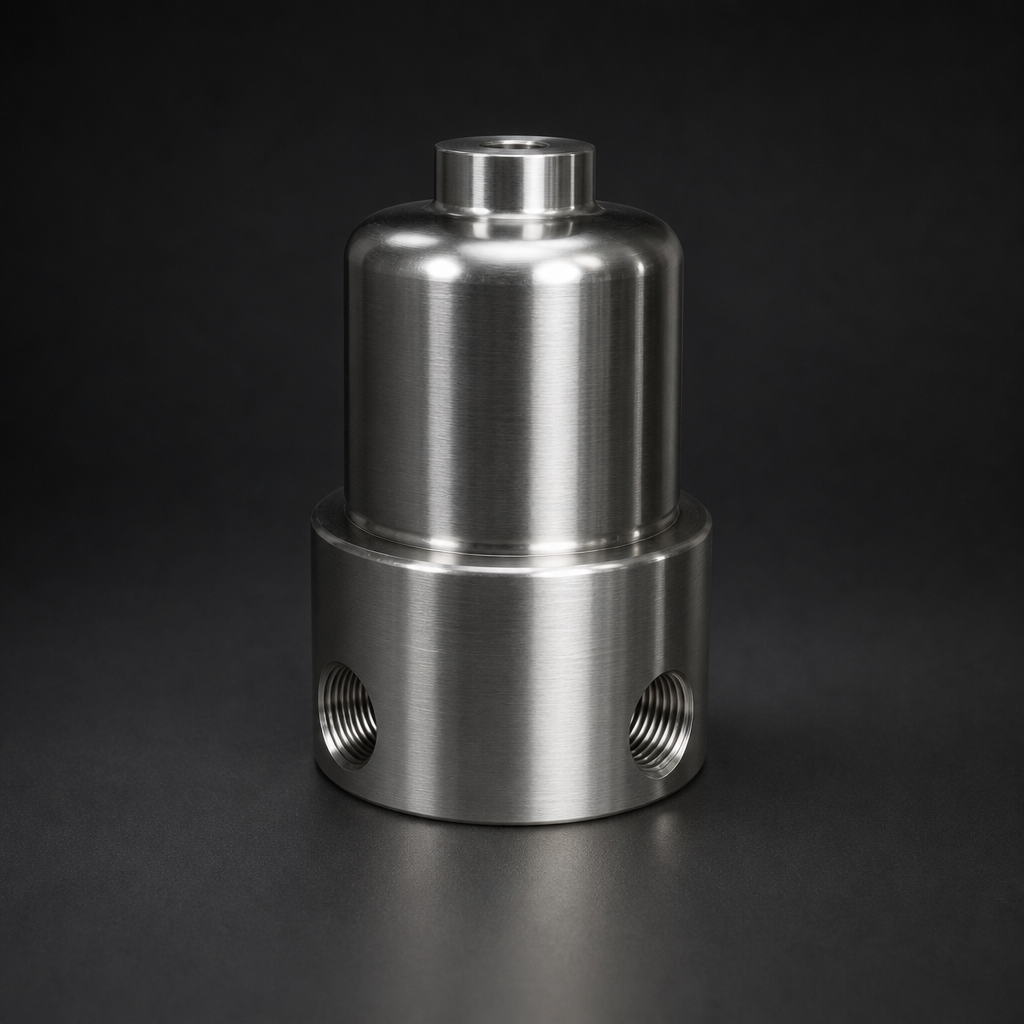
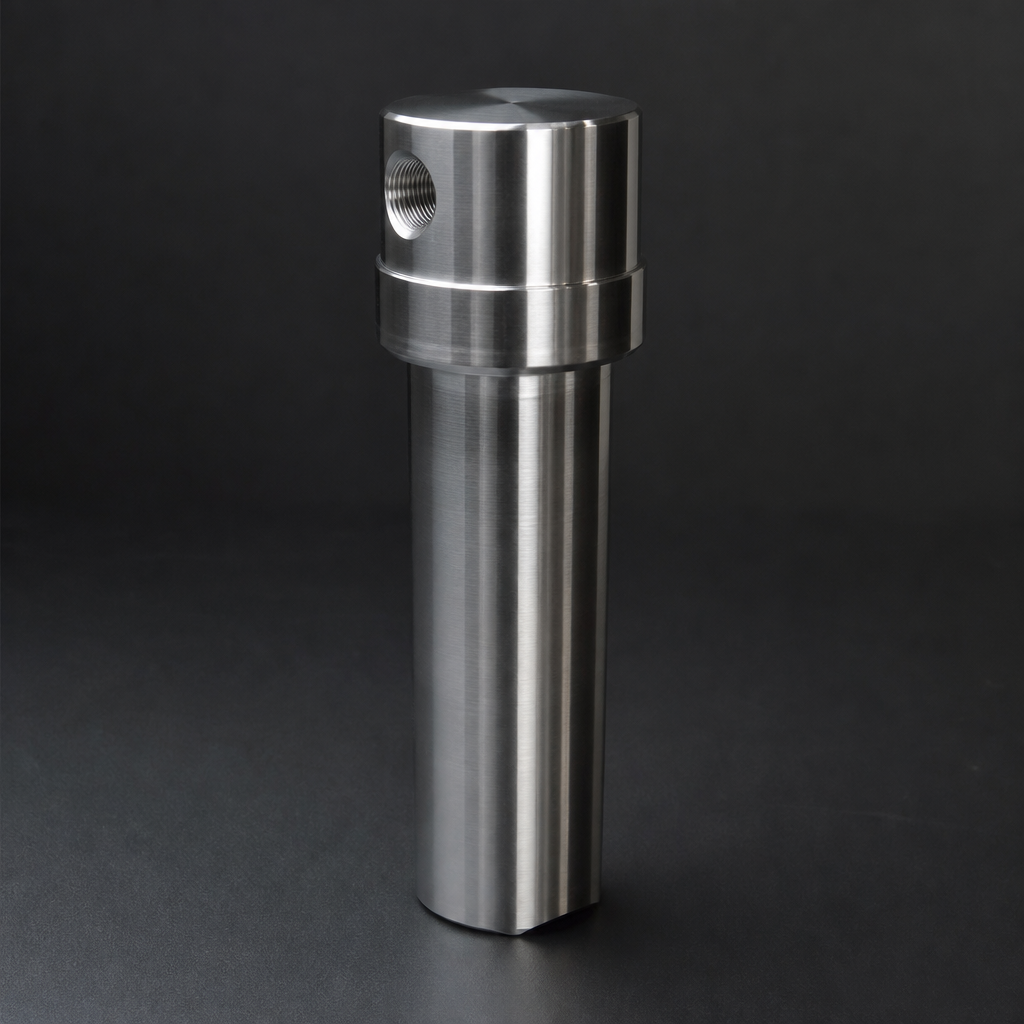
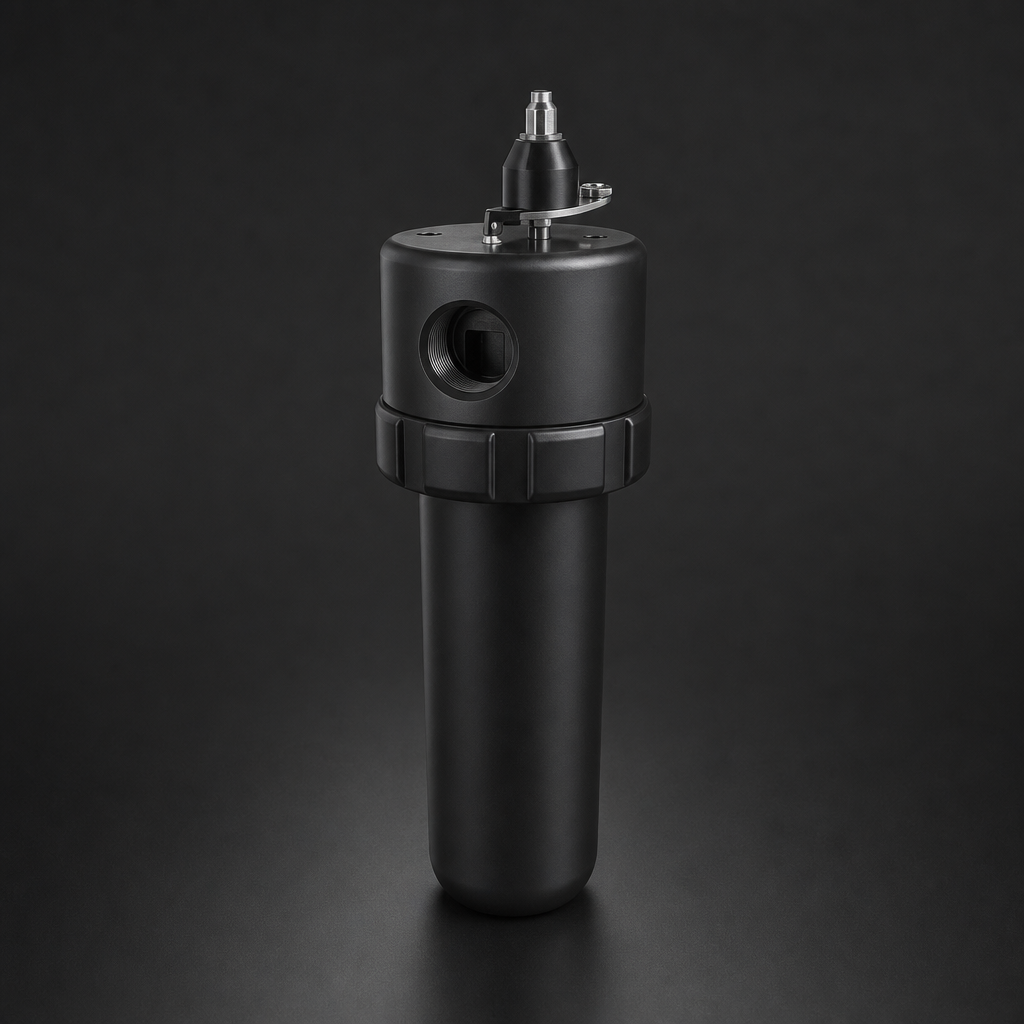
The RF-C elements are housed in the RF-H-310 to RF-H-395 series aluminium housings, rated to 17 bar and available in flow capacities from a few hundred to over 12,000 Nm³/h. For most industrial desiccant dryer installations, a single coalescing stage is sufficient upstream protection.
Stage 2: Particulate After-Filter (Downstream of Dryer)
Even with a correctly specified pre-filter, the desiccant bed will shed fine dust particles over time — particularly during the first weeks of operation and after any bed disturbance. This desiccant dust, if allowed to reach downstream equipment, can block instrument orifices, contaminate process streams, and damage pneumatic actuators.
The solution is an RF-P particulate after-filter installed immediately downstream of the dryer outlet. RF-P elements achieve 99.99% efficiency at ≥ 0.3 µm and are available in the same housing series as the RF-C coalescing elements, simplifying spares management. The after-filter requires no drain — it captures dry particulate only — and typically has a longer service interval than the upstream coalescer.
Key Performance Data
Fit automatic drains on the coalescing pre-filter
Comparing Filter Grades for Desiccant Dryer Protection
Not all coalescing filters are equal. The table below compares the key grades relevant to desiccant dryer pre-filtration, based on ISO 8573-1 compressed air quality classes.
| Filter Stage | Element Type | Efficiency | Oil Residual | ISO 8573-1 Class |
|---|---|---|---|---|
| Pre-filter (coalescing) | RF-C | 99.99% ≥ 0.1 µm | <0.01 mg/m³ | Class 1 (oil) |
| After-filter (particulate) | RF-P | 99.99% ≥ 0.3 µm | Dry dust only | Class 1 (particle) |
| Optional: activated carbon | RF-AC | Vapour adsorption | <0.003 mg/m³ | Class 1 (vapour) |
Use our free Engineering Tool to get a filtration recommendation for your specific application in under 2 minutes.
When to Add an Activated Carbon Stage
For applications requiring ISO 8573-1 Class 1 for oil vapour — such as food and beverage processing, pharmaceutical manufacturing, or instrument air — a third filter stage using an RF-AC activated carbon element should be installed downstream of the coalescing pre-filter and upstream of the dryer. The RF-AC element reduces residual hydrocarbon vapour to below 0.003 mg/m³, protecting both the desiccant bed and the downstream process.
This three-stage arrangement (coalescer → carbon adsorber → desiccant dryer → particulate after-filter) is the gold standard for critical applications. For standard industrial compressed air, the two-stage arrangement (coalescer → dryer → particulate) is typically sufficient.
Practical Installation Guidance
Several installation details significantly affect filter performance in desiccant dryer applications:
- Install the pre-filter as close to the dryer inlet as practical — long pipe runs between filter and dryer allow re-contamination from pipe scale and condensate.
- Fit automatic drains on the coalescing pre-filter — manual drains are frequently neglected, leading to liquid carry-over into the desiccant bed.
- Monitor differential pressure — a rising ΔP across the pre-filter indicates element loading and approaching replacement interval. Most RF-H housings accept optional ΔP indicators.
- Replace elements on schedule — a blocked coalescing element can collapse under differential pressure, releasing accumulated contamination directly into the dryer.
For heatless desiccant dryers specifically, the pre-filter must handle the full system flow during both the drying and regeneration phases. Ensure the housing is sized for peak flow, not average flow.
For further guidance on element selection and sizing, the R+F Engineering Sizing Tool allows you to specify flow rate, pressure, and contamination class to identify the correct housing and element combination. You can also read more about coalescing vs particulate filter elements to understand the technical differences in more detail.
- Desiccant dryers — whether heatless, heated, or blower-purge types — work by passing compressed air through a bed of hygroscopic material, typically activated alumina or molecular sieve.
- The industry-standard approach for protecting a desiccant dryer uses two filter stages: a coalescing pre-filter upstream and a particulate after-filter downstream.
- Not all coalescing filters are equal.
- For applications requiring ISO 8573-1 Class 1 for oil vapour — such as food and beverage processing, pharmaceutical manufacturing, or instrument air — a third filter stage using an RF-AC activated carbon element should be installed downstream of the coalescing pre-filter and upstream of the dryer.
Related Reading
- Coalescing vs Particulate Filter Elements — Which Do You Need?
- ISO 8573-1 Compressed Air Quality Classes Explained
- Crankcase Ventilation Filtration — Managing Oil Mist at Source
Try our Engineering Sizing Tool → or discuss your requirements with our team.