High-purity cylinder gas is specified to exacting standards — yet by the time it reaches your analyser, sensor, or process instrument, contamination introduced downstream of the cylinder valve can compromise measurement accuracy, damage sensitive components, and invalidate calibration. Particles shed from pressure regulators, tubing joints, and fittings are invisible to the naked eye but devastating to precision instrumentation. Point-of-use filtration is the last — and most critical — line of defence in any specialty gas delivery system.
Why Cylinder Gas Is Never as Pure as the Label Suggests
Specialty gas suppliers certify purity at the point of fill. From that moment, the gas travels through a cylinder valve, a pressure regulator, stainless steel or PTFE tubing, compression fittings, and manifold blocks before it reaches your process. Each interface is a potential contamination source. Regulator diaphragms shed elastomer particles; stainless tubing carries mill scale and weld spatter; compression fittings generate metal fines every time they are tightened or loosened.
For calibration gas, zero gas, and carrier gas applications, the consequences are particularly severe. A single contaminated calibration run can invalidate an entire batch of process measurements, triggering costly re-calibration campaigns and potential regulatory non-compliance. Point-of-use inline filters installed immediately upstream of the instrument are the only reliable way to guarantee that the gas entering your equipment matches its certified specification.
The Contamination Sources in a Typical Specialty Gas Delivery System
Understanding where contamination enters the delivery train is the first step to controlling it. In a typical laboratory or process analyser installation, the gas path from cylinder to instrument passes through at least six potential contamination points:
- Cylinder valve seat: Brass or stainless steel particles from valve operation
- Pressure regulator: Diaphragm elastomer fragments, seat debris, and inlet filter bypass
- Tubing connections: Metal fines from compression fittings, PTFE thread tape fibres
- Manifold blocks: Machining swarf and residual cutting fluid contamination
- Solenoid valves: Seal particles and actuator debris
- Sample conditioning system: Membrane fragments and coalescer carry-over
Filtration Requirements by Gas Application
Not all specialty gas applications demand the same filtration grade. The table below summarises the recommended filtration approach for the most common cylinder gas uses in process analytics and laboratory environments. For a broader overview of filter element selection, see our guide on coalescing vs particulate filter elements.
| Gas Application | Typical Contaminant | Recommended Filter Grade | R+F Solution |
|---|---|---|---|
| Calibration gas (CEMS, analyser) | Regulator particles, metal fines | 0.3 µm particulate | RF-DIL (particulate) |
| Carrier gas (GC, GC-MS) | Particles, trace hydrocarbons | 0.1 µm + activated carbon | RF-DIL + RF-DIA |
| Zero gas / span gas | Particulate, moisture ingress | 0.3 µm particulate | RF-DIL (particulate) |
| Purge gas (instrument enclosures) | Dust, fibres from tubing | 1 µm particulate | RF-DIL (coarse) |
| Semiconductor process gas | Sub-micron particles, metals | 0.003 µm (SilcoNert-coated) | RF-H-110 series (instrumentation) |
Record installation date and cylinder batch number
The RF-DIL Disposable Inline Filter: Purpose-Built for Point-of-Use Protection
The RF-DIL disposable inline filter from R+F FilterElements is designed specifically for point-of-use installation in specialty gas delivery systems. Its compact body — available in standard 1/4" and 1/8" compression fitting connections — allows direct installation at the instrument inlet without modifying the existing tubing layout. The all-stainless-steel wetted path ensures compatibility with reactive and corrosive specialty gases including hydrogen chloride, ammonia, and chlorine mixtures.
The RF-DIL uses a sintered stainless steel or borosilicate glass microfibre element depending on the selected grade, providing absolute filtration at 0.3 µm for particulate protection or 0.1 µm for coalescing applications where trace aerosol carry-over from regulators is a concern. The disposable design eliminates the risk of cross-contamination during element change-out — a critical consideration when switching between calibration gas mixtures of different compositions.
Use our free Engineering Tool to get a filtration recommendation for your specific application in under 2 minutes.
High-Pressure Cylinder Gas: When Standard Inline Filters Are Not Enough
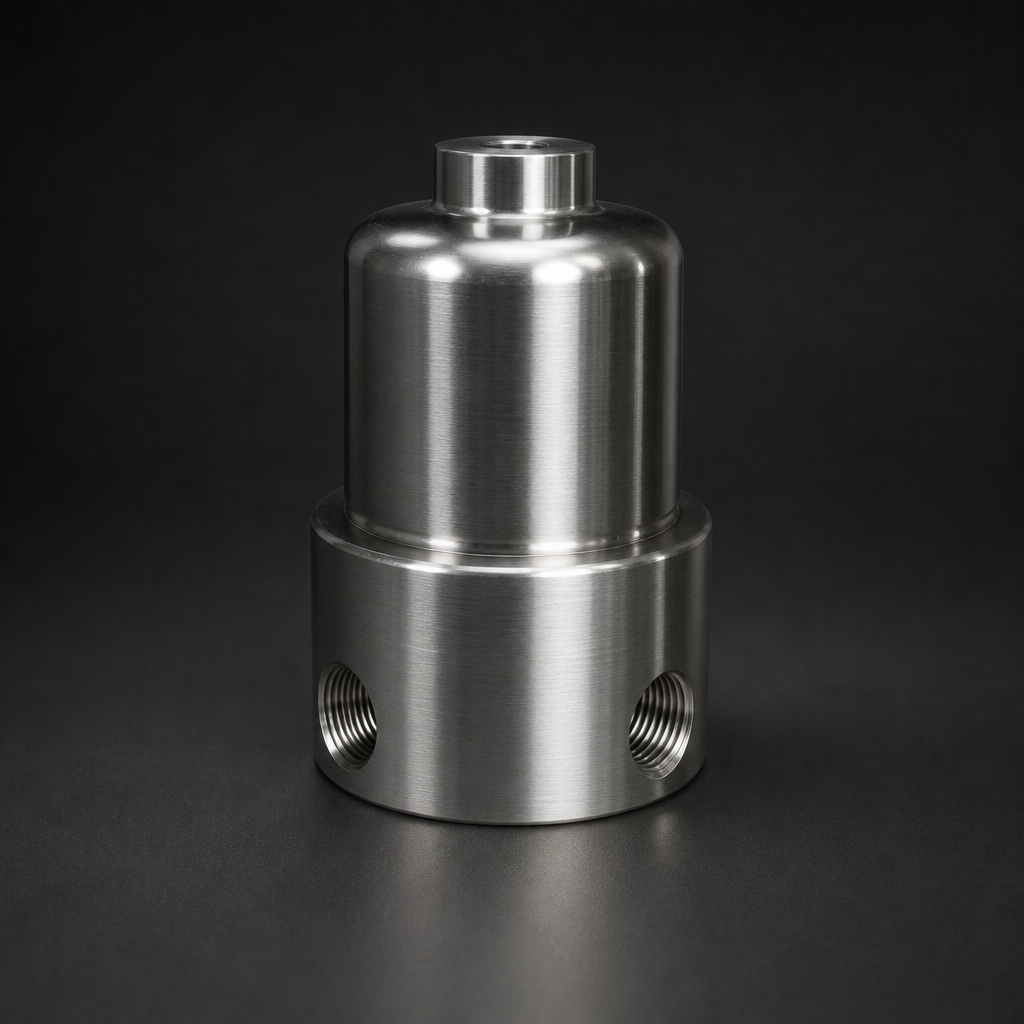
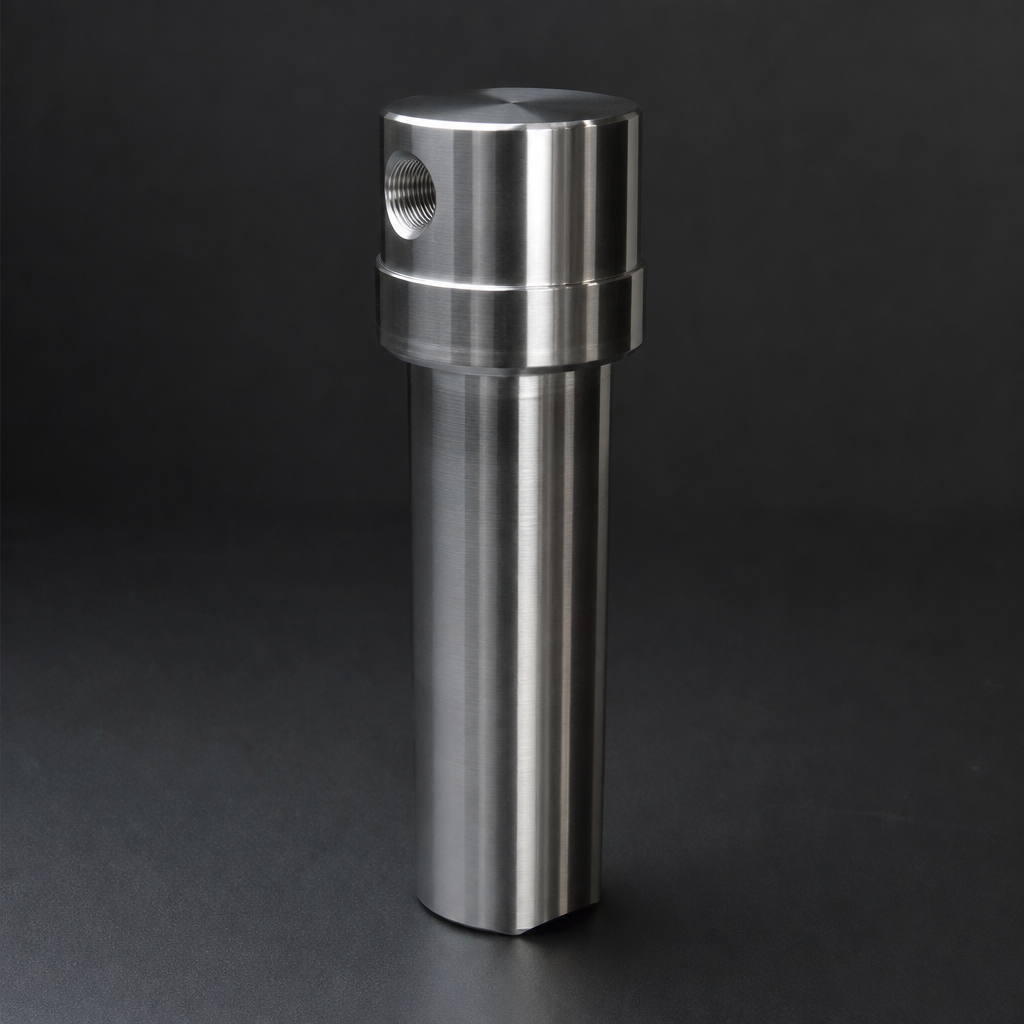
Specialty gas cylinders are typically supplied at pressures of 150–300 bar. Even after regulation to working pressure, many process analyser systems operate at 5–50 bar — well above the pressure rating of standard laboratory inline filters. For high-pressure specialty gas delivery, R+F FilterElements offers the RF-H-110 to RF-H-170 instrumentation filter series, manufactured from 316L stainless steel with pressure ratings from 100 bar (RF-H-150) up to 700 bar (RF-H-170 HP variant).
These housings accept the same RF-C coalescing and RF-P particulate elements used across the R+F range, ensuring consistent filtration performance regardless of system pressure. For semiconductor and ultra-pure gas applications, SilcoNert-coated variants are available from R+F FilterElements, providing an inert, non-reactive internal surface that prevents adsorption of trace-level analytes from the gas stream.
For a detailed look at how filtration integrates into high-pressure process gas systems, see our article on hydrogen electrolysis filtration and the process gas filter range.
Carrier Gas Purity: The Hidden Variable in Chromatography Performance
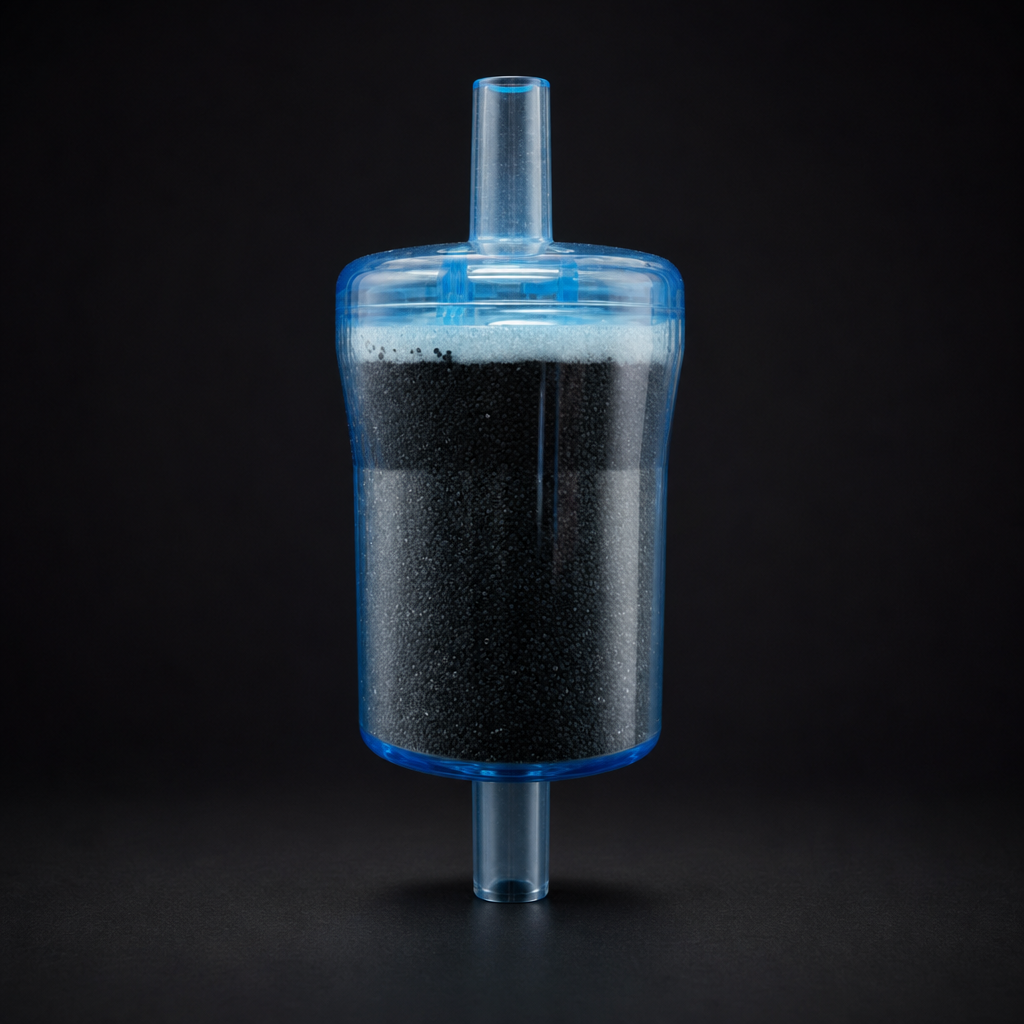
In gas chromatography (GC) and GC-MS applications, carrier gas purity directly determines baseline noise, detector sensitivity, and column lifetime. Hydrocarbon contamination from regulator lubricants and elastomer outgassing raises the baseline on FID detectors; particulate contamination blocks capillary column inlets and damages injection port septa. A two-stage filtration approach — RF-DIL particulate filter followed by an RF-DIA activated carbon adsorber — removes both particle and hydrocarbon contamination in a single compact assembly.
The RF-DIA uses a molecular sieve or activated carbon bed to reduce total hydrocarbon content to below 0.1 ppm, meeting the carrier gas purity requirements of ISO 8573-1 Class 1 for oil content. Combined with the RF-DIL particulate stage, this assembly provides a complete point-of-use purification solution that can be installed in minutes using standard compression fittings.
Installation Best Practice for Specialty Gas Point-of-Use Filters
Correct installation is as important as filter selection. Follow these guidelines to maximise the effectiveness of point-of-use filtration in your specialty gas delivery system:
- Install as close to the instrument inlet as possible — ideally within 300 mm of the instrument connection port
- Orient vertically with flow downward for coalescing filters to allow liquid drainage by gravity
- Purge the filter with the process gas before connecting to the instrument — this removes any air or moisture trapped during installation
- Record installation date and cylinder batch number — this allows correlation between filter change intervals and gas supplier batches if contamination events occur
- Use metal-to-metal compression fittings (Swagelok or equivalent) rather than PTFE tape — tape fibres are a common contamination source that a downstream filter cannot remove
For guidance on selecting the correct filter housing for your system pressure and flow rate, use the R+F Engineering Sizing Tool, which covers the full range from disposable inline filters to high-pressure instrumentation housings. You may also find our overview of ISO 8573-1 compressed air quality classes useful when specifying filtration grades for mixed compressed air and specialty gas installations.
- Specialty gas suppliers certify purity at the point of fill.
- Sample conditioning system:
- Not all specialty gas applications demand the same filtration grade.
- The RF-DIL disposable inline filter from R+F FilterElements is designed specifically for point-of-use installation in specialty gas delivery systems.
Related Reading
- Coalescing vs Particulate Filter Elements — Which Do You Need?
- ISO 8573-1 Compressed Air Quality Classes Explained
- Oxygen Filtration Safety — What Every Engineer Must Know
Try our Engineering Sizing Tool → or discuss your requirements with our team.