Selecting the wrong housing material for a corrosive or high-purity gas application can lead to catastrophic consequences — from accelerated corrosion and process contamination to unplanned shutdowns and safety incidents. When aluminium or carbon steel simply cannot withstand the chemical environment, 316L stainless steel filter housings become the only viable choice. This guide explains when and why to specify stainless steel, which R+F housing variants are available, and what material and surface-finish criteria to verify before ordering.
Why Material Selection Matters in Corrosive Gas Filtration
Process gas streams in chemical plants, refineries, and gas-processing facilities frequently contain aggressive components that attack standard filter housing materials. Hydrogen sulphide (H₂S) causes sulphide stress cracking in carbon steel. Chlorine and hydrogen chloride rapidly corrode aluminium alloys. Ammonia and SO₂ attack copper-bearing alloys and unprotected ferrous metals. Even trace moisture combined with these gases creates highly acidic condensates that accelerate corrosion far beyond what dry-gas ratings suggest.
High-purity applications present a different but equally serious challenge. Semiconductor process gases, pharmaceutical carrier gases, and laboratory reference gases cannot tolerate metallic contamination from housing corrosion or particulate shedding from rough internal surfaces. In these cases, material selection is driven not by chemical attack on the housing, but by the risk of contaminating the gas itself.
For both scenarios, 316L stainless steel — with its low carbon content (≤ 0.03%), elevated molybdenum addition, and excellent weldability — provides the combination of corrosion resistance, mechanical strength, and surface-finish capability that neither aluminium nor carbon steel can match. Explore the full process gas filter housing range to see which configurations are available for your application.
Corrosive Gas Applications: Where Stainless Steel Is Non-Negotiable
The following gas streams routinely require 316L stainless steel housings. In some cases, additional protective measures such as PTFE-lined internals or special seal materials are also necessary.
| Gas / Contaminant | Failure Mode in Aluminium / Carbon Steel | 316L SS Advantage | Recommended Seal |
|---|---|---|---|
| Chlorine (Cl₂), HCl | Rapid pitting; aluminium dissolves in wet HCl | Excellent resistance to dry Cl₂; PTFE lining for wet service | PTFE (260 °C) |
| Hydrogen sulphide (H₂S) | Sulphide stress cracking in carbon steel; pitting in Al | K-type sour-gas elements + 316L housing for NACE compliance | FKM/Viton (200 °C) |
| Sulphur dioxide (SO₂) | Sulphurous acid formation attacks carbon steel | Passive oxide layer resists dilute sulphurous acid | FKM/Viton |
| Ammonia (NH₃) | Stress corrosion cracking in copper alloys; embrittlement | 316L SS is fully compatible with dry and wet ammonia | EPDM or PTFE |
| High-purity inert / specialty gases | Oxide particles and corrosion products contaminate gas | Electropolished Ra ≤ 0.4 µm surface minimises adsorption and particle shedding | PTFE or EPDM |
The R+F Stainless Steel Housing Range
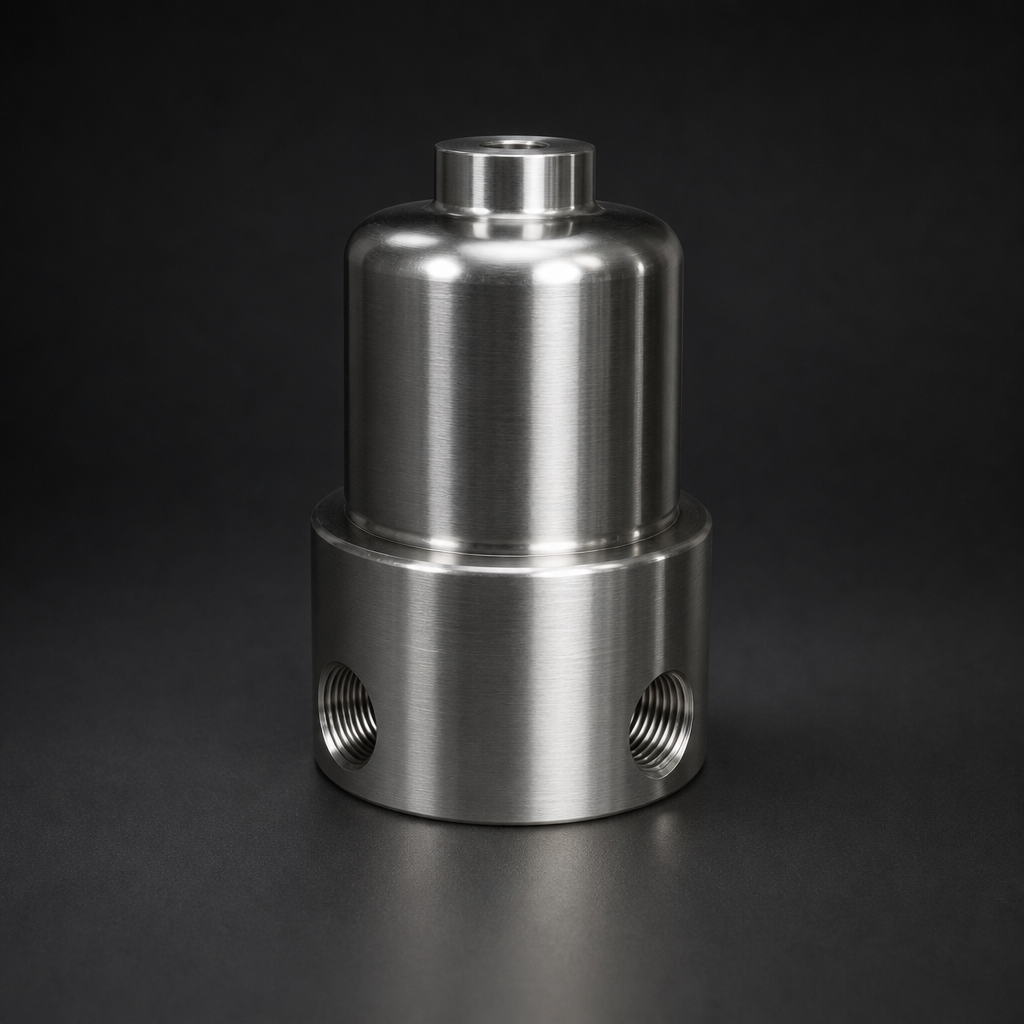
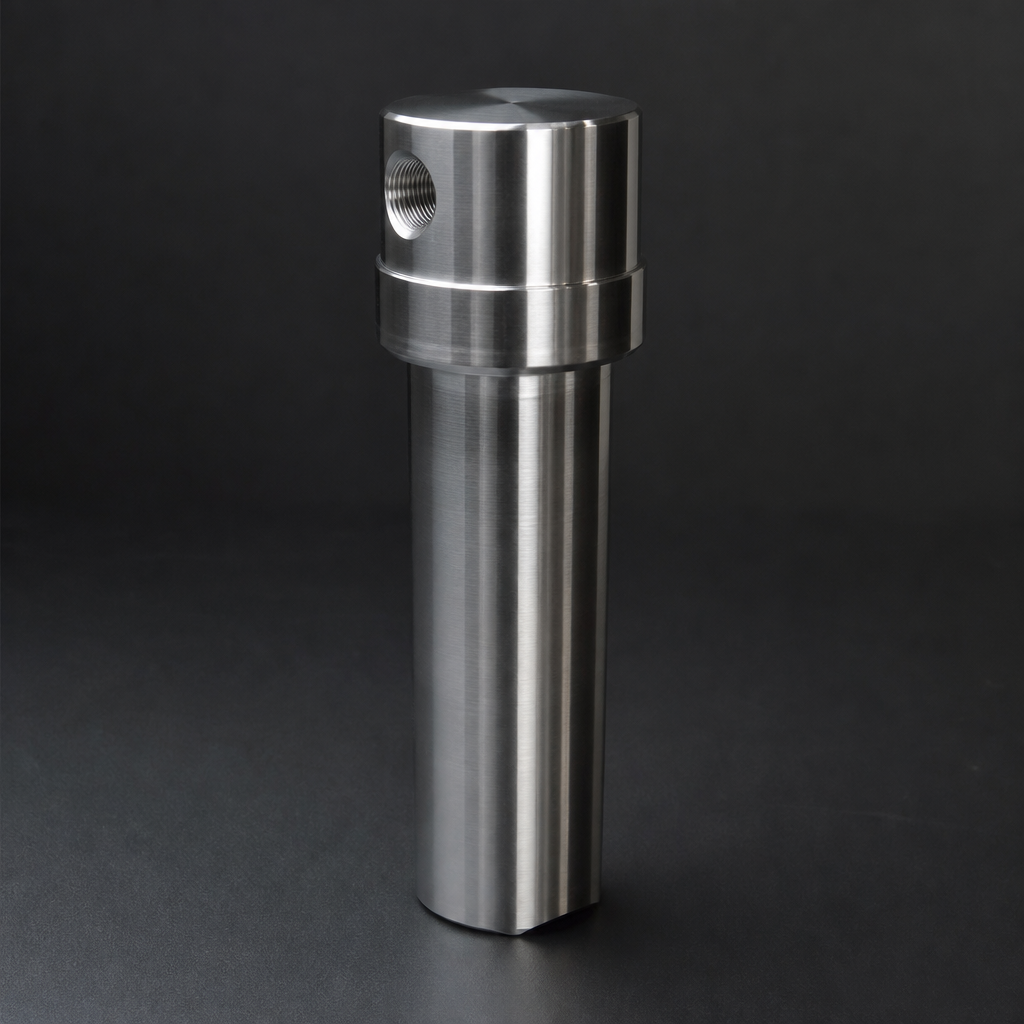
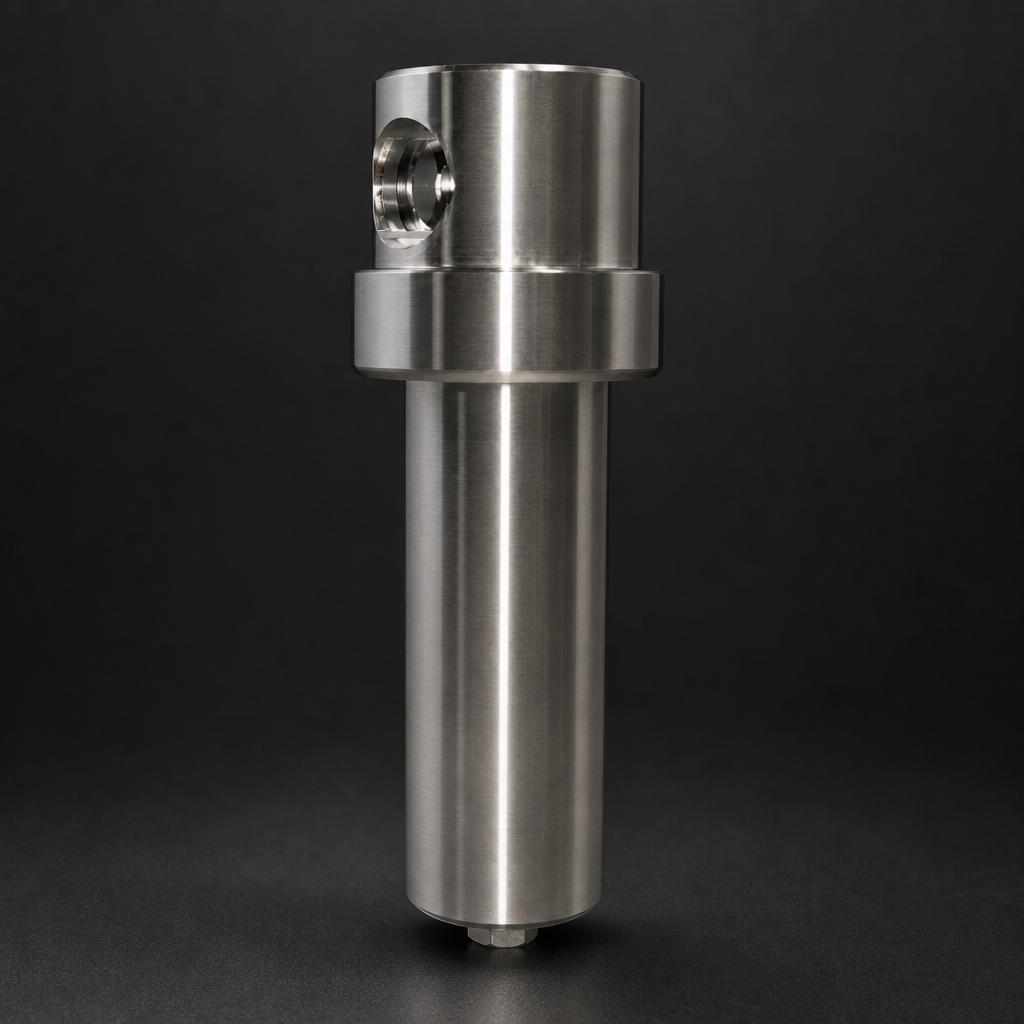
R+F FilterElements offers its own range of 316L stainless steel process gas filter housings, designed for demanding industrial and high-purity applications. The core models cover a wide pressure envelope:
- RF-H-150 — Compact process gas housing, rated to 100 bar, suitable for flow rates up to approximately 500 Nm³/h. Ideal for corrosive gas duty at moderate pressures, including H₂S and SO₂ service with appropriate element and seal selection.
- RF-H-160 — Medium-pressure housing rated to 250 bar, suited to high-pressure natural gas, synthesis gas, and chemical process streams where corrosive components are present.
- RF-H-170 — High-pressure analyser filter rated to 400 bar, used for sample conditioning and analyser protection in corrosive or ultra-pure gas streams. Available with SilcoNert® coating for semiconductor and ultra-trace applications.
All three housings are manufactured from 316L stainless steel bar or forged stock, with full material traceability and 3.1 material certificates available on request. Connection options include NPT, BSP, and DIN 11851 hygienic fittings for pharmaceutical applications. Visit the filter housings product page for full dimensional data and ordering information.
Need help selecting the right stainless steel filter housing?
Matching Filter Elements to Corrosive and High-Purity Service
A stainless steel housing is only as good as the filter element inside it. For corrosive gas applications, element selection must account for chemical compatibility of the filter medium, binder, and end-cap materials. R+F FilterElements offers several element types suited to these duties:
- RF-C coalescing elements — Borosilicate glass microfibre with 99.99% efficiency at ≥ 0.1 µm. Standard end-caps are aluminium; stainless steel end-caps are available for aggressive gas streams. Suitable for H₂S and SO₂ service when paired with FKM seals.
- RF-P particulate elements — 99.99% efficiency at ≥ 0.3 µm. Used upstream of coalescing stages or as standalone particulate protection in dry corrosive gas streams.
- K-type sour-gas elements — Specifically designed for H₂S-rich streams, with NACE-compliant materials throughout. Prevents sulphide stress cracking in element metalwork.
- Sintered metal elements — Rated to 450 °C, suitable for high-temperature corrosive gas streams where polymer-bonded media would degrade.
For high-purity applications, the instrumentation filter range includes SilcoNert®-coated variants that prevent adsorption of reactive trace gases onto internal surfaces — critical for semiconductor process gases and calibration gas standards. Learn more about element selection in our guide to coalescing vs. particulate filter elements.
Use our free Engineering Tool to get a filtration recommendation for your specific application in under 2 minutes.
Material Certificates, Surface Finish, and Weld Quality
For regulated industries — oil and gas, pharmaceuticals, semiconductor manufacturing — documentation is as important as the hardware itself. When specifying stainless steel filter housings for corrosive or high-purity service, request the following from your supplier:
Material Certificates
A 3.1 material certificate (per EN 10204) confirms that the actual material used in manufacture meets the specified composition and mechanical properties. For 316L, this means verifying the carbon content (≤ 0.03%), molybdenum content (2.0–3.0%), and yield strength. Some applications — particularly in the nuclear or pharmaceutical sectors — require 3.2 certificates with independent third-party witness.
Surface Finish (Ra Value)
Internal surface roughness directly affects cleanliness and the risk of particle shedding. For high-purity gas service, specify electropolished internal surfaces with Ra ≤ 0.4 µm. Electropolishing removes the deformed surface layer left by machining, reduces surface area, and creates a chromium-enriched passive layer that is more corrosion-resistant than the as-machined surface. For standard corrosive gas duty (H₂S, SO₂), a mechanically polished Ra ≤ 0.8 µm surface is typically sufficient.
Weld Quality
Welded joints are the most vulnerable points in any stainless steel assembly. Specify full-penetration orbital welds with internal purging (argon back-purge) to prevent oxidation of the weld root. Post-weld passivation — either chemical (citric acid or nitric acid treatment) or electrochemical — restores the passive oxide layer and removes heat-tint contamination. For pharmaceutical and semiconductor applications, weld inspection records and borescope photographs of internal welds are standard documentation requirements.
Temperature Extremes and Seal Selection
Stainless steel housings maintain their mechanical integrity across a wide temperature range — from cryogenic service (liquid nitrogen, LNG) down to −196 °C, to high-temperature process gas streams up to 450 °C with sintered metal elements. However, the seal material is often the limiting factor. Match the seal to both the process temperature and the chemical environment:
- NBR — General-purpose, rated to 100 °C. Not suitable for aromatic hydrocarbons or strong acids.
- FKM/Viton — Rated to 200 °C. Excellent resistance to H₂S, SO₂, and most hydrocarbons. Standard choice for sour gas service.
- EPDM — Rated to 150 °C. Preferred for oxygen service and ammonia applications. Not compatible with hydrocarbons.
- PTFE — Rated to 260 °C. Universal chemical resistance. Required for chlorine, HCl, and ultra-pure applications where elastomer extractables are unacceptable.
For applications involving oxygen-enriched streams, refer to our dedicated guide on oxygen filtration safety — seal and lubricant compatibility are critical safety considerations in oxygen service. For hydrogen applications, the hydrogen filtration solutions page covers the additional requirements for hydrogen embrittlement resistance and leak-tight connections.
- Process gas streams in chemical plants, refineries, and gas-processing facilities frequently contain aggressive components that attack standard filter housing materials.
- The following gas streams routinely require 316L stainless steel housings.
- R+F FilterElements offers its own range of 316L stainless steel process gas filter housings, designed for demanding industrial and high-purity applications.
- K-type sour-gas elements
Specifying the Right Housing: A Practical Checklist
Before contacting R+F FilterElements or using the engineering sizing tool, gather the following data for your application:
- Gas composition — including all corrosive components and their concentrations (ppm or %)
- Operating pressure and temperature — both normal and upset conditions
- Flow rate — in Nm³/h or m³/h at actual conditions
- Filtration duty — coalescing (liquid aerosol removal), particulate, or adsorption
- Required cleanliness class — per ISO 8573-1 if applicable
- Documentation requirements — 3.1 certificates, weld records, surface finish reports
- Connection standard — NPT, BSP, flanged, or hygienic fitting
With this information, the R+F team can recommend the correct housing model (RF-H-150, RF-H-160, or RF-H-170), element type, seal material, and surface finish specification for your specific corrosive or high-purity gas application. Contact our engineering team to discuss your requirements in detail.
Related Reading
- Coalescing vs. Particulate Filter Elements: Which Do You Need?
- Oxygen Filtration Safety: Seal and Material Selection Guide
- Hydrogen Electrolysis Filtration: Protecting Electrolyser Stacks
Try our Engineering Sizing Tool → or discuss your corrosive gas requirements with our team.