Process steam is one of the most demanding filtration challenges in industrial and pharmaceutical manufacturing. Whether you are running a food-grade culinary steam line, a pharmaceutical clean steam circuit, or a general utility steam system, the presence of particles, rust, scale, and entrained condensate can compromise product quality, damage downstream equipment, and — in regulated industries — trigger costly compliance failures. Understanding how to select and size the right steam filter is therefore not a luxury; it is a process-critical decision.
Clean Steam, Culinary Steam, and Utility Steam — What Is the Difference?
The three steam grades are often confused, yet they carry very different filtration requirements:
- Utility steam is generated from untreated or softened water and is used for heating, tracing, and non-contact applications. Contamination levels are high and filtration is primarily about protecting equipment.
- Culinary steam (also called food-grade steam) comes into direct or indirect contact with food or food-contact surfaces. It must comply with FDA 21 CFR and equivalent EU food-safety regulations, requiring removal of rust, scale, and pipe debris to a defined particle size.
- Clean steam is produced from purified water (WFI or purified water) and is used in pharmaceutical manufacturing, sterilisation, and bioprocessing. It must meet pharmacopoeial standards and is typically validated under GMP frameworks.
Each grade demands a different filter element material, housing design, and maintenance interval. Selecting the wrong grade — or under-specifying the filtration — is a common and expensive mistake. Our process gas filter range covers all three steam grades with housings and elements rated for the temperatures and pressures involved.
Why Condensate Removal Is as Important as Particle Filtration
Steam lines inevitably carry entrained liquid water — condensate formed by heat loss in pipework. This condensate is not merely a nuisance; it is a primary vector for contamination. Rust particles, boiler treatment chemicals, and biological matter dissolve or suspend in condensate droplets and are then carried at steam velocity into process equipment, filling machines, or sterilisers.
A well-designed steam filter must therefore perform two functions simultaneously: remove solid particles and coalesce liquid droplets so they drain away under gravity or differential pressure. This is why sintered metal elements — rather than fibrous media — are the preferred choice for steam service. Sintered metal withstands the thermal cycling, steam condensation, and periodic steam-through sterilisation (SIP) that would destroy a glass-fibre or polymer element within weeks.
Sintered Metal Elements for High-Temperature Steam Service
Sintered metal filter elements are manufactured by compacting and sintering metal powder — typically 316L stainless steel — to create a rigid, self-supporting porous structure. The pore size is controlled during manufacture and remains stable across the full operating temperature range. Unlike fibrous media, sintered metal elements can be cleaned by back-flushing, ultrasonic cleaning, or steam-through regeneration, making them the most cost-effective long-term choice for continuous steam filtration.
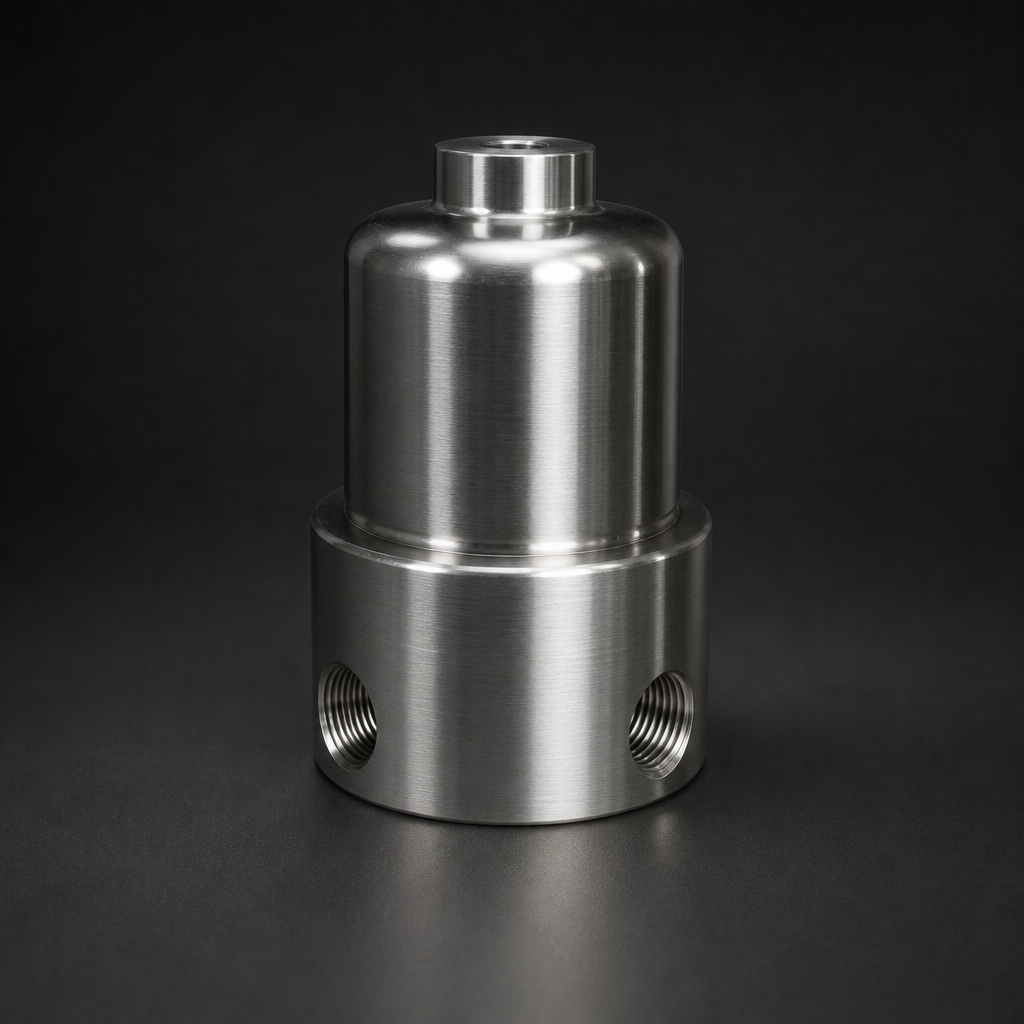
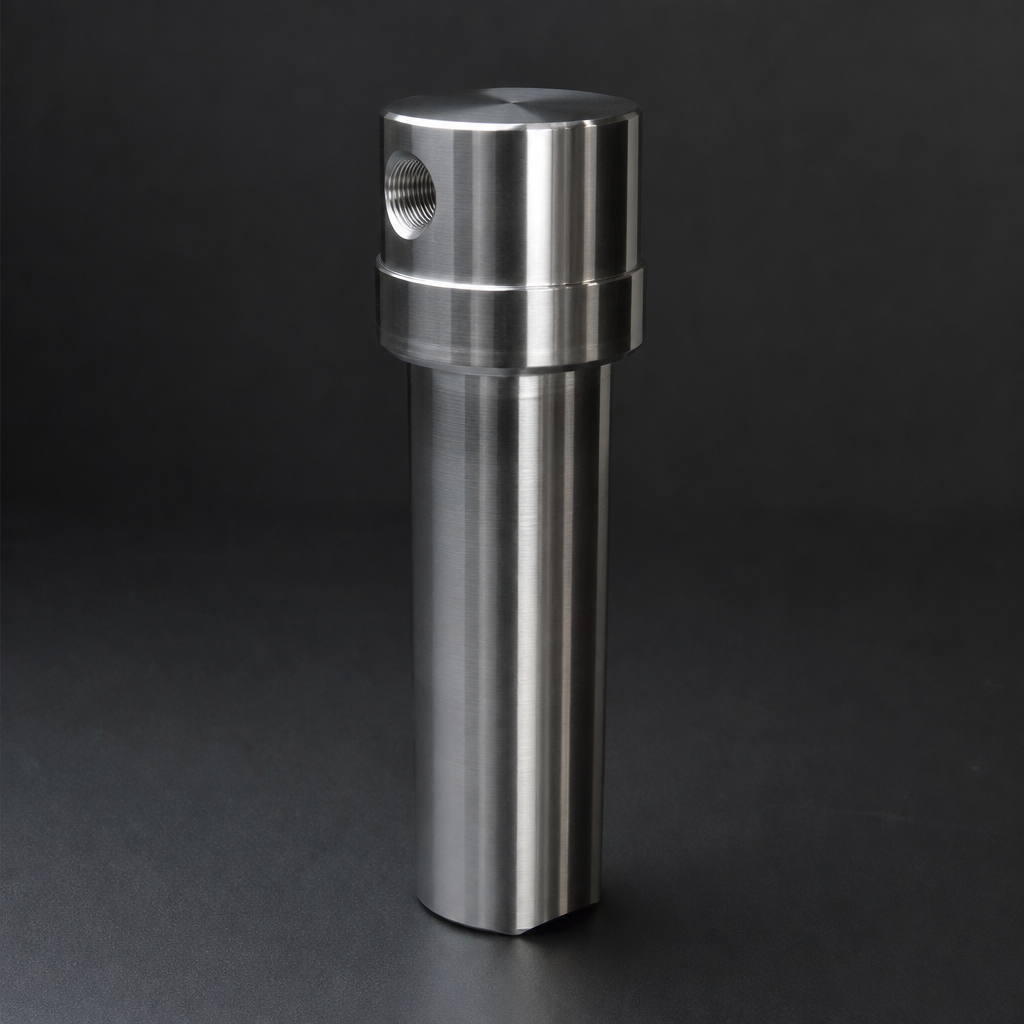
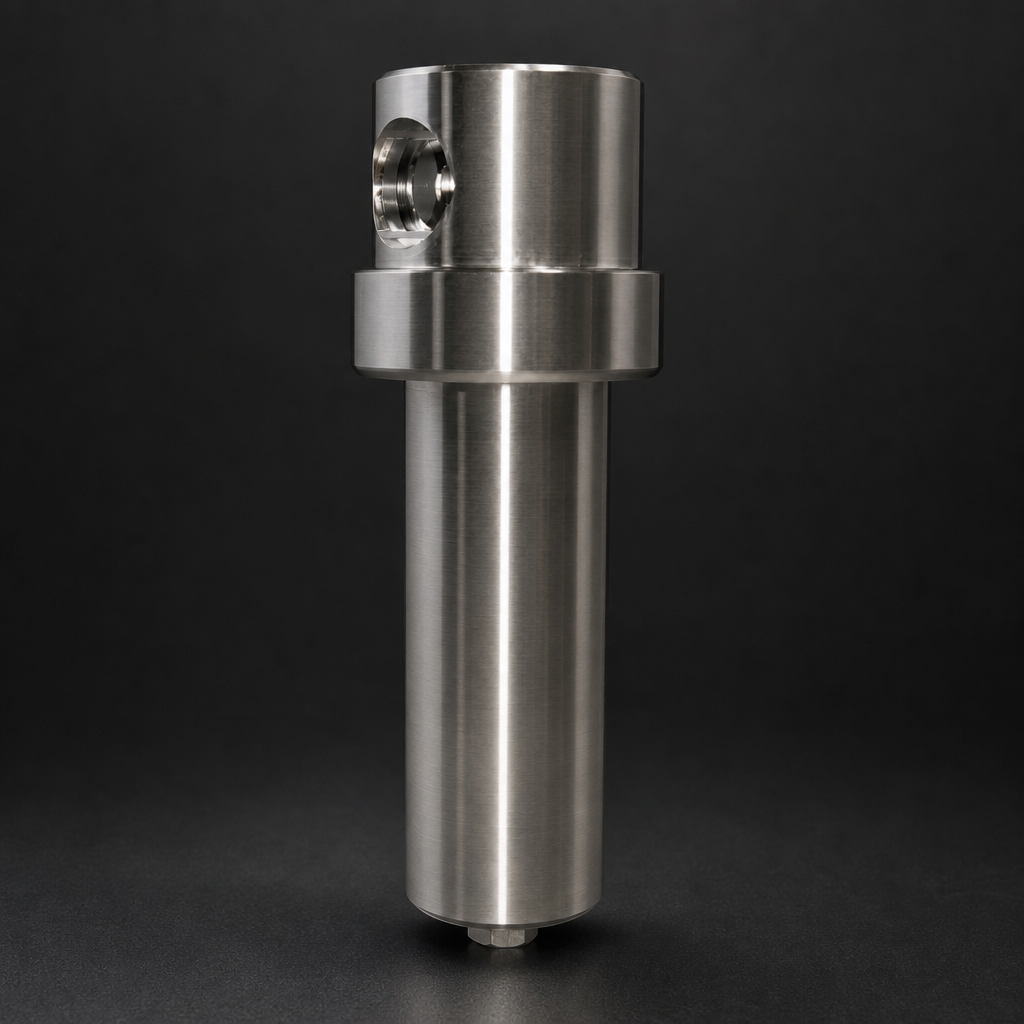
R+F FilterElements offers sintered metal elements compatible with its RF-H-150 and RF-H-160 process gas housings, which are rated to 100 bar and 250 bar respectively. For steam service, these housings are specified with sintered 316L elements in pore sizes from 2 µm to 40 µm, depending on the downstream requirement. The RF-H-150 is particularly well suited to culinary and clean steam applications where a compact, hygienic housing is required.
For pharmaceutical clean steam, the element surface finish and housing design must also meet 3-A Sanitary Standards or equivalent, with electropolished internal surfaces and crevice-free connections. R+F branded sintered metal elements are available with surface roughness Ra ≤ 0.8 µm to satisfy these requirements. See our filter elements page for full specifications.
Differential pressure monitoring:
FDA and Pharmaceutical Compliance Requirements
In food and pharmaceutical manufacturing, steam filtration is not optional — it is a regulatory requirement. The key standards and guidelines that govern steam quality include:
- FDA 21 CFR Part 173.310 — defines permitted boiler additives and, by implication, the purity requirements for culinary steam in direct food contact.
- 3-A Sanitary Standards 74-07 — covers steam filters used in dairy and food processing, specifying materials, surface finish, and drainability.
- European Pharmacopoeia (Ph. Eur.) 0169 — defines clean steam quality for pharmaceutical sterilisation, including limits on non-condensable gases, conductivity, and endotoxins.
- ISPE Baseline Guide: Sterile Manufacturing Facilities — provides engineering guidance on clean steam system design and validation.
Meeting these requirements demands more than simply installing a filter. The housing material (316L stainless steel minimum), element material (sintered metal or PTFE membrane), connection type (tri-clamp or hygienic flange), and condensate drain design all contribute to compliance. R+F FilterElements works with engineering teams to specify complete steam filtration assemblies that satisfy the applicable regulatory framework. Contact our team via the Engineering Sizing Tool to start a specification.
Use our free Engineering Tool to get a filtration recommendation for your specific application in under 2 minutes.
Comparing Steam Filter Element Options
| Element Type | Max. Temp. | Pore Size | Cleanable | Typical Application |
|---|---|---|---|---|
| Sintered 316L SS | 450 °C | 2–40 µm | Yes (back-flush / ultrasonic) | Clean steam, culinary steam, utility steam |
| PTFE Membrane (RF-GMS-170) | 260 °C | 0.2–1 µm | No (disposable) | Sterile steam venting, absolute liquid barrier |
| Borosilicate glass-fibre (RF-C) | 100 °C | 0.1–1 µm | No | Compressed air only — NOT for steam |
| Sintered Hastelloy C-276 | 450 °C | 5–20 µm | Yes | Aggressive steam with chloride or acid carry-over |
Sizing a Steam Filter Correctly
Undersizing a steam filter is one of the most common engineering errors. Steam has a much lower density than compressed air at the same pressure, which means that a housing sized for compressed air duty will typically be severely undersized for steam at the same nominal flow rate. The key parameters for steam filter sizing are:
- Steam pressure (bar g) — determines the steam density and therefore the actual volumetric flow through the element.
- Steam temperature (°C) — must be within the element and seal material ratings. For saturated steam, temperature and pressure are linked; for superheated steam, they are independent.
- Mass flow rate (kg/h) — the primary sizing parameter. Convert to actual volumetric flow using steam tables before selecting a housing.
- Allowable pressure drop (mbar) — typically 50–200 mbar for steam service. Excessive pressure drop causes condensation and water hammer.
- Condensate load — estimate the condensate rate from heat loss calculations and ensure the housing drain is adequately sized.
R+F FilterElements provides sizing support for all steam filtration applications. Use our Engineering Sizing Tool to input your steam conditions and receive a recommended housing and element combination, or visit our process gas filter range for full technical data sheets.
Installation and Maintenance Considerations
Even a correctly specified steam filter will underperform if installed incorrectly. Key installation requirements include:
- Orientation: Install with the condensate drain at the lowest point. Horizontal installation with a bottom drain is preferred for maximum condensate removal.
- Steam trapping: A steam trap downstream of the filter housing is essential to remove condensate without losing live steam. Size the trap for at least 3× the calculated condensate load to handle cold-start surges.
- Thermal insulation: Insulate the filter housing to reduce condensate formation and maintain steam quality downstream.
- Bypass provision: Install an isolation valve and bypass line to allow element replacement without process shutdown.
- Differential pressure monitoring: Fit a differential pressure gauge or transmitter across the filter to indicate element loading and trigger maintenance before excessive pressure drop occurs.
For pharmaceutical clean steam systems, the filter housing and all associated pipework must be fully drainable and sterilisable-in-place (SIP). The RF-H-150 housing is designed with this requirement in mind, featuring a bottom drain port and tri-clamp connections compatible with standard SIP procedures. Learn more about our process gas solutions and how they apply to steam service.
- The three steam grades are often confused, yet they carry very different filtration requirements:
- Steam lines inevitably carry entrained liquid water — condensate formed by heat loss in pipework.
- Sintered metal filter elements are manufactured by compacting and sintering metal powder — typically 316L stainless steel — to create a rigid, self-supporting porous structure.
- FDA 21 CFR Part 173.310
Related Reading
- Coalescing vs Particulate Filter Elements — Which Do You Need?
- ISO 8573-1 Compressed Air Quality Classes Explained
- Oxygen Filtration Safety — Why Standard Filters Are Not Enough
Try our Engineering Sizing Tool → or discuss your requirements with our team.