Pharmaceutical vessels — fermenters, buffer tanks, water-for-injection (WFI) storage, and bioreactor headspaces — must breathe. Every time liquid is pumped in or out, the headspace pressure changes, and air or nitrogen must flow freely through the vent. Yet that same vent is a direct pathway for microbial contamination. A single undetected pinhole in a vent filter membrane can compromise an entire batch, trigger a regulatory deviation, and cost far more than the filter itself.
This guide covers how sterile vent filters work, how to select the right PTFE membrane element for your vessel, how to perform integrity testing correctly, and when to replace — all in line with EU GMP Annex 1 (2022 revision) and current industry practice.
Why Vessel Venting Is a Contamination Risk
Unlike process gas streams that flow continuously in one direction, vessel vents are bidirectional and intermittent. During filling, displaced gas exits through the vent; during emptying or cooling, ambient air is drawn back in. This in-breathing cycle is the critical hazard: any particulate, moisture, or viable organism carried on the incoming air stream can reach the product contact surface.
The consequences of a failed vent filter are severe. Regulatory agencies classify an undetected vent filter failure as a critical defect. Batch rejection, investigation, and potential product recall follow. For this reason, vent filter selection, installation, integrity testing, and change-out frequency must all be documented within the site's quality management system.
PTFE Membrane: Why It Is the Standard Choice
Polytetrafluoroethylene (PTFE) hydrophobic membranes dominate sterile vent applications for three reasons:
- Hydrophobicity: Water droplets bead and drain rather than blocking the membrane pores. A wetted membrane cannot pass gas, so hydrophobicity is essential for continuous venting.
- Chemical resistance: PTFE is inert to virtually all cleaning agents, including NaOH, peracetic acid, and hydrogen peroxide vapour (VHP) used in vessel sanitisation.
- Sterilisability: PTFE membranes withstand repeated steam-in-place (SIP) cycles at 134 °C without degradation of the membrane or housing seal.
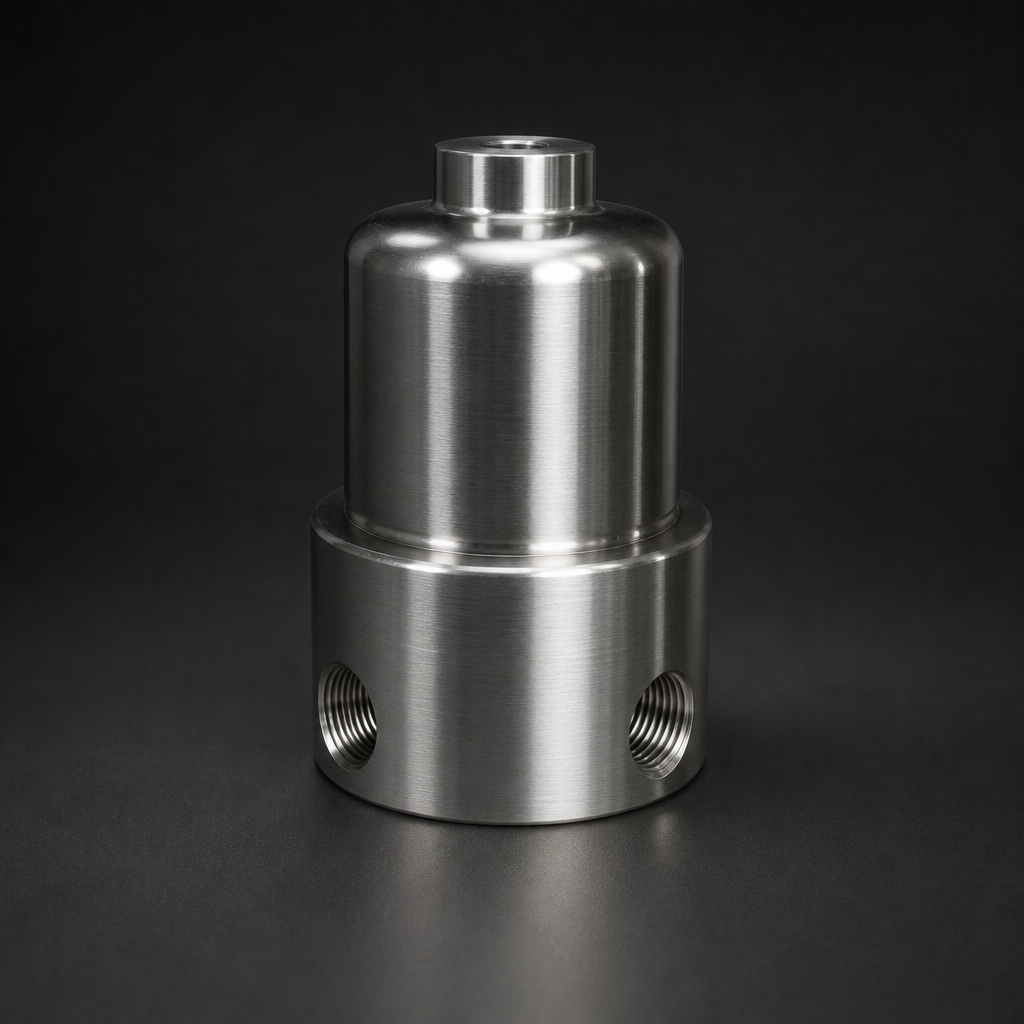
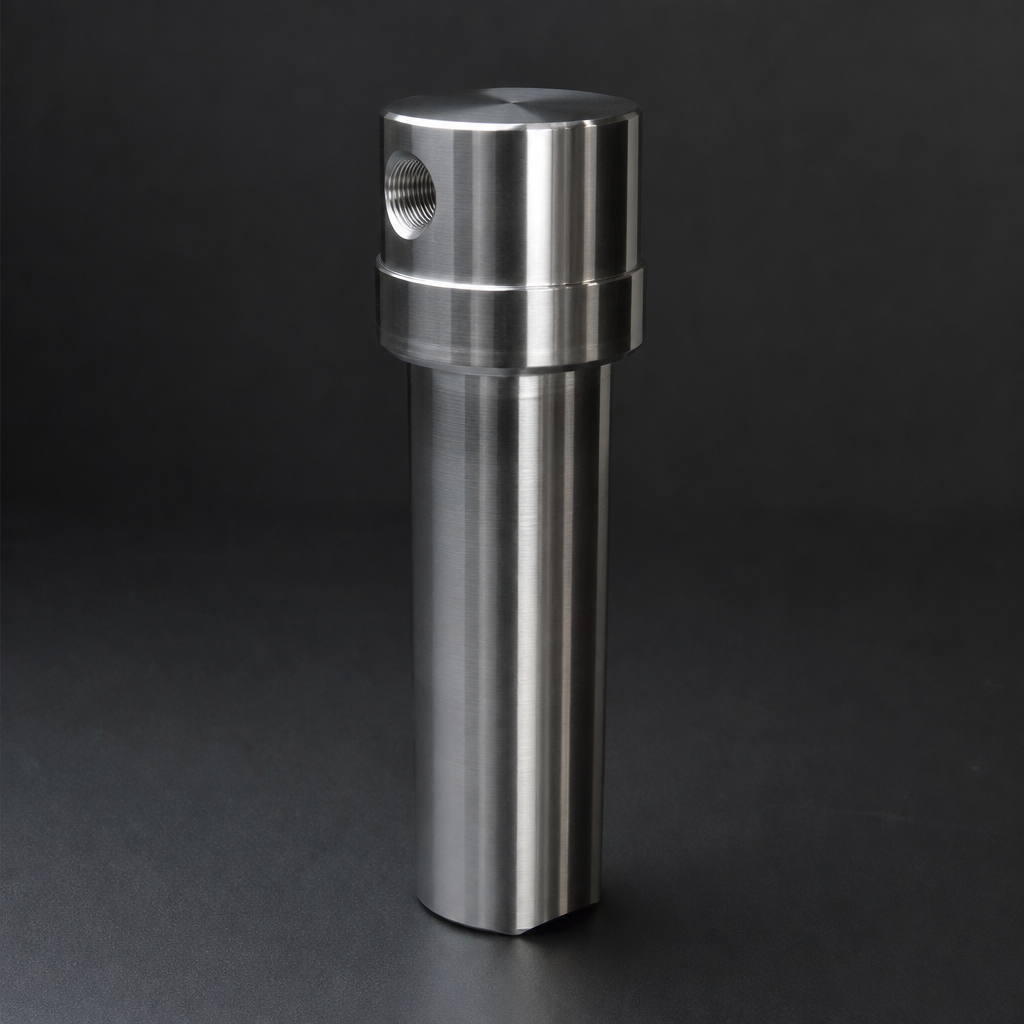
The RF-GMS-170 PTFE hydrophobic membrane separator from R+F FilterElements is designed precisely for this duty. Its 316L stainless steel housing is fully drainable, tri-clamp compatible, and rated for SIP at 3 bar(g). The membrane provides an absolute liquid barrier while maintaining low differential pressure across the full vent flow range.
Integrity Testing: Bubble Point and Diffusion Methods
Integrity testing is the only reliable way to confirm that a vent filter membrane is intact and will perform as validated. Visual inspection alone is insufficient — a membrane can appear undamaged yet have a defect that passes microorganisms. Two methods are accepted by regulatory agencies:
Bubble Point Test
The filter is wetted with a reference liquid (typically water or isopropanol, depending on the membrane material), then gas pressure is applied upstream. The bubble point is the minimum pressure at which a continuous stream of bubbles is observed downstream. For a 0.2 µm PTFE membrane wetted with water, the bubble point is typically ≥ 3.5 bar(g). A result below the validated minimum indicates membrane damage or incomplete wetting.
Forward Flow (Diffusion) Test
At a fixed pressure below the bubble point, the diffusive gas flow through the wetted membrane is measured. An intact membrane shows a low, stable diffusion rate. Elevated flow indicates a defect. This method is preferred for large-area membranes and automated integrity testers because it is less sensitive to operator technique.
| Parameter | Bubble Point Test | Forward Flow (Diffusion) Test |
|---|---|---|
| Principle | Minimum pressure to displace wetting liquid from pores | Diffusive gas flow at sub-bubble-point pressure |
| Typical test pressure (0.2 µm PTFE) | ≥ 3.5 bar(g) | 80% of bubble point |
| Pass criterion | No continuous bubble stream below minimum | Flow ≤ validated limit (mL/min) |
| Best suited for | Small cartridges, manual testing | Large membranes, automated testers |
| Regulatory acceptance | EU GMP Annex 1, FDA guidance | EU GMP Annex 1, FDA guidance |
Both tests must be performed on a wetted filter. For vent filters that are steamed in place, the condensate from SIP typically provides sufficient wetting. Always confirm wetting before testing — a dry PTFE membrane will pass gas at any pressure and give a false pass result.
Need help selecting the right sterile vent filter for your vessel?
Selecting the Right Vent Filter for Your Vessel
Not all vent filters are interchangeable. Key selection parameters include:
- Vent flow rate: Calculate the maximum in-breathing or out-breathing rate based on the fastest pump-out or fill rate. The filter must pass this flow at an acceptable differential pressure (typically < 0.1 bar) to avoid vessel deformation.
- SIP compatibility: Confirm the housing and membrane are rated for your SIP temperature and cycle count. The RF-GMS-170 is validated for ≥ 100 SIP cycles at 134 °C.
- Connection standard: Pharmaceutical vessels use tri-clamp (ISO 2852) or DIN 11851 connections. Specify the correct end fitting to avoid dead legs.
- Heating jacket: In humid environments or cold rooms, condensation can wet and block the vent filter. A heated housing or self-draining design prevents this.
For vessels requiring supplementary gas filtration — for example, nitrogen blanketing or compressed air sparging — the RF-H-150 process gas filter (100 bar, 316L SS) provides a compact, high-integrity solution. For instrumentation and sampling lines connected to the vessel, the RF-H-110 to RF-H-170 instrumentation filter series covers pressures up to 700 bar with SilcoNert-coated internals for ultra-pure applications.
Use our free Engineering Tool to get a filtration recommendation for your specific application in under 2 minutes.
Replacement Criteria and Change-Out Frequency
Vent filter replacement should be driven by a combination of time-based and condition-based criteria, both validated and documented in the site's filter management procedure:
- Failed integrity test: Immediate replacement. No batch may be released if the post-use integrity test fails without a documented investigation and risk assessment.
- Visible damage or contamination: Replace immediately. Inspect the housing and membrane during each SIP cycle preparation.
- Maximum SIP cycle count: Replace at the validated cycle limit, even if the filter passes integrity testing. Repeated thermal cycling degrades the membrane support structure over time.
- Campaign or batch limit: Many sites define a maximum number of batches per filter, regardless of integrity test results, as a conservative risk control.
- Extended storage: Filters stored on vessels for more than 6 months without use should be replaced and re-sterilised before the next campaign.
R+F FilterElements offers the RF-GMS-170 as a complete validated assembly, with traceability documentation (certificate of conformity, extractables data, bacterial retention validation) to support your site master file and regulatory submissions. Replacement elements are available as R+F branded filter elements with full batch traceability.
Installation and Operational Best Practices
Even a correctly specified filter will fail prematurely if installed or operated incorrectly. Follow these practices:
- Install the vent filter in a vertical orientation with the drain port at the lowest point to allow condensate to drain freely.
- Ensure the vent line has no low points upstream of the filter where liquid can accumulate and block the vent.
- Use a sintered metal or PTFE-lined vent guard on the atmospheric side to prevent insects or debris from entering the housing.
- Record the installation date, SIP cycle count, and integrity test results in the equipment logbook for each filter position.
- Train operators to recognise signs of filter blockage: unusual vessel pressure fluctuations, slow filling or emptying, or audible restriction at the vent.
For broader gas quality management across your pharmaceutical facility — including compressed air used for vessel pressurisation and pneumatic conveying — see our guide on ISO 8573-1 compressed air quality classes and the process gas filtration solutions available from R+F FilterElements.
- Unlike process gas streams that flow continuously in one direction, vessel vents are bidirectional and intermittent.
- Polytetrafluoroethylene (PTFE) hydrophobic membranes dominate sterile vent applications for three reasons:
- Integrity testing is the only reliable way to confirm that a vent filter membrane is intact and will perform as validated.
- Not all vent filters are interchangeable.
Related Reading
- Coalescing vs Particulate Filter Elements — Which Do You Need?
- Oxygen Filtration Safety — Avoiding Ignition Risks in High-Purity O₂ Systems
- ISO 8573-1 Compressed Air Quality — A Practical Guide
Try our Engineering Sizing Tool → or discuss your requirements with our team.