A gas engine or micro-turbine running on natural gas or biogas is a precision machine. The combustion chamber tolerances, fuel injector orifices, and turbocharger bearings are engineered to work with clean, dry, oil-free gas — not the variable-quality stream that arrives from the grid, a biogas upgrader, or a landfill wellhead. When that gas carries particles, liquid droplets, or oil vapour, the consequences range from accelerated wear and fouled injectors to catastrophic bearing failure and unplanned outages lasting weeks.
For operators of combined heat and power (CHP) plant, district energy schemes, and industrial power generation, the economics are stark: a set of correctly specified inlet filters costs a fraction of a single engine overhaul. This guide explains what contaminants threaten gas engines and micro-turbines, how to specify the right filtration train, and which R+F FilterElements housings and elements are suited to the duty.
Why Gas Engines and Micro-Turbines Are Sensitive to Fuel Quality
Unlike a simple burner, a reciprocating gas engine or micro-turbine relies on tight mechanical clearances and precisely metered fuel delivery. Contaminants attack these systems through several distinct mechanisms:
- Solid particles — Pipe scale, weld spatter, silica dust, and compressor wear debris act as abrasives. Even particles in the 5–50 µm range can score cylinder liners, erode fuel valve seats, and accelerate turbocharger blade wear.
- Liquid water and condensate — Free water causes misfires, promotes corrosion in the fuel train, and can hydrolock a cylinder if a slug reaches the combustion chamber. In biogas systems, water also carries dissolved hydrogen sulphide (H₂S), which attacks copper alloys and elastomers.
- Oil aerosols and vapour — Compressor lubricant carry-over deposits on injector tips and spark plugs, raising maintenance frequency and reducing ignition reliability. In micro-turbines, oil contamination of the combustion zone raises NOₓ emissions and can void emissions compliance.
- Siloxanes (biogas-specific) — Volatile methyl siloxanes (VMS) from landfill and sewage gas combust to form hard silica deposits on pistons, valves, and turbine blades. Adsorption filtration upstream of the engine is the primary defence.
Engine manufacturers typically specify maximum allowable contamination levels in their fuel gas quality requirements. Failing to meet these limits not only risks mechanical damage but can also void the engine warranty — a significant financial exposure for plant operators.
The True Cost of Inadequate Gas Engine Inlet Filtration
It is tempting to view filtration as a cost centre. The reality is the opposite. Consider a 500 kWe gas engine running at 8,000 hours per year. A major overhaul — cylinder head replacement, piston ring renewal, injector refurbishment — typically costs £25,000–£60,000 in parts and labour, plus lost generation revenue during the outage. A correctly specified filtration train for the same engine costs a fraction of that, with element replacement intervals of 2,000–4,000 hours depending on gas quality.
The calculation becomes even more compelling for micro-turbines, where turbine blade erosion or silica deposition can require complete rotor replacement. Operators who have experienced a single contamination-related failure rarely question the value of upstream filtration thereafter.
Specifying the Right Filtration Train
A complete gas engine inlet filtration system typically comprises two or three stages, each targeting a different contaminant class:
Stage 1 — Particulate Pre-Filter
A coarse particulate filter removes bulk solids and protects the downstream coalescer from premature loading. For natural gas at line pressure, a 5 µm or 10 µm rated element is typical at this stage. The housing must be rated for the operating pressure — for medium-pressure gas supplies (up to 100 bar), the R+F process gas range provides the appropriate pressure rating and material specification.
Stage 2 — Coalescing Filter
The coalescing stage is the heart of the filtration train. Borosilicate glass microfibre elements capture sub-micron liquid aerosols — water, hydrocarbon condensate, and compressor oil — and coalesce them into droplets large enough to drain by gravity. R+F RF-C coalescing elements achieve 99.99% efficiency at ≥ 0.1 µm, meeting the most demanding engine manufacturer specifications. The collected liquid drains to a sump and is discharged via an automatic drain valve.
Stage 3 — Adsorption (where required)
For biogas applications where siloxanes or residual oil vapour are a concern, an activated carbon adsorption stage downstream of the coalescer provides a final polishing step. R+F RF-AC adsorption elements reduce residual oil content to below 0.003 mg/m³, protecting injectors and combustion surfaces from carbonaceous deposits.
Differential pressure monitoring
R+F FilterElements Housings for CHP and Power Generation Duty
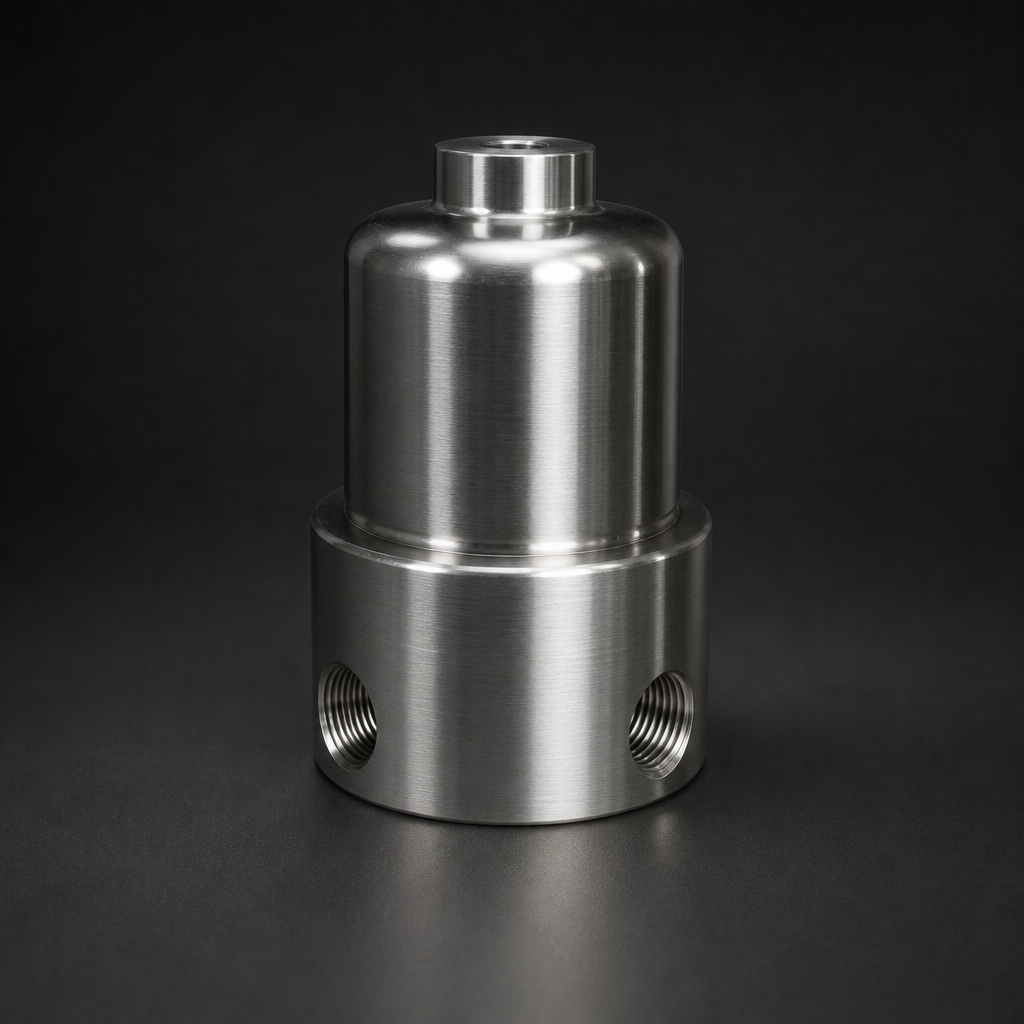
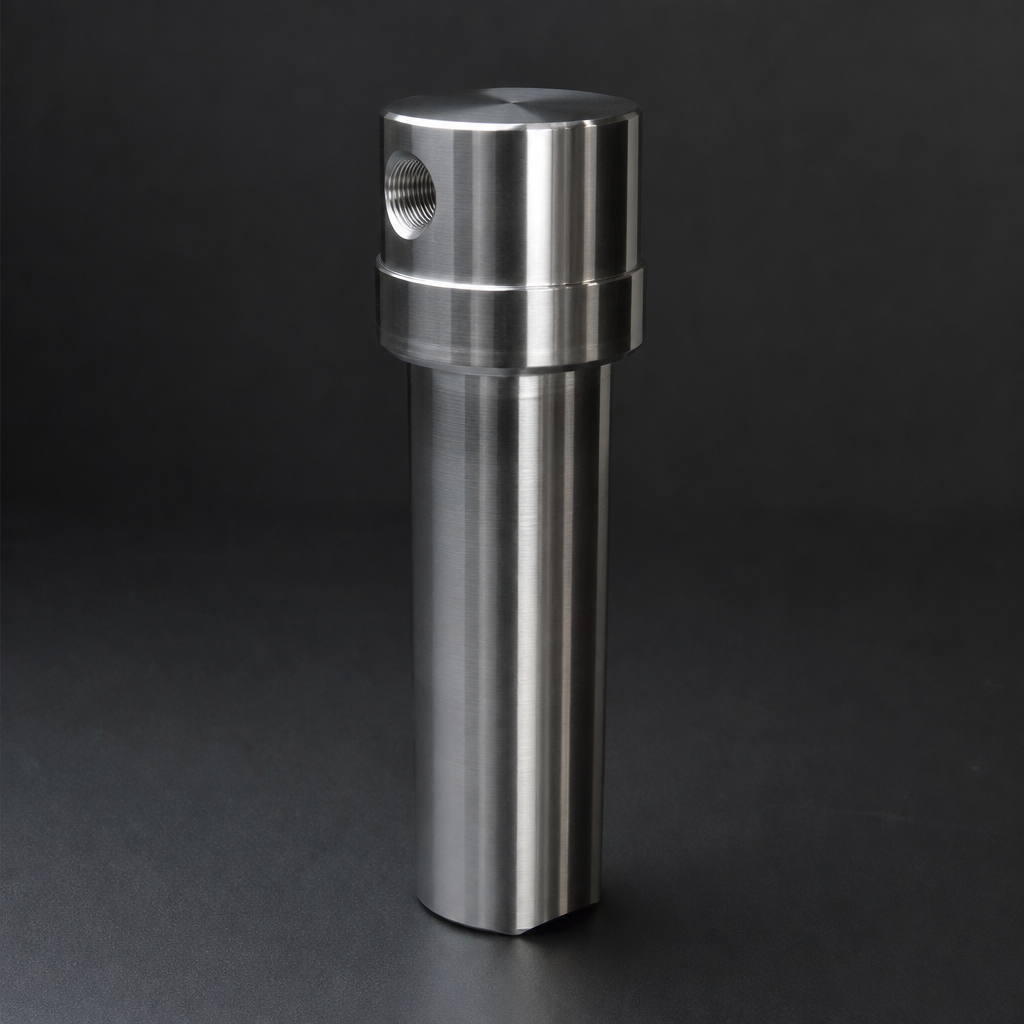
R+F FilterElements offers its own range of stainless steel process gas filter housings designed for the pressures, temperatures, and gas compositions encountered in power generation applications. Two housings are particularly well suited to gas engine and micro-turbine inlet filtration:
RF-H-150 — Compact Process Gas Filter (up to 100 bar)
The RF-H-150 is a compact 316L stainless steel housing rated to 100 bar, making it suitable for high-pressure natural gas supplies ahead of the pressure regulation station, or for medium-pressure biogas systems. Its compact footprint suits plant rooms where space is at a premium, and the all-stainless construction resists the mild corrosion associated with wet biogas streams. The housing accepts standard RF-C coalescing and RF-P particulate elements.
RF-H-160 — Medium-Pressure Process Gas Filter (up to 250 bar)
Where gas is supplied at higher pressure — for example, from a high-pressure grid connection or a CNG storage system — the RF-H-160 provides a 250 bar pressure rating in the same 316L stainless steel construction. This housing is particularly relevant for micro-turbine installations where fuel gas may be supplied at elevated pressure before expansion to combustion pressure. Like the RF-H-150, it accepts the full range of RF-C and RF-P elements and can be configured with automatic drain valves for unattended operation.
Technical Comparison
| Parameter | RF-H-150 | RF-H-160 |
|---|---|---|
| Maximum working pressure | 100 bar | 250 bar |
| Body material | 316L stainless steel | 316L stainless steel |
| Seal options | NBR, FKM/Viton, EPDM | NBR, FKM/Viton, EPDM |
| Element compatibility | RF-C, RF-P, RF-AC | RF-C, RF-P, RF-AC |
| Typical application | Medium-pressure gas engine inlet, biogas CHP | High-pressure micro-turbine fuel, CNG-fed CHP |
| Construction standard | European engineering standards | European engineering standards |
Element Selection for Gas Engine Inlet Filtration
Selecting the correct filter element grade is as important as choosing the right housing. R+F FilterElements offers several element types suited to power generation duty:
- RF-C (Coalescing) — Borosilicate glass microfibre construction, 99.99% efficiency at ≥ 0.1 µm. The standard choice for liquid aerosol removal ahead of gas engines. Available in Standard grade (up to 100 °C) and S-type (up to 200 °C) for high-temperature applications.
- RF-P (Particulate) — 99.99% efficiency at ≥ 0.3 µm. Used as a pre-filter ahead of the coalescing stage, or as a standalone particulate barrier where liquid contamination is not a concern.
- RF-AC (Adsorption) — Activated carbon media, residual oil content below 0.003 mg/m³. Essential for biogas applications where siloxanes or hydrocarbon vapour must be removed before combustion.
- RF-C K-type (Sour Gas) — Specified for biogas or natural gas streams containing elevated H₂S. The K-type element uses materials resistant to hydrogen sulphide attack, protecting both the element and the downstream engine components.
For most natural gas CHP applications, a two-stage train comprising an RF-P particulate pre-filter followed by an RF-C coalescing filter provides comprehensive protection. Biogas applications should add an RF-AC adsorption stage and consider K-type elements if H₂S levels exceed 100 ppm.
Use our free Engineering Tool to get a filtration recommendation for your specific application in under 2 minutes.
Seal Material Selection for Gas Engine Duty
The seal material must be compatible with the gas composition and operating temperature. For natural gas at ambient temperature, NBR seals (rated to 100 °C) are the standard choice. For biogas containing H₂S or elevated CO₂, FKM/Viton seals offer superior chemical resistance. Where the gas stream may contain traces of aromatic hydrocarbons, PTFE seals (rated to 260 °C) provide the broadest chemical compatibility.
Installation and Maintenance Considerations
Even the best-specified filtration system will underperform if poorly installed or maintained. Key considerations for gas engine inlet filtration include:
- Drain valve specification — Automatic float-operated drain valves prevent liquid accumulation in the filter sump without requiring manual intervention. For unattended CHP plant, automatic drains are strongly recommended.
- Differential pressure monitoring — A differential pressure gauge or transmitter across each filter stage provides early warning of element loading. Most engine manufacturers recommend element replacement when differential pressure reaches 0.5–1.0 bar, well before the element reaches its rated terminal pressure drop.
- Bypass provision — A bypass valve allows element replacement without shutting down the gas supply, important for plant where continuous generation is required. The bypass should be interlocked to prevent inadvertent operation during normal running.
- Upstream isolation — A full-bore isolation valve upstream of the filter train allows safe element replacement and housing inspection without depressurising the entire gas supply.
R+F FilterElements, as a German-based filtration specialist, can advise on complete filtration train design including drain valve selection, differential pressure instrumentation, and bypass arrangements. Contact the technical team via the sizing wizard or directly at the enquiry page to discuss your specific application.
Biogas-Specific Considerations
Biogas from anaerobic digestion, landfill, or sewage treatment presents additional challenges compared to natural gas. The gas composition is variable, typically 50–70% methane with the balance CO₂, plus trace contaminants including H₂S, water vapour, siloxanes, and halogenated compounds. Each of these requires specific filtration or treatment:
- Water vapour — Biogas is typically saturated with water vapour at the point of generation. A coalescing filter removes free liquid water and aerosols; a refrigeration dryer or desiccant dryer may be required to reduce the dew point to the level required by the engine manufacturer.
- H₂S — Hydrogen sulphide is corrosive to copper alloys and attacks elastomers. At concentrations above 100 ppm, iron sponge or activated carbon desulphurisation upstream of the engine is standard practice. The filtration train should use K-type elements and FKM seals.
- Siloxanes — Volatile methyl siloxanes are present in landfill gas and sewage gas. They combust to form hard silica (SiO₂) deposits on pistons, valves, and turbine blades. Activated carbon adsorption (RF-AC elements) is the primary removal method, with the adsorber sized for the siloxane loading and the required service interval.
For a detailed discussion of coalescing versus particulate element selection in gas treatment applications, see our guide to coalescing vs particulate filter elements.
- Liquid water and condensate
- It is tempting to view filtration as a cost centre.
- A complete gas engine inlet filtration system typically comprises two or three stages, each targeting a different contaminant class:
- R+F FilterElements offers its own range of stainless steel process gas filter housings designed for the pressures, temperatures, and gas compositions encountered in power generation applications.
Summary: Protecting Your Investment in Power Generation
Gas engine inlet filtration is not an optional extra — it is a fundamental requirement for reliable, efficient, and warranty-compliant operation of any gas engine or micro-turbine. The cost of a correctly specified filtration train is modest compared to the cost of a single contamination-related failure, and the operational benefits — reduced maintenance intervals, extended engine life, and consistent electrical output — compound over the life of the plant.
R+F FilterElements offers its own range of 316L stainless steel process gas filter housings, including the RF-H-150 (100 bar) and RF-H-160 (250 bar), paired with RF-C coalescing, RF-P particulate, and RF-AC adsorption elements to cover the full range of natural gas and biogas CHP applications. As a German-based filtration specialist applying European engineering standards, R+F FilterElements provides the technical expertise to specify, supply, and support complete inlet filtration systems for power generation duty.
To discuss your gas engine or micro-turbine filtration requirements, visit the natural gas solutions page or use the online sizing wizard to generate a preliminary specification.