Marine diesel engines operating on heavy fuel oil (HFO) generate some of the most aggressive crankcase blow-by gases found in any industrial application. High soot concentrations, sulphurous combustion residues, and the sheer scale of large two-stroke and four-stroke marine engines create filtration challenges that go far beyond those encountered in road transport or stationary power generation. For vessel operators and marine engineers, meeting the requirements of the International Maritime Organisation (IMO) and the major classification societies is not optional — it is a condition of class certification and port-state compliance.
This article explains what those requirements demand of your crankcase ventilation (CCV) system, why standard automotive-grade separators fall short, and how correctly specified large-capacity coalescing elements can protect your engine room, your crew, and your compliance record. For background on the fundamentals of crankcase filtration, see our guide on crankcase ventilation filtration.
Why Marine CCV Is a Different Problem
A large slow-speed two-stroke crosshead engine — the type that powers most ocean-going bulk carriers and container ships — can displace tens of thousands of cubic centimetres per cylinder and run on residual fuel with a sulphur content historically as high as 3.5% (now capped at 0.5% outside ECAs under MARPOL Annex VI). The blow-by gas stream from such an engine carries:
- Heavy oil mist — droplets of HFO residue, cylinder lubricant, and combustion products
- High soot loading — particulate carbon that rapidly blinds conventional filter media
- Acidic condensate — sulphuric and organic acids from sulphur combustion
- Elevated temperatures — blow-by gas temperatures can exceed 120 °C at the separator inlet
- High volumetric flow — large engines require separators handling hundreds of Nm³/h
IMO and Classification Society Requirements
The IMO's Marine Environment Protection Committee (MEPC) addresses crankcase emissions primarily through MARPOL Annex VI, which limits NOx, SOx, and particulate matter from marine engines. However, the more operationally relevant requirements for CCV systems come from the classification societies — Lloyd's Register, DNV, Bureau Veritas, ClassNK, ABS, and others — whose rules govern engine room safety and machinery certification.
Key requirements typically include:
- Oil mist detection and separation: Classification rules require oil mist detectors (OMDs) on crankcase spaces of engines above a certain bore diameter. CCV separators must reduce oil mist concentration to levels that do not trigger OMD alarms under normal operating conditions.
- Crankcase pressure management: The separator must maintain a slight negative pressure (or at minimum atmospheric) in the crankcase to prevent blow-by gas from escaping into the engine room — a fire and explosion risk.
- Drainage and oil return: Separated oil must drain continuously back to the sump or a dedicated collection tank; no pooling is permitted in the separator housing.
- Material compatibility: All wetted parts must be compatible with HFO residues, cylinder lubricants, and acidic condensate. Stainless steel housings and chemically resistant seals are typically required.
- Maintenance access: Classification surveyors expect documented maintenance intervals and accessible element change-out procedures.
Performance Benchmarks for Marine CCV Separators
The following key performance figures illustrate what a correctly specified marine CCV system must achieve:
Pressure differential monitoring:
Selecting the Right Coalescing Elements for Marine Duty
Standard borosilicate glass microfibre coalescing elements — the type used in compressed air systems — are not suitable for marine CCV duty without modification. The combination of high soot loading and HFO residue causes rapid blinding of fine-grade media, leading to excessive differential pressure and shortened service life. Marine-duty elements must balance coalescence efficiency with adequate dirt-holding capacity.
R+F FilterElements offers large-capacity coalescing elements specifically suited to oil mist separation in demanding industrial and marine environments. The RF-C-51476 coalescing element — the largest in the RF-C range — provides a filtration area of approximately 0.47 m² per element, with a borosilicate glass microfibre matrix achieving 99.99% efficiency at ≥ 0.1 µm. For marine CCV applications where soot loading is severe, the RF-CS-51476 S-type variant uses a silica-bonded binder system rated to 200 °C, providing both the thermal resistance and the structural integrity needed in high-temperature blow-by streams.
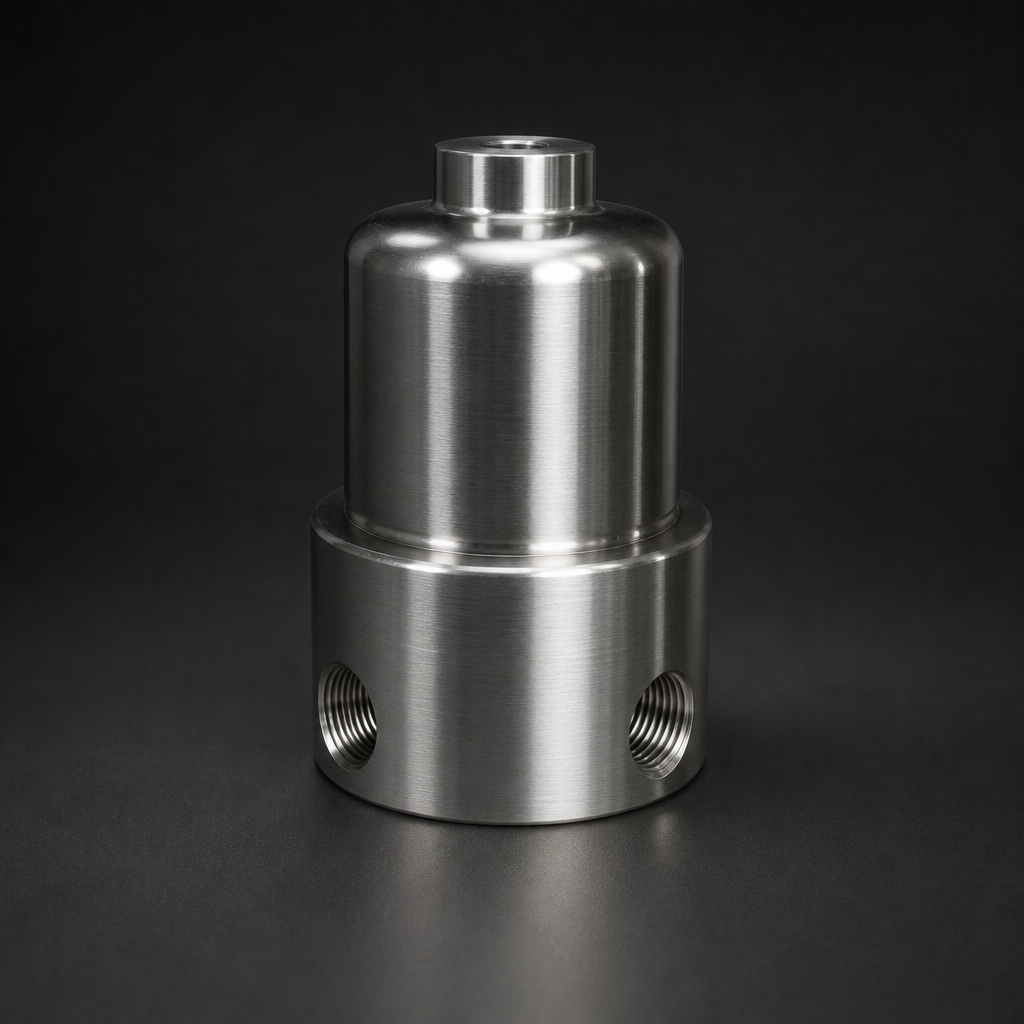
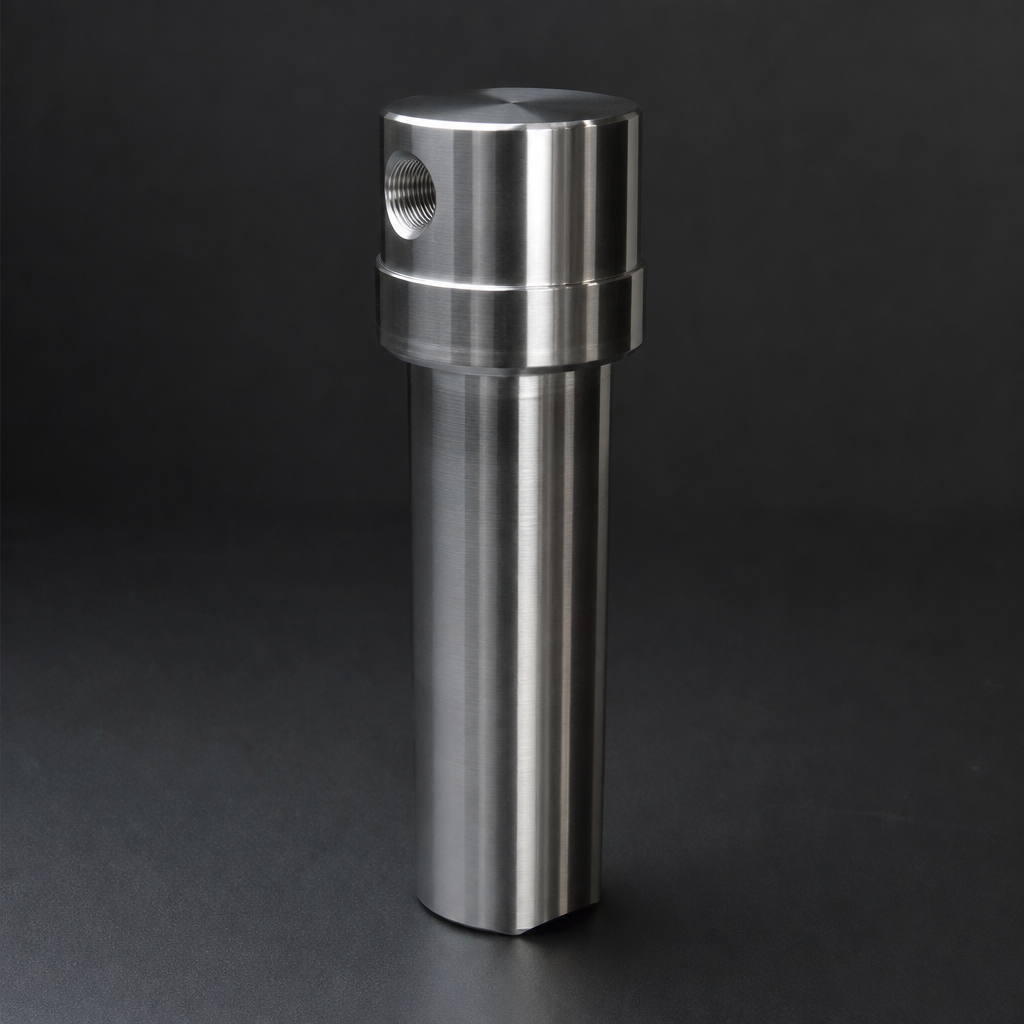
For very high flow rates, R+F FilterElements' multi-element vacuum pump exhaust housings — the RF-H-420 to RF-H-456 series — can be adapted for marine CCV duty. These housings accept 1 to 16 elements in parallel, scaling capacity from 5 Nm³/h to over 765 m³/h (free air delivery equivalent). The 316L stainless steel construction and FKM/Viton seals provide the chemical resistance required for HFO and acidic condensate environments. Explore the full filter element range to identify the right grade for your application.
Use our free Engineering Tool to get a filtration recommendation for your specific application in under 2 minutes.
Comparing Separator Technologies for Marine CCV
| Technology | Separation Efficiency | Soot Tolerance | Temp. Limit | Maintenance |
|---|---|---|---|---|
| Centrifugal / cyclone | 70–85% (coarse droplets only) | Good | 150 °C | Low (no consumables) |
| Impingement / baffle | 80–90% (medium droplets) | Moderate | 200 °C | Low–medium |
| Coalescing element (standard grade) | 99.97–99.99% (≥ 0.1 µm) | Poor (rapid blinding) | 100 °C | Element replacement required |
| Coalescing element (S-type / marine duty) | 99.97–99.99% (≥ 0.1 µm) | Good (open-grade pre-layer) | 200 °C | Element replacement required |
| Electrostatic precipitator | 95–99% (variable) | Good | 80 °C | High (cleaning cycles) |
For applications where classification society rules require demonstrable sub-micron separation efficiency — particularly on medium-speed four-stroke engines running on marine gas oil (MGO) or very low sulphur fuel oil (VLSFO) — coalescing elements remain the preferred technology. The key is selecting the correct element grade and housing configuration for the specific engine type and fuel.
Installation and Maintenance Considerations
Correct installation is as important as correct element selection. Classification surveyors will inspect the following during periodic surveys:
- Drain line routing: The separator drain must fall continuously to the collection point with no traps or siphons that could cause oil to back up into the element.
- Pressure differential monitoring: A differential pressure gauge or switch across the element is required to indicate when element replacement is due. Many classification societies require this to be connected to the engine alarm system.
- Bypass prevention: No bypass valve should be fitted that could allow unfiltered blow-by gas to reach the engine room atmosphere.
- Maintenance records: Element change intervals and actual differential pressure readings should be logged in the engine room maintenance management system.
For vessels operating on extended voyages, carrying sufficient spare elements is essential. R+F FilterElements supplies RF-C and RF-CS elements in all standard sizes for direct replacement in existing housings, including cross-references to OEM part numbers from major marine engine builders. See our process gas filtration range and natural gas solutions for related high-duty applications.
Compliance Documentation and Type Approval
Classification societies increasingly require type-approval documentation for CCV separator elements, not just the housing. This means the element manufacturer must provide test certificates demonstrating separation efficiency, pressure drop characteristics, and temperature resistance in accordance with the relevant class rules. R+F FilterElements can supply full technical data sheets, material certificates (EN 10204 3.1), and test reports for RF-C and RF-CS elements to support class survey submissions.
For new-build vessels, the CCV separator system should be included in the machinery approval package submitted to the classification society at the design stage. Retrofits on existing vessels require a class-approved modification procedure. In both cases, R+F FilterElements' engineering team can provide the technical documentation required to support the approval process.
- Elevated temperatures
- Oil mist detection and separation:
- The following key performance figures illustrate what a correctly specified marine CCV system must achieve:
- Standard borosilicate glass microfibre coalescing elements — the type used in compressed air systems — are not suitable for marine CCV duty without modification.
Related Reading
- Crankcase Ventilation Filtration — Principles and Element Selection
- Coalescing vs Particulate Filter Elements — Which Do You Need?
- ISO 8573-1 Compressed Air Quality — A Practical Guide
Try our Engineering Sizing Tool → or discuss your requirements with our team.