Why Roots Blower Inlet Filtration Is Often Underestimated
In many industrial vacuum systems, the Roots blower — also called a Roots booster — sits between the process chamber and the backing pump, acting as a volumetric amplifier that dramatically increases pumping speed. This arrangement is highly effective for achieving deep vacuum levels at high throughput, but it introduces a filtration challenge that is frequently overlooked during system design: whatever contamination enters the booster is concentrated and delivered directly to the backing pump at elevated pressure.
Particulate matter, process condensates, and entrained liquid droplets that might cause only minor wear in a standalone pump can become catastrophic in a two-stage Roots system. The booster compresses the gas before it reaches the backing pump, which means any solid particles are accelerated and any liquid aerosols are partially coalesced into larger droplets — both of which increase the risk of mechanical damage, seal failure, and oil contamination in the backing pump.
A correctly specified roots blower inlet filter addresses this risk at the source, before contamination can propagate through the system. This article explains the engineering principles behind high-flow vacuum filtration, the staged approach required for Roots booster systems, and how to select the right filter housing and elements for your application.
How Roots Boosters Amplify Contamination Risk
A Roots blower operates on a positive-displacement principle: two counter-rotating lobed rotors trap gas between the rotor profile and the housing, transferring it from the inlet to the outlet without internal compression. The compression ratio across the booster is typically 5:1 to 10:1, depending on the pressure differential between the process side and the backing pump inlet.
This compression effect has a direct consequence for filtration. Consider a gas stream carrying 10 mg/m³ of particulate at the booster inlet. After compression at a ratio of 8:1, the backing pump sees an effective particulate concentration of up to 80 mg/m³ — eight times the inlet loading. Without adequate roots pump protection at the booster inlet, the backing pump is exposed to contamination levels far beyond what its internal oil filtration can handle.
Liquid contamination is equally problematic. Process condensates — water, solvents, or light hydrocarbons — that enter the booster as fine aerosols are partially coalesced by the compression cycle. The resulting larger droplets can cause hydraulic shock in the backing pump, dilute the pump oil, and accelerate corrosion of internal surfaces.
The Staged Filtration Approach for Two-Stage Vacuum Systems
Effective booster pump filtration in a Roots system requires two distinct filtration stages, each with a different duty:
Stage 1 — Coarse Pre-Filtration at the Booster Inlet
The first filter is installed on the inlet side of the Roots booster, between the process chamber and the booster. Its primary duty is to remove bulk particulate — dust, process debris, and larger liquid droplets — before they enter the booster rotors. The filtration rating at this stage is typically 5–25 µm, balancing protection with the low pressure drop required to avoid starving the booster of gas flow.
Because the booster inlet operates at the lowest pressure in the system (closest to the process vacuum level), the filter housing must be rated for the full vacuum duty and must not introduce significant restriction. A pressure drop of more than 2–5 mbar across the inlet filter at maximum flow can measurably reduce the effective pumping speed of the booster.
Stage 2 — Fine Filtration Before the Backing Pump
The second filter is installed between the booster outlet and the backing pump inlet. At this point, the gas is at a higher pressure (typically 1–50 mbar absolute, depending on system design), which makes fine filtration more effective. This stage targets sub-micron aerosols, oil mist carried back from the backing pump during transient conditions, and any fine particulate that passed through the first stage.
For this duty, a coalescing element rated to 0.1 µm is appropriate. The higher operating pressure at this point also means that the filter housing sees a greater differential pressure across the element, so correct sizing for the actual free air delivery (FAD) — not the nominal pump displacement — is essential.
Sizing a High-Flow Vacuum Filter: Key Parameters
The most common sizing error in high flow vacuum filter selection is using the pump's nominal displacement volume rather than the actual free air delivery at the operating vacuum level. A Roots booster with a nominal displacement of 500 m³/h may deliver only 300–350 m³/h FAD at the target process pressure, depending on the slip across the rotors and the compression ratio.
The following parameters must be established before selecting a filter housing:
- Actual FAD at operating pressure — obtain from the pump manufacturer's performance curve, not the nameplate displacement
- Operating pressure range — both the minimum (deepest vacuum) and maximum (atmospheric start-up) conditions
- Gas temperature — process gas temperature at the filter inlet, accounting for any heat of compression in the booster
- Contamination type and loading — particulate, liquid aerosol, or both; estimated concentration in mg/m³
- Allowable pressure drop — typically ≤5 mbar for inlet filters, ≤10 mbar for inter-stage filters
Once these parameters are established, the filter housing can be selected from the appropriate flow range, and the element change interval can be estimated from the contamination loading and element dirt-holding capacity.
Oversized inlet filter with excessive internal volume
R+F FilterElements Vacuum Filter Housings for Roots Systems
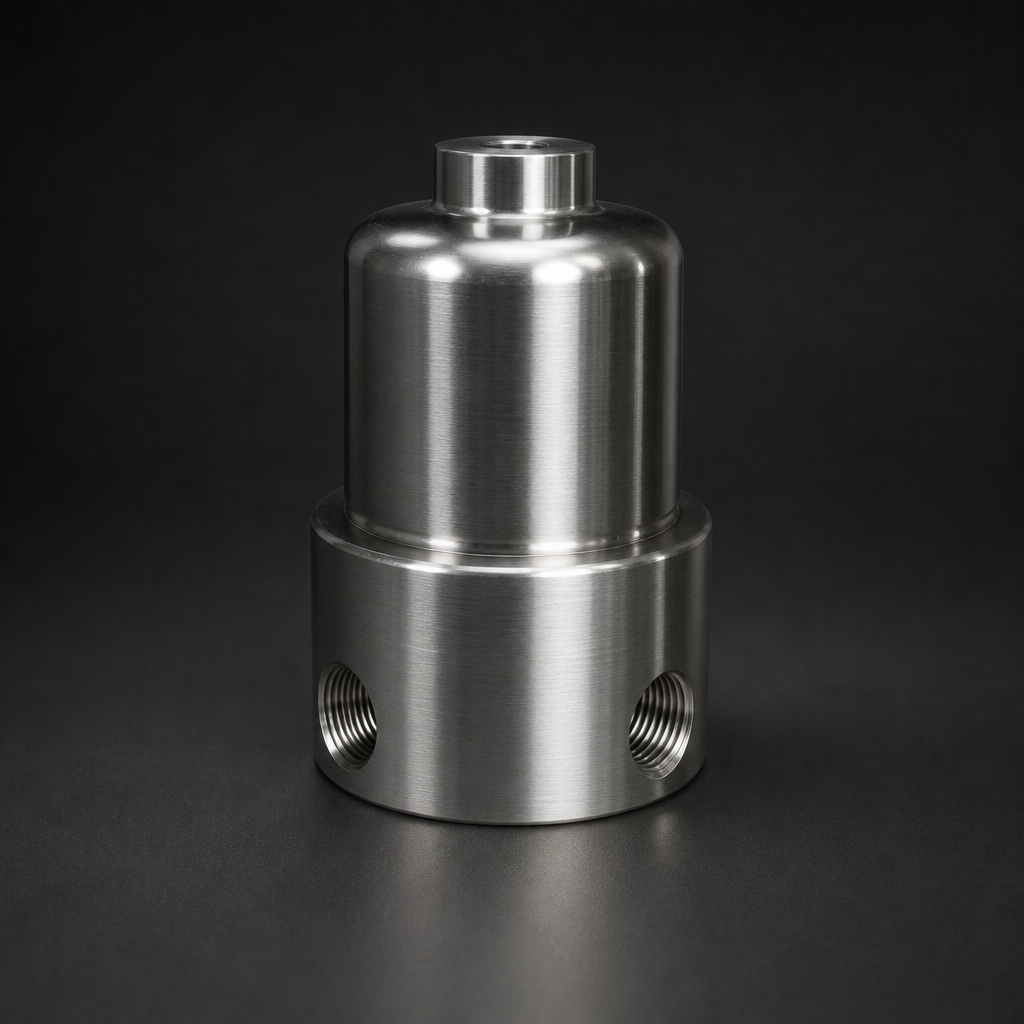
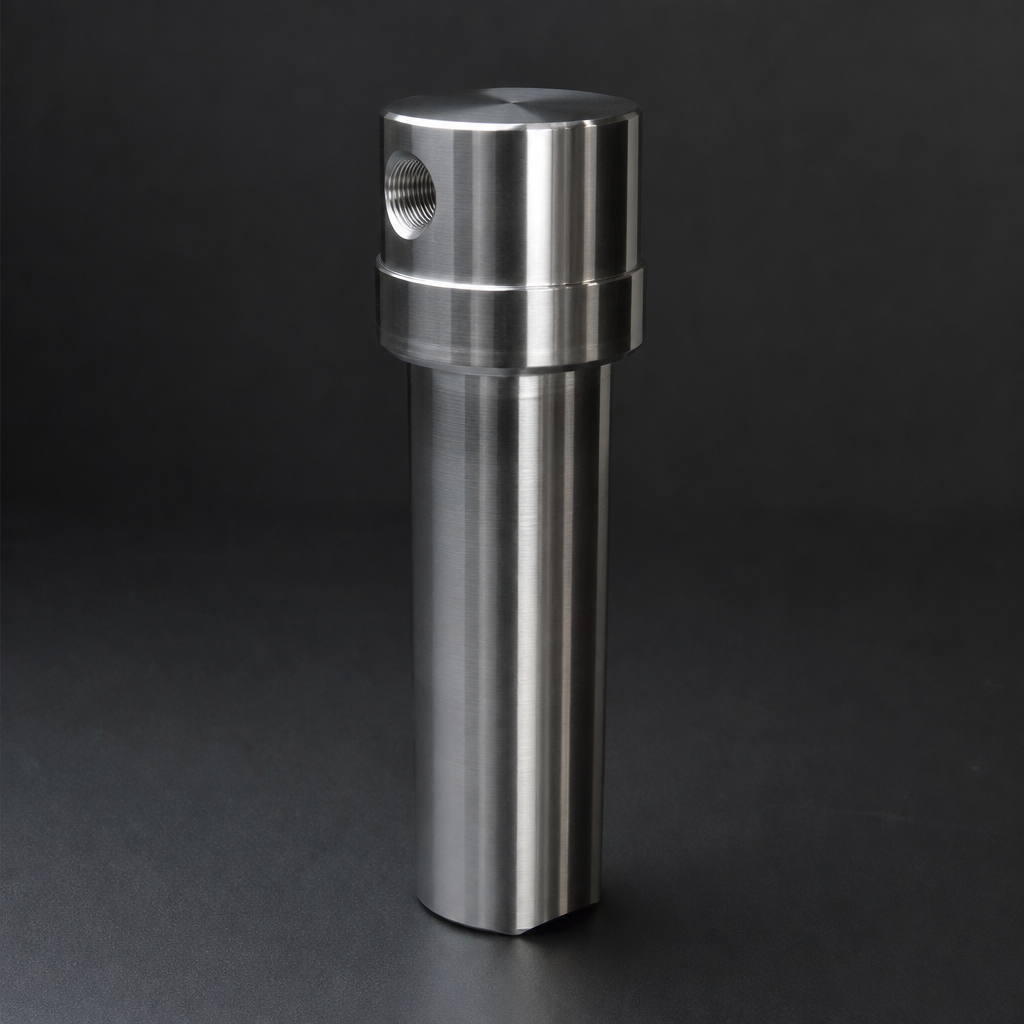
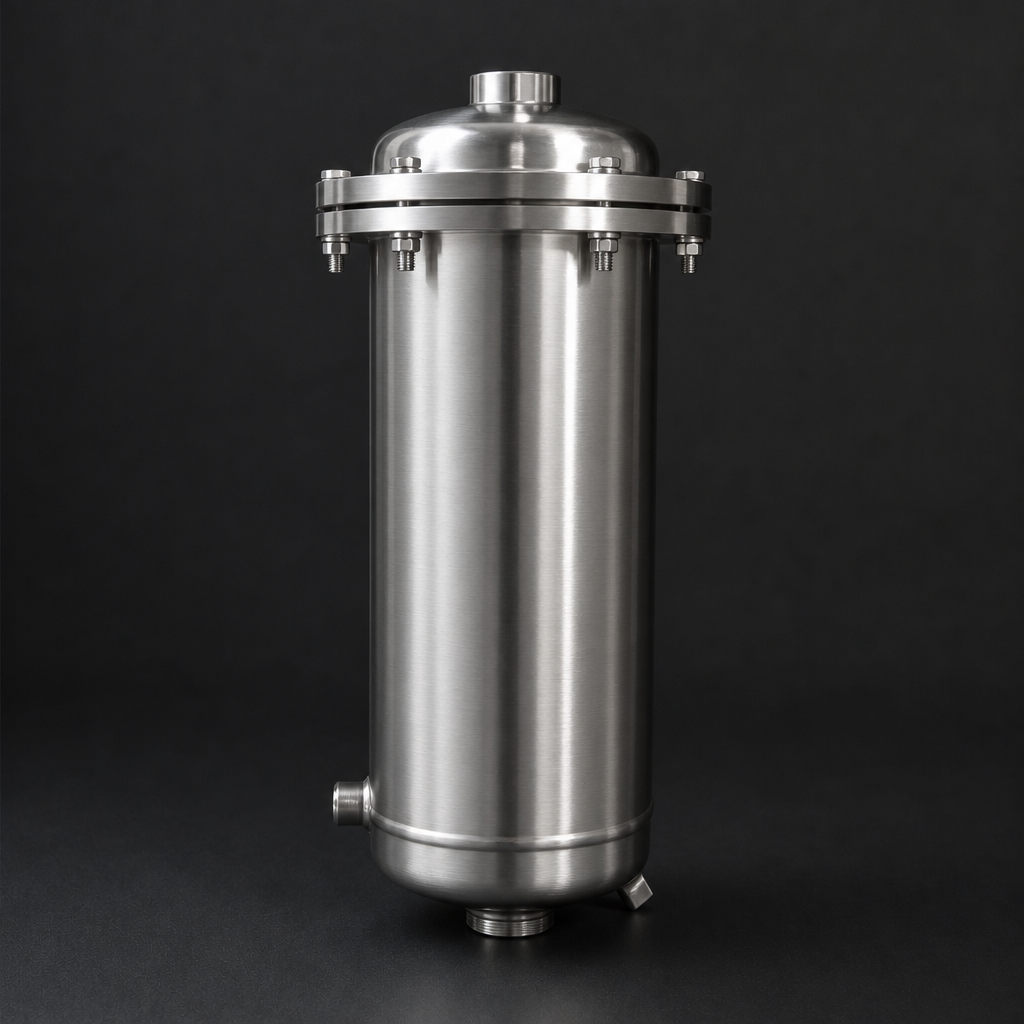
R+F FilterElements offers its own range of vacuum pump exhaust and inlet filter housings specifically designed for high-flow vacuum applications. Two housings are particularly well suited to Roots booster systems:
RF-H-447 — Multi-Element Vacuum Filter Housing
The RF-H-447 is a multi-element vacuum filter housing available in aluminium and 316L stainless steel construction. It accommodates up to eight RF-CS vacuum filter elements in a single housing, making it suitable for high free air delivery rates up to several hundred m³/h. The housing is designed for vacuum service with full-face flanged connections and a robust drain valve for condensate removal.
The RF-H-447 is well suited to the inter-stage position in a Roots booster system — between the booster outlet and the backing pump inlet — where it provides fine coalescing filtration to protect the backing pump from aerosols and fine particulate concentrated by the booster compression cycle.
RF-H-456 — High-Capacity Vacuum Filter Housing
The RF-H-456 is R+F's highest-capacity vacuum filter housing, designed for large Roots booster installations with free air delivery rates up to 765 m³/h. It accepts up to sixteen RF-CS elements and is available in 316L stainless steel for corrosive process gas applications. The housing features a large-diameter element bundle for minimal face velocity and low pressure drop, which is critical for inlet-side filtration where pressure drop directly affects booster performance.
Both housings are fitted with RF-CS vacuum filter elements — silica-bonded borosilicate glass microfibre elements rated to 200 °C, suitable for the elevated temperatures that can occur in the inter-stage gas stream of a heavily loaded Roots system.
Technical Specification Comparison
| Parameter | RF-H-447 | RF-H-456 |
|---|---|---|
| Max flow (FAD) | Up to ~400 m³/h | Up to 765 m³/h |
| Max elements | 8 × RF-CS | 16 × RF-CS |
| Housing material | Aluminium / 316L SS | 316L stainless steel |
| Max temperature | 200 °C (with RF-CS elements) | 200 °C (with RF-CS elements) |
| Connection type | Flanged | Flanged |
| Drain | Manual / automatic | Manual / automatic |
| Typical position | Inter-stage or exhaust | Inter-stage or exhaust |
| Element rating | 0.1 µm (coalescing) | 0.1 µm (coalescing) |
Use our free Engineering Tool to get a filtration recommendation for your specific application in under 2 minutes.
Element Selection for Roots Booster Applications
The RF-CS element range is the correct choice for Roots booster filtration. These elements use a silica-bonded borosilicate glass microfibre matrix that maintains its structural integrity at temperatures up to 200 °C — important in inter-stage applications where the gas temperature can rise significantly under high compression ratios or when the backing pump is running hot.
For the inlet-side filter (Stage 1), a coarser RF-CS element rated to 5 µm is typically appropriate, providing adequate protection for the booster rotors without excessive pressure drop. For the inter-stage filter (Stage 2), a fine RF-CS element rated to 0.1 µm provides the coalescing performance needed to protect the backing pump from aerosols.
Seal material selection should account for the process gas composition. Standard NBR seals are suitable for air and inert gases up to 100 °C. For elevated temperatures or chemically aggressive process gases, FKM/Viton seals rated to 200 °C are available across the RF-H-447 and RF-H-456 range.
Common Installation Mistakes and How to Avoid Them
Even correctly specified filters can underperform if installed incorrectly. The following installation errors are frequently encountered in Roots booster systems:
- Oversized inlet filter with excessive internal volume — a filter housing that is too large for the actual flow rate will have a low face velocity across the element, which reduces coalescing efficiency for liquid aerosols. Size for the actual FAD, not the maximum possible flow.
- No differential pressure indicator — without a DP gauge or switch across the filter, element loading cannot be monitored and elements are either changed too early (wasting money) or too late (causing pressure drop problems). Fit a DP indicator as standard.
- Drain valve left closed — coalesced liquid must be drained regularly. A blocked or closed drain valve causes liquid re-entrainment and can flood the backing pump. Automatic drain valves are strongly recommended for unattended operation.
- Filter installed in the wrong orientation — vacuum filter housings must be installed with the drain at the lowest point. Inverted or horizontal installation prevents condensate from draining and leads to liquid carry-over.
- Ignoring start-up conditions — during pump start-up from atmospheric pressure, the gas velocity through the filter is at its maximum. Ensure the housing is sized for this transient condition, not just the steady-state operating flow.
Maintenance Intervals and Condition Monitoring
Element change intervals for Roots booster filters depend heavily on the process contamination loading. In clean applications (semiconductor, pharmaceutical), elements may last 12–24 months. In heavily contaminated processes (chemical, mining, food processing), intervals of 3–6 months are more typical.
The most reliable approach is condition-based maintenance using differential pressure monitoring. A clean element in a correctly sized housing will show a DP of 1–3 mbar at operating flow. When DP rises to 8–10 mbar, the element should be changed. This approach avoids both premature changes (which waste elements and create unnecessary maintenance exposure) and overdue changes (which cause excessive pressure drop and reduce booster performance).
R+F FilterElements recommends fitting a differential pressure gauge with a high-DP alarm contact to all vacuum filter housings in Roots booster service. This allows the maintenance team to respond to actual element condition rather than a fixed calendar interval, reducing both maintenance cost and unplanned downtime.
For guidance on sizing your vacuum filter system or to discuss your specific Roots booster application, visit the R+F FilterElements sizing wizard or contact our engineering team directly.
Selecting the Right Filter for Your Roots System
To summarise the selection process for a Roots booster filtration system:
- Establish the actual FAD at the operating vacuum level from the pump performance curve
- Determine the gas temperature at each filter position (inlet and inter-stage)
- Identify the contamination type (particulate, liquid aerosol, or both) and estimated loading
- Select a coarse element (5 µm RF-CS) for the booster inlet and a fine coalescing element (0.1 µm RF-CS) for the inter-stage position
- Choose the RF-H-447 for flows up to ~400 m³/h or the RF-H-456 for flows up to 765 m³/h
- Specify FKM seals for temperatures above 100 °C or for chemically aggressive gases
- Fit differential pressure indicators and automatic drain valves as standard
The full R+F vacuum pump exhaust filter range covers free air delivery rates from 5 m³/h to 765 m³/h, with housing options in aluminium and 316L stainless steel to suit the full range of industrial vacuum applications. For applications requiring element-only replacement into existing housings, the complete RF-CS element range is available separately.
- roots pump protection
- booster pump filtration
- high flow vacuum filter
- R+F FilterElements offers its own range of vacuum pump exhaust and inlet filter housings specifically designed for high-flow vacuum applications.