Why Vacuum Packaging Pumps Fail Prematurely
In any food processing facility running vacuum or modified atmosphere packaging (MAP), the vacuum pump is the heart of the operation. Yet it is also one of the most vulnerable components on the line. Every time the chamber lid closes and the pump evacuates the bag, it draws in far more than just air. Blood, brine, marinade, fine food particles, and water vapour all travel through the system towards the pump inlet — and without adequate filtration, they arrive there.
The consequences are well understood by maintenance engineers: accelerated vane wear in rotary vane pumps, oil contamination leading to frequent oil changes, corrosion of internal surfaces, and ultimately unplanned downtime during peak production shifts. A single pump failure on a high-throughput packaging line can cost thousands of pounds per hour in lost output, not counting the cost of the repair itself.
The good news is that the solution is straightforward. A correctly specified two-stage filtration system — an inlet liquid separator upstream of the pump and a coalescing exhaust filter on the outlet — eliminates the vast majority of contamination before it can cause damage.
Understanding the Contamination Challenge in Food Packaging
Before selecting filtration equipment, it is worth understanding exactly what the pump is being asked to handle. The contamination profile in vacuum food packaging differs significantly from industrial compressed air or process gas applications, and this has direct implications for filter selection.
Liquid Carry-Over
Wet products — fresh meat, fish, marinated poultry, ready meals with sauces — release liquid into the chamber during evacuation. Surface tension is overcome as the pressure drops, and droplets are entrained in the gas stream. In a busy production environment, this liquid carry-over is not an occasional event; it happens with every cycle involving a wet product.
Food Particles and Debris
Crumbs, bone fragments, herb particles, and other solid debris are drawn into the vacuum line, particularly when bags are not perfectly sealed before evacuation begins or when product is positioned close to the bag opening. These particles are abrasive and can score pump vanes and cylinder walls.
Moisture and Vapour
Even with dry products, water vapour is present. At the low pressures achieved during packaging cycles, vapour condenses within the pump and mixes with the oil, reducing its lubricating properties and promoting corrosion. In cold-store environments, the temperature differential between the product and the pump exacerbates this effect.
Aggressive Marinades and Acidic Liquids
Acidic marinades — citrus-based, vinegar-based, or containing wine — are particularly damaging. They attack metal surfaces and degrade pump oil rapidly. A pump handling marinated products without inlet protection may require oil changes every few days rather than the manufacturer's recommended interval of several weeks.
The Two-Stage Filtration Strategy
R+F FilterElements recommends a two-stage approach for vacuum packaging pump protection: an inlet liquid separator to intercept bulk liquid and particles before they reach the pump, and a coalescing exhaust filter on the pump outlet to capture oil mist and fine aerosols before they are discharged to atmosphere.
Stage 1: Inlet Liquid Separator
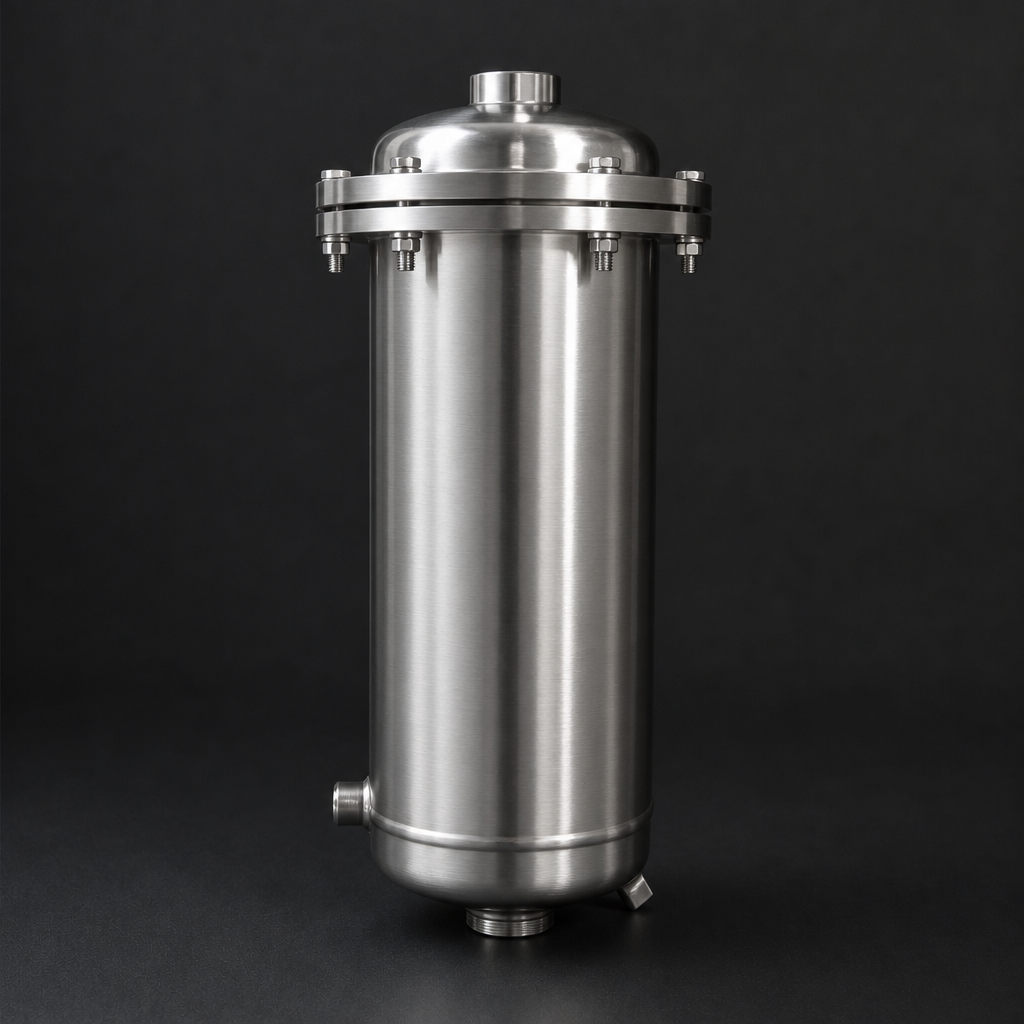
The inlet separator is installed in the vacuum line between the packaging chamber and the pump. Its function is to intercept bulk liquid, food particles, and entrained droplets before they enter the pump. The separator uses centrifugal action and impingement to coalesce droplets and drain them to a collection bowl, which is emptied at regular intervals.
For food packaging applications, the separator must be constructed from materials that are compatible with food-contact environments and easy to clean. Stainless steel housings are strongly preferred over aluminium in wet food environments, as they resist the corrosive effects of acidic marinades and are compatible with standard CIP (clean-in-place) procedures.
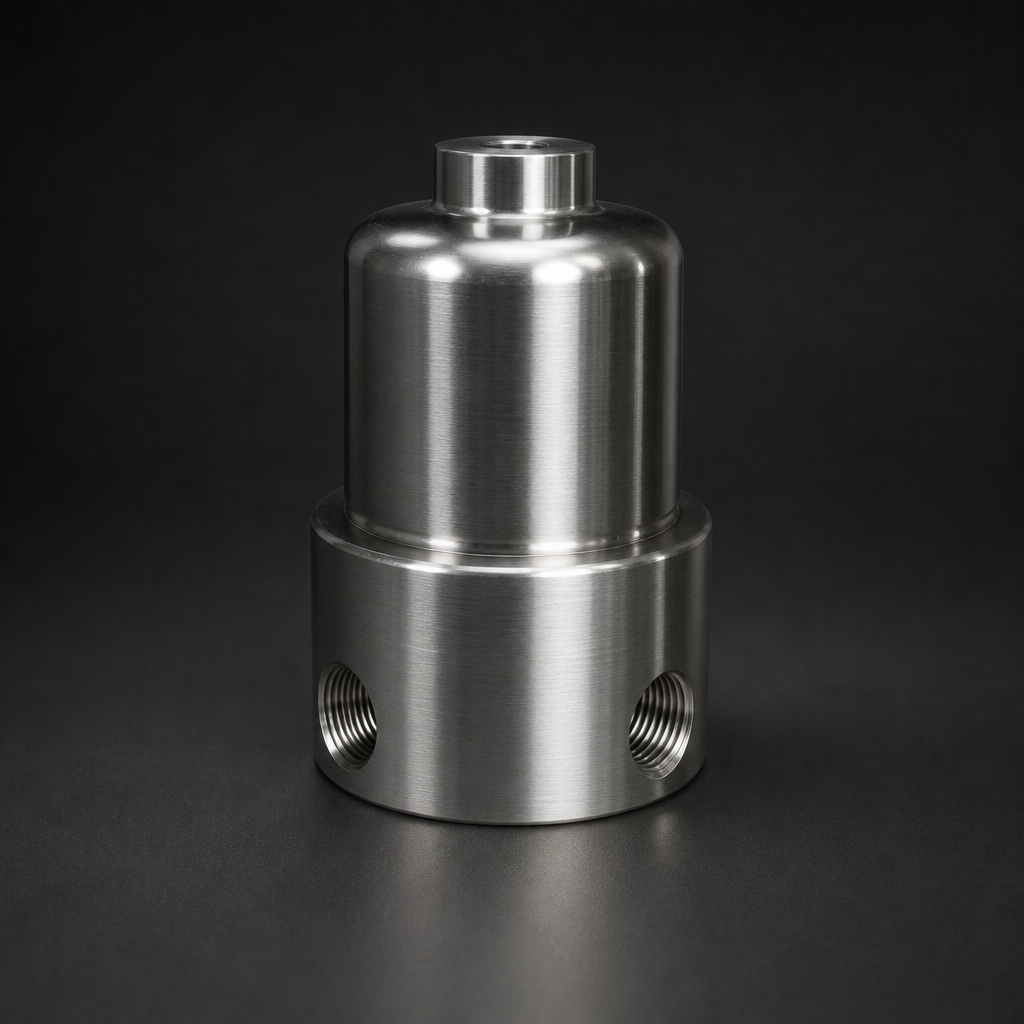
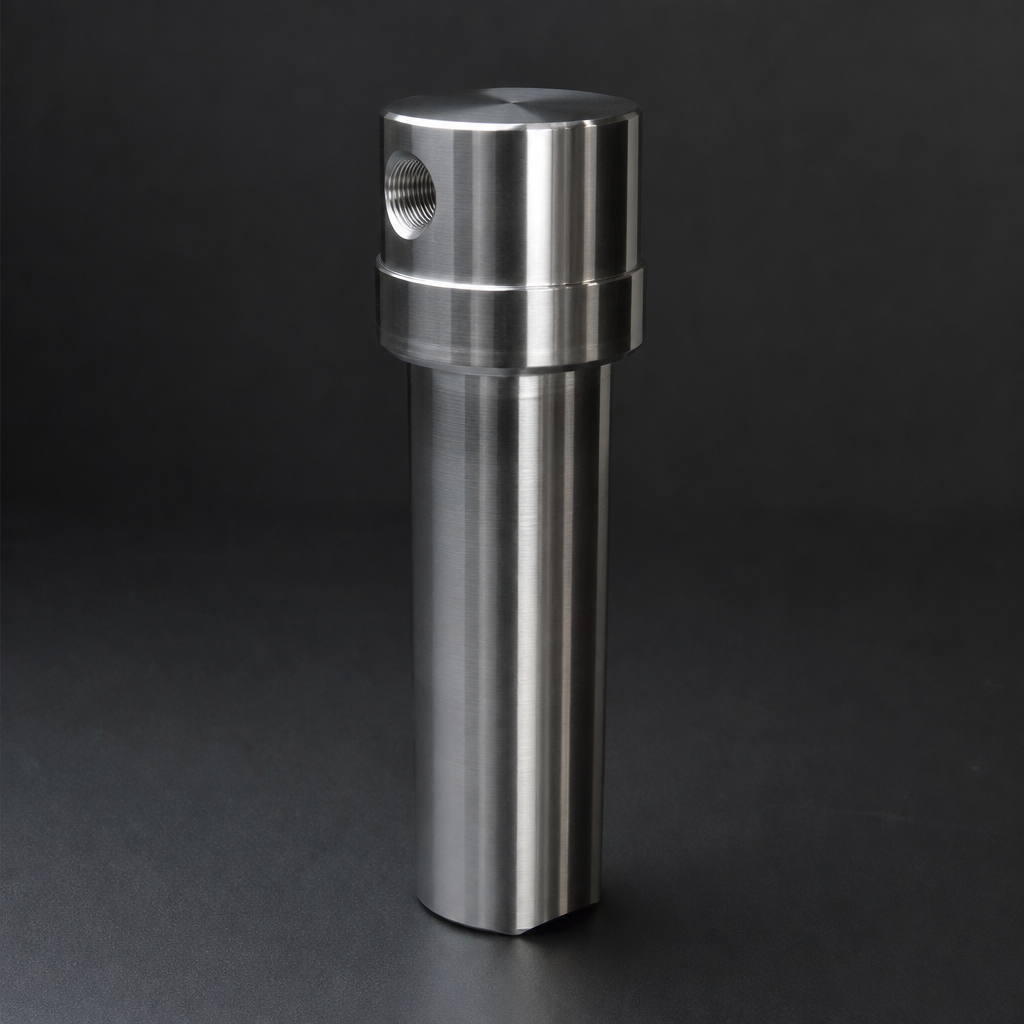
The R+F vacuum pump exhaust filter range includes housings from the RF-H-430 series that can be configured for inlet separation duty. The RF-H-430 series is available in both aluminium and 316L stainless steel, with flow capacities from 5 m³/h up to 765 m³/h free air delivery, covering everything from a single-chamber benchtop packer to a large multi-lane industrial line.
Stage 2: Coalescing Exhaust Filter
On the pump outlet, oil mist and fine aerosols are discharged with the exhaust gas. Without an exhaust filter, this oil mist contaminates the production environment, creates slip hazards, and may trigger food safety concerns if the packaging area is not adequately separated from the pump room. In many facilities, regulatory requirements mandate that pump exhaust is filtered before discharge.
The coalescing exhaust filter captures oil aerosols using borosilicate glass microfibre elements. Droplets coalesce on the fibre matrix, drain to the base of the housing, and are returned to the pump oil reservoir or collected for disposal. The result is a clean, oil-free exhaust stream.
R+F FilterElements supplies vacuum-specific RF-CS filter elements for exhaust duty. These elements use a silica-bonded construction that withstands the elevated temperatures found at pump exhausts — up to 200 °C — and resists the chemical attack from oil degradation products. They are available in standard and S-type configurations to match the operating temperature of the pump.
Selecting the Right RF-H-430 Series Configuration
The RF-H-430 series from R+F FilterElements is the primary recommendation for vacuum packaging pump protection. The series covers a wide range of flow rates and is available in configurations suited to both inlet separation and exhaust filtration duty.
| Model | Housing Material | Max Flow (m³/h FAD) | Element Type | Max Temp (°C) | Typical Application |
|---|---|---|---|---|---|
| RF-H-430 | Aluminium | Up to 85 | RF-CS (vacuum) | 120 | Small to medium packers, dry products |
| RF-H-435 | Aluminium | Up to 200 | RF-CS (vacuum) | 120 | Medium industrial lines |
| RF-H-440S | 316L Stainless Steel | Up to 200 | RF-CS S-type | 200 | Wet/marinated products, washdown areas |
| RF-H-447S | 316L Stainless Steel | Up to 450 | RF-CS S-type | 200 | High-throughput lines, aggressive liquids |
| RF-H-456S | 316L Stainless Steel | Up to 765 | RF-CS S-type (multi-element) | 200 | Large multi-lane packaging systems |
For facilities handling wet or marinated products, R+F FilterElements strongly recommends the stainless steel variants (RF-H-440S, RF-H-447S, or RF-H-456S). The 316L stainless steel construction withstands acidic carry-over and is compatible with the high-pressure washdown procedures common in food processing environments. FKM/Viton seals are recommended for applications involving aggressive marinades or elevated temperatures.
Monitor exhaust filter differential pressure.
MAP Packaging: Additional Considerations
Modified atmosphere packaging (MAP) introduces an additional variable: the gas used to backfill the package after evacuation. Nitrogen, carbon dioxide, and oxygen blends are all commonly used, and the filtration system must be compatible with these gases.
For MAP lines, R+F FilterElements recommends that the gas supply to the backfill circuit is also filtered to remove particulates and moisture before it enters the package. The R+F compressed air filter range — specifically the RF-H-310 to RF-H-395 series — is suitable for filtering nitrogen and CO₂ supply lines at the pressures and flow rates typical of MAP applications. Particulate elements (RF-P series) are used to remove any debris from the gas supply, while coalescing elements (RF-C series) address moisture and oil aerosols from the gas generation or supply system.
It is also worth noting that oxygen-enriched MAP applications require special attention to seal material selection. EPDM-O₂ seals must be used in any filter housing that contacts oxygen-enriched gas streams, as standard NBR or FKM seals are not suitable for oxygen service. R+F FilterElements can supply housings with EPDM-O₂ seals for this duty — consult the team via the enquiry page for oxygen-compatible configurations.
Use our free Engineering Tool to get a filtration recommendation for your specific application in under 2 minutes.
Installation and Maintenance Best Practices
Even the best filtration equipment will underperform if it is incorrectly installed or poorly maintained. The following guidelines apply to vacuum packaging pump filtration systems:
- Install the inlet separator as close to the pump as practical, but downstream of any flexible hose connections to the chamber. This minimises the volume of contaminated gas that must travel through the system before being intercepted.
- Size the separator generously. In food packaging, contamination events are frequent and the separator bowl will fill quickly during production. Oversizing the separator reduces the frequency of bowl-emptying and provides a buffer against unexpected high-contamination cycles.
- Drain the separator bowl regularly — at minimum at the start and end of each production shift, and more frequently when handling particularly wet products. An overfull bowl will allow liquid to bypass the separator and reach the pump.
- Monitor exhaust filter differential pressure. A rising pressure drop across the exhaust filter indicates that the element is loading with oil and debris. Replace the RF-CS element before the pressure drop reaches the maximum recommended value to avoid restricting pump performance.
- Use genuine RF-CS replacement elements. Vacuum exhaust elements must be matched to the housing and the operating conditions. Non-genuine elements may not provide the correct fit, efficiency, or temperature resistance, and can void any warranty on the housing.
- Check seal condition at every element change. In food processing environments, seals are exposed to cleaning chemicals and temperature cycling. Replace seals at the recommended interval or at the first sign of deterioration.
Calculating the Return on Investment
The business case for vacuum packaging pump filtration is straightforward. Consider a typical rotary vane pump on a mid-size packaging line:
| Cost Factor | Without Filtration | With RF-H-430 Series Filtration |
|---|---|---|
| Oil change interval | Every 2–4 weeks (contaminated) | Every 8–12 weeks (manufacturer schedule) |
| Vane replacement interval | 6–12 months (accelerated wear) | 24–36 months (normal wear) |
| Unplanned downtime events per year | 3–6 (pump failures) | 0–1 (filter maintenance only) |
| Pump overhaul frequency | Every 1–2 years | Every 4–6 years |
| Annual maintenance cost (indicative) | High — frequent oil, parts, labour | Low — scheduled filter element changes only |
The cost of an RF-H-430 series inlet separator and exhaust filter, including installation, is typically recovered within the first production quarter through reduced oil consumption and avoided downtime alone. Over a three-year period, the savings in pump maintenance and extended pump life represent a significant return on a modest capital investment.
Specifying Your Filtration System
To specify the correct RF-H-430 series configuration for your vacuum packaging line, R+F FilterElements needs the following information:
- Pump free air delivery (m³/h) and ultimate vacuum level
- Product types being packaged (dry, wet, marinated, liquid-containing)
- Number of packaging chambers and cycle frequency
- Whether MAP backfill gas filtration is also required
- Installation environment (ambient temperature, washdown requirements)
- Preferred seal material (NBR standard, FKM for elevated temperature or aggressive liquids)
With this information, the R+F FilterElements engineering team can recommend the correct housing size, element type, and seal specification to provide reliable, long-term pump protection. Use the online sizing wizard for an initial recommendation, or contact the team directly for complex or multi-pump installations.
- Before selecting filtration equipment, it is worth understanding exactly what the pump is being asked to handle.
- R+F FilterElements recommends a two-stage approach for vacuum packaging pump protection: an inlet liquid separator to intercept bulk liquid and particles before they reach the pump, and a coalescing exhaust filter on the pump outlet to capture oil mist and fine aerosols before they are discharged to atmosphere.
- The RF-H-430 series from R+F FilterElements is the primary recommendation for vacuum packaging pump protection.
- Modified atmosphere packaging (MAP) introduces an additional variable: the gas used to backfill the package after evacuation.
Summary
Vacuum packaging machines place exceptional demands on their pumps. Food particles, moisture, blood, and aggressive marinades are drawn into the vacuum system with every cycle, and without adequate filtration, pump wear and contamination are inevitable. The solution — a two-stage system combining an inlet liquid separator with a coalescing exhaust filter from the R+F FilterElements RF-H-430 series — is proven, cost-effective, and straightforward to implement.
Stainless steel variants (RF-H-440S through RF-H-456S) are the preferred choice for wet food environments, offering compatibility with washdown procedures and resistance to acidic carry-over. RF-CS vacuum elements provide the temperature resistance and filtration efficiency required for exhaust duty. Correctly installed and maintained, this filtration system will extend pump service life, reduce maintenance costs, and keep your packaging line running at full capacity.
For MAP applications, complementary filtration of the backfill gas supply using the RF-H-310 to RF-H-395 compressed air filter range ensures that the gas entering the package is clean, dry, and free of contaminants — protecting both the product and the packaging process.