Gas chromatographs, mass spectrometers, and online process analysers are among the most sensitive instruments in any industrial or laboratory environment. A single contamination event — particles at the sub-micron level, trace hydrocarbons, or moisture at parts-per-billion concentrations — can foul detector cells, block capillary columns, and produce erroneous readings that cascade into costly process upsets or regulatory non-compliance. Protecting these instruments begins with the gas supply, and that means taking analytical gas filtration seriously.
Why ppb-Level Contamination Destroys Sensitive Instruments
Carrier gases for gas chromatography (GC) — typically helium, hydrogen, or nitrogen — must be delivered at purities exceeding 99.9995 % (5.5 grade) to avoid baseline noise and ghost peaks. Even at this purity, the cylinder or bulk supply line introduces particulates from valve seats, regulator diaphragms, and tubing corrosion. A single 5 µm particle lodging in a capillary column inlet can restrict flow, alter retention times, and ultimately destroy a column costing several hundred euros.
Mass spectrometers face an even stricter challenge. The ion source and quadrupole analyser operate under high vacuum, and any hydrocarbon or moisture ingress raises background noise, suppresses ionisation efficiency, and shortens filament life. For process analysers deployed in refineries, chemical plants, or gas processing facilities, the sample stream itself carries the contamination risk — particulates, liquid aerosols, and reactive compounds must all be removed before the sample reaches the detector.
Carrier Gas Filtration for GC/MS Systems
Point-of-use filtration is the last line of defence between the gas supply and the instrument. For GC carrier gas applications, disposable inline filters installed immediately upstream of the instrument inlet provide particulate removal without introducing dead volume or adsorption artefacts.
The RF-DIL series from R+F FilterElements is designed precisely for this duty. These compact, point-of-use particulate filters use borosilicate glass microfibre media to achieve 99.99 % efficiency at ≥ 0.1 µm — sufficient to protect capillary column inlets and detector cells from particulate damage. The all-stainless-steel wetted path and low internal volume (typically < 2 mL) ensure negligible contribution to system dead volume and no hydrocarbon bleed that could interfere with sensitive FID or MS detection.
Zero Air and Calibration Gas Conditioning
Zero air — hydrocarbon-free, dry air used as a reference gas for FID detectors and ambient air analysers — must meet stringent purity requirements: total hydrocarbons < 0.1 ppm, moisture < −60 °C dew point, and particulates < 0.01 µm. Calibration gas mixtures used for span calibration of process analysers are equally sensitive: any contamination of the calibration gas introduces systematic error into every measurement made with that instrument.
For zero air conditioning, a two-stage approach is standard: a coalescing stage to remove any compressor oil aerosol, followed by an activated carbon adsorption stage to strip residual hydrocarbons. The RF-DIA inline adsorber — available with activated carbon or molecular sieve fill — provides the adsorption stage in a compact, disposable format suitable for laboratory and field analyser installations.
Replace on schedule, not on failure.
Process Analyser Sample Conditioning
Online process analysers — CEMS (continuous emissions monitoring systems), process gas chromatographs, and infrared or UV photometric analysers — draw a continuous sample from the process stream. This sample arrives at the analyser at process temperature and pressure, laden with particulates, liquid droplets, and reactive compounds. The sample conditioning system (SCS) must reduce the sample to a clean, dry, representative gas at the analyser's inlet conditions.
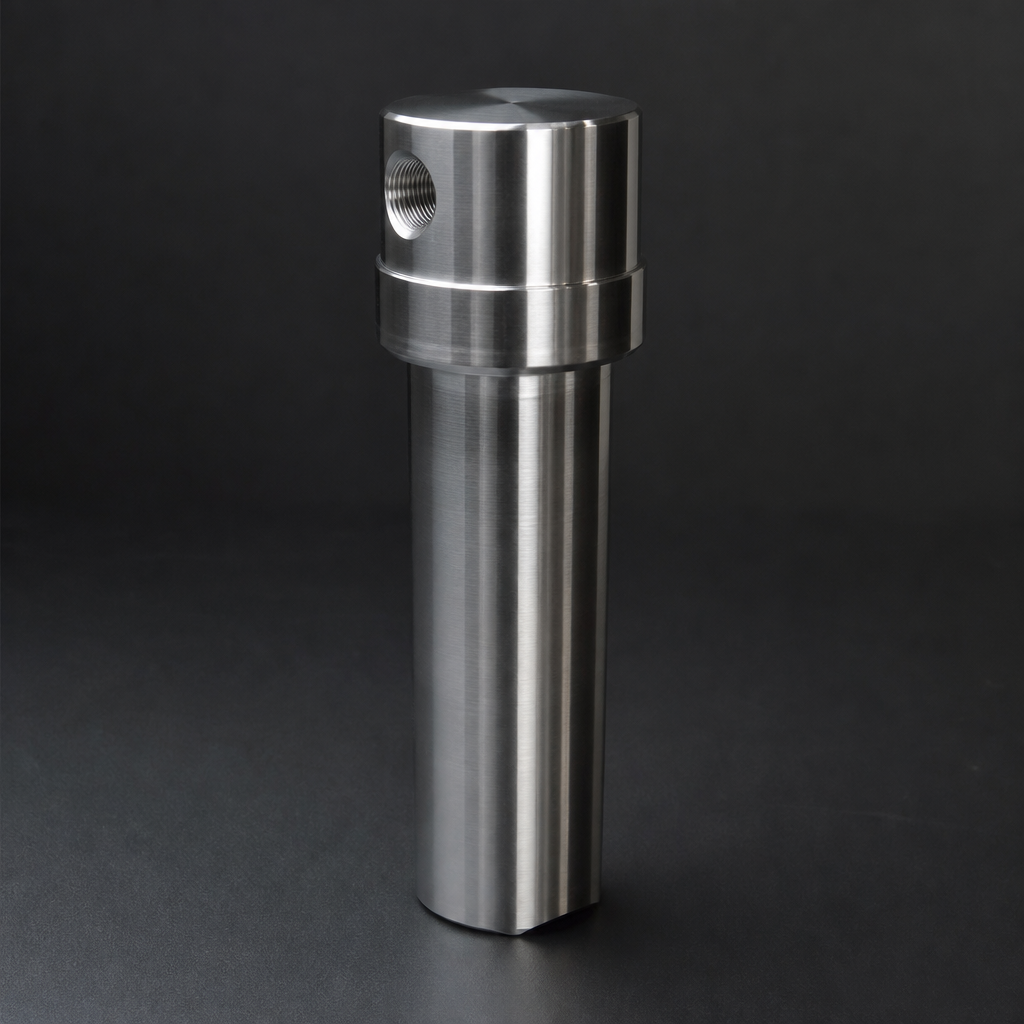
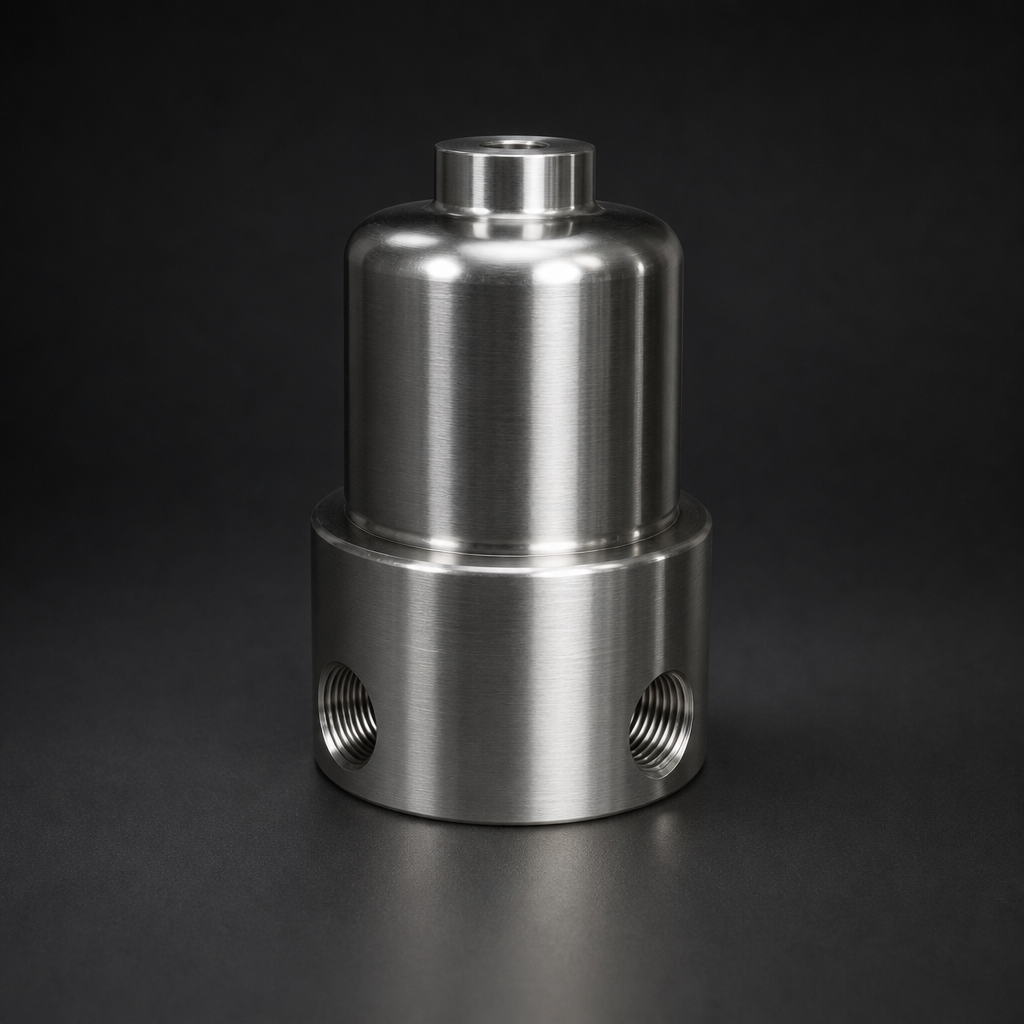
Filtration is the first and most critical stage of any sample conditioning system. A primary filter removes bulk particulates and liquid slugs; a secondary coalescing filter removes sub-micron aerosols; and in some applications, a membrane separator provides an absolute liquid barrier. The RF-H-150 process gas housing — rated to 100 bar in 316L stainless steel — is well suited to primary filtration duty in high-pressure sample take-off points. For higher-pressure applications, the RF-H-170 analyser filter housing, rated to 400 bar (700 bar in HP configuration), provides the pressure containment required for high-pressure gas sampling.
Filter Selection by Analytical Application
| Application | Recommended Filter | Key Requirement | Efficiency |
|---|---|---|---|
| GC carrier gas (He, H₂, N₂) | RF-DIL inline particulate filter | All-metal wetted path, low dead volume | 99.99% ≥ 0.1 µm |
| Zero air / FID reference gas | RF-DIA activated carbon adsorber | THC < 0.1 ppm, no polymer bleed | Residual HC < 0.003 mg/m³ |
| Process analyser sample (≤ 100 bar) | RF-H-150 + RF-C coalescing element | 316L SS, FKM seals, coalescing stage | 99.99% ≥ 0.1 µm liquid aerosol |
| High-pressure analyser inlet (≤ 700 bar) | RF-H-170 HP analyser filter | Compact, high-pressure rated, SS body | 99.99% ≥ 0.1 µm |
| Calibration gas conditioning | RF-DIL + RF-DIA in series | Particle + hydrocarbon removal, inert path | Combined: < 0.1 ppm THC |
Use our free Engineering Tool to get a filtration recommendation for your specific application in under 2 minutes.
Borosilicate Media: Why It Matters for Analytical Duty
The choice of filter media is as important as the housing material for analytical gas applications. Borosilicate glass microfibre — the media used in R+F coalescing and particulate elements — offers several advantages over synthetic polymer media for this duty. It is chemically inert to virtually all industrial gases, does not outgas hydrocarbons or plasticisers, and maintains its filtration efficiency across the full temperature range of typical analytical installations (−20 °C to +120 °C).
For sample conditioning systems handling reactive gases — hydrogen sulphide, chlorine, or ammonia — the K-type sour gas element variant provides additional chemical resistance. For ultra-high-purity semiconductor or pharmaceutical applications, SilcoNert-coated stainless steel housings eliminate any risk of surface adsorption of trace analytes. Consult the full filter elements range to identify the correct media and coating for your specific analytical gas.
Installation Best Practice for Analytical Gas Filtration
Even the best filter delivers suboptimal performance if installed incorrectly. For analytical gas duty, observe these principles:
- Install as close to the instrument as possible. Every metre of tubing between the filter and the instrument inlet is an opportunity for recontamination from tubing walls or fittings.
- Use compression fittings, not push-fit. Push-fit polymer fittings introduce polymer outgassing and potential leak paths. Use stainless steel compression fittings (Swagelok or equivalent) throughout the analytical gas train.
- Purge before use. After filter installation or element replacement, purge the system at 3–5× the filter volume before connecting to the instrument.
- Replace on schedule, not on failure. Analytical filters should be replaced on a time-based schedule (typically every 6–12 months) rather than waiting for visible contamination or pressure drop increase.
For process analyser sample conditioning systems, the choice between coalescing and particulate elements at each stage of the SCS is critical to achieving the required sample quality. A coalescing stage upstream of the particulate stage protects the finer media from liquid loading and extends element life significantly.
Regulatory and Standards Context
Analytical gas filtration sits at the intersection of several standards frameworks. ISO 8573-1 defines compressed air quality classes and is widely referenced for instrument air supply to analyser enclosures. For process analyser sample conditioning, IEC 61285 (Industrial-process control — Safety of analyser houses) and ISA-12.27.01 (Requirements for Process Sealing Between Electrical Systems and Flammable or Combustible Process Fluids) set the broader safety context within which filtration must operate.
R+F FilterElements products are designed to support compliance with these frameworks. The ISO 8573-1 guide on this site provides a detailed walkthrough of quality class selection for instrument air and process gas applications.
- Carrier gases for gas chromatography (GC) — typically helium, hydrogen, or nitrogen — must be delivered at purities exceeding 99.
- Point-of-use filtration is the last line of defence between the gas supply and the instrument.
- Zero air — hydrocarbon-free, dry air used as a reference gas for FID detectors and ambient air analysers — must meet stringent purity requirements: total hydrocarbons < 0.
- Online process analysers — CEMS (continuous emissions monitoring systems), process gas chromatographs, and infrared or UV photometric analysers — draw a continuous sample from the process stream.
Related Reading
- Coalescing vs Particulate Filter Elements — Which Do You Need?
- ISO 8573-1 Compressed Air Quality Classes Explained
- Hydrogen Electrolysis Filtration — Protecting Electrolyser Stacks
Try our Engineering Sizing Tool → or discuss your requirements with our team.