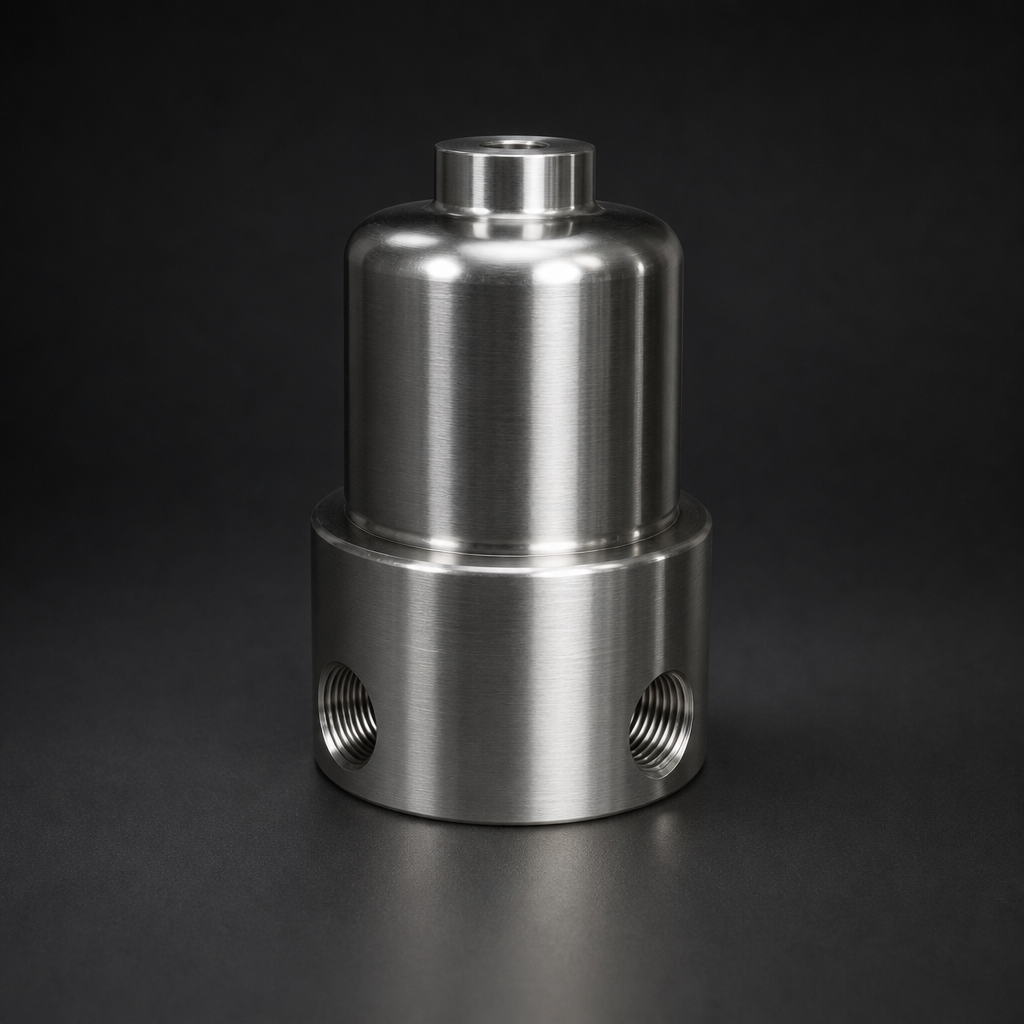
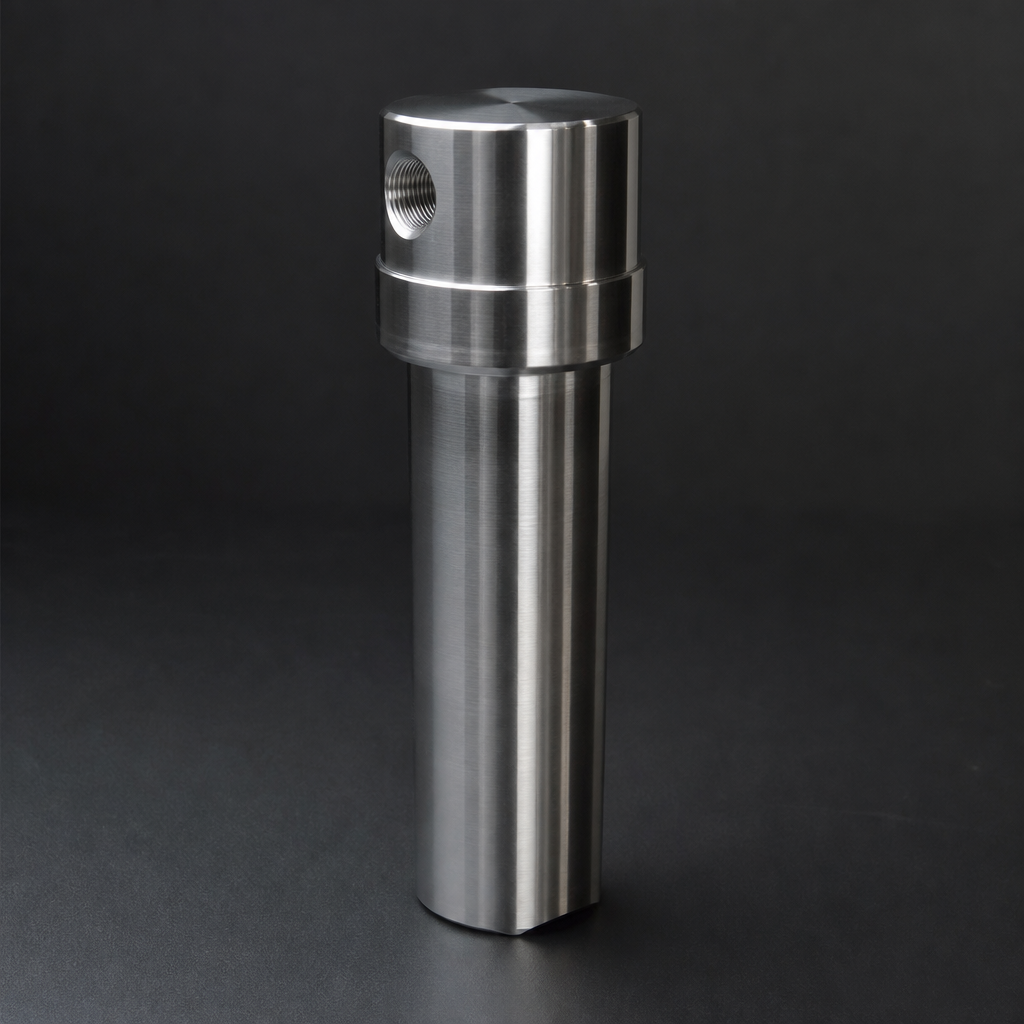
Selecting the wrong gas filter housing is rarely obvious at the point of purchase — it becomes apparent months later, when a seal fails at elevated temperature, a polycarbonate bowl cracks under pressure surge, or a carbon steel body corrodes in the presence of hydrogen sulphide. This guide walks through the four key selection parameters — operating pressure, temperature, gas composition, and connection type — and maps them to the R+F FilterElements housing range so you can specify with confidence.
Step 1 — Define Your Operating Pressure
Pressure is the primary filter housing selection driver. R+F FilterElements offers housings across four broad pressure tiers, each matched to a distinct material and construction approach:
| Pressure Range | Typical Housing Material | R+F Housing Series | Typical Application |
|---|---|---|---|
| ≤ 10 bar | Polycarbonate bowl / aluminium head | RF-H-310 to RF-H-395 | Compressed air, instrument air |
| ≤ 17 bar | Aluminium (all-metal) | RF-H-310 to RF-H-395 (AM) | Compressed air, vacuum exhaust |
| ≤ 100 bar | 316L stainless steel | RF-H-150 | Process gas, CNG, biogas |
| ≤ 250 bar | 316L stainless steel | RF-H-160 | Medium-pressure process gas, hydrogen |
| ≤ 400–700 bar | 316L stainless steel (HP) | RF-H-170 | Analyser protection, high-pressure hydrogen |
For process gas applications, polycarbonate bowls are never appropriate — even at low pressures — because many process gases (hydrocarbons, solvents, aggressive chemicals) attack polycarbonate. Specify all-metal housings from the outset.
Step 2 — Temperature Range and Seal Material
Temperature affects both the housing body and, critically, the elastomeric seals. A housing rated to 200 °C is only as good as its seal material at that temperature. The R+F FilterElements range covers cryogenic to high-temperature service:
- NBR seals — standard service, –10 °C to +100 °C. Suitable for compressed air, nitrogen, inert gases.
- FKM/Viton seals — elevated temperature, –20 °C to +200 °C. Recommended for hydrocarbons, aggressive process gases, and steam-traced lines.
- EPDM-O₂ seals — oxygen service, –40 °C to +150 °C. Mandatory for oxygen-enriched streams to avoid ignition risk.
- PTFE seals — chemically inert, –196 °C to +260 °C. Used in cryogenic LNG/LH₂ service and ultra-pure semiconductor applications.
Step 3 — Housing Material Selection by Gas Composition
Gas composition determines the corrosion resistance requirement. The R+F FilterElements housing range covers five material tiers:
Polycarbonate (Visual Bowl) — ≤ 17 bar, Dry Inert Gases Only
Polycarbonate bowls provide a visual liquid level indicator, useful for compressed air drains. They are limited to dry, inert, non-aggressive gases and must never be used with hydrocarbons, solvents, or process gases. Maximum 17 bar, 60 °C.
Aluminium — ≤ 17 bar, Compressed Air and Inert Gases
Aluminium housings (RF-H-310 to RF-H-395 series) are the workhorse of compressed air filtration. Lightweight, cost-effective, and available in a wide flow range up to 12,000 Nm³/h. Not suitable for wet chlorine, strong acids, or alkaline gases.
316L Stainless Steel — ≤ 700 bar, Process Gas Standard
316L SS is the default material for process gas filter housings. It handles the majority of industrial gases — nitrogen, hydrogen, natural gas, biogas, CO₂, argon — across the full pressure range. The RF-H-150, RF-H-160, and RF-H-170 housings are all 316L SS construction, available from R+F FilterElements.
Duplex Stainless Steel — Extreme Corrosion Environments
Duplex SS (e.g. 2205) offers approximately twice the yield strength of 316L and significantly better resistance to chloride stress corrosion cracking. Specified for offshore gas processing, chlorine-containing streams, and seawater-cooled systems where 316L would suffer pitting.
Hastelloy C-276 — On Request, Aggressive Chemical Service
Hastelloy C-276 provides outstanding resistance to oxidising acids, wet chlorine, and mixed acid environments. Available from R+F FilterElements on request for specialised chemical process applications.
Need help selecting the right filter housing?
Step 4 — Connection Type and Pipework Integration
Connection standard selection is often overlooked until installation, at which point mismatches are costly. The R+F FilterElements housing range supports all major industrial connection standards:
- BSP (G thread) — standard in European compressed air and process gas systems. Available on RF-H-150 and RF-H-310 to RF-H-395 series.
- NPT thread — North American standard, common in LNG, CNG, and US-specification process plants.
- SAE connections — used in hydraulic and high-pressure gas systems, particularly for compact instrumentation filter housings.
- Flanged (ASME B16.5 / EN 1092-1) — required for large-bore process gas lines and high-pressure applications where threaded connections are not permitted by plant standards.
When specifying for a new installation, confirm the plant piping standard before ordering. Retrofitting a BSP housing into an NPT system requires adapters that introduce potential leak points — particularly problematic in hydrogen or toxic gas service.
Use our free Engineering Tool to get a filtration recommendation for your specific application in under 2 minutes.
Matching Filter Elements to the Housing
The housing is only half the system. Filter element selection must match the duty:
- RF-C coalescing elements — remove liquid aerosols and oil mist to < 0.01 mg/m³. Borosilicate glass microfibre, 99.99% efficiency ≥ 0.01 µm. For wet gas streams upstream of analysers or compressors.
- RF-P particulate elements — remove solid particles ≥ 0.01 µm at 99.99% efficiency. For dry gas streams requiring particulate protection.
- RF-AC adsorption elements — activated carbon, residual oil < 0.003 mg/m³. For oil vapour removal in food, pharmaceutical, and electronics applications.
- Sintered metal elements — rated to 450 °C, for high-temperature process gas and steam service where polymer elements would fail.
For point-of-use protection in instrumentation lines, the RF-DIL disposable inline filter provides a compact, low-cost solution without a separate housing. For hydrogen applications, see our dedicated hydrogen electrolysis filtration guide.
Sour Gas and H₂S Service
Hydrogen sulphide (H₂S) — present in natural gas, biogas, and refinery off-gases — requires specific material attention. Standard 316L SS is generally acceptable for low H₂S concentrations, but at elevated partial pressures, sulphide stress cracking (SSC) becomes a risk. For sour gas service:
- Specify K-type filter elements (sour gas rated) for the element internals
- Confirm housing material compliance with NACE MR0175 / ISO 15156 for the H₂S partial pressure and temperature combination
- Consider Duplex SS or Hastelloy for high H₂S concentrations
The R+F process gas filter range includes K-type element options for sour gas duty. Contact the R+F FilterElements engineering team for material certification requirements on NACE-compliant specifications.
- Pressure is the primary filter housing selection driver.
- Temperature affects both the housing body and, critically, the elastomeric seals.
- Gas composition determines the corrosion resistance requirement.
- Flanged (ASME B16.5 / EN 1092-1)
Practical Selection Checklist
Before raising a purchase order for a gas filter housing, confirm the following:
- Maximum allowable working pressure (MAWP) with appropriate safety factor
- Operating temperature range (minimum and maximum)
- Gas composition — including trace contaminants (H₂S, chlorides, moisture)
- Required filtration duty (coalescing, particulate, adsorption)
- Connection standard and pipe size
- Seal material compatibility with gas and temperature
- Regulatory requirements (ATEX, PED, NACE, oxygen service)
- Element change-out access and maintenance envelope
Use the R+F Engineering Sizing Tool to cross-check your parameters against the available housing range and generate a preliminary specification. For complex or non-standard duties, the R+F FilterElements engineering team can advise on material selection and provide certified documentation.
Related Reading
- Coalescing vs Particulate Filter Elements — Which Do You Need?
- ISO 8573-1 Compressed Air Quality Classes Explained
- Hydrogen Electrolysis Filtration — Protecting Electrolysers and Downstream Equipment
Try our Engineering Sizing Tool → or discuss your requirements with our team.