Choosing the wrong filter housing is one of the most common — and costly — mistakes in process gas system design. Whether you are protecting an analyser, conditioning a sample stream, or filtering compressed air at high flow rates, the housing you select determines not just filtration performance but also safety, maintenance burden, and total cost of ownership. This guide walks through the three critical decision points: material, configuration, and sizing.
Question 1: What Material Does Your Application Demand?
Material selection is driven by three overlapping factors: operating pressure, temperature, and chemical compatibility with the process fluid. Getting this wrong can result in housing failure, seal degradation, or contamination of the downstream process.
Pressure and Temperature Ratings
For standard compressed air and industrial gas applications up to 17 bar and 120 °C, aluminium housings with polycarbonate bowls are the practical choice — lightweight, cost-effective, and widely available. The RF-H series process gas housings from R+F FilterElements cover a broad range of pressure classes, from compact 100 bar units up to 400 bar high-pressure variants.
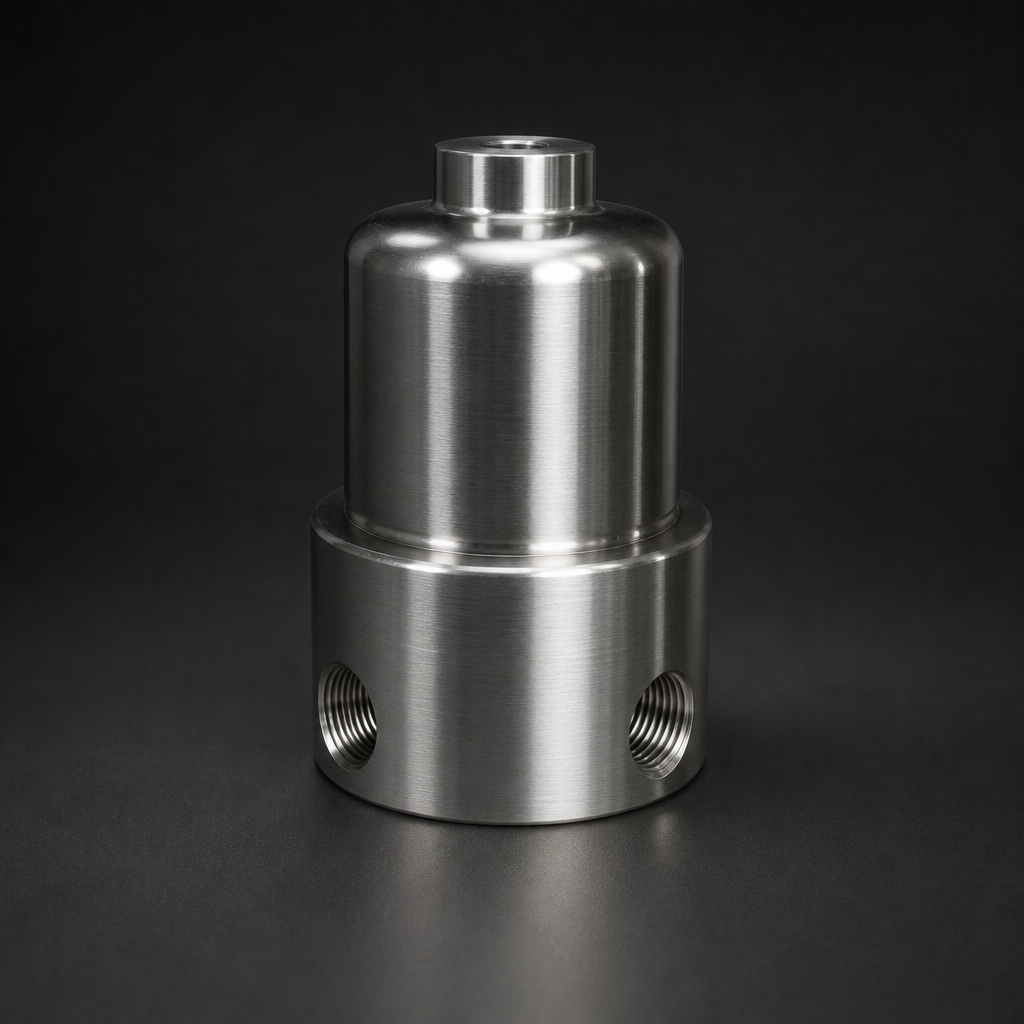
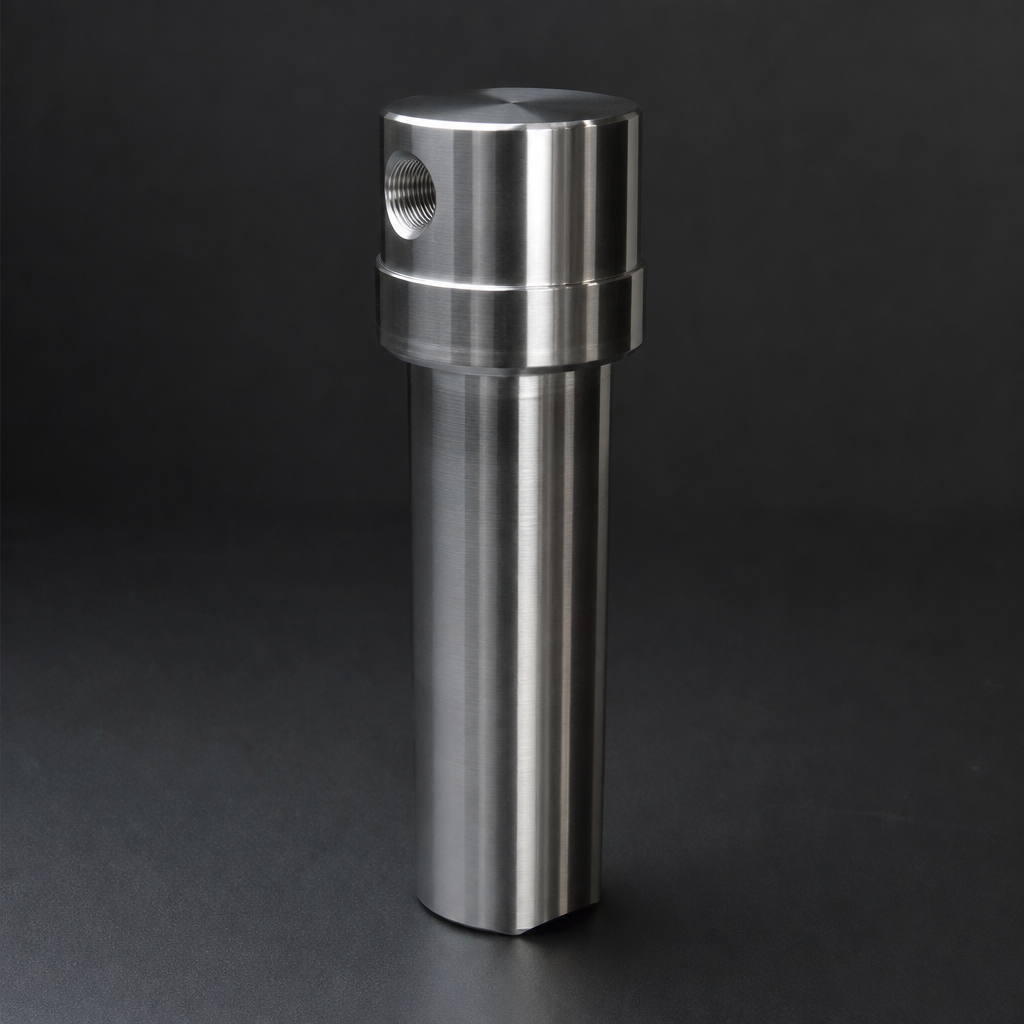
When pressure climbs above 100 bar, or when the process involves aggressive gases such as hydrogen sulphide (H₂S), carbon dioxide (CO₂), or chlorinated compounds, 316L stainless steel becomes the baseline material. The RF-H-150 is a compact 316L stainless steel housing rated to 100 bar, well suited to process gas conditioning and sample system protection. For medium-pressure duties up to 250 bar, the RF-H-160 provides additional wall thickness and a reinforced end-cap design. At the extreme end, the RF-H-170 handles up to 400 bar and is commonly specified for high-pressure analyser protection in natural gas and hydrogen service.
Exotic Alloys for Aggressive Chemistry
Some process streams demand materials beyond 316L stainless steel. Hastelloy C-276 offers superior resistance to oxidising acids and chloride-containing streams. Monel 400 is preferred for hydrofluoric acid service and seawater applications. Inconel 625 is specified where high-temperature strength is required alongside corrosion resistance. Titanium provides an excellent strength-to-weight ratio for offshore and marine environments where weight is a constraint.
Seal material selection follows the same logic. NBR seals are suitable to 100 °C in hydrocarbon service. FKM (Viton) extends the temperature ceiling to 200 °C and provides better resistance to aromatic hydrocarbons. EPDM is the correct choice for oxygen service, where hydrocarbon-based elastomers present a fire risk. PTFE seals handle the widest chemical range and are rated to 260 °C.
Question 2: Which Configuration Suits Your Duty?
Filter housings are available in single-port, two-port, and three-port configurations, each designed for a specific filtration duty. Selecting the wrong configuration means either under-filtering the stream or adding unnecessary pressure drop and cost.
Single-Port Housings: Particulate and Coalescing Duties
The most common configuration is a single inlet and single outlet with a bottom drain or blowdown port. This suits both particulate filtration (using RF-P elements) and coalescing filtration (using RF-C elements). Coalescing elements — made from borosilicate glass microfibre — achieve 99.99% efficiency at ≥ 0.1 µm and are the correct choice when liquid aerosols or oil mist must be removed from a gas stream. Particulate elements achieve 99.99% efficiency at ≥ 0.3 µm and are used where solid contamination is the primary concern.
For applications requiring both coalescing and adsorption — for example, where residual oil vapour must be reduced below 0.003 mg/m³ — a two-stage arrangement is used: a coalescing stage followed by an activated carbon adsorption stage using RF-AC adsorption elements.
Three-Port Housings: Catchpot and Liquid Separation
Three-port housings add a separate liquid outlet, allowing collected liquid to drain continuously without interrupting gas flow. This configuration is essential in applications where liquid slugs or high liquid loading are expected — for example, upstream of a compressor or in wet gas conditioning. Without a dedicated liquid outlet, the collected liquid can re-entrain into the gas stream during pressure fluctuations.
Inline Filters for Point-of-Use Protection
Where space is limited or the application requires disposable, maintenance-free filtration at the point of use, RF-DIL disposable inline filters provide a compact alternative. These are particularly useful for protecting instruments, analysers, and control valves from particulate contamination without the need for a full housing assembly.
Use our free Engineering Tool to get a filtration recommendation for your specific application in under 2 minutes.
Question 3: How Do You Size the Housing Correctly?
Undersizing a filter housing increases pressure drop, shortens element life, and risks breakthrough. Oversizing wastes capital and can reduce velocity to the point where liquid re-entrainment occurs in coalescing applications. Correct sizing requires three inputs: volumetric flow rate, operating pressure, and the nature of the contamination.
Flow Rate and Pressure Drop
Filter housings are rated at a reference pressure (typically 7 bar for compressed air housings). At higher pressures, the same housing passes a greater mass flow for the same volumetric flow rate. Always convert your flow to actual conditions before selecting a housing size. The R+F Engineering Sizing Tool performs this conversion automatically and recommends the correct housing and element combination for your duty.
As a general rule, target a clean-element pressure drop of 0.2–0.5 bar at design flow. Higher initial pressure drop indicates the housing is undersized; lower initial pressure drop may indicate oversizing, which can reduce coalescing efficiency in liquid-aerosol applications.
Contamination Load and Element Change Interval
High contamination loads — for example, upstream of a compressor or in a poorly maintained compressed air system — shorten element life significantly. In these cases, a pre-filter stage using a coarser particulate element (RF-P) upstream of a coalescing stage (RF-C) extends the life of the more expensive coalescing element and reduces total maintenance cost. For guidance on element selection, see our article on coalescing vs particulate filter elements.
Housing Selection by Application
| Application | Recommended Housing | Material | Max Pressure |
|---|---|---|---|
| Compressed air / industrial gas | RF-H-310 to RF-H-395 series | Aluminium | 17 bar |
| Process gas conditioning | RF-H-150 | 316L SS | 100 bar |
| Medium-pressure process gas | RF-H-160 | 316L SS | 250 bar |
| High-pressure analyser protection | RF-H-170 | 316L SS | 400 bar |
| Point-of-use instrument protection | RF-DIL inline filter | 316L SS / Polymer | Application-specific |
Is liquid loading high enough to require a three-port catchpot configuration?
- Material selection is driven by three overlapping factors: operating pressure, temperature, and chemical compatibility with the process fluid.
- Filter housings are available in single-port, two-port, and three-port configurations, each designed for a specific filtration duty.
- Undersizing a filter housing increases pressure drop, shortens element life, and risks breakthrough.
Putting It All Together: A Practical Selection Checklist
Before specifying a filter housing, work through the following questions in order:
- What is the operating pressure and temperature? — This sets the minimum pressure class and seal material.
- What is the process fluid? — Identify any aggressive components (H₂S, CO₂, halogens, oxygen) that require exotic alloys or specific seal materials.
- What contamination must be removed? — Liquid aerosols require coalescing elements; solid particulate requires particulate elements; oil vapour requires adsorption elements.
- What is the flow rate at operating conditions? — Convert to actual conditions before sizing.
- Is liquid loading high enough to require a three-port catchpot configuration?
- What is the acceptable pressure drop budget? — This determines whether a single stage or multi-stage arrangement is needed.
For hydrogen and natural gas applications, additional considerations apply — including material compatibility with hydrogen embrittlement and the need for ATEX-rated components. See our dedicated guides on hydrogen filtration solutions and natural gas filtration for further detail.
The full RF-H series product range is available from R+F FilterElements, with standard configurations held in stock and custom alloy variants available on request. All housings are supplied with full material traceability documentation and pressure test certificates as standard.
Related Reading
- Coalescing vs Particulate Filter Elements: Which Do You Need?
- ISO 8573-1 Compressed Air Quality Classes Explained
- Oxygen Filtration Safety: What Every Engineer Must Know
Try our Engineering Sizing Tool → or discuss your requirements with our team.