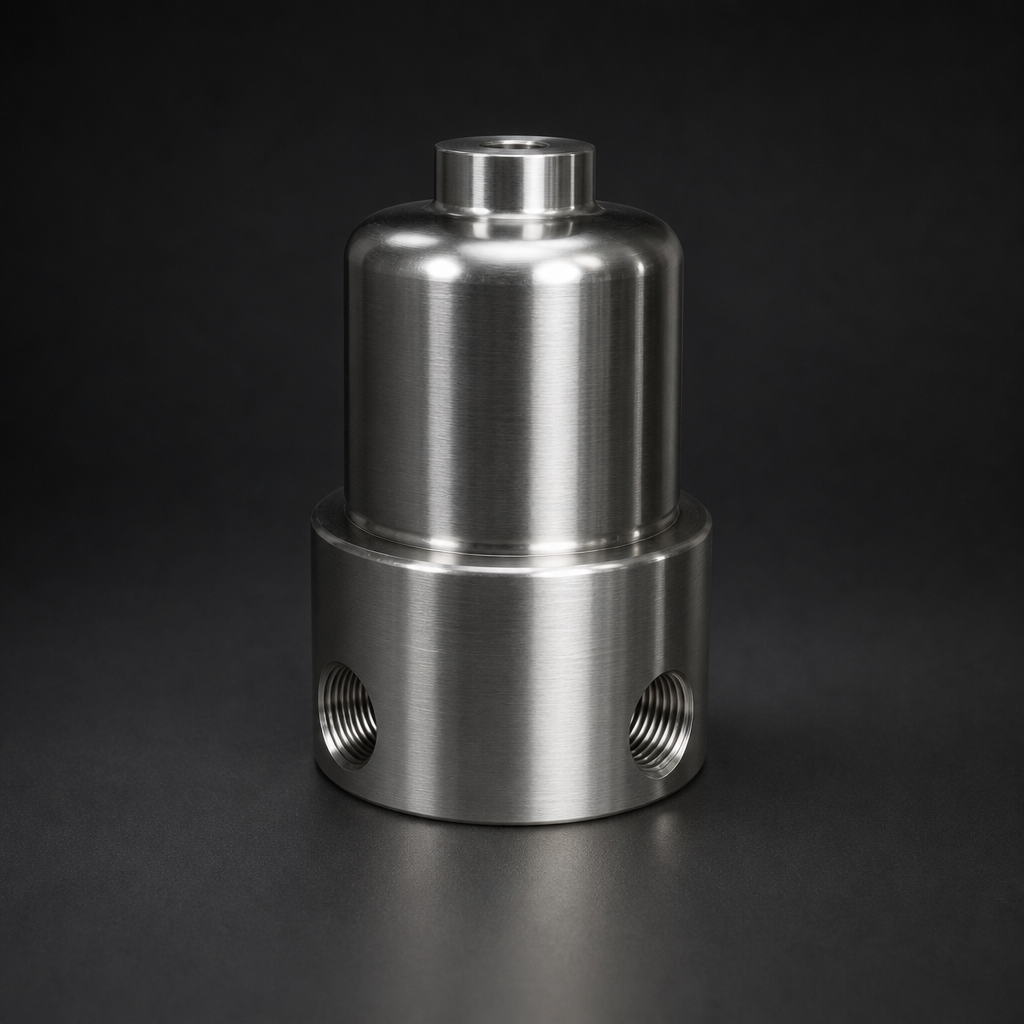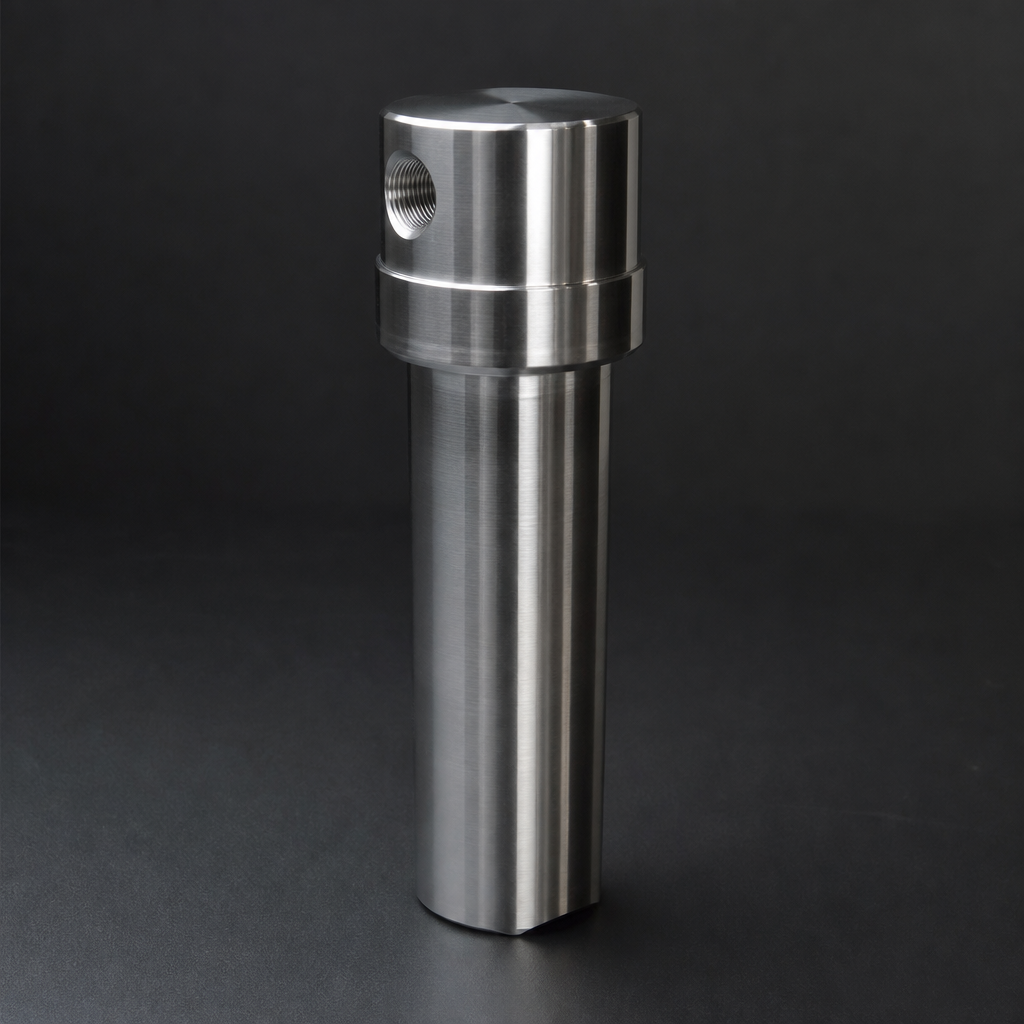
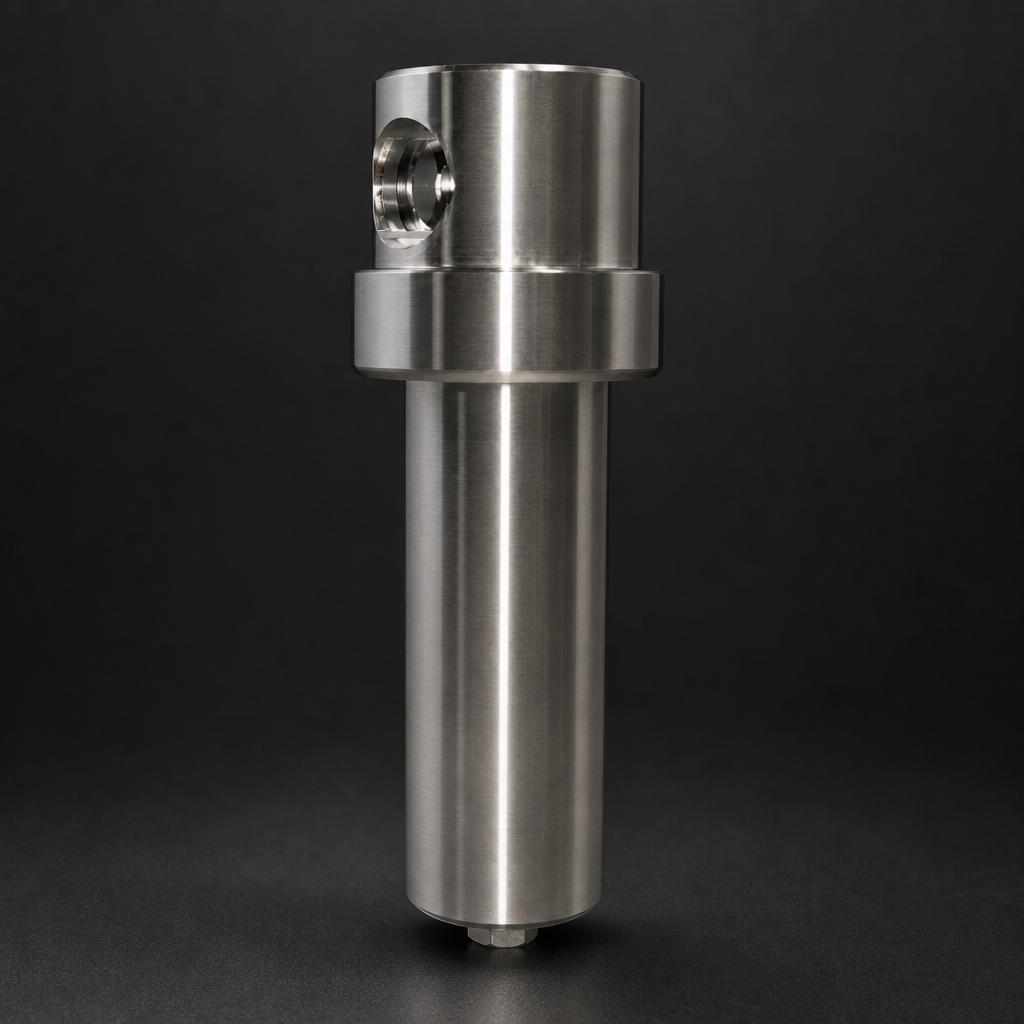
When your application demands filtration at 700 bar — whether for hydrogen refuelling stations, CNG line protection, or high-pressure test rigs — the HYDAC GF2 series is a well-known reference point. But it is not the only engineering solution. R+F FilterElements offers the RF-H-110HP to RF-H-140HP range as a technically credible alternative, designed for ultra-high-pressure gas service with 316L stainless steel construction and proven element technology.
This guide compares the two product families across the parameters that matter most to process engineers: pressure rating, materials, connection standards, and element technology. It is not a drop-in replacement claim — it is an engineering evaluation to help you decide whether the R+F approach fits your system.
Why Ultra-High-Pressure Gas Filtration Is Demanding
At 700 bar, the mechanical stresses on a filter housing are extreme. Seal integrity, body wall thickness, and connection thread engagement all become critical safety factors. Contamination control is equally important: particulate ingress at these pressures can cause valve seat erosion, regulator failure, and instrument damage within hours of commissioning.
Applications that routinely operate at or near 700 bar include hydrogen refuelling infrastructure (SAE J2601 protocol), CNG cascade storage systems, high-pressure gas chromatography carrier lines, and hydraulic test bench supply circuits. Each of these demands a filter that can sustain cyclic pressure loading without fatigue failure at the body or end-cap joints.
HYDAC GF2 Series: What It Offers
The HYDAC GF2 is a compact, high-pressure gas filter designed for pressures up to 700 bar. Key characteristics include Duplex stainless steel (1.4462) construction, which provides excellent resistance to chloride stress corrosion cracking — relevant in coastal or offshore environments. Connection options typically include UNF and Autoclave-style fittings, which are common in high-pressure gas and hydraulic instrumentation.
The GF2 uses Chemicron filter elements — a sintered metal or glass-fibre medium depending on the grade selected. Chemicron elements are robust and well-suited to high-differential-pressure service, though they are proprietary to HYDAC and must be sourced through HYDAC's distribution network.
R+F RF-H-110HP to RF-H-140HP: The Alternative Engineering Approach
The R+F high-pressure instrumentation filter range covers the RF-H-110HP through RF-H-140HP housings, all rated to 700 bar. These are manufactured in 316L austenitic stainless steel — a material choice that prioritises weldability, broad chemical compatibility, and availability of certified material traceability documentation (EN 10204 3.1).
Connection options for the RF-H-110HP to RF-H-140HP series include NPT (1/4" and 1/2") and, on selected variants, UNF and Autoclave-compatible fittings. This gives system designers flexibility when integrating into existing high-pressure manifolds or when specifying new installations to a preferred connection standard.
Filter elements used in the RF-H-110HP to RF-H-140HP housings are borosilicate glass microfibre coalescing elements (RF-C series) or sintered metal particulate elements, depending on the contamination type being targeted. The borosilicate elements achieve 99.99% efficiency at ≥ 0.1 µm — a performance level consistent with ISO 8573-1 Class 1 aerosol removal requirements.
Need help selecting the right filter for your 700 bar application?
Key Performance Statistics
Side-by-Side Comparison: HYDAC GF2 vs R+F RF-H-110HP to RF-H-140HP
| Parameter | HYDAC GF2 | R+F RF-H-110HP – RF-H-140HP |
|---|---|---|
| Max. Working Pressure | 700 bar | 700 bar |
| Body Material | Duplex SS 1.4462 | 316L Stainless Steel |
| Element Technology | Chemicron (sintered/glass-fibre) | Borosilicate glass microfibre (RF-C) / Sintered metal |
| Connection Options | UNF, Autoclave | NPT, UNF, Autoclave (variant-dependent) |
| Material Certification | HYDAC standard | EN 10204 3.1 available |
| Element Sourcing | HYDAC proprietary | R+F FilterElements (RF-C, RF-P series) |
| Drop-in Replacement? | — | No — alternative engineering solution |
Use our free Engineering Tool to get a filtration recommendation for your specific application in under 2 minutes.
Material Considerations: 316L vs Duplex 1.4462
The choice between 316L austenitic stainless steel and Duplex 1.4462 is not simply a matter of preference — it reflects different engineering priorities. Duplex grades offer approximately twice the yield strength of 316L, which can allow thinner wall sections for the same pressure rating. They also provide superior resistance to chloride-induced stress corrosion cracking (SCC), making them the preferred choice in marine or offshore environments.
316L, by contrast, is more widely available, easier to machine and weld, and has a longer track record in gas processing and instrumentation applications. For hydrogen service specifically, 316L is well-characterised in terms of hydrogen embrittlement resistance at the pressures and temperatures typical of refuelling infrastructure. The R+F hydrogen filtration solutions page provides further guidance on material selection for H₂ applications.
For most inland hydrogen refuelling, CNG, and high-pressure test applications, 316L is a fully adequate material choice. The RF-H-110HP to RF-H-140HP range is designed and tested for these service conditions.
Element Technology: Borosilicate vs Chemicron
HYDAC's Chemicron elements are a well-established sintered or glass-fibre medium with a long service history in hydraulic and gas applications. They are robust under high differential pressure and are available in a range of micron ratings.
The R+F RF-C coalescing elements use borosilicate glass microfibre technology — the same fundamental medium used in the highest-performance compressed air and gas filtration worldwide. At 700 bar service, the element is housed within the RF-H-110HP to RF-H-140HP body and retained by a precision end-cap assembly designed to prevent bypass under pressure surge conditions.
For applications where liquid aerosol removal is the primary concern (e.g. compressor oil carryover in CNG systems), the coalescing RF-C element is the appropriate choice. For dry particulate removal (e.g. pipe scale, valve debris), sintered metal elements or the RF-P particulate series are more suitable. The coalescing vs particulate filter elements guide explains the selection logic in detail.
Application Fit: Where the RF-H-110HP to RF-H-140HP Range Excels
The R+F high-pressure range is particularly well-suited to:
- Hydrogen refuelling stations — protecting dispensing valves and metering equipment from particulate and aerosol contamination at cascade pressures up to 700 bar. See the hydrogen solutions overview for system-level guidance.
- CNG line protection — upstream of pressure regulators and metering skids in compressed natural gas distribution systems.
- High-pressure test rigs — protecting precision instrumentation and control valves from contamination introduced during system assembly or commissioning.
- Analyser sample conditioning — where the instrumentation filter range provides the pressure rating and element efficiency required for reliable analyser protection.
For applications requiring even higher pressure ratings or specialised alloys (e.g. Hastelloy C-276 for aggressive gas compositions), contact R+F FilterElements directly to discuss bespoke engineering options.
- At 700 bar, the mechanical stresses on a filter housing are extreme.
- The HYDAC GF2 is a compact, high-pressure gas filter designed for pressures up to 700 bar.
- The R+F high-pressure instrumentation filter range covers the RF-H-110HP through RF-H-140HP housings, all rated to 700 bar.
- The choice between 316L austenitic stainless steel and Duplex 1.
Related Reading
- Hydrogen Electrolysis Filtration — Protecting Electrolyser Stacks
- Coalescing vs Particulate Filter Elements — Which Do You Need?
- ISO 8573-1 Compressed Air Quality Classes Explained
Try our Engineering Sizing Tool → or discuss your requirements with our team.