When your process gas application demands filtration at pressures up to 400 bar, the choice of housing and element supplier becomes a critical engineering decision. Many plants currently running HYDAC GF3 series filters are discovering that alternative solutions — offering comparable specifications with additional advantages — are available from European filtration specialists. R+F FilterElements offers its own range of high-pressure stainless steel filter housings that serve as engineering-equivalent alternatives for demanding process gas duties.
Understanding the HYDAC GF3 Application Space
The HYDAC GF3 series covers seven sizes (010 through 990), rated to 400 bar working pressure in 316L stainless steel (material 1.4571). These filters are widely used in natural gas compression, CNG stations, hydrogen production, and high-pressure instrumentation loops. When procurement teams seek alternative suppliers — whether for cost, lead time, or supply chain resilience — they need housings that match the core engineering parameters without compromising process integrity.
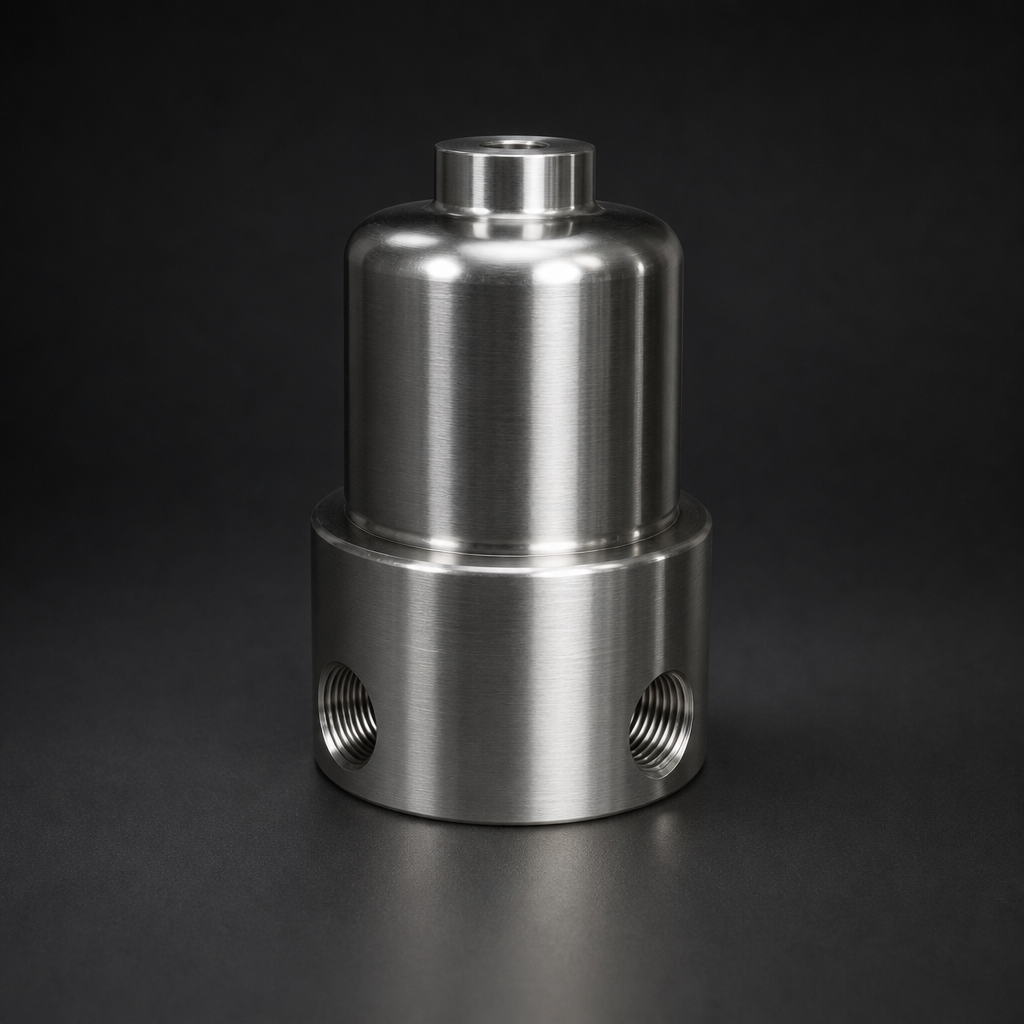
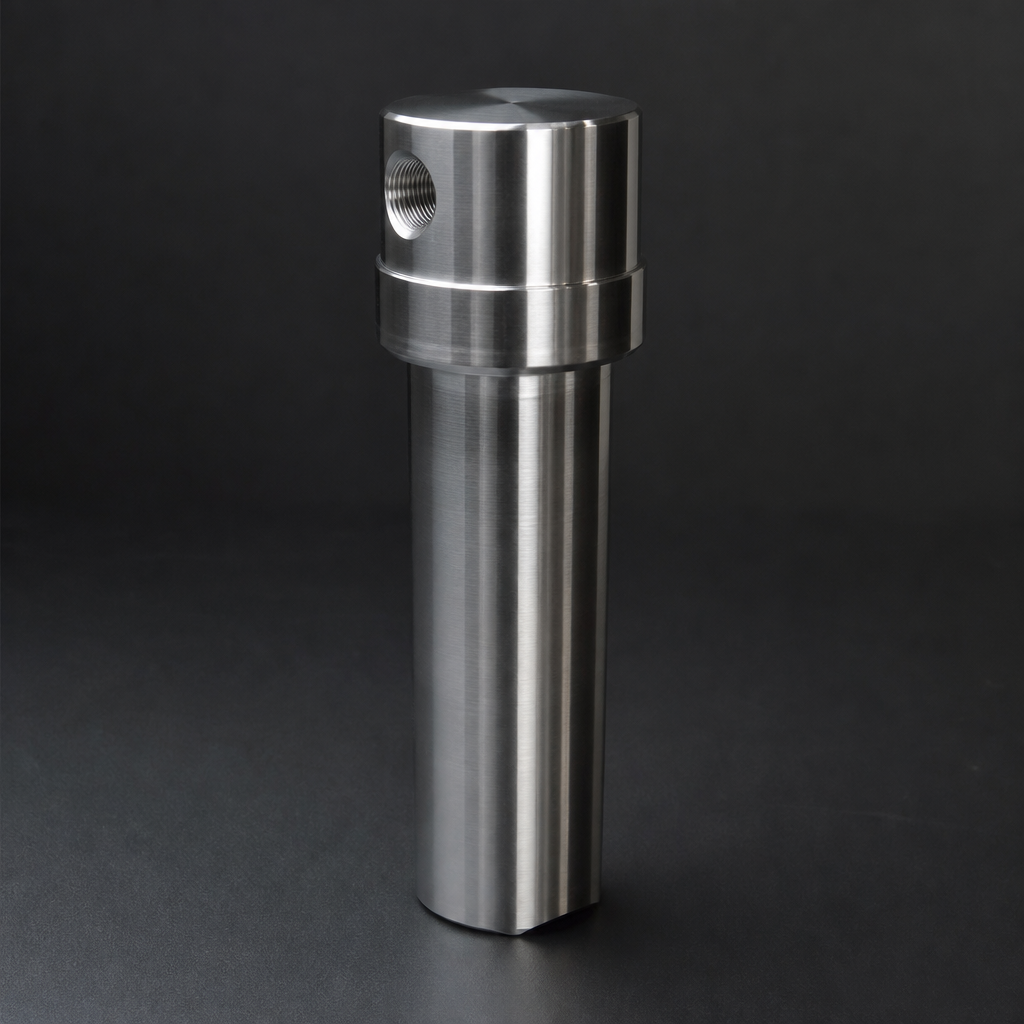
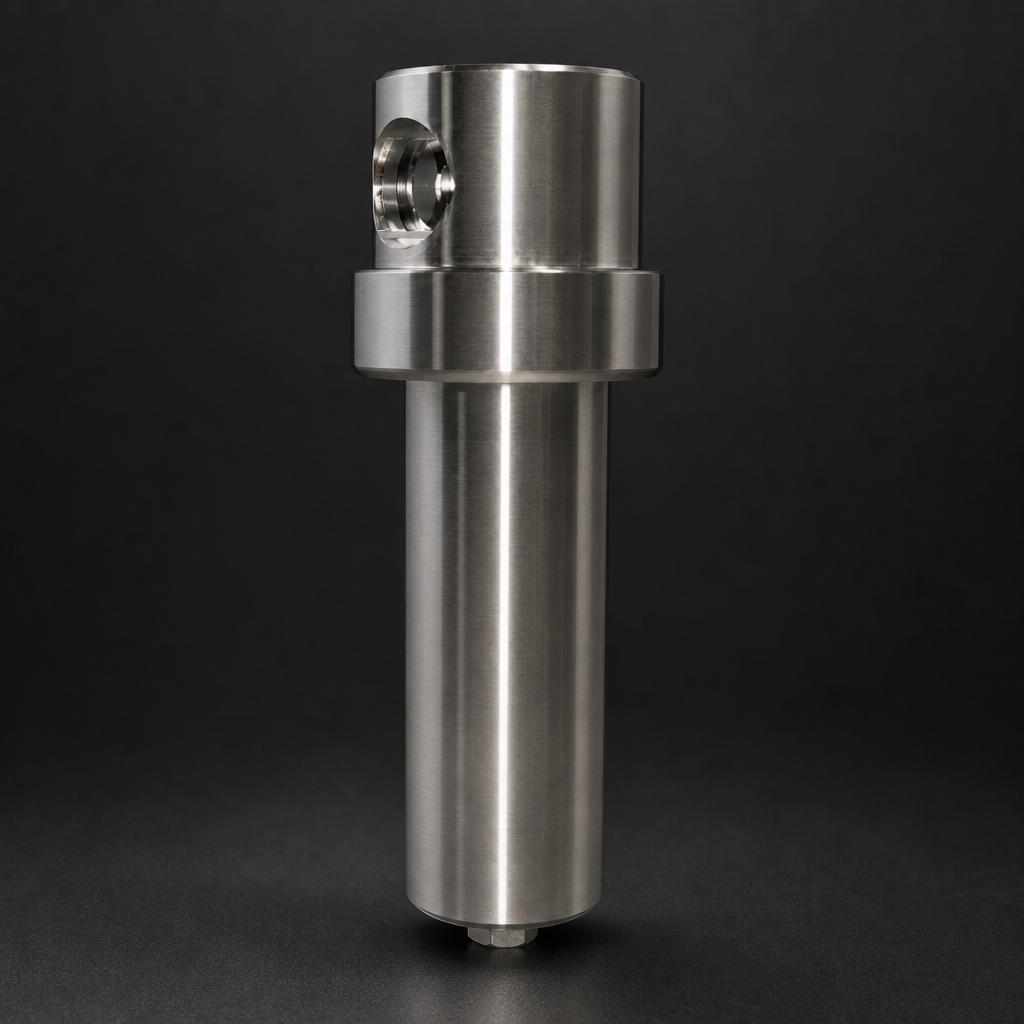
R+F High-Pressure Housing Range: RF-H-110 to RF-H-170
R+F FilterElements offers its own range of instrumentation and process gas filter housings in 316L stainless steel, covering pressures from standard process duties up to 700 bar in high-pressure variants. For applications comparable to the HYDAC GF3 series, the relevant R+F housings are:
- RF-H-150 — Compact process gas housing, rated to 100 bar, 316L SS, suitable for lower-pressure GF3 equivalents
- RF-H-160 — Medium-pressure process gas housing, rated to 250 bar, 316L SS
- RF-H-170 — High-pressure analyser and process gas housing, rated to 400 bar, 316L SS — the primary engineering-equivalent alternative for GF3 high-pressure duties
All three housings are available from R+F FilterElements with borosilicate glass microfibre filter elements, covering coalescing (RF-C series) and particulate (RF-P series) duties across a wide range of filtration grades.
Specification Comparison: HYDAC GF3 vs R+F RF-H-170
The table below compares the key engineering parameters of the HYDAC GF3 high-pressure series against the R+F RF-H-170 housing. This comparison is intended to assist engineers in evaluating suitability — it is not a claim of drop-in interchangeability.
| Parameter | HYDAC GF3 (HP sizes) | R+F RF-H-170 |
|---|---|---|
| Max working pressure | Up to 400 bar | Up to 400 bar |
| Housing material | 316L SS (1.4571) | 316L SS (1.4404) |
| Temperature range | −10 °C to +80 °C | −40 °C to +120 °C |
| Element media | Glass microfibre / sintered | Borosilicate glass microfibre |
| Seal options | NBR, FKM | NBR, FKM/Viton, EPDM, PTFE |
| Connection types | NPT, BSP, SAE | NPT, BSP, compression fitting |
| Sizes available | 7 sizes (010–990) | Multiple element lengths |
Need help selecting the right filter?
Where R+F Elements Offer Additional Advantages
Beyond matching the core pressure and material specifications, R+F FilterElements offers several engineering advantages that are worth considering during the evaluation process.
Wider Element Grade Range
R+F coalescing elements (RF-C series) and particulate elements (RF-P series) are available in a broader range of filtration grades than many OEM alternatives. This allows engineers to optimise filtration performance for specific contaminant profiles — whether the primary concern is liquid aerosols, solid particulate, or a combination of both. For process gas applications where ISO 8573-1 compliance is required, the ability to select the precise element grade is a significant advantage.
For applications requiring adsorption of hydrocarbon vapours or odour removal, the RF-AC activated carbon element is available as a companion stage. Learn more about R+F filter elements and their specifications.
Borosilicate Glass Microfibre Media
All R+F coalescing and particulate elements use borosilicate glass microfibre as the primary filtration medium. This material offers excellent chemical resistance across a wide range of process gases — including natural gas, hydrogen, nitrogen, and instrument air — and maintains its structural integrity at elevated temperatures. The RF-C coalescing elements achieve 99.99% efficiency at ≥ 0.1 µm, meeting the requirements of ISO 8573-1 Class 1 for oil aerosol content.
Competitive Lead Times from European Stock
R+F FilterElements operates from Hildesheim, Germany, with European stock of both housings and replacement elements. For maintenance-critical applications where unplanned downtime is costly, access to locally-stocked replacement elements can be a decisive factor. The RF-H-170 housing and compatible RF-C and RF-P elements are available for short-notice delivery across Europe.
Use our free Engineering Tool to get a filtration recommendation for your specific application in under 2 minutes.
Selecting the Right Configuration for Your Application
Choosing the correct R+F housing and element combination for a HYDAC GF3 equivalent application requires a structured engineering review. The key parameters to confirm are:
- Operating pressure — confirm maximum allowable working pressure (MAWP) and any pressure surge conditions
- Flow rate — determine Nm³/h at operating conditions to select the correct housing size
- Gas composition — identify any aggressive components (H₂S, CO₂, moisture) that affect seal and element selection
- Temperature range — confirm minimum and maximum operating temperatures
- Filtration duty — coalescing (liquid aerosol removal), particulate, or combined stage
- Connection standard — NPT, BSP, or compression fitting to match existing pipework
For natural gas and CNG applications, the R+F natural gas filtration solutions page provides application-specific guidance. For hydrogen service, see the hydrogen filtration solutions section, which covers material compatibility and element selection for H₂ applications.
The R+F process gas filter range includes full technical data for the RF-H-150, RF-H-160, and RF-H-170 housings, including dimensional drawings and pressure/temperature ratings.
Engineering Review: Is the RF-H-170 Right for Your GF3 Application?
The RF-H-170 is the primary R+F housing to evaluate for applications currently using HYDAC GF3 filters in the high-pressure range (above 250 bar). Its 316L stainless steel construction, 400 bar pressure rating, and compatibility with the full range of RF-C and RF-P elements make it a technically credible alternative for most process gas duties.
However, a direct substitution should never be made without a full engineering review. Connection dimensions, element footprint, and flow capacity must all be verified against the existing installation. R+F FilterElements' engineering team can assist with this review — providing dimensional data, element selection guidance, and application-specific recommendations.
For a quick initial assessment, use the R+F Engineering Sizing Tool to input your operating parameters and receive a preliminary housing and element recommendation.
- The HYDAC GF3 series covers seven sizes (010 through 990), rated to 400 bar working pressure in 316L stainless steel (material 1.
- R+F FilterElements offers its own range of instrumentation and process gas filter housings in 316L stainless steel, covering pressures from standard process duties up to 700 bar in high-pressure variants.
- The table below compares the key engineering parameters of the HYDAC GF3 high-pressure series against the R+F RF-H-170 housing.
- Beyond matching the core pressure and material specifications, R+F FilterElements offers several engineering advantages that are worth considering during the evaluation process.
Related Reading
- Coalescing vs Particulate Filter Elements — Which Do You Need?
- Filtration Requirements for Hydrogen Electrolysis Systems
- ISO 8573-1 Explained: Compressed Air and Process Gas Quality Classes
Try our Engineering Sizing Tool → or discuss your requirements with our team.