Why Filtration Is a Safety-Critical Function at Every Hydrogen Refuelling Station
A hydrogen refuelling station (HRS) is not simply a scaled-up version of a compressed-air system. The combination of ultra-high pressures — 350 bar for heavy-duty vehicles and 700 bar for passenger cars — with the unique physical and chemical behaviour of molecular hydrogen creates a set of engineering challenges that standard industrial filters are simply not designed to meet. Particulate contamination, moisture carry-over, and compressor oil aerosols can all reach the vehicle's fuel cell stack if filtration is inadequate, causing irreversible damage to the membrane electrode assembly and voiding the vehicle manufacturer's warranty.
Beyond protecting the end-user's vehicle, correct filter selection protects the station itself. Hydrogen embrittlement — the progressive weakening of metallic components caused by hydrogen atoms diffusing into the crystal lattice — is a real failure mode at these pressures. Selecting housings and elements from a supplier who understands HRS duty is therefore not a procurement detail; it is a fundamental safety requirement.
This guide walks through the three pillars of HRS filtration: material selection, seal choice, and system placement — and explains how R+F FilterElements' RF-H-110HP and RF-H-140HP housings address each one.
Understanding the Pressure Tiers: 350 bar vs 700 bar
The Society of Automotive Engineers (SAE) J2601 standard defines two primary fuelling protocols for hydrogen vehicles:
- H35 (350 bar / 5,000 psi): Used predominantly for fuel cell buses, trucks, and forklifts. The larger tank volumes involved mean that fuelling times are acceptable even at the lower pressure.
- H70 (700 bar / 10,000 psi): The standard for passenger cars and light commercial vehicles, where rapid fuelling (under five minutes) is a commercial necessity.
From a filtration standpoint, the jump from 350 to 700 bar is not simply a doubling of mechanical stress. Wall stresses in cylindrical pressure vessels scale with pressure, so a housing rated for 700 bar must be substantially more robust than one rated for 350 bar. Equally, the density of hydrogen at 700 bar is high enough that even trace quantities of particulate or liquid contamination represent a meaningful mass of contaminant delivered to the vehicle per fill.
Material Requirements: Why 316L and Hastelloy Are the Starting Point
Hydrogen embrittlement susceptibility varies significantly between alloys. Carbon steels and low-alloy steels are highly susceptible, particularly at elevated pressures. Austenitic stainless steels — especially low-carbon grades such as 316L — offer substantially better resistance due to their face-centred cubic (FCC) crystal structure, which is less prone to hydrogen-assisted cracking than body-centred cubic (BCC) ferritic or martensitic structures.
For the most demanding 700 bar applications, or where the hydrogen stream contains trace levels of hydrogen sulphide (H₂S) from electrolysis or storage, Hastelloy C-276 provides an additional margin of safety. Its high nickel and molybdenum content gives excellent resistance to both hydrogen embrittlement and stress corrosion cracking.
| Material | Max Pressure (typical HRS use) | H₂ Embrittlement Resistance | H₂S Resistance | Typical Application |
|---|---|---|---|---|
| Carbon steel | Not recommended for H₂ | Poor | Poor | General industrial (avoid in HRS) |
| 316L stainless steel | Up to 700 bar (HP-rated) | Good | Moderate | Standard HRS filter housings |
| Hastelloy C-276 | Up to 700 bar | Excellent | Excellent | Sour H₂, ultra-high-pressure duty |
| Duplex 2205 | Up to 500 bar (application-specific) | Moderate | Good | Intermediate-pressure HRS circuits |
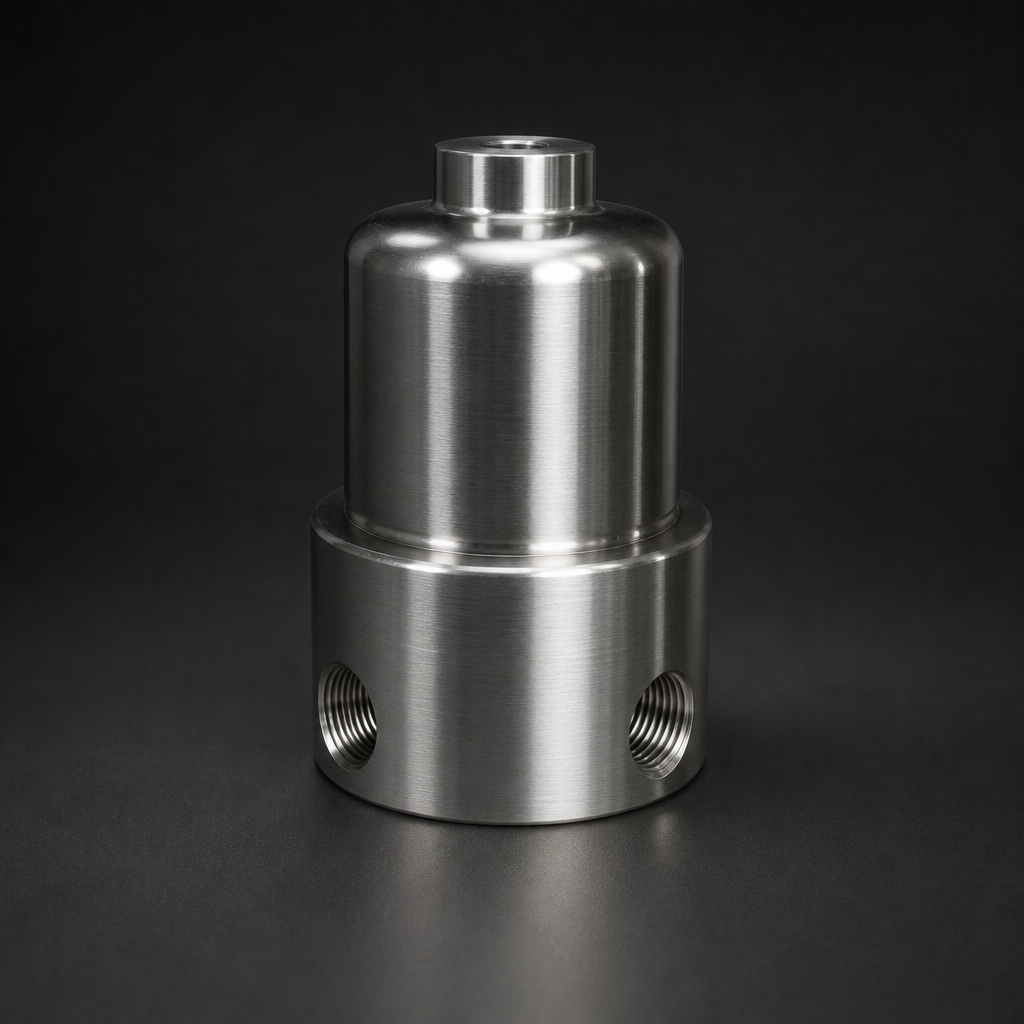
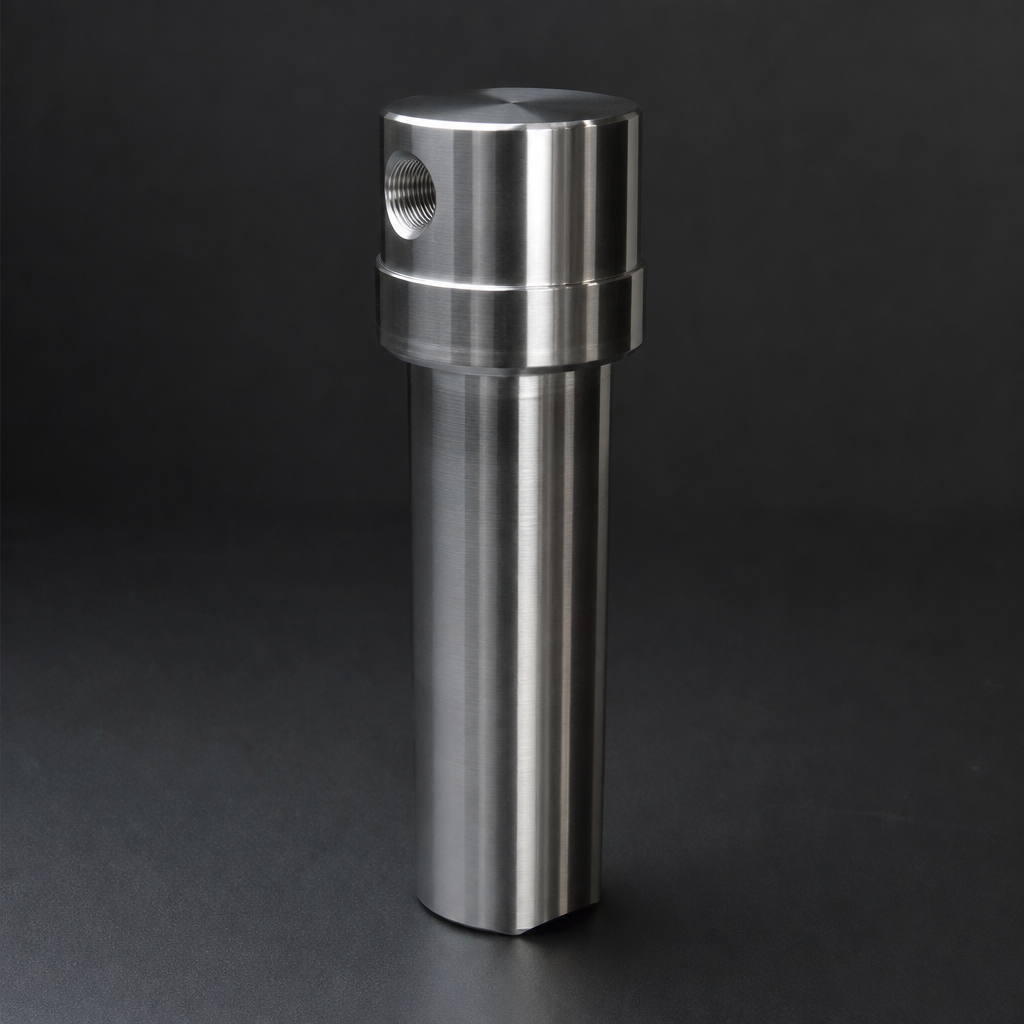
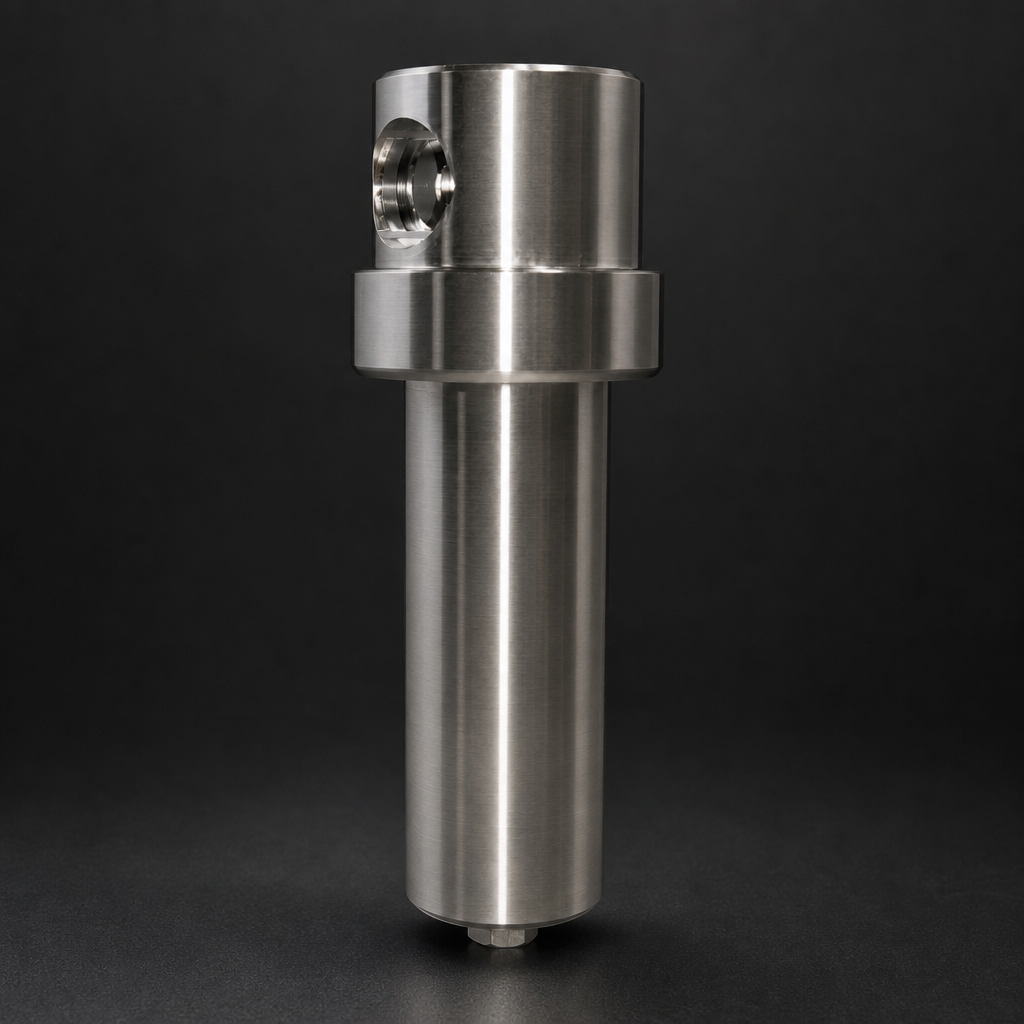
The R+F RF-H-110HP and RF-H-140HP housings are manufactured from 316L stainless steel as standard, with Hastelloy C-276 wetted parts available on request for sour-gas or ultra-demanding duty. Both housings are pressure-tested and certified to the relevant Pressure Equipment Directive (PED) requirements before despatch.
For further information on the full range of high-pressure and instrumentation housings available from R+F FilterElements, visit the instrumentation filter range or the process gas filter range.
Seal Selection: Why Standard Elastomers Fail in High-Pressure Hydrogen
Seal selection is arguably the most frequently underestimated aspect of HRS filtration design. Many engineers familiar with compressed-air or nitrogen systems default to NBR (nitrile) O-rings, which perform well in those applications. In high-pressure hydrogen service, however, NBR and many other common elastomers present two serious problems:
- Explosive decompression (ED): At high pressure, hydrogen dissolves into the elastomer matrix. When pressure is rapidly reduced — as occurs during a vehicle fill cycle — the dissolved gas expands within the seal, causing blistering, cracking, or catastrophic failure. This is not a gradual degradation; it can destroy a seal in a single decompression event.
- Hydrogen permeation: Even without explosive decompression, hydrogen molecules are small enough to permeate through many elastomers at elevated pressure, creating a slow leak path that is difficult to detect and potentially dangerous in an enclosed dispenser cabinet.
The preferred seal materials for HRS duty are:
- PTFE: Chemically inert, zero permeation, rated to 260 °C. PTFE is the gold standard for static seals in high-pressure hydrogen. Its low elasticity means it must be used in precision-machined grooves, but it offers unmatched chemical compatibility.
- FFKM (perfluoroelastomer): Combines the chemical resistance of PTFE with the elasticity of a rubber compound. Suitable for dynamic seals where PTFE's rigidity is a limitation. Expensive, but justified in safety-critical HRS applications.
- FKM/Viton (ED-resistant grades): Certain specially compounded FKM grades with low Shore hardness and controlled cross-link density offer acceptable explosive decompression resistance. These must be specified explicitly — standard FKM is not adequate.
R+F FilterElements specifies PTFE seals as standard on the RF-H-110HP and RF-H-140HP housings, with FFKM available as an option. Standard NBR and general-purpose FKM are explicitly excluded from the HRS product configuration.
FKM/Viton (ED-resistant grades):
Filter Placement in the HRS Dispensing System
A typical hydrogen refuelling station comprises several distinct pressure zones, and filtration requirements differ at each stage. Understanding where to place filters — and what grade of filtration is needed at each point — is essential for both system protection and compliance with standards such as SAE J2719 (hydrogen fuel quality) and ISO 14687 (hydrogen fuel specification).
1. Compressor Inlet and Inter-Stage Filtration
Hydrogen arriving at the station from an electrolyser, pipeline, or tube trailer may carry moisture, particulate from pipework, and trace compressor oils from upstream equipment. Coarse particulate filtration (typically 10–40 µm) at the compressor inlet protects the compressor valves and reduces wear. Inter-stage filters between compression stages remove any oil aerosol introduced by the compressor itself.
2. High-Pressure Storage Buffer Outlet
After compression to 500–900 bar (cascade storage), hydrogen passes through a pressure regulator before entering the dispenser. A fine particulate filter (1–5 µm) at this point removes any scale or debris that may have accumulated in the storage vessels, protecting the regulator seat and downstream instrumentation.
3. Final Point-of-Dispense Filter
The most critical filter in the system sits immediately upstream of the dispenser nozzle. ISO 14687 specifies that hydrogen delivered to a vehicle must contain no more than 1 mg/kg of total particulate matter with a maximum particle size of 10 µm. A high-efficiency particulate filter — rated to 99.99% efficiency at ≥ 1 µm — at this location is the last line of defence before hydrogen enters the vehicle's fuel cell system.
The RF-H-140HP is particularly well-suited to this final-stage duty. Its compact body fits within the space constraints of a standard dispenser cabinet, while its 700 bar pressure rating and PTFE seals ensure safe, reliable operation across thousands of fill cycles.
Filter Placement Summary
| Location | Pressure Range | Recommended Filtration Grade | R+F Housing |
|---|---|---|---|
| Compressor inlet | 5–30 bar | 10–40 µm particulate | RF-H-150 or RF-H-160 |
| Inter-stage (compressor) | 30–200 bar | Coalescing + particulate | RF-H-160 |
| Storage buffer outlet | 200–500 bar | 1–5 µm particulate | RF-H-110HP |
| Final dispense (H35) | 350 bar | ≤ 1 µm, 99.99% efficiency | RF-H-110HP |
| Final dispense (H70) | 700 bar | ≤ 1 µm, 99.99% efficiency | RF-H-140HP |
Use our free Engineering Tool to get a filtration recommendation for your specific application in under 2 minutes.
RF-H-110HP and RF-H-140HP: Technical Overview
R+F FilterElements offers two housings from its instrumentation and high-pressure range that are specifically configured for HRS duty:
- RF-H-110HP: Rated to 350 bar, 316L stainless steel body, PTFE seals, 1/4" to 1/2" NPT or compression-fitting connections. Accepts standard RF-P particulate elements in 12032 and 12057 sizes. Suitable for H35 dispensing and intermediate-pressure stages.
- RF-H-140HP: Rated to 700 bar, 316L stainless steel body (Hastelloy option available), PTFE seals, 1/4" NPT or Swagelok-compatible compression fittings. Accepts RF-P elements in 12032 size. Designed for H70 final-dispense duty within dispenser cabinets.
Both housings are available with optional SilcoNert® coating on all wetted surfaces for applications where even trace metallic contamination must be eliminated — for example, in stations supplying hydrogen to semiconductor fabs or research facilities where fuel cell stack purity requirements exceed the standard SAE J2719 specification.
Element replacement is tool-free on both models, with a quarter-turn locking collar that allows element changeout without disconnecting the housing from the pipework — an important feature in a dispenser cabinet where space is at a premium.
Compliance and Documentation
HRS operators in Europe must demonstrate compliance with the Hydrogen Refuelling Infrastructure Directive and, where applicable, ATEX zone classification requirements for the dispenser cabinet. R+F FilterElements provides full material traceability documentation (EN 10204 3.1 material certificates), pressure test certificates, and dimensional drawings for all HP-series housings, simplifying the CE marking and safety case process for station operators and their notified bodies.
For stations requiring ATEX-rated components, R+F can advise on compatible instrumentation and connection options. Contact the technical team via the enquiry page or use the filter sizing wizard to generate a preliminary specification for your HRS project.
Our engineering team can help you select the correct filter housing, element grade, and seal material for your hydrogen refuelling station — whether H35 or H70.
Request a Technical Consultation →- H35 (350 bar / 5,000 psi):
- Hydrogen embrittlement susceptibility varies significantly between alloys.
- Explosive decompression (ED):
- A typical hydrogen refuelling station comprises several distinct pressure zones, and filtration requirements differ at each stage.
Key Takeaways for HRS Filtration Design
- Use 316L stainless steel as a minimum for all wetted components; specify Hastelloy C-276 for sour-gas or ultra-high-pressure duty.
- Eliminate standard NBR and general-purpose FKM seals entirely — specify PTFE or FFKM for all HRS filter connections.
- Place filters at every pressure transition point: compressor inlet, inter-stage, storage outlet, and final dispense.
- Ensure the final-dispense filter meets ISO 14687 particulate limits (≤ 1 µm, ≤ 1 mg/kg total particulate).
- Demand full material traceability and pressure test certificates from your filter supplier.
- The R+F RF-H-110HP (350 bar) and RF-H-140HP (700 bar) are purpose-built for these requirements and are available with short lead times from R+F FilterElements' European supply chain.
For a detailed technical discussion of your specific HRS project — including flow rates, connection standards, and element selection — the R+F FilterElements engineering team is available to assist. Visit the hydrogen filtration solutions page for further application guidance.