Lithium-ion battery manufacturing demands some of the most stringent environmental controls in modern industry. Electrode coating lines, cell assembly areas, and formation chambers all require ultra-dry air or nitrogen with dew points below −40 °C — and any particulate contamination at the micron level can cause catastrophic cell defects. If your dry room gas supply is not properly filtered and conditioned, you risk yield losses, separator damage, and costly production downtime.
Why Dry Rooms Are So Demanding
Lithium reacts violently with moisture. During electrode slurry coating, calendering, and cell winding, even trace humidity causes lithium dendrite formation and electrolyte decomposition. Industry targets for dry room air quality typically specify a dew point of −40 °C to −60 °C, with particle counts below ISO Class 5 (ISO 14644-1). Nitrogen blanketing is used in the most sensitive zones — particularly during electrolyte filling — where oxygen levels must remain below 1 ppm.
Beyond moisture, the process gas supply must be free of compressor oil aerosols, particulate debris from pipework, and hydrocarbon vapours that could contaminate electrode surfaces. A multi-stage filtration approach is therefore essential at every gas inlet point.
Key Contamination Challenges in Battery Cell Production
1. Particulate Control for Electrode Coating
Electrode slurry — a mixture of active material, binder, and solvent — is coated onto copper or aluminium foil at high speed. Any hard particle above 0.5 µm in the supply air or nitrogen can score the coating, create pinholes, or embed itself in the active layer. Coalescing and particulate filter elements rated to 99.99% efficiency at ≥ 0.1 µm are the standard of care here.
R+F FilterElements offers the RF-DIL disposable inline particulate filter for point-of-use protection directly at coating heads and gas manifolds. These compact, single-use units eliminate the risk of cross-contamination during element change-outs and are ideal for high-purity nitrogen distribution networks.
2. Ultra-Dry Air and Nitrogen Supply
Compressed dry air and nitrogen generators both introduce contamination risks: compressor oil carry-over, pipe scale, and moisture ingress at connection points. Before gas enters the dry room, it must pass through a coalescing stage to remove oil aerosols, followed by a particulate stage to capture any downstream debris.
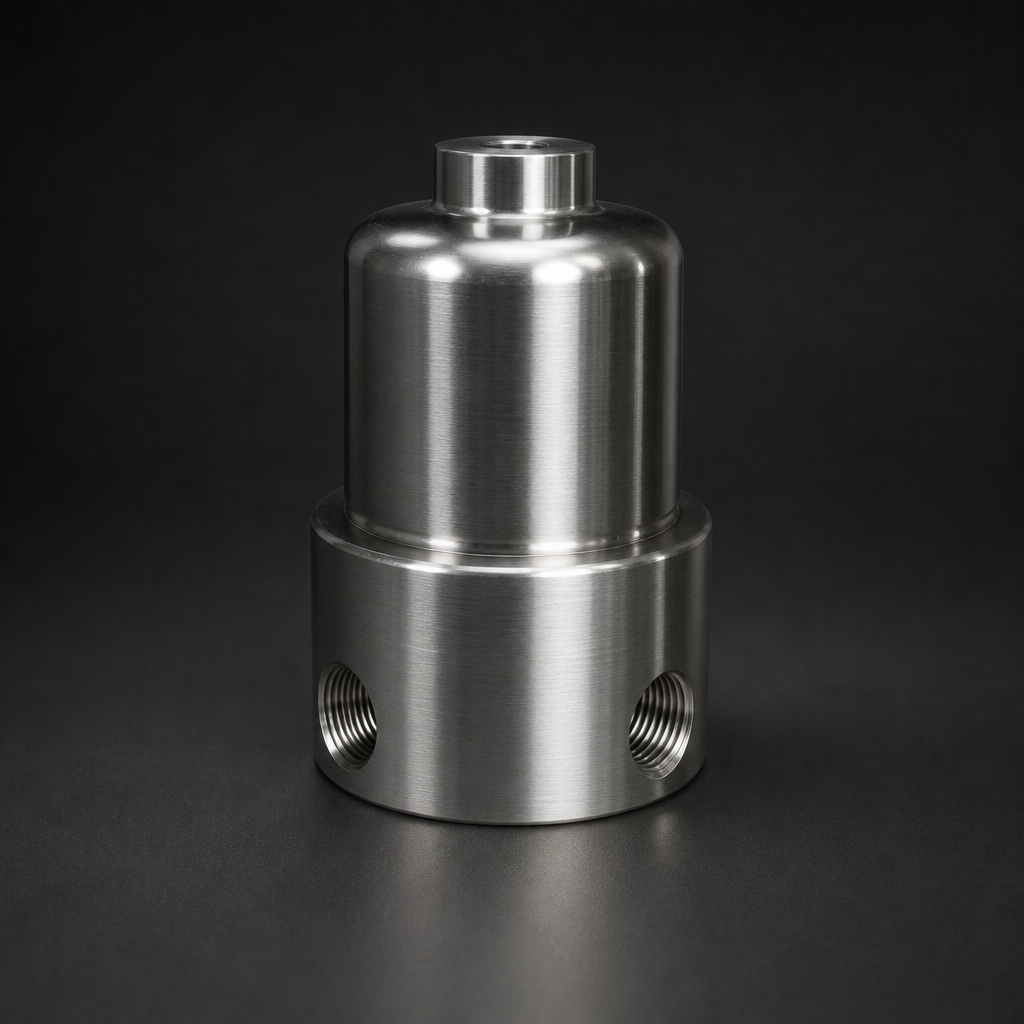
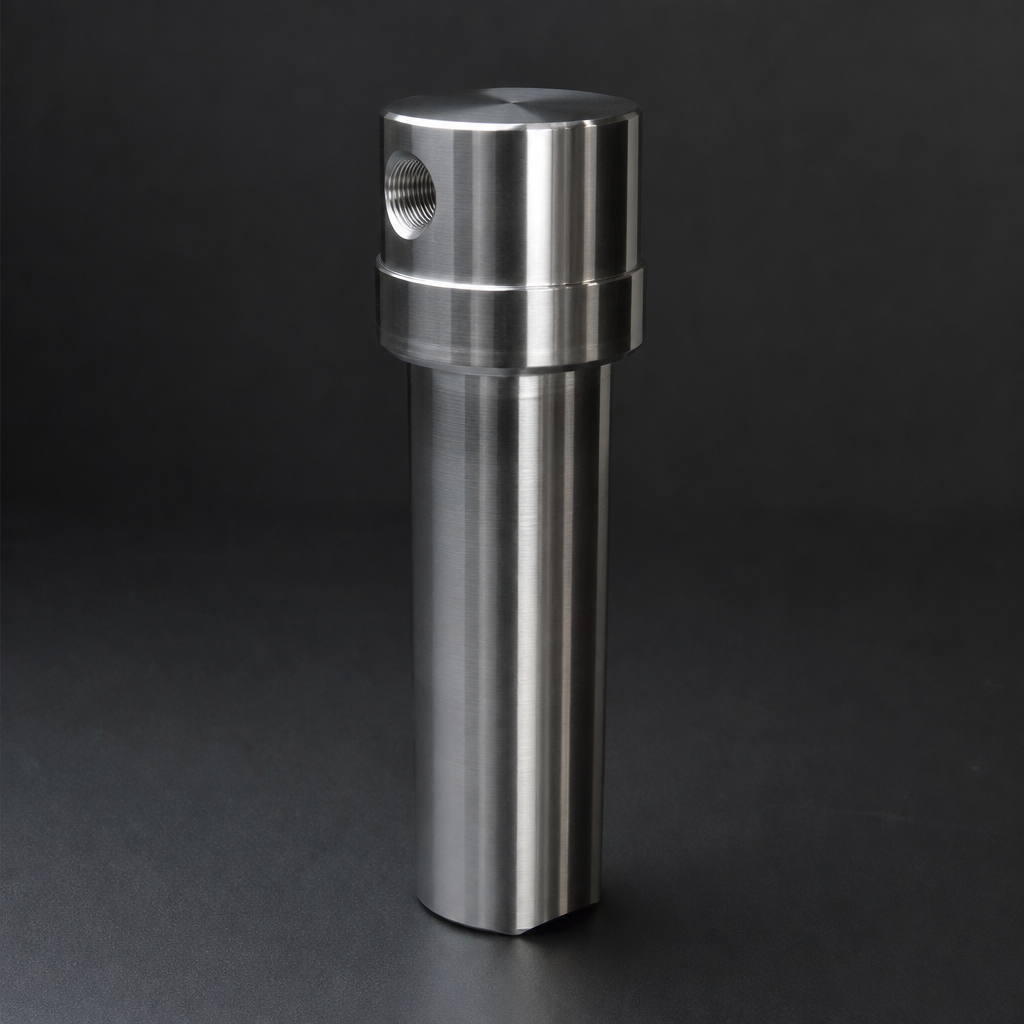
The RF-H-150 compact process gas housing — rated to 100 bar in 316L stainless steel — is well suited to high-pressure nitrogen supply lines feeding dry room distribution headers. Its all-metal construction and FKM seal option make it compatible with ultra-dry service where elastomer outgassing must be minimised.
3. NMP Solvent Recovery Gas Filtration
N-Methyl-2-pyrrolidone (NMP) is the dominant solvent used in cathode slurry preparation. During drying, NMP vapour is captured and recovered for reuse — a process that involves recirculating gas streams laden with solvent aerosols and fine particulate. Filtration at the inlet and outlet of NMP recovery systems protects heat exchangers, condensers, and adsorption beds from fouling.
For NMP-laden gas streams, activated carbon adsorption elements (RF-AC series) can be deployed downstream of coalescing stages to capture residual solvent vapour, reducing emissions and protecting downstream equipment. See our guide on coalescing vs particulate filter elements for a detailed comparison of element selection criteria.
Performance Benchmarks for Battery Manufacturing Gas Filtration
Need help selecting the right filter for your battery manufacturing gas supply?
Recommended Filtration Stages for Dry Room Gas Supply
| Stage | Function | R+F Product | Key Spec |
|---|---|---|---|
| 1 — Bulk coalescing | Remove compressor oil aerosols and bulk liquid | RF-C element in RF-H-150 housing | 99.99% @ ≥ 0.1 µm, up to 100 bar |
| 2 — Particulate | Capture downstream pipe scale and debris | RF-P element | 99.99% @ ≥ 0.3 µm |
| 3 — Adsorption | Remove hydrocarbon vapour and NMP traces | RF-AC activated carbon element | Residual oil < 0.003 mg/m³ |
| 4 — Point-of-use | Final protection at coating heads and manifolds | RF-DIL disposable inline filter | Compact, single-use, no cross-contamination |
Use our free Engineering Tool to get a filtration recommendation for your specific application in under 2 minutes.
Selecting the Right Housing for High-Pressure Nitrogen Lines
Battery gigafactories typically receive nitrogen at high pressure from on-site generation or bulk liquid storage, then distribute it through a ring main at 10–50 bar before pressure reduction at each dry room inlet. The RF-H-150 process gas housing is designed precisely for this duty: 316L stainless steel body, electropolished internal surfaces, and FKM or PTFE seal options to minimise outgassing and particle shedding.
For applications requiring even higher pressure — such as cylinder manifold protection or high-pressure test gas supply — the RF-H-160 (250 bar) and RF-H-170 (400 bar) housings extend the same design philosophy to more demanding service conditions. All housings accept the full range of RF-C, RF-P, and RF-AC elements.
Where space is at a premium on gas panels or at individual tool inlets, the RF-DIL inline filter provides a compact, disposable solution that can be installed directly in ¼″ or ½″ tube fittings without any housing. This is particularly valuable in cleanroom environments where minimising maintenance interventions reduces contamination risk.
Compliance and Standards
Gas quality for battery manufacturing is increasingly governed by internal OEM specifications derived from semiconductor industry standards. ISO 8573-1 Class 1 (particles), Class 1 (water), and Class 1 (oil) represent the most stringent tier — achievable with a properly designed multi-stage filtration train. R+F FilterElements can supply test certificates and element batch traceability documentation to support quality audits.
For teams working on hydrogen electrolysis filtration or oxygen filtration safety, many of the same high-purity principles apply — the element selection and housing material choices overlap significantly with battery manufacturing requirements.
- Lithium reacts violently with moisture.
- Electrode slurry — a mixture of active material, binder, and solvent — is coated onto copper or aluminium foil at high speed.
- Battery gigafactories typically receive nitrogen at high pressure from on-site generation or bulk liquid storage, then distribute it through a ring main at 10–50 bar before pressure reduction at each dry room inlet.
- Gas quality for battery manufacturing is increasingly governed by internal OEM specifications derived from semiconductor industry standards.
Related Reading
- Coalescing vs Particulate Filter Elements — Which Do You Need?
- Hydrogen Electrolysis Filtration — Protecting Electrolysers and Gas Purity
- ISO 8573-1 Compressed Air Quality — A Practical Guide
Try our Engineering Sizing Tool → or discuss your requirements with our team.