Process analysers are only as reliable as the sample they receive. In fast-loop sample systems — where gas is continuously circulated from the process tap to the analyser and back — even brief contamination events can foul sensors, block capillaries, and trigger costly unplanned shutdowns. Selecting the right combination of filter housing and element type is therefore not a secondary concern: it is the foundation of analyser longevity and measurement accuracy.
Why Sample System Filtration Demands a Different Approach
Unlike bulk compressed-air filtration, sample conditioning operates at much lower flow rates, often under tightly controlled pressure and temperature conditions. The sample gas must arrive at the analyser in a representative, clean state — free of particulates, liquid droplets, and moisture traces that would otherwise skew readings or damage sensitive components.
Fast-loop bypass flow is the standard technique for achieving rapid sample transport. A high-velocity bypass stream carries the sample from the process tap to the analyser enclosure in seconds, minimising dead volume and lag time. A small slip-stream is then drawn off for analysis. This architecture places the filtration train at the heart of the system: every element of contamination that enters the loop must be captured before it reaches the analyser cell.
Matching Filter Type to Contamination Profile
The flexibility to combine different filter media within a single housing train is what distinguishes a well-engineered sample system from a generic installation. R+F FilterElements offers its own range of elements and housings designed specifically for this application, available through instrumentation-grade filter housings.
Particulate Filters for Heavily Contaminated Samples
Where the process stream carries solid particulates — rust, scale, catalyst fines, or process dust — a dedicated particulate stage must be placed upstream of any coalescing or membrane element. R+F branded RF-P particulate elements achieve 99.99% efficiency at ≥ 0.3 µm, protecting downstream stages from premature loading. These elements are available in multiple grades and are compatible with the RF-H-110 to RF-H-170 instrumentation housing series, which are constructed from 316L stainless steel and rated to pressures up to 700 bar in high-pressure variants.
Coalescing Filters for Liquid Aerosol Removal
Gas streams saturated with liquid aerosols — water, hydrocarbon condensate, or compressor oil carry-over — require a coalescing stage. R+F branded RF-C coalescing elements use borosilicate glass microfibre media to capture sub-micron droplets and drain them away from the gas path. Efficiency is 99.99% at ≥ 0.1 µm, and the elements are available in both standard (100 °C) and S-type (200 °C) configurations for elevated-temperature sample streams. Learn more about the differences between element types in our guide to coalescing vs particulate filter elements.
PTFE Membrane Separators for Final Moisture Traces
Where the analyser is sensitive to even trace moisture — as is common in laser-based or electrochemical analysers — a PTFE hydrophobic membrane separator provides an absolute liquid barrier. The RF-GMS-170 membrane separator from R+F FilterElements passes gas freely whilst blocking any liquid phase, ensuring the sample arrives in a dry, representative condition. This stage is typically installed immediately upstream of the analyser inlet, after particulate and coalescing pre-filtration.
Housing Selection: The Critical Variable
Element performance is only realised when the housing is correctly matched to the application. For sample system use, the key parameters are pressure rating, wetted material compatibility, connection size, and ease of element replacement in the field.
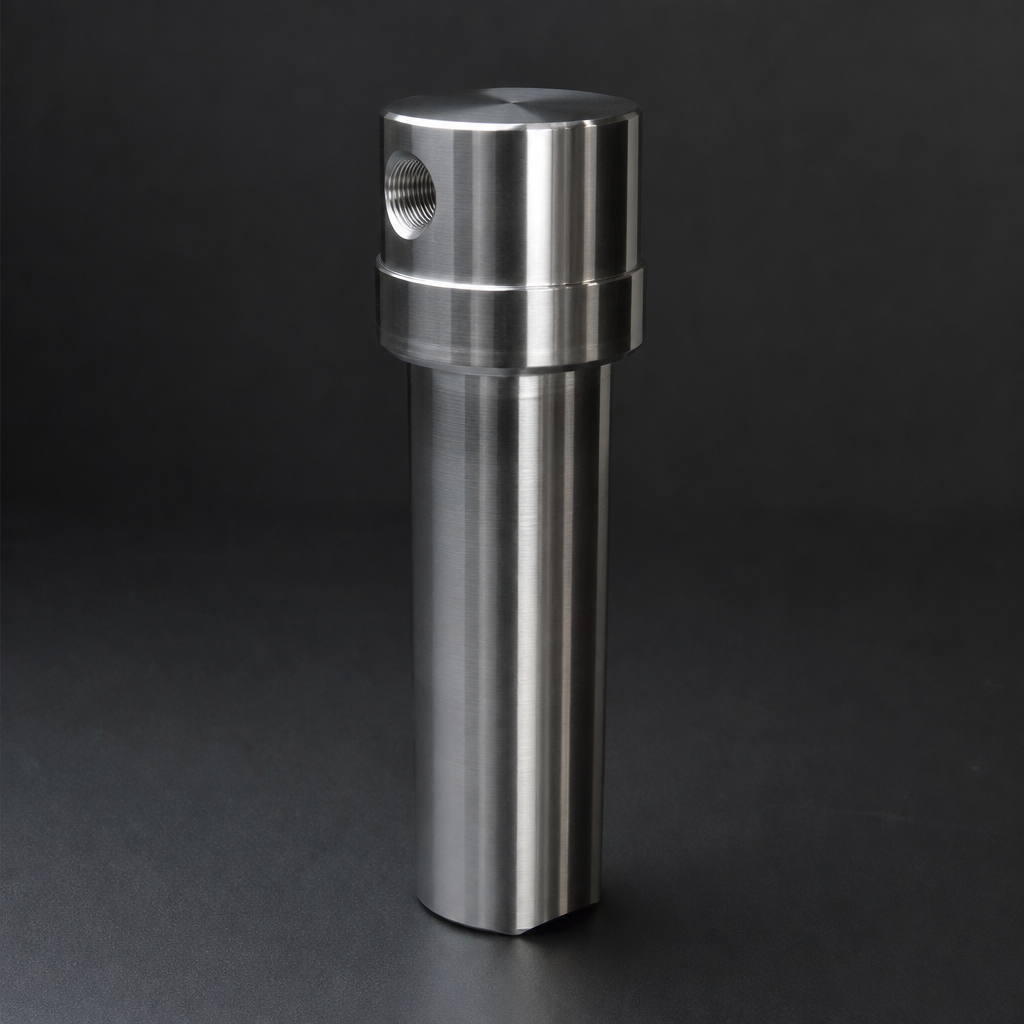
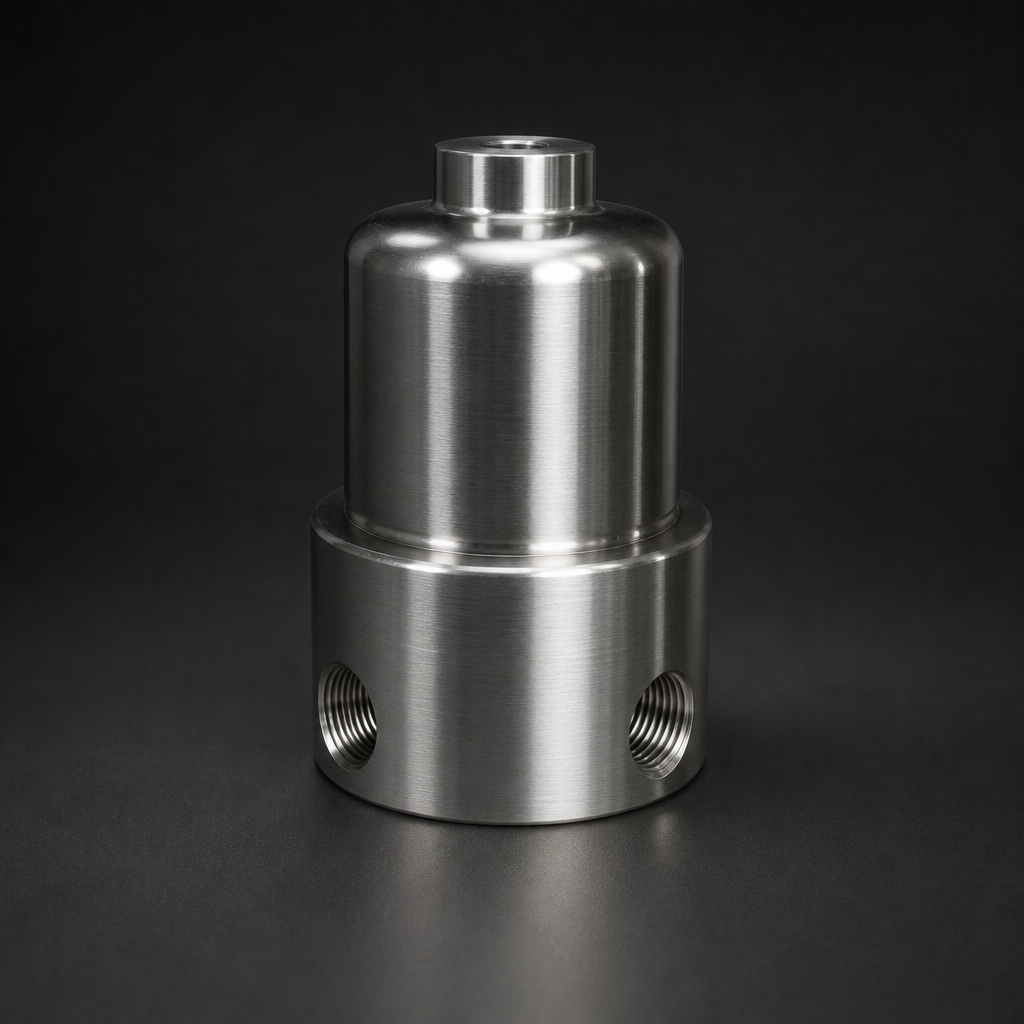
The RF-H-150 process gas housing is a compact 316L stainless steel unit rated to 100 bar, well suited to medium-pressure sample conditioning duties. For higher-pressure applications — natural gas metering stations, hydrogen production, or high-pressure process streams — the RF-H-160 (250 bar) and RF-H-170 (400 bar) housings provide the necessary pressure containment whilst maintaining the small footprint required in analyser enclosures.
Where the sample contains aggressive components such as H₂S or chlorine, K-type sour gas elements combined with FKM/Viton seals provide the chemical resistance required. SilcoNert-coated variants of the RF-H-170 are available for ultra-pure and semiconductor applications where surface adsorption of trace components must be minimised.
Need help selecting the right filter for your sample system?
Key Performance Data at a Glance
Use our free Engineering Tool to get a filtration recommendation for your specific application in under 2 minutes.
Comparing Filter Configurations for Common Analyser Applications
| Application | Recommended Element | Housing | Key Benefit |
|---|---|---|---|
| Natural gas metering | RF-P + RF-C (two-stage) | RF-H-160 | Solid and liquid removal to 250 bar |
| Hydrogen purity analysis | RF-P + RF-GMS-170 | RF-H-170 | Absolute moisture barrier, 400 bar rated |
| Sour gas / H₂S streams | RF-C K-type + FKM seals | RF-H-150 | Chemical resistance, compact footprint |
| Semiconductor / ultra-pure | RF-P + RF-GMS-170 | RF-H-170 SilcoNert | Minimal surface adsorption of trace species |
The Cost Case for Integrated Media and Housing Manufacturing
One of the most significant — and often overlooked — advantages of sourcing filter elements and housings from a single supplier is dimensional and performance consistency. When elements are designed and manufactured to match specific housing geometries, bypass leakage is eliminated, element change-out is straightforward, and replacement intervals can be predicted with confidence.
R+F FilterElements manufactures its own range of elements and housings to European engineering standards, offering a complete sample system filtration solution from a single source. This integrated approach reduces procurement complexity, eliminates compatibility risk, and supports traceability requirements for regulated industries. For applications where ISO 8573-1 compliance is required, the element efficiency data is documented and available on request.
Explore the full range of R+F filter elements and membrane separators to configure the right filtration train for your sample system. For hydrogen-specific applications, our dedicated hydrogen electrolysis filtration guide covers additional considerations for high-purity gas handling.
- Unlike bulk compressed-air filtration, sample conditioning operates at much lower flow rates, often under tightly controlled pressure and temperature conditions.
- The flexibility to combine different filter media within a single housing train is what distinguishes a well-engineered sample system from a generic installation.
- Element performance is only realised when the housing is correctly matched to the application.
- One of the most significant — and often overlooked — advantages of sourcing filter elements and housings from a single supplier is dimensional and performance consistency.
Related Reading
- Coalescing vs Particulate Filter Elements — Which Do You Need?
- Filtration for Hydrogen Electrolysis Systems
- ISO 8573-1 Compressed Air Quality — A Practical Guide
Try our Engineering Sizing Tool → or discuss your requirements with our team.