Contamination of a bioreactor batch is not merely a quality failure — it can mean weeks of lost production, regulatory scrutiny, and, in the worst case, patient safety risk. The gas streams entering and leaving a bioreactor or fermentation vessel are among the most overlooked contamination pathways in bioprocess design. Sterile gas filtration is the critical barrier that keeps those pathways closed.
Why Gas Filtration Matters in Bioprocessing
Every bioreactor requires a continuous supply of sterile air or gas — for sparging (introducing oxygen or CO₂ directly into the culture medium), for headspace blanketing, and for tank venting during filling and emptying cycles. Each of these gas streams can carry bacteria, fungal spores, bacteriophages, or viral particles if left unfiltered. A single contamination event can destroy a batch worth hundreds of thousands of euros.
The regulatory framework is clear. EU GMP Annex 1 (2022 revision) explicitly requires that gases contacting sterile products or their containers be filtered through sterilising-grade filters. The FDA's guidance on aseptic processing echoes this requirement. For fermentation processes — even those not classified as aseptic — the risk of phage contamination alone justifies robust sterile gas filtration at every gas inlet and vent point.
Borosilicate Depth Media vs. Membrane Sterile Filters
Two main filter technologies compete for sterile gas duty in bioprocessing: hydrophobic membrane filters (typically PTFE or PVDF) and borosilicate glass microfibre depth media. Understanding when to use each is essential for both performance and cost-effectiveness.
| Parameter | Borosilicate Depth Media | Hydrophobic Membrane (PTFE/PVDF) |
|---|---|---|
| Retention mechanism | Depth (interception, diffusion, inertia) | Surface sieving (absolute pore size) |
| Bacterial retention | ≥ 10⁷ CFU/cm² (high-efficiency grades) | ≥ 10⁷ CFU/cm² (0.2 µm rated) |
| Steam sterilisation (SIP) | Excellent — withstands 1,000+ cycles | Good — typically 50–200 cycles |
| CIP compatibility | Excellent — resistant to NaOH, acids | Good — check chemical compatibility |
| Pressure drop | Low — high void volume | Low to moderate |
| Extractables | Very low — inorganic glass fibre | Low — polymer-dependent |
| Best application | High-flow sparge, vent, blanketing | Low-flow, absolute sterility assurance |
For high-flow sparging applications — where gas volumes can reach hundreds of Nm³/h per bioreactor — borosilicate depth media offers a decisive advantage: lower pressure drop at equivalent flow rates, and far greater resistance to the repeated steam sterilisation cycles that are standard in GMP bioprocessing. A membrane filter subjected to 500 SIP cycles may show integrity test failures; a borosilicate depth element typically does not.
The Case for CIP/SIP-Compatible Borosilicate Elements
In a GMP bioreactor environment, filter elements cannot simply be replaced when they become contaminated — they must be sterilised in place (SIP) or cleaned in place (CIP) as part of the validated process. This places extreme demands on the filter medium.
Borosilicate glass microfibre is inherently inorganic and thermally stable. It does not swell, shrink, or delaminate under steam sterilisation conditions. The binder system used to consolidate the fibres is the critical variable — silica-bonded constructions (as used in R+F's S-type elements) withstand continuous temperatures up to 200 °C and are rated for over 1,000 SIP cycles without loss of integrity.
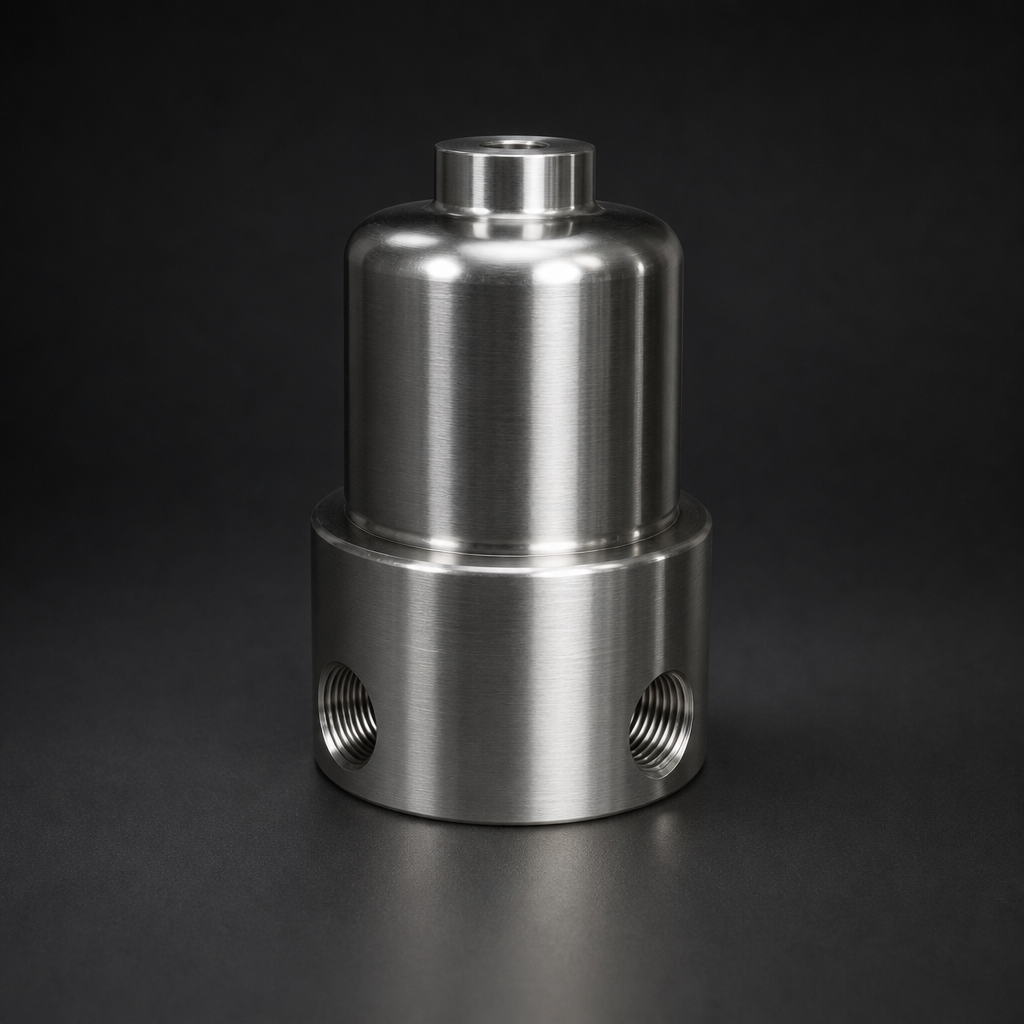
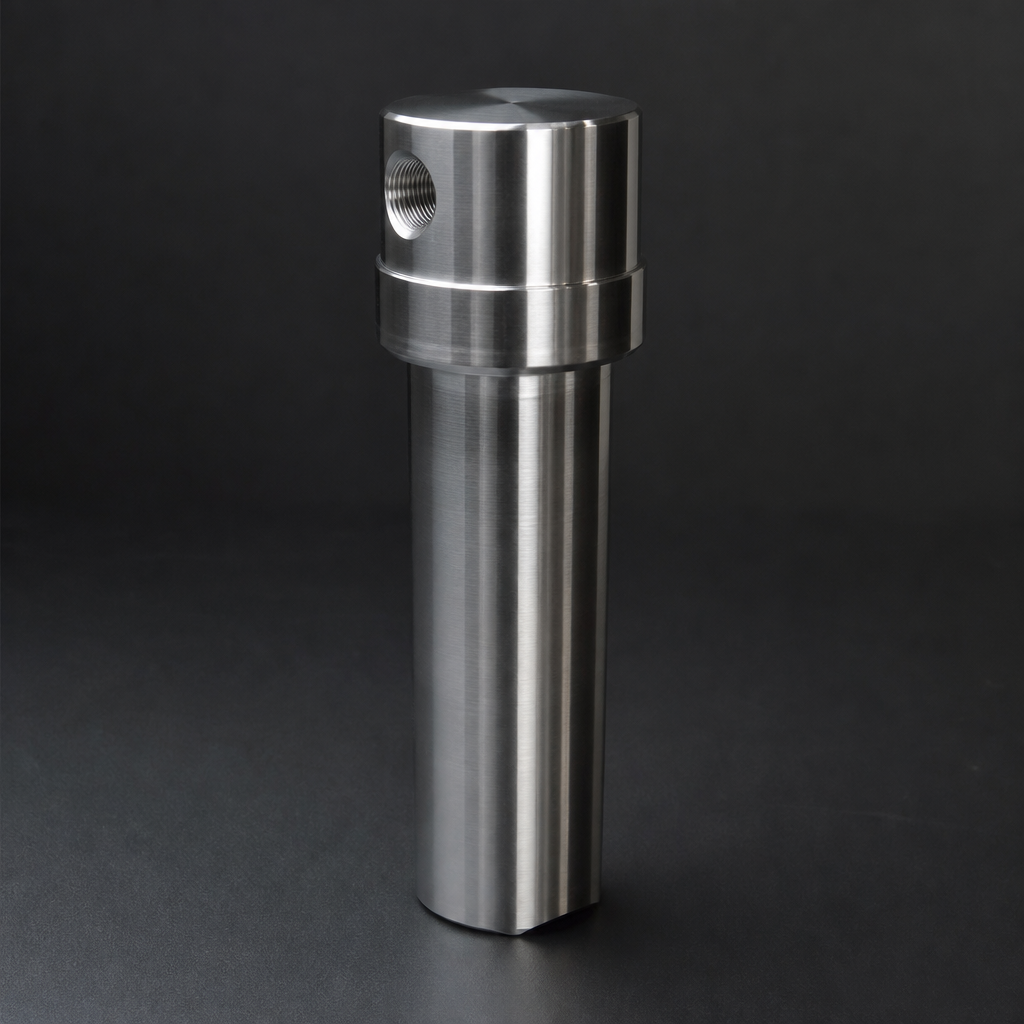
R+F FilterElements offers borosilicate depth media elements specifically suited to bioprocess sterile gas duty. The RF-C series coalescing elements and the RF-H-150 process gas housing provide a validated, CIP/SIP-compatible filtration solution for bioreactor sparge and vent lines. For high-temperature applications, the S-type element variant (RF-CS) extends the operating envelope to 200 °C continuous service.
Need help selecting the right sterile gas filter for your bioreactor?
Key Performance Data
Use our free Engineering Tool to get a filtration recommendation for your specific application in under 2 minutes.
Application Points in a Bioreactor System
Sterile gas filtration is required at multiple points in a typical bioreactor installation. Each point has different flow, pressure, and sterilisation requirements:
- Sparge inlet: Highest flow demand; gas contacts culture medium directly. Requires highest-efficiency sterile filtration. Borosilicate depth media preferred for flow capacity and SIP durability.
- Headspace overlay: Moderate flow; maintains positive pressure and gas composition above the culture. Sterile filtration required to prevent ingress during pressure fluctuations.
- Tank vent: Bidirectional flow during filling/emptying. Hydrophobic media essential to prevent liquid blockage. The RF-GMS-170 membrane separator provides an absolute liquid barrier upstream of the vent filter.
- Exhaust gas: Downstream of the bioreactor; may carry aerosols and viable organisms. Sterile filtration prevents environmental release and protects downstream equipment.
- Instrument connections: Pressure transmitters, level sensors, and sample ports all require sterile gas barriers. Instrumentation-grade filters in compact housings are appropriate here.
For a complete bioprocess installation, R+F FilterElements can supply the full range of filter elements and housings required across all these application points, from the RF-DIL disposable inline filters for instrument connections to the RF-H-150 stainless steel housing for main sparge lines.
Regulatory Compliance: EU GMP Annex 1 and FDA Expectations
The 2022 revision of EU GMP Annex 1 introduced the concept of a Contamination Control Strategy (CCS) — a holistic, documented approach to identifying and mitigating all contamination risks in sterile manufacturing. Gas filtration is explicitly called out as a critical control point within the CCS framework.
Key regulatory expectations for sterile gas filtration include:
- Filter integrity testing (bubble point or diffusion test) before and after each use or sterilisation cycle
- Validated sterilisation procedures with documented cycle parameters
- Defined filter change intervals based on validated performance data
- Extractables and leachables assessment for filters in direct product contact applications
- Supplier qualification documentation (material certificates, test reports)
R+F FilterElements provides full material traceability and test documentation for all filter elements supplied for GMP applications. This documentation package supports the supplier qualification process required under both EU GMP and FDA 21 CFR Part 211 frameworks.
Selecting the Right Element for Your Process
The choice between borosilicate depth media and membrane filters — and between standard and S-type elements — depends on several process parameters. For most bioreactor sparge and vent applications, the recommended starting point is the RF-C series borosilicate coalescing element in an RF-H-150 stainless steel housing. Where absolute sterility assurance is required at low flow rates (instrument connections, sample ports), the RF-DIL disposable inline filter provides a convenient, single-use alternative that eliminates the need for integrity testing and sterilisation validation at that point.
For processes involving aggressive CIP chemicals (high-concentration NaOH, peracetic acid), confirm chemical compatibility of all wetted materials — housing seals in particular. FKM/Viton seals are recommended for most CIP chemical regimes; PTFE seals for the most aggressive applications.
- Every bioreactor requires a continuous supply of sterile air or gas — for sparging (introducing oxygen or CO₂ directly into the culture medium), for headspace blanketing, and for tank venting during filling and emptying cycles.
- Two main filter technologies compete for sterile gas duty in bioprocessing: hydrophobic membrane filters (typically PTFE or PVDF) and borosilicate glass microfibre depth media.
- In a GMP bioreactor environment, filter elements cannot simply be replaced when they become contaminated — they must be sterilised in place (SIP) or cleaned in place (CIP) as part of the validated process.
- Instrument connections:
Related Reading
- Coalescing vs Particulate Filter Elements — Which Do You Need?
- Oxygen Filtration Safety — Avoiding Ignition Risks in High-Purity O₂ Systems
- ISO 8573-1 Compressed Air Quality — A Practical Guide
Try our Engineering Sizing Tool → or discuss your requirements with our team.