Supercritical CO₂ extraction has transformed botanical oil production — delivering solvent-free, food-grade extracts with unmatched purity. But the process places extreme demands on filtration: high pressures, chemically aggressive CO₂, and the need for absolute cleanliness in every gram of product. Choosing the wrong filter housing or element can mean contaminated extract, unplanned downtime, or a failed regulatory audit.
This guide covers the filtration requirements at every stage of a supercritical CO₂ botanical extraction system, from feed-gas conditioning through to post-separator polishing — and explains which R+F process gas filter housings and elements are suited to each duty.
The Supercritical CO₂ Phase Window
Carbon dioxide enters its supercritical state above 31.1 °C and 73.8 bar. In this phase it behaves simultaneously as a liquid solvent and a gas — diffusing rapidly through plant material while dissolving target compounds such as essential oils, cannabinoids, and waxes. By adjusting pressure and temperature within the supercritical envelope, operators perform fractional extraction: sequential separation of oils, waxes, and herbal distillates at different operating points.
Typical operating pressures range from 100 bar for standard oil extraction up to 200 bar for high-yield wax and resin fractions. This immediately rules out standard compressed-air filter housings, which are rated to 17 bar. The entire filtration train must be specified for the full system pressure.
Where Filtration Is Required
A supercritical CO₂ extraction loop has three distinct filtration duties:
- Feed-gas conditioning — removing particulate and oil aerosols from the CO₂ supply before it enters the pump and extraction vessel
- Recirculation protection — protecting the high-pressure pump and heat exchangers from particulate generated within the loop
- Post-separator polishing — removing fine wax particles and CO₂ aerosols from the separated extract stream before collection
Filter Housing Requirements for Supercritical CO₂
The housing specification for supercritical CO₂ service is non-negotiable on several points:
Material: 316L Stainless Steel
CO₂ at high pressure and temperature is mildly corrosive, particularly in the presence of trace moisture (forming carbonic acid). Aluminium housings — standard for compressed air — are not suitable. All wetted parts must be 316L stainless steel, which provides adequate corrosion resistance and meets food-grade construction requirements under EU Regulation 1935/2004 and FDA 21 CFR standards.
Pressure Rating
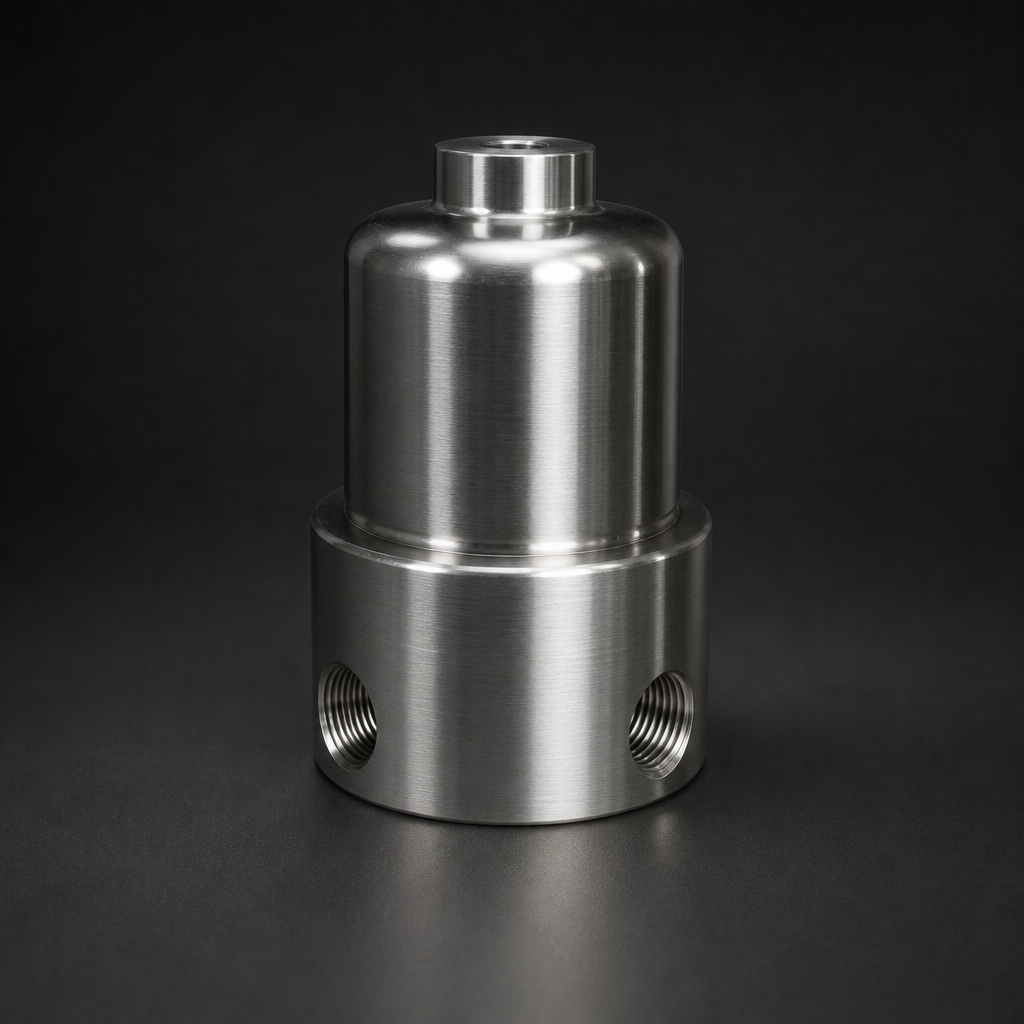
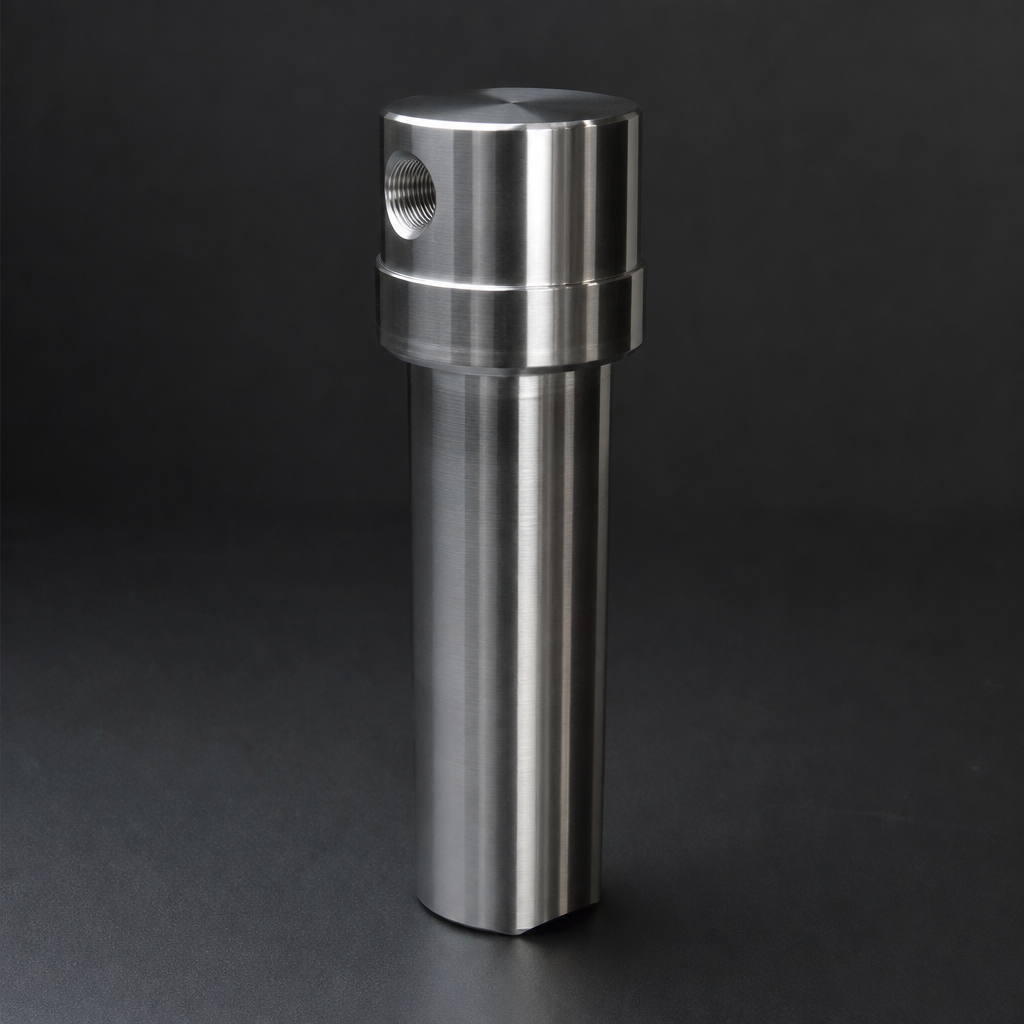
Feed-gas conditioning filters must be rated to at least the maximum system pressure. For most botanical extraction systems this means a minimum of 100 bar, with high-yield systems requiring 150–200 bar. The RF-H-150 process gas filter housing from R+F FilterElements is rated to 100 bar in 316L stainless steel — suitable for standard extraction pressures. For higher-pressure duties up to 250 bar, the RF-H-160 provides the required pressure envelope.
Seal Materials: PTFE and FKM/Viton
Standard NBR seals are not compatible with supercritical CO₂ — CO₂ causes rapid swelling and degradation of nitrile rubber. The correct seal choices are:
- PTFE — chemically inert, FDA-approved, rated to 260 °C; the preferred choice for food-grade CO₂ service
- FKM/Viton — rated to 200 °C, excellent CO₂ resistance, suitable where PTFE is not mechanically practical
Need help selecting the right filter for your CO₂ extraction system?
Selecting the Right Filter Elements
Element selection depends on the duty point within the extraction loop. The R+F FilterElements range covers all three filtration duties:
Feed-Gas Coalescing: RF-C Series
CO₂ supplied from bulk storage or cylinders may contain compressor oil aerosols and fine particulate. RF-C coalescing elements — borosilicate glass microfibre construction — achieve 99.99% efficiency at ≥ 0.1 µm, removing oil aerosols to below 0.01 mg/m³. This protects the high-pressure pump seals and prevents oil contamination of the extract. For food-grade applications, follow the coalescing stage with an RF-DIL inline particulate filter for final polishing.
Recirculation Particulate: RF-P Series
RF-P particulate elements (99.99% efficiency ≥ 0.3 µm) protect heat exchangers and the recirculation pump from fine particles generated by plant material breakdown and seal wear. These are typically installed downstream of the extraction vessel separator.
Post-Separator Polishing
After the primary separator, the CO₂ stream carries fine wax droplets and botanical fines. A coalescing element in the post-separator position captures these before the CO₂ is recompressed, preventing accumulation in the recirculation loop and protecting product purity.
Use our free Engineering Tool to get a filtration recommendation for your specific application in under 2 minutes.
Filter Housing Comparison for CO₂ Extraction Duties
| Housing | Pressure Rating | Material | Typical Duty | Seal Options |
|---|---|---|---|---|
| RF-H-150 | 100 bar | 316L SS | Feed-gas conditioning, standard extraction pressure | PTFE, FKM |
| RF-H-152 | 150 bar | 316L SS | Mid-pressure extraction, recirculation protection | PTFE, FKM |
| RF-H-160 | 250 bar | 316L SS | High-yield wax/resin extraction, high-pressure duty | PTFE, FKM |
Food-Grade Compliance and Regulatory Considerations
Botanical oil extraction for food, nutraceutical, and cosmetic applications requires that all product-contact materials comply with food-grade standards. For filter housings and elements, this means:
- 316L stainless steel construction (EU 1935/2004, FDA 21 CFR 177)
- PTFE or FKM/Viton seals with FDA-grade certification
- No lubricants or binders that could migrate into the product stream
- Traceable material certificates (3.1 mill certs) for all wetted components
R+F FilterElements supplies 316L stainless steel process gas housings with PTFE seal options and material traceability documentation — meeting the requirements for food-grade CO₂ extraction service. For a full overview of process gas filtration solutions, including high-pressure housings and compatible elements, see the product range.
For related filtration challenges in high-purity gas applications, see our guides on hydrogen electrolysis filtration and oxygen filtration safety — both share the same requirement for inert, high-pressure-rated housings with compatible seal materials.
Sizing and System Integration
Correct filter sizing for supercritical CO₂ requires knowledge of the CO₂ mass flow rate, operating pressure, and temperature. At supercritical conditions, CO₂ density is significantly higher than at atmospheric conditions — a standard Nm³/h flow calculation will underestimate the actual volumetric flow through the housing. Use actual operating density (typically 600–900 kg/m³ in the supercritical region) when sizing housing bore and element area.
The R+F Engineering Sizing Tool supports process gas applications and can assist with housing selection based on your operating conditions. For complex multi-stage extraction systems, contact the R+F FilterElements engineering team directly via the enquiry form.
- fractional extraction
- Feed-gas conditioning
- The housing specification for supercritical CO₂ service is non-negotiable on several points:
- Element selection depends on the duty point within the extraction loop.
Related Reading
- Filtration requirements for hydrogen electrolysis systems
- Oxygen filtration safety — housing and element selection
- Coalescing vs particulate filter elements — when to use each
Try our Engineering Sizing Tool → or discuss your requirements with our team.