Syngas — the mixture of hydrogen and carbon monoxide produced by reforming or gasification of hydrocarbons, biomass, or coal — is one of the most demanding process gases to handle. High temperatures, catalyst dust, tar aerosols, and sulphur compounds create a filtration environment that pushes conventional filter media well beyond their design limits. Getting the filtration strategy right is not merely a matter of product quality: it directly determines catalyst lifetime, downstream equipment reliability, and plant safety.
Why Syngas Filtration Is Different
Most industrial gas filtration operates below 200 °C with relatively clean, dry gas streams. Syngas is the exception. Depending on the upstream process, the gas may contain:
- Catalyst fines — nickel or iron particles shed from reformer or Fischer-Tropsch catalyst beds, typically 1–50 µm
- Tar aerosols — condensable hydrocarbons that polymerise on filter surfaces at lower temperatures
- Sulphur compounds — H₂S, COS, and mercaptans that attack standard seal materials and some metal alloys
- High-temperature particulate — ash and char from gasification, often abrasive and irregular in shape
The combination of high temperature and chemically aggressive contaminants rules out polymer-based filter media entirely. Even the S-type borosilicate elements rated to 200 °C — used successfully in vacuum pump exhaust applications — cannot survive the thermal and chemical environment of a syngas loop. The answer lies in sintered metal filtration.
Sintered Metal Elements: The Only Viable Medium
Sintered metal filter elements are manufactured by compacting and sintering metal powders — typically 316L stainless steel, Hastelloy C-276, or Inconel — into a rigid, self-supporting porous structure. Unlike fibre-based media, sintered metal elements offer:
- Continuous service temperatures up to 450 °C (higher with specialist alloys)
- Absolute filtration ratings from 0.5 µm to 100 µm
- Full regenerability by back-pulse, reverse-flow, or chemical cleaning
- Resistance to H₂S, CO, and reducing atmospheres
- Mechanical strength to withstand differential pressures up to 50 bar
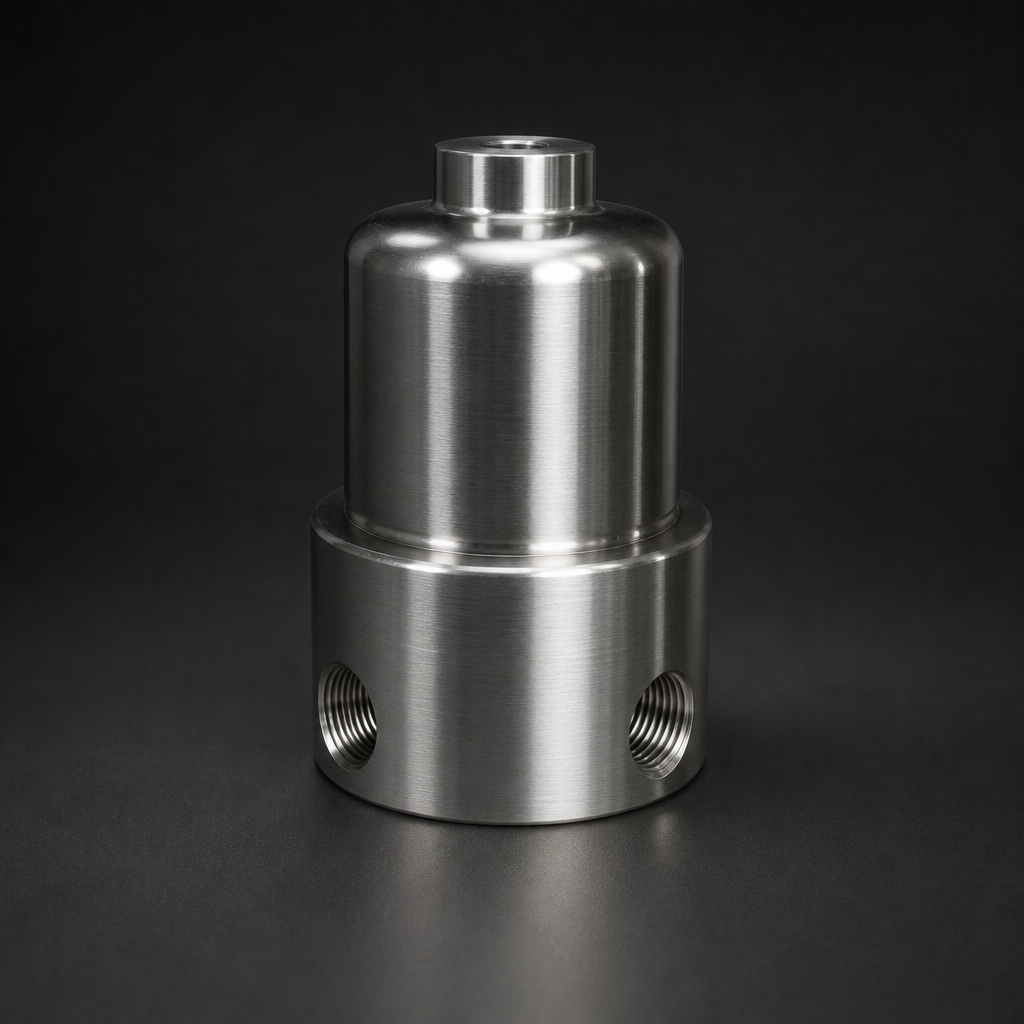
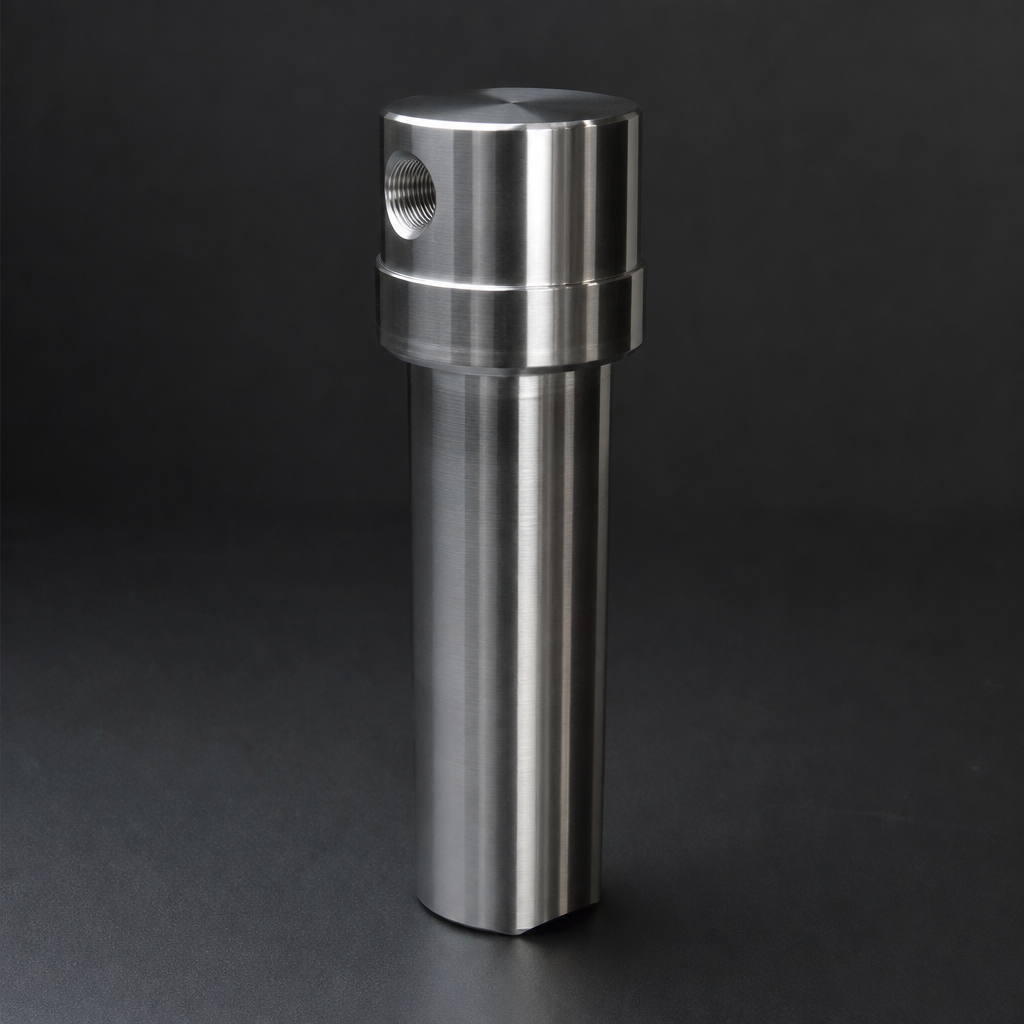
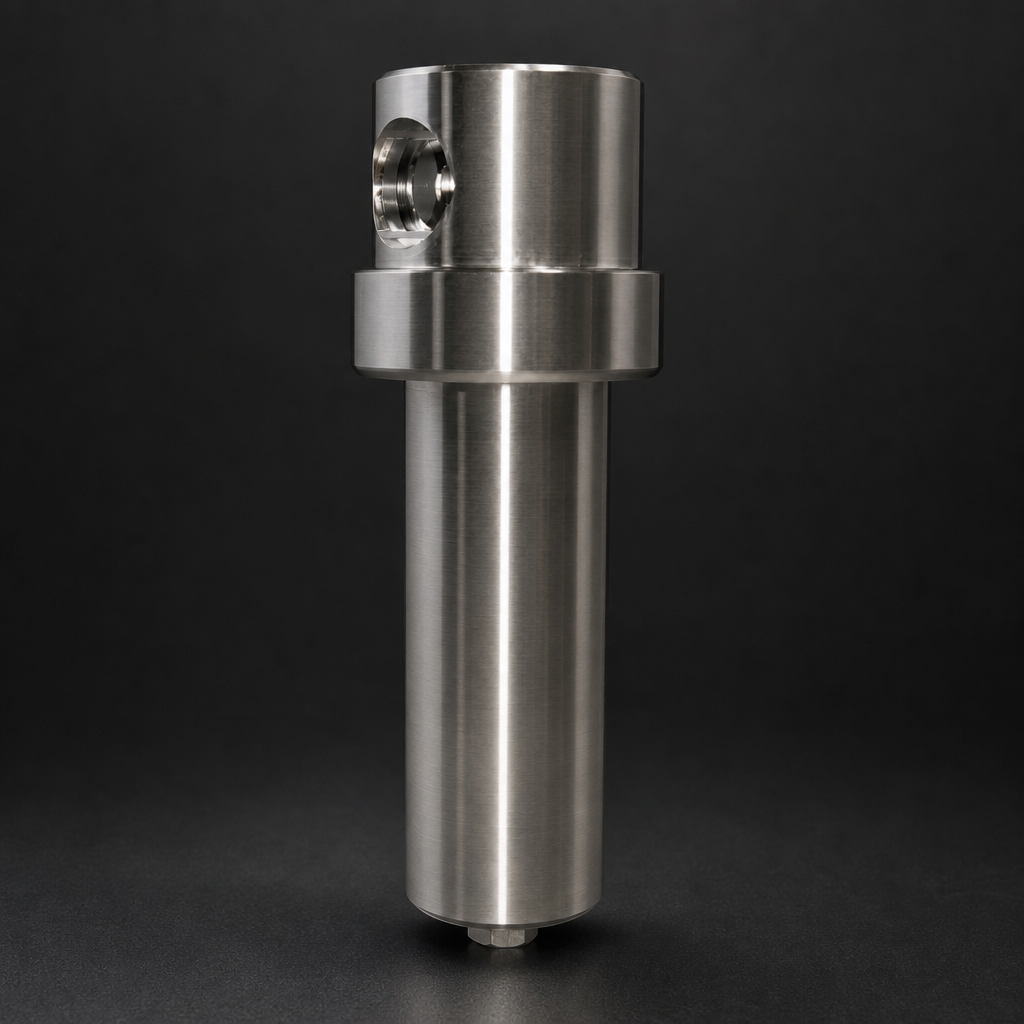
R+F FilterElements offers sintered metal elements as part of its process gas filter range, sized to fit both R+F-branded housings and third-party vessels. For syngas duty, the recommended starting point is the RF-H-160 housing (250 bar rated, 316L stainless steel) fitted with sintered metal elements in Hastelloy C-276 for sour-gas environments, or 316L for clean reformer duty.
Filtration Stages in a Typical Syngas Train
A well-designed syngas filtration train typically comprises three stages, each addressing a different contaminant class:
Stage 1 — Hot-Gas Particulate Removal (upstream of shift reactor)
Immediately downstream of the reformer or gasifier, gas temperatures are highest and particulate loading is at its peak. Sintered metal elements rated to 450 °C remove catalyst fines and char before they can foul the water-gas shift (WGS) catalyst bed. The RF-H-160 housing, with its 250 bar pressure rating and all-stainless construction, is well suited to this duty. Element pore size is typically 5–20 µm at this stage — fine enough to protect the shift catalyst, coarse enough to maintain acceptable pressure drop with high dust loads.
Stage 2 — Intermediate Filtration (post-shift, pre-methanation or PSA)
After the shift reactor, gas temperature drops to 200–350 °C. At this stage, finer filtration (1–5 µm) protects the pressure swing adsorption (PSA) adsorbent or methanation catalyst from residual fines. The RF-C coalescing elements in S-type configuration (200 °C rated) can be used here if temperatures permit; otherwise sintered metal elements remain the preferred choice.
Stage 3 — Polishing Filtration (product gas)
Final product gas — whether hydrogen, methanol synthesis gas, or Fischer-Tropsch feed — requires sub-micron polishing to meet downstream catalyst or purity specifications. At this stage, gas temperatures are typically below 100 °C, and the full range of R+F filter elements becomes available. The RF-C-25178 coalescing element (99.99% efficiency ≥ 0.1 µm) in an RF-H-150 or RF-H-160 housing provides the final barrier before the product header.
Need help selecting the right filter for your syngas application?
Filter Medium Selection by Syngas Source
| Syngas Source | Temp. Range | Key Contaminants | Recommended Element | R+F Housing |
|---|---|---|---|---|
| Steam Methane Reformer (SMR) | 300–800 °C | Ni catalyst fines, steam | Sintered 316L, 5–20 µm | RF-H-160 |
| Coal/Biomass Gasifier | 400–900 °C | Ash, char, tar, H₂S | Sintered Hastelloy, 10–50 µm | RF-H-160 / RF-H-170 |
| Autothermal Reformer (ATR) | 200–600 °C | Catalyst fines, CO₂ | Sintered 316L, 2–10 µm | RF-H-150 / RF-H-160 |
| Post-shift / PSA feed | 40–200 °C | Residual fines, moisture | RF-C S-type or sintered 1 µm | RF-H-150 |
Use our free Engineering Tool to get a filtration recommendation for your specific application in under 2 minutes.
Seal Material and Housing Considerations
In sour syngas streams containing H₂S, standard NBR seals will fail rapidly. R+F recommends FKM/Viton seals for temperatures up to 200 °C, or PTFE-encapsulated seals for the most aggressive sour-gas environments. For the K-type sour-gas element configuration, the housing must also be specified in a corrosion-resistant alloy — 316L stainless steel as a minimum, Duplex or Hastelloy for high H₂S concentrations.
Pressure ratings are equally critical. Syngas loops in ammonia or methanol plants commonly operate at 80–250 bar. The RF-H-160 (250 bar) and RF-H-170 (400 bar) housings cover the full range of syngas loop pressures encountered in industrial practice. Both are available with ATEX-compliant designs for hazardous area installation.
For applications where syngas purity is critical — such as fuel cell feed or semiconductor-grade hydrogen production — the hydrogen filtration considerations discussed in our electrolysis article also apply to reformer-derived hydrogen streams.
Regeneration and Maintenance Strategy
One of the key advantages of sintered metal elements over disposable fibre media is regenerability. In high-dust syngas applications, elements can be back-pulsed with clean nitrogen or product gas to dislodge accumulated cake, restoring flow capacity without element replacement. A typical back-pulse cycle for a gasifier application might be triggered every 4–8 hours based on differential pressure, with elements requiring chemical cleaning (caustic wash or acid clean) every 12–24 months depending on contaminant chemistry.
R+F's engineering team can assist with sizing the back-pulse system — vessel volume, pulse pressure, and valve sizing — as part of the Engineering Sizing Tool workflow. For complex syngas applications, a detailed process data sheet (temperature, pressure, flow, gas composition, dust loading) should be submitted via the project enquiry form for a bespoke recommendation.
- High-temperature particulate
- Sintered metal filter elements are manufactured by compacting and sintering metal powders — typically 316L stainless steel, Hastelloy C-276, or Inconel — into a rigid, self-supporting porous structure.
- A well-designed syngas filtration train typically comprises three stages, each addressing a different contaminant class:
- In sour syngas streams containing H₂S, standard NBR seals will fail rapidly.
Related Reading
- Hydrogen Electrolysis Filtration — Protecting Electrolysers and Downstream Equipment
- Coalescing vs Particulate Filter Elements — Which Do You Need?
- Oxygen Filtration Safety — Why Standard Filters Are Not Enough
Try our Engineering Sizing Tool → or discuss your requirements with our team.