When a food processing plant's chlorine monitoring system starts throwing false alarms or drifting readings, the instinct is to blame the analyser. In most cases, the real culprit is upstream: inadequate pre-filtration that allows particulate matter, biofilm fragments, and entrained water droplets to reach the sensor. This guide examines how a cyclone-based filtration approach solved persistent analyser blockage in a produce-washing application — and what it means for your own food-industry filtration strategy.
The Problem: Chlorine Analysers Failing in Produce Washing
Fresh produce washing is one of the most demanding environments for inline water-quality monitoring. Wash water circuits carry soil particles, organic debris, and microbial load that fluctuate dramatically with throughput. Chlorine — typically dosed as sodium hypochlorite — must be maintained within tight limits: too little and food safety is compromised; too much and regulatory limits are breached, with potential product taint.
Continuous chlorine analysers are the backbone of this control loop. Yet in a case study from a large European salad-processing facility, the plant's three amperometric chlorine sensors were requiring manual cleaning every four to six hours. Downtime was accumulating, and the maintenance team had already replaced two sensor membranes within a single production week.
Root-cause analysis revealed that the existing 100 µm basket strainers were passing fine particulate and, critically, were not removing entrained air bubbles or droplets of foam generated by the wash detergent. These reached the sensor flow cell and caused both physical fouling and optical interference in the amperometric measurement.
Why Standard Strainers Are Not Enough
Basket strainers and simple mesh filters are designed for bulk solids removal. They offer no mechanism for separating entrained liquids from a gas stream, nor do they address the velocity profile of the sample flow. In a wash-water circuit operating at elevated velocity — often 1.5–3 m/s to maintain turbulence and prevent biofilm formation — a static strainer basket can actually re-entrain captured particles when flow surges occur during pump start-up or valve switching.
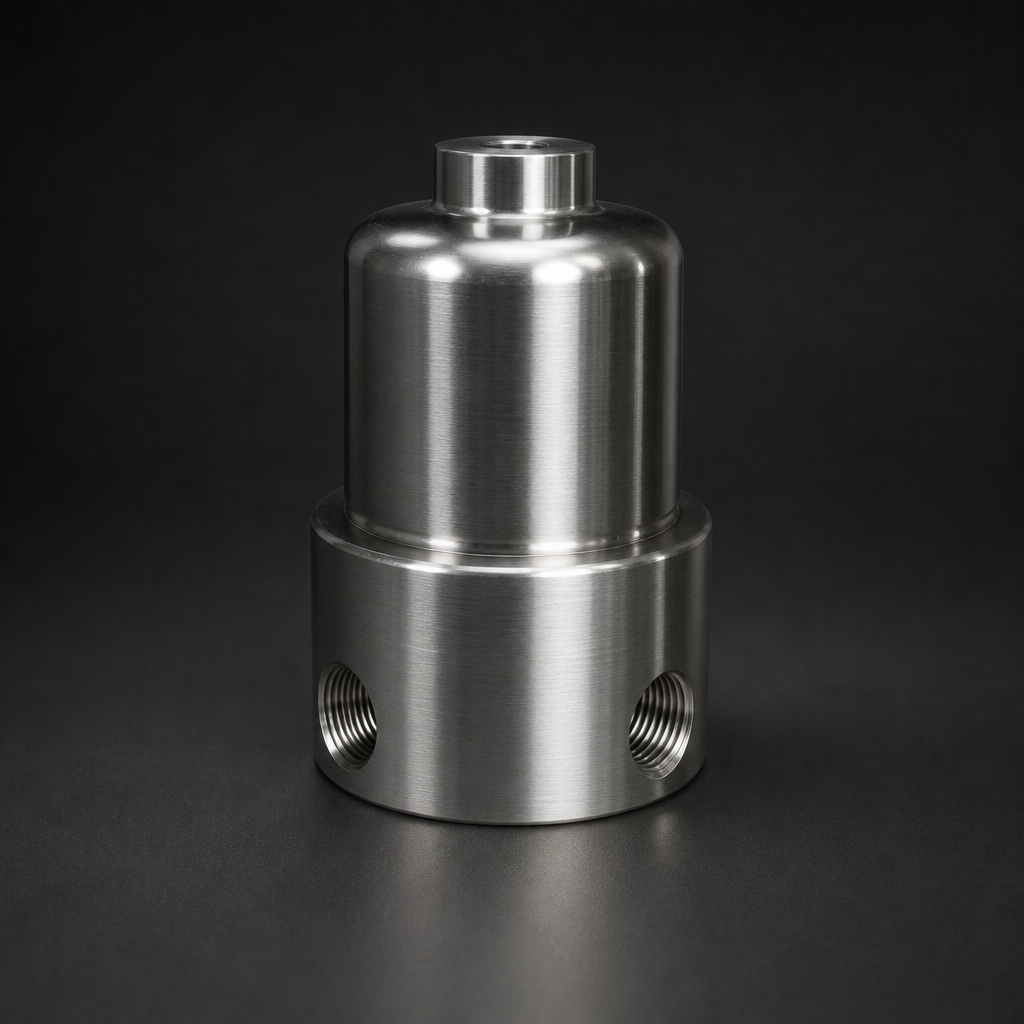
The solution in this case was to replace the basket strainer with a cyclone separator housing upstream of the analyser sample tap. Cyclone separation exploits centrifugal force: the incoming flow is introduced tangentially, spinning the heavier particles and droplets to the outer wall, where they fall to a collection sump. The cleaned sample exits from the central vortex finder. Critically, cyclone efficiency increases with flow velocity — the opposite behaviour to a static strainer.
Cyclone Filter Housings for Analyser Protection
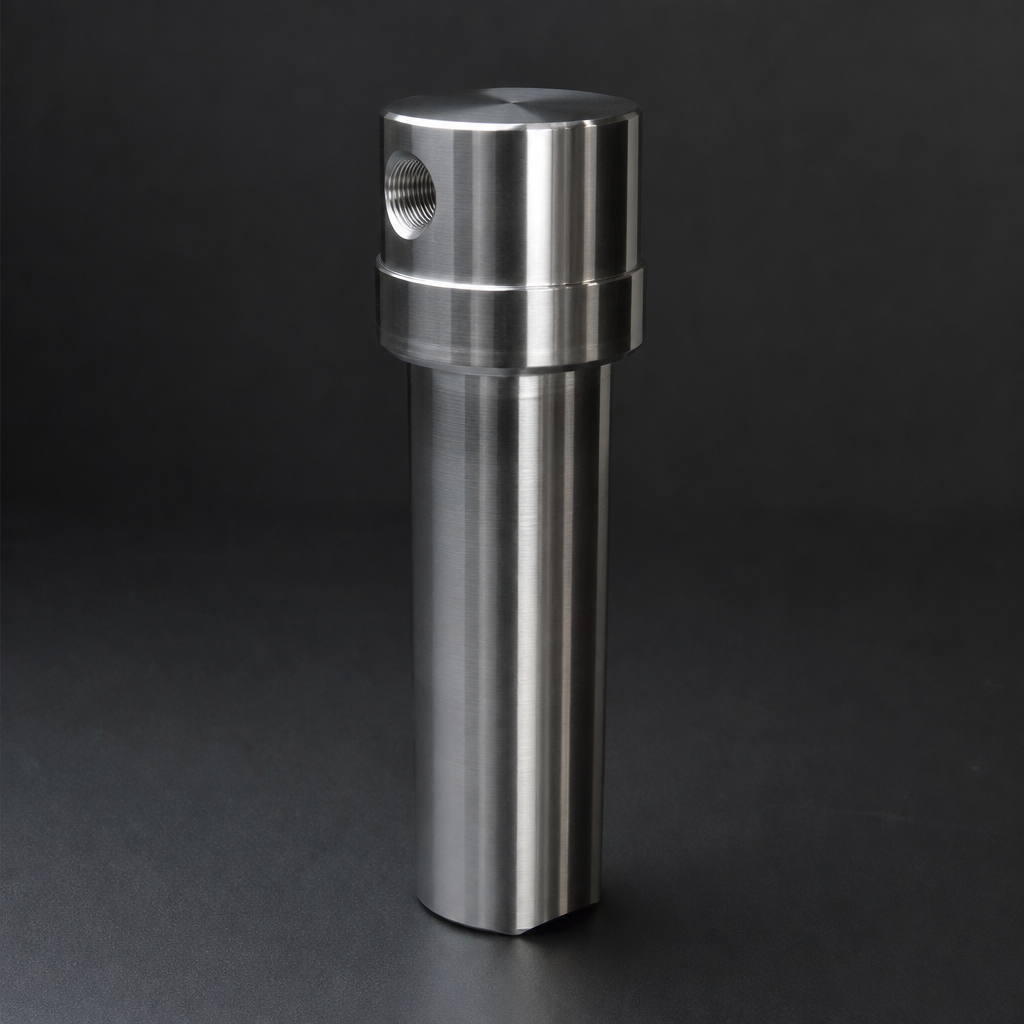
R+F FilterElements offers a range of instrumentation and analyser protection filters suited to exactly this application. For wash-water chlorine monitoring, the relevant product family is the specialty cyclone housings, which combine centrifugal pre-separation with a downstream fine-filter element.
In the produce-washing case study, the selected configuration paired a cyclone pre-separator with an RF-DIL disposable inline filter rated at 25 µm absolute. The RF-DIL is a point-of-use particulate filter available from R+F FilterElements that provides a final polishing stage after cyclone separation, ensuring that any residual fine particles — including those small enough to pass the cyclone vortex — are captured before the sample reaches the sensor flow cell.
The result was transformative. Sensor cleaning intervals extended from every six hours to once per week, and the two membrane replacements per week dropped to zero over the following three-month monitoring period. The plant's quality team also noted improved measurement stability, with chlorine readings showing tighter variance around the setpoint.
Compressed air quality verification
Selecting the Right Filtration Configuration
Not every food-industry analyser application requires a cyclone separator. The appropriate configuration depends on the nature and concentration of the contaminant load, the sample flow rate, and the sensitivity of the downstream instrument. The table below summarises the key decision criteria:
| Contamination Type | Recommended Pre-Filter | Final Stage | R+F Product |
|---|---|---|---|
| Coarse solids (>100 µm) | Basket strainer | 25 µm inline filter | RF-DIL |
| Fine solids + entrained droplets | Cyclone separator | 25 µm inline filter | RF-H-150 + RF-DIL |
| Dissolved organics / chlorine demand | Cyclone + coalescer | Activated carbon adsorber | RF-AC element |
| Foam / surfactant carry-over | Cyclone separator | Hydrophobic membrane | RF-GMS-170 |
Use our free Engineering Tool to get a filtration recommendation for your specific application in under 2 minutes.
Broader Applications in Food and Beverage Processing
Chlorine monitoring in produce washing is one of many food-industry scenarios where analyser protection filtration is critical. Similar challenges arise in:
- CIP (Clean-in-Place) return monitoring — caustic and acid concentrations must be measured accurately, but CIP return streams carry foam, product residues, and fine solids.
- Pasteuriser inlet water quality — turbidity and chlorine must be controlled, with analysers exposed to hot water and steam carry-over.
- Compressed air quality verification — food-contact compressed air must meet ISO 8573-1 Class 1 or 2 for oil and particulate. Inline verification analysers require clean, dry sample streams.
- CO₂ purity in carbonation — beverage-grade CO₂ must be free of particulate and oil mist before entering the carbonation stage. The R+F process gas filter range addresses this with stainless steel housings rated to 100 bar.
In each case, the principle is the same: the analyser is a precision instrument that cannot tolerate the contamination levels present in the process stream. A correctly specified filtration train — cyclone pre-separation, fine particulate removal, and where necessary liquid coalescence or adsorption — protects the instrument and ensures measurement integrity.
Material Compatibility in Food-Grade Applications
Food-industry filtration hardware must comply with material contact regulations. In Europe, this means compliance with EC 1935/2004 for food-contact materials, and for compressed air applications, the BfR (Bundesinstitut für Risikobewertung) recommendations. R+F FilterElements' stainless steel housings — including the RF-H-150 compact process gas housing — are constructed from 316L stainless steel with electropolished internal surfaces, meeting food-grade contact requirements. Seal materials are available in FKM/Viton for hot-water and steam applications, or EPDM for oxygen-compatible circuits.
For disposable inline filters such as the RF-DIL, the filter media and housing materials are selected to be free of extractables that could contaminate the sample stream or the product. This is particularly important in chlorine monitoring, where even trace contamination of the sample can cause measurement bias.
- Fresh produce washing is one of the most demanding environments for inline water-quality monitoring.
- Basket strainers and simple mesh filters are designed for bulk solids removal.
- R+F FilterElements offers a range of instrumentation and analyser protection filters suited to exactly this application.
- Not every food-industry analyser application requires a cyclone separator.
Engineering the Right Solution
Specifying an analyser protection filter train for a food-industry application requires a systematic approach. Key parameters to define include: sample flow rate and pressure, expected particulate load and particle size distribution, presence of entrained liquids or foam, temperature range, and the sensitivity and flow requirements of the downstream analyser. The R+F Engineering Sizing Tool allows engineers to input these parameters and receive a recommended filter configuration, including housing selection, element grade, and expected service intervals.
For complex applications — such as the produce-washing case study described here — a pre-engineering consultation with the R+F technical team can identify the optimal cyclone configuration and element combination before any hardware is ordered. This avoids the costly trial-and-error approach that many plants default to when analyser problems first emerge.
Related Reading
- Coalescing vs Particulate Filter Elements — Which Do You Need?
- ISO 8573-1 Compressed Air Quality — A Practical Guide
- Oxygen Filtration Safety — What Every Plant Engineer Should Know
Try our Engineering Sizing Tool → or discuss your requirements with our team.