Biogas upgrading is one of the most demanding filtration environments in the energy sector. Whether your plant uses a membrane separation unit or a pressure swing adsorption (PSA) system to produce pipeline-quality biomethane, the raw biogas arriving at the upgrading stage is far from clean. Siloxanes, hydrogen sulphide, moisture, compressor oil aerosols, and fine particulate are all present — and every one of them is capable of causing irreversible damage to the separation media downstream.
A well-designed biogas upgrading pre-filter train is not an optional add-on. It is the single most cost-effective investment you can make to protect your upgrading asset, extend membrane or adsorbent bed life, and keep your biomethane output on specification. This article explains what contaminants you are dealing with, why they matter, and how a multi-stage pre-filtration approach addresses each threat systematically.
What Is in Raw Biogas — and Why It Matters
Raw biogas from anaerobic digestion typically contains 50–65 % methane, 35–45 % carbon dioxide, and a cocktail of trace contaminants that vary by feedstock. Understanding each contaminant class is the starting point for any rational pre-filtration design.
Siloxanes
Siloxanes are organosilicon compounds that originate from personal care products, detergents, and industrial chemicals entering the digester. In concentrations as low as a few milligrams per cubic metre, siloxanes pass through the upgrading unit and combust downstream to form silicon dioxide (SiO₂) — a hard, abrasive deposit that coats membrane fibres, blocks PSA adsorbent pores, and destroys downstream equipment. Siloxane removal requires activated carbon adsorption upstream of the upgrading stage.
Hydrogen Sulphide (H₂S)
H₂S is corrosive to metals, toxic to personnel, and a poison to many PSA adsorbents. Even at concentrations of a few hundred ppm, H₂S can degrade zeolite beds and attack the polymer hollow fibres used in membrane modules. Biological desulphurisation in the digester reduces H₂S but rarely eliminates it entirely. A dedicated adsorption stage — or a K-type filter element rated for sour gas service — is required to bring H₂S to safe levels before the upgrading unit.
Moisture and Liquid Water
Biogas leaving the digester is saturated with water vapour. Compression raises the dew point and causes liquid water to drop out in pipework and vessels. Liquid water in a membrane module causes catastrophic wetting of the hollow fibres, reducing selectivity and throughput. In a PSA unit, excess moisture competes with CO₂ for adsorption sites, reducing separation efficiency and shortening bed regeneration intervals. A coalescing filter stage removes bulk liquid and aerosol droplets; a desiccant or refrigeration dryer then handles vapour-phase moisture.
Compressor Oil Aerosols
Most biogas upgrading plants use oil-lubricated screw or reciprocating compressors to raise the gas to the operating pressure of the upgrading unit (typically 6–16 bar for membranes, 4–8 bar for PSA). These compressors shed oil aerosols in the 0.01–5 µm range. Oil contamination of membrane fibres causes irreversible fouling and loss of permeability. In PSA beds, oil coats the adsorbent surface and blocks active sites. A high-efficiency coalescing filter rated to remove aerosols ≥ 0.1 µm is mandatory downstream of any oil-lubricated compressor.
Particulate
Rust, pipe scale, compressor wear debris, and biological solids all contribute to the particulate load in compressed biogas. Even modest concentrations of fine particulate can block the narrow flow channels in hollow-fibre membrane modules or cause channelling in PSA beds. A particulate filter with an absolute rating of 1 µm or finer is the first line of defence.
Why Membrane and PSA Systems Are Particularly Vulnerable
Both membrane separation and PSA are capital-intensive technologies with long payback periods. Their sensitivity to contamination is a direct consequence of how they work.
Membrane modules rely on the differential permeability of a thin polymer layer — typically polyimide or cellulose acetate — to separate CO₂ from CH₄. The active layer is only a few hundred nanometres thick. Oil, siloxane deposits, or liquid water can permanently alter the polymer structure, increasing CO₂ slip into the biomethane product or reducing overall throughput. Membrane replacement is expensive and requires plant shutdown.
PSA systems use zeolite or activated carbon adsorbent beds that are regenerated by pressure cycling. Siloxanes and heavy hydrocarbons adsorb irreversibly on zeolite, progressively reducing capacity. H₂S reacts with some adsorbents to form stable sulphur compounds. Liquid water causes adsorbent agglomeration and bed collapse. Once a PSA bed is contaminated, it cannot be regenerated in situ — the adsorbent must be replaced.
In both cases, the cost of a contamination event — lost production, replacement media, engineering time — vastly exceeds the cost of a properly specified pre-filtration train.
The Multi-Stage Pre-Filtration Approach
Effective biomethane filtration before the upgrading stage is not a single filter but a sequence of stages, each targeting a specific contaminant class. The order of stages matters: removing bulk liquid before coalescing, and coalescing before adsorption, maximises the life of each downstream stage.
Stage 1 — Bulk Liquid Separation
A gas-liquid separator or knock-out vessel removes free liquid water and any condensed hydrocarbons before the gas enters the filter train. This protects the coalescing elements from liquid flooding and extends their service life significantly.
Stage 2 — Particulate Pre-Filter
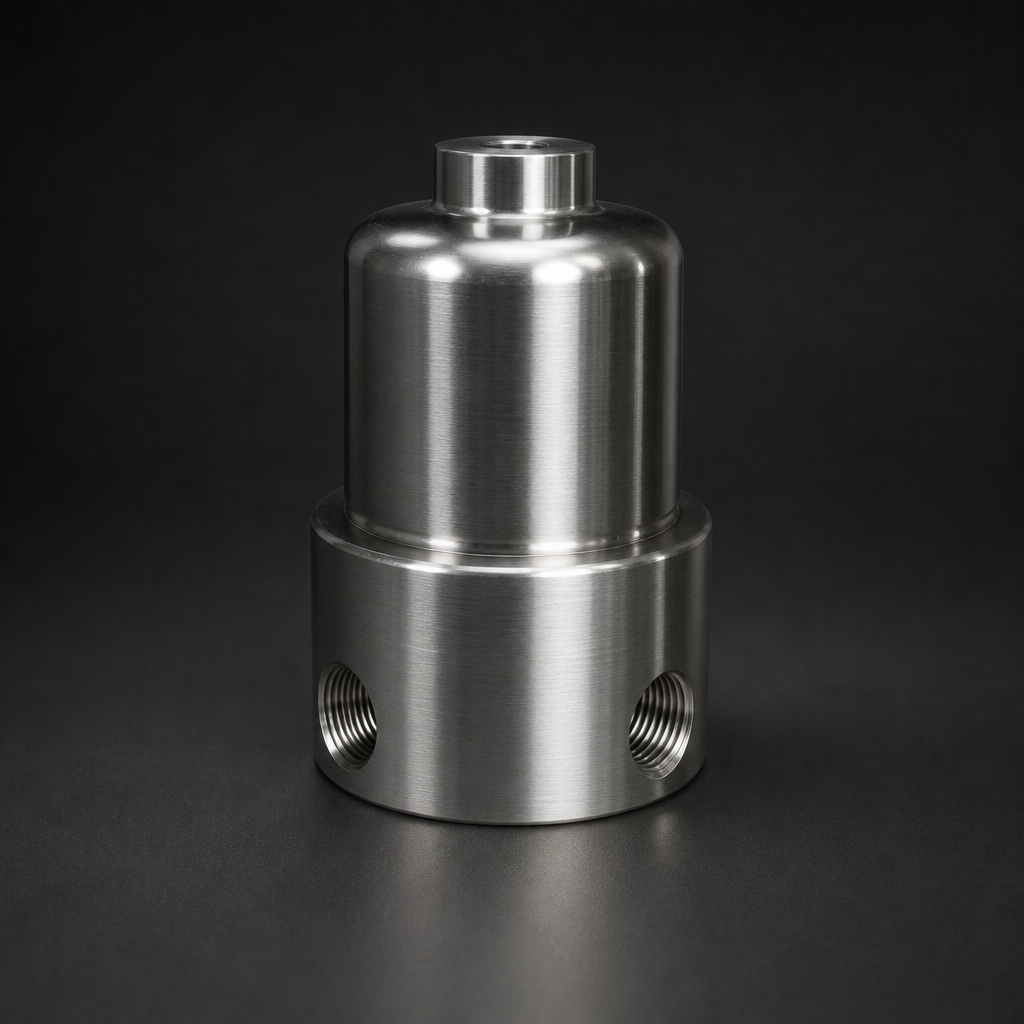
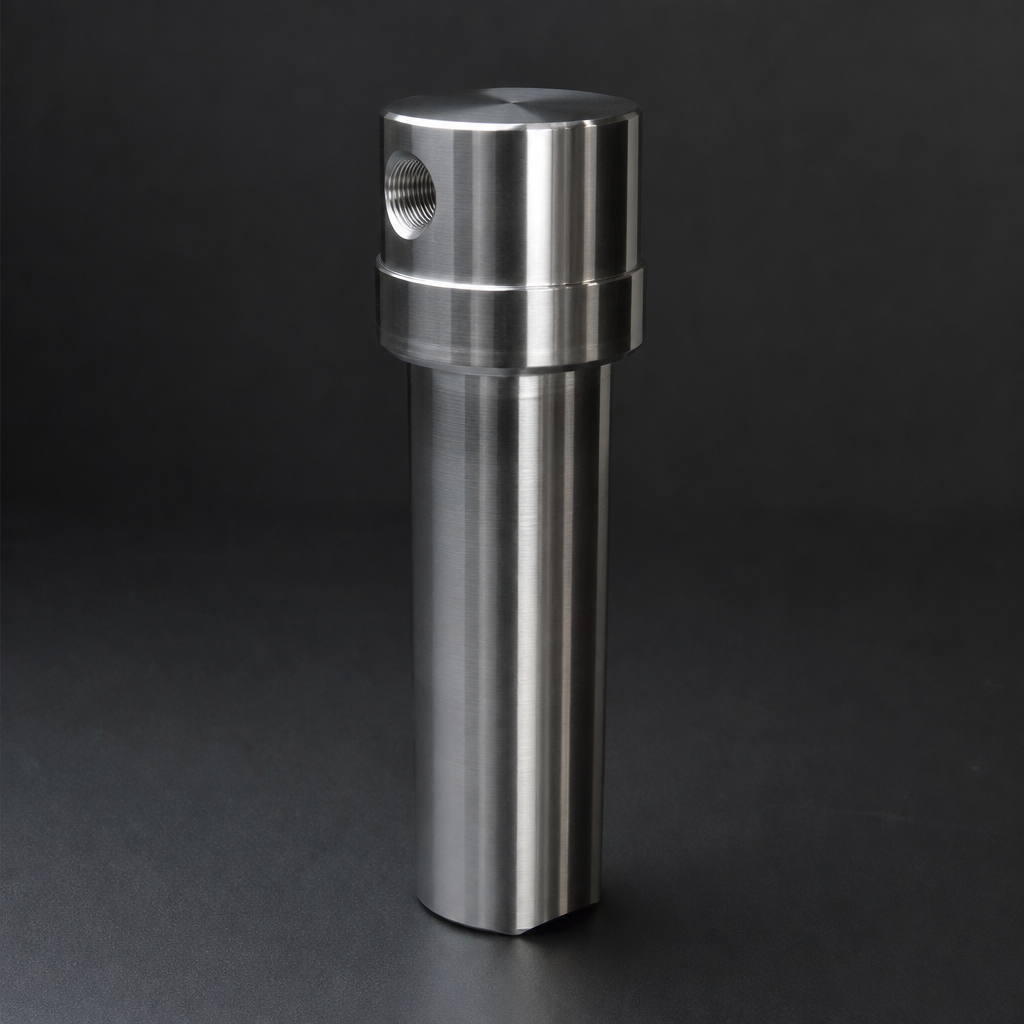
A particulate filter with a 1–5 µm absolute rating removes pipe scale, rust, and coarse solids. This stage protects the finer coalescing elements downstream from premature blinding. R+F FilterElements offers the RF-H-150 compact process gas housing in 316L stainless steel, rated to 100 bar, which is well suited to this duty at the typical operating pressures of biogas upgrading plants. Fitted with RF-P particulate elements (99.99 % efficiency ≥ 0.3 µm), it provides reliable coarse filtration in a compact, corrosion-resistant package.
Stage 3 — High-Efficiency Coalescing Filter
A coalescing filter using borosilicate glass microfibre elements removes oil aerosols and fine water mist down to 0.1 µm. The RF-C coalescing elements available from R+F FilterElements achieve 99.99 % efficiency at ≥ 0.1 µm, with a residual oil content in the outlet gas of less than 0.01 mg/m³. For biogas service, FKM (Viton) seals are recommended to resist the H₂S and CO₂ content of the gas. The R+F process gas filter range includes housings suitable for this duty, with options for K-type elements rated for sour gas environments.
Stage 4 — Activated Carbon Adsorption
Siloxane removal and residual H₂S polishing require an adsorption stage. The RF-AC activated carbon adsorber elements available from R+F FilterElements are designed for in-line use within standard process gas housings, providing a residual oil content below 0.003 mg/m³ and effective siloxane adsorption. For higher siloxane loads, a dedicated vessel with a larger carbon bed may be required — R+F FilterElements can advise on sizing through the online sizing wizard.
For H₂S-specific applications, the RF-AC elements can be specified with impregnated carbon (potassium iodide or potassium permanganate impregnation) to improve H₂S removal efficiency. Alternatively, K-type filter elements with sour gas-rated seals provide mechanical protection while a separate chemical adsorber handles H₂S.
Stage 5 — Final Guard Filter
A final particulate guard filter immediately upstream of the upgrading unit catches any carbon fines shed by the adsorber bed and provides a last line of defence against particulate. A 1 µm absolute rating is typical. This stage is often overlooked but is critical — carbon fines from an adsorber bed can cause rapid fouling of membrane modules.
Differential pressure monitoring:
Technical Specification Summary
| Stage | Function | R+F Product | Rating / Efficiency | Seal Material |
|---|---|---|---|---|
| 1 — Bulk Separator | Free liquid removal | Gas-liquid separator vessel | — | FKM |
| 2 — Particulate Pre-Filter | Coarse solids, rust, scale | RF-H-150 + RF-P elements | 99.99 % ≥ 0.3 µm | FKM / PTFE |
| 3 — Coalescing Filter | Oil aerosols, water mist | RF-H-150 + RF-C elements (K-type) | 99.99 % ≥ 0.1 µm; < 0.01 mg/m³ oil | FKM (sour gas) |
| 4 — Activated Carbon Adsorber | Siloxanes, H₂S, odour | RF-AC elements (impregnated option) | < 0.003 mg/m³ residual oil; siloxane removal | FKM |
| 5 — Guard Filter | Carbon fines, final particulate | RF-H-150 + RF-P elements | 1 µm absolute | FKM |
Use our free Engineering Tool to get a filtration recommendation for your specific application in under 2 minutes.
Selecting the Right Housing for Biogas Duty
Biogas upgrading plants typically operate at pressures between 6 and 16 bar, with gas temperatures that depend on the compression stage and any inter-stage cooling. The key housing selection criteria for a biogas membrane filter or biogas PSA pre-filter application are:
- Material compatibility: 316L stainless steel is the preferred housing material for biogas service. Carbon steel is susceptible to H₂S-induced stress corrosion cracking, and aluminium is not suitable for wet, acidic gas streams. The RF-H-150 is constructed from 316L stainless steel throughout.
- Pressure rating: The RF-H-150 is rated to 100 bar, providing a substantial safety margin over typical upgrading pressures and accommodating future plant expansions.
- Seal selection: FKM (Viton) seals are recommended for H₂S-containing biogas. PTFE seals are available for the most aggressive compositions. NBR seals are not suitable for H₂S service.
- Element type: K-type elements with sour gas-rated seals are available for coalescing and particulate duties in H₂S-containing streams. Standard elements are suitable where H₂S has been removed upstream.
- Differential pressure monitoring: All filter stages should be fitted with differential pressure indicators or transmitters to enable condition-based element replacement. Biogas contaminant loads vary seasonally with feedstock composition, making fixed replacement intervals unreliable.
For plants processing biogas from mixed feedstocks — food waste, agricultural slurry, and sewage sludge in combination — siloxane concentrations can be highly variable. In these cases, R+F FilterElements recommends installing siloxane monitoring upstream of the adsorber stage and sizing the carbon bed for peak rather than average load. The R+F biogas solutions page provides further guidance on sizing for variable feedstock applications.
Common Pre-Filtration Mistakes and How to Avoid Them
Undersizing the Adsorber
The most frequent and costly mistake in biogas pre-filtration is undersizing the activated carbon adsorber. Siloxane breakthrough is not immediately obvious — the upgrading unit continues to operate, but membrane permeability or PSA capacity declines gradually over weeks or months. By the time the problem is diagnosed, significant damage has already occurred. Size the adsorber for the worst-case siloxane concentration in your feedstock, not the average.
Omitting the Guard Filter
Carbon fines from an activated carbon bed can be shed during pressure transients, start-up, and shutdown. Without a guard filter downstream of the adsorber, these fines reach the membrane module or PSA bed directly. A simple 1 µm particulate filter at this position costs a fraction of the damage it prevents.
Using Aluminium Housings
Aluminium filter housings are widely used in compressed air applications and are cost-effective in that context. In biogas service, however, the combination of moisture, CO₂, and H₂S creates a corrosive environment that attacks aluminium over time. Stainless steel housings are the correct choice for biogas duty, even at the modest pressures typical of upgrading plants.
Ignoring Differential Pressure
Running filter elements beyond their useful life increases differential pressure across the filter train, which reduces compressor efficiency and can cause element bypass if the differential pressure exceeds the element's collapse rating. Install differential pressure gauges on every filter stage and establish clear replacement triggers — typically 0.5–0.7 bar differential pressure for coalescing elements.
- Raw biogas from anaerobic digestion typically contains 50–65 % methane, 35–45 % carbon dioxide, and a cocktail of trace contaminants that vary by feedstock.
- Both membrane separation and PSA are capital-intensive technologies with long payback periods.
- biomethane filtration
- biogas membrane filter
Summary
Protecting a biogas upgrading unit from siloxanes, H₂S, moisture, oil aerosols, and particulate requires a systematic, multi-stage pre-filtration approach. Each contaminant class demands a specific treatment stage, and the stages must be arranged in the correct sequence to maximise the life of each downstream component. Cutting corners on pre-filtration is a false economy: the cost of a contaminated membrane module or a fouled PSA bed is orders of magnitude greater than the cost of a properly specified filter train.
The RF-H-150 compact process gas housing and RF-AC activated carbon adsorber elements available from R+F FilterElements provide a proven foundation for biogas upgrading pre-filtration in 316L stainless steel construction, with seal options and element types suited to sour gas service. For a detailed sizing recommendation based on your plant's flow rate, operating pressure, and feedstock composition, contact the R+F FilterElements engineering team or use the online sizing wizard.