Die Wasserstofftrocknung ist ein kritischer Schritt in nahezu jedem Wasserstofferzeugungs- und -verteilungsprozess. Ob Sie eine Druckwechseladsorptionsanlage (PSA), einen Temperaturwechseladsorptionstrockner (TSA) oder ein kältebasiertes System betreiben — das Adsorptionsbett im Herzen Ihres Trockners ist zugleich Ihr wertvollstes und Ihr verwundbarestes Bauteil. Verunreinigungen durch Kompressoröl-Carry-over, Partikelfeinstäube oder Flüssigwasserschläge können die Adsorptionskapazität innerhalb weniger Wochen zerstören und aus einem kapitalintensiven Anlagenteil eine kostspielige Wartungslast machen.
Dieser Artikel erläutert, warum die einzigartigen physikalischen Eigenschaften von Wasserstoff den Schutz von Adsorptionsbetten besonders anspruchsvoll gestalten, welche Verunreinigungen das größte Risiko darstellen und wie ein korrekt ausgelegter Wasserstofftrockner-Schutzfilter vor dem Adsorptionsbett die Standzeit verlängert, Ausfallzeiten reduziert und die Produktreinheit sichert.
Warum Wasserstoff anders ist: Physikalische Eigenschaften, die neue Regeln setzen
Ingenieure, die mit der Druckluft- oder Erdgastrocknung vertraut sind, unterschätzen mitunter, wie anders sich Wasserstoff verhält. Drei Eigenschaften bestimmen die Filtrationsspezifikation maßgeblich:
- Geringes Molekulargewicht (2 g/mol): Wasserstoffmoleküle sind die kleinsten überhaupt. Sie diffundieren durch Dichtungen, Elastomere und Filtermedien weit leichter als schwerere Gase. Das bedeutet, dass jedes im Gasstrom mitgeführte Flüssigaerosol oder Öltröpfchen mit hoher Geschwindigkeit transportiert wird und tief in die Adsorptionsporen eindringt, bevor es ablaufen kann.
- Hohe Diffusivität: Der Diffusionskoeffizient von H₂ in Luft ist etwa viermal so hoch wie der von Stickstoff. Im Adsorptionsbett führt dies zu einem schnellen Stofftransport — Verunreinigungen verbreiten sich rasch durch das gesamte Bett, anstatt lokal am Einlass zu verbleiben.
- Niedrige Viskosität: Mit 0,009 mPa·s (etwa einem Zehntel der Luftviskosität) bietet Wasserstoff dem Strömungswiderstand kaum Widerstand. Tröpfchen und Partikel, die in einem schwereren Gasstrom durch Trägheitsabscheidung erfasst würden, können ein Filterelement passieren, das nicht ausdrücklich für den Einsatz bei niedrig-viskoser Strömung ausgelegt ist.
Die praktische Konsequenz: Ein Filterelement, das bei Druckluft ausreichend arbeitet, kann bei Verwendung desselben Gehäuses mit Wasserstoff erheblichen Öl- und Partikel-Carry-over zulassen. Die Auswahl eines Wasserstofftrockner-Schutzfilters erfordert Filterelemente, die für den Einsatz mit Gasen geringer Molmasse und niedriger Viskosität validiert sind.
Welche Verunreinigungen bedrohen Ihr Adsorptionsbett?
Kompressoröl-Aerosole
Hubkolben- und Schraubenkompressoren, die in der Wasserstoffverdichtung eingesetzt werden, bringen Schmierstoffaerosole in den Gasstrom ein. Selbst ölfreie Kompressoren können geringe Mengen an Prozessflüssigkeit oder Dichtungsschmierstoff mitführen. Silikagel- und Molekularsieb-Adsorbentien sind hochgradig anfällig für Öl-Fouling: Ein dünner Kohlenwasserstofffilm auf der Adsorbentienoberfläche blockiert Adsorptionsplätze und reduziert die Wasserkapazität je nach Öltyp und -konzentration um 30–70 %. Einmal verunreinigt, lässt sich das Adsorbens durch Wärme allein nicht regenerieren — das Bett muss ausgetauscht werden.
Flüssigwasserschläge
Vorgelagerte Kühlung, Zwischenstufenabscheider oder plötzliche Druckabfälle können dazu führen, dass flüssiges Wasser in den Trocknereinlass gelangt. Ein einziger Flüssigkeitsschlag kann zu lokalen Adsorbensbrüchen führen (Silikagel ist beim schnellen Benetzen besonders spröde), wodurch Feinstäube entstehen, die sich stromabwärts verlagern und Prozessanlagen oder Analysegeräte kontaminieren.
Partikelfeinstäube
Rohrleitungsablagerungen, Schweißspritzer und Adsorbensfeinstäube aus einem vorherigen Bett akkumulieren im Gasstrom. Bei Wasserstoffanwendungen, wo aufgrund der geringen Gasdichte hohe Strömungsgeschwindigkeiten auftreten, werden diese Partikel effizient durch die Rohrleitungen und in den Trockner transportiert. Partikelbeladung erhöht den Druckabfall über das Adsorptionsbett und kann Verteilersiebe verstopfen.
Siloxane und Spurenorganika
Bei grünem Wasserstoff, der durch Elektrolyse aus Wasser mit gelösten organischen Verbindungen erzeugt wird, oder bei Wasserstoff, der aus industriellen Abgasen zurückgewonnen wird, können Spurensiloxane und flüchtige organische Verbindungen (VOC) vorhanden sein. Diese Verbindungen adsorbieren bevorzugt auf Molekularsieb und verbrauchen Kapazität, die für die Wasserentfernung reserviert sein sollte.
Die Vorfiltrationsstrategien: Drei Stufen vor dem Adsorbens
Die beste Praxis für die Wasserstoff-Entfeuchtungsfiltration sieht eine dreistufige Vorfiltrationsanlage unmittelbar vor dem Adsorptionstrockner vor:
- Koaleszenzfilter (erste Stufe): Entfernt flüssiges Wasser und Ölaerosole bis auf einen Restölgehalt von 0,01 mg/m³. Das Koaleszenzelement muss für den Wasserstoffeinsatz ausgelegt sein — eine Konstruktion aus Borosilikat-Glasmikrofaser mit einem inerten Binder ist unerlässlich, um eine Kontamination des H₂-Stroms zu vermeiden.
- Partikelfilter (zweite Stufe): Erfasst Feststoffpartikel ≥ 0,3 µm, die die Koaleszenzstufe passieren oder von ihr abgegeben werden. Dies schützt den Adsorbensverteiler und verhindert die Migration von Feinstäuben.
- Aktivkohleadsorber (optionale dritte Stufe): Für Anwendungen, bei denen Spurenkohlenwasserstoffe oder Siloxane vorhanden sind, entfernt ein Aktivkohleadsorber diese Verbindungen, bevor sie das Adsorptionsbett erreichen.
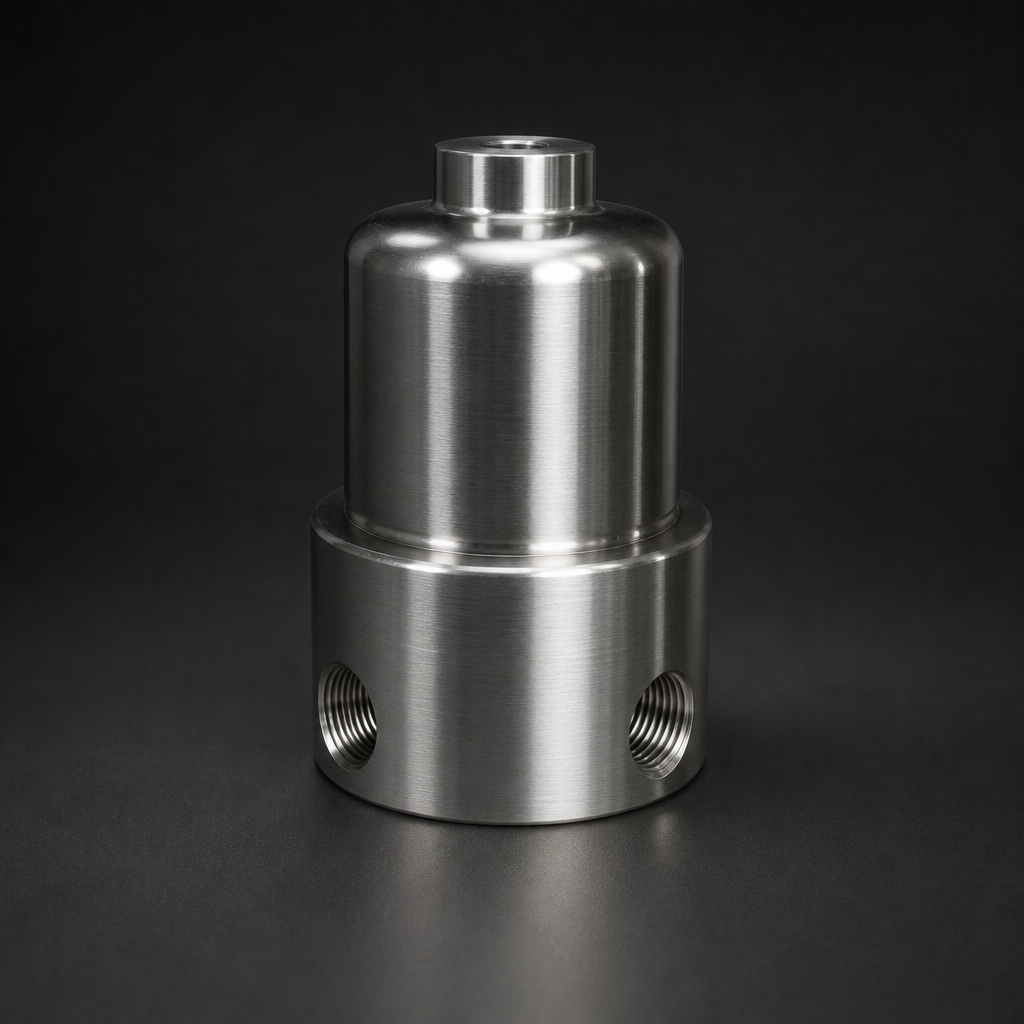
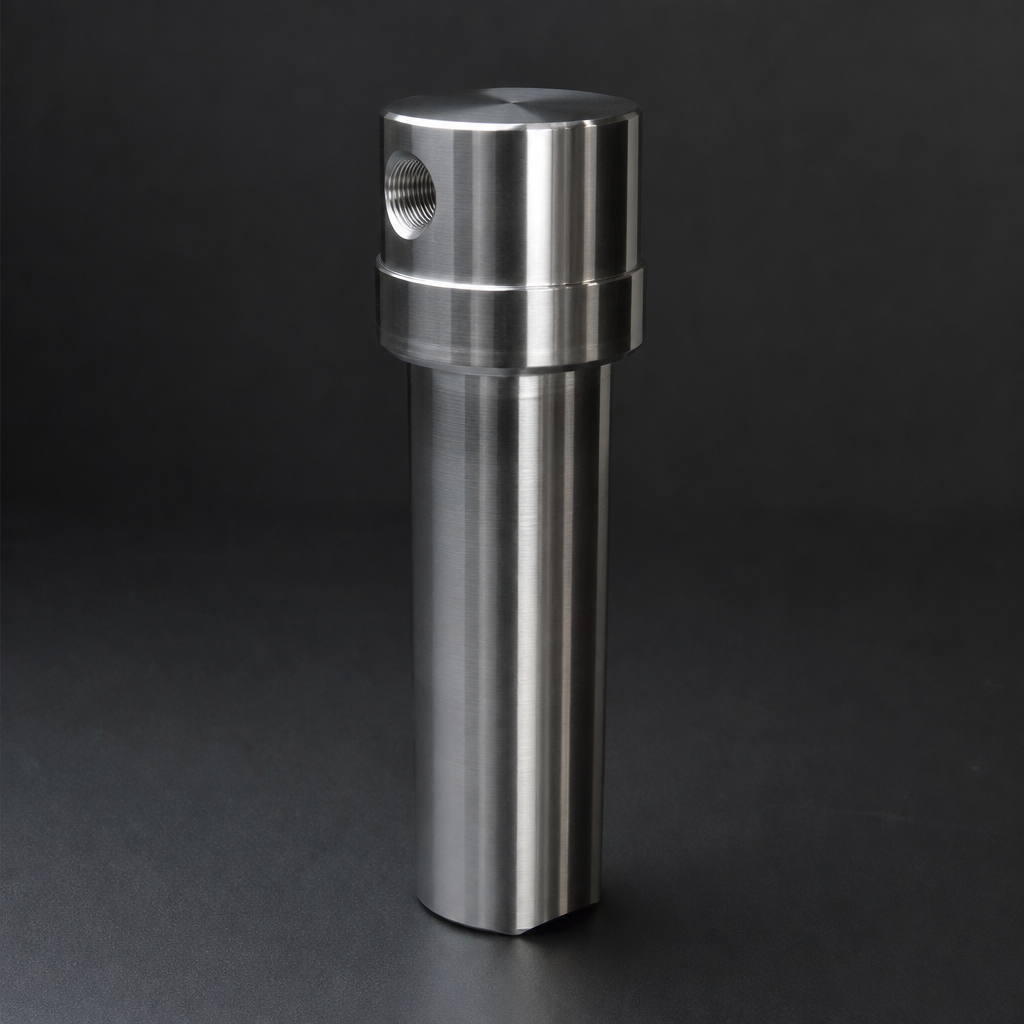
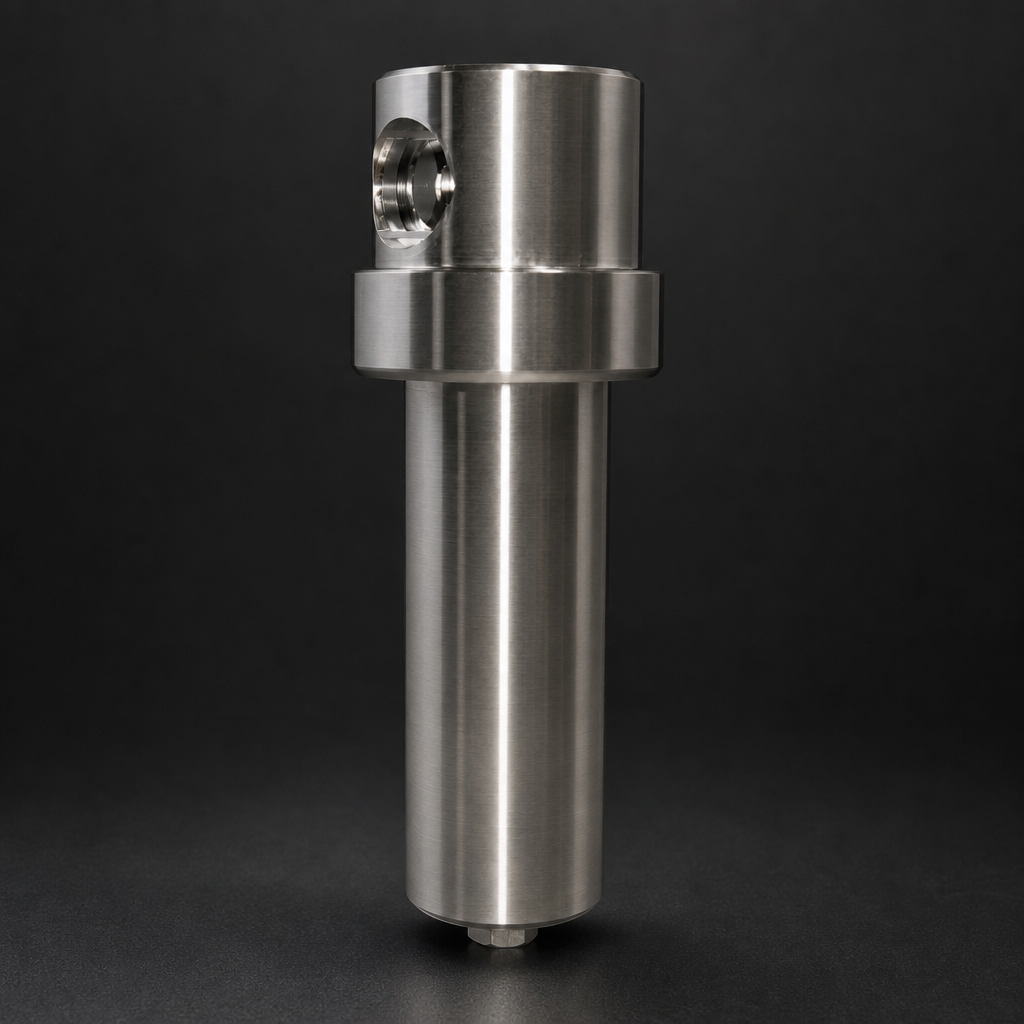
R+F FilterElements bietet eine eigene Baureihe von Filtergehäusen und -elementen, die speziell für diese Vorfiltrationsaufgabe geeignet sind. Die Prozessgas-Filterbaureihe deckt Betriebsdrücke von 100 bar bis 400 bar ab und ist damit sowohl mit Niederdruck-Elektrolyseausgängen als auch mit Hochdruck-PSA-Zulaufströmen kompatibel.
Aktivkohleadsorber (optionale dritte Stufe):
Das richtige Gehäuse für den Wasserstoffeinsatz auswählen
Das geringe Molekulargewicht und die hohe Diffusivität von Wasserstoff stellen strenge Anforderungen an Gehäusewerkstoffe und Dichtungsauswahl. Kohlenstoffstahl wird aufgrund des Risikos der Wasserstoffversprödung bei erhöhten Drücken generell vermieden; 316L-Edelstahl ist der Standardwerkstoff für Wasserstoff-Filtergehäuse oberhalb von 30 bar.
Die nachfolgende Tabelle fasst die R+F FilterElements-Gehäuseoptionen zusammen, die am häufigsten als PSA-Wasserstoff-Vorfilter und für den Schutz von Adsorptionstrocknern spezifiziert werden:
| Gehäusemodell | Werkstoff | Max. Druck | Max. Temp. | Typische Anwendung |
|---|---|---|---|---|
| RF-H-150 | 316L Edelstahl | 100 bar | 120 °C | Niederdruck-H₂-Vorfiltration, Elektrolyseausgang |
| RF-H-160 | 316L Edelstahl | 250 bar | 120 °C | Mitteldruck-PSA-Zulauf, Tube-Trailer-Befüllung |
| RF-H-170 | 316L Edelstahl | 400 bar | 120 °C | Hochdruck-H₂-Speicherung, Analysatorschutz |
Alle drei Gehäuse sind bei R+F FilterElements standardmäßig mit FKM/Viton-Dichtungen für den Wasserstoffeinsatz erhältlich und bieten Kompatibilität bis 200 °C sowie Beständigkeit gegen Wasserstoffpermeation. PTFE-Dichtungen sind für Reinstanwendungen verfügbar, bei denen das Ausgasen von Elastomeren minimiert werden muss.
Das richtige Filterelement auswählen
Das Filterelement ist das funktionale Herzstück des Vorfiltrationsystems. Für den Schutz von Wasserstoff-Adsorptionstrocknern empfiehlt R+F FilterElements die folgenden Elementtypen:
RF-C Koaleszenzelemente
Die RF-C-Baureihe verwendet Borosilikat-Glasmikrofasermedien mit einem siliziumfreien Binder und erreicht einen Abscheidegrad von 99,99 % bei ≥ 0,1 µm. Die inerte Konstruktion stellt sicher, dass keine extrahierbaren Verbindungen in den Wasserstoffstrom eingebracht werden — eine kritische Anforderung für Brennstoffzellen- und Halbleiter-H₂. Der Restölgehalt stromabwärts beträgt ≤ 0,01 mg/m³ und liegt damit weit innerhalb der Grenzwerte, die zum Schutz von Silikagel- und Molekularsieb-Adsorbentien erforderlich sind.
Für den Wasserstoffeinsatz oberhalb von 150 °C (z. B. stromabwärts eines Heißkompressors ohne Zwischenstufenkühlung) ist die S-Variante des RF-C-Elements bis 200 °C ausgelegt und verwendet FKM-Endkappendichtungen.
RF-P Partikelfilterelemente
Die RF-P-Baureihe bietet einen Abscheidegrad von 99,99 % bei ≥ 0,3 µm und ist in denselben Gehäusegrößen wie die RF-C-Koaleszenzelemente erhältlich. Dadurch lässt sich eine zweistufige Anlage mit identischen Gehäusen aufbauen — was die Ersatzteilhaltung und die Wartungsabläufe vereinfacht.
RF-AC Aktivkohleadsorber
Wenn Spurenkohlenwasserstoffe oder Siloxane ein Problem darstellen, kann das RF-AC-Adsorptionselement in einem dritten Gehäuse stromabwärts der Partikelstufe installiert werden. Das Aktivkohlemedium reduziert den Gesamtkohlenwasserstoffgehalt auf unter 0,003 mg/m³ und schützt das Molekularsieb-Adsorbens vor organischem Fouling.
Alle Elementtypen sind bei R+F FilterElements in den Größen 12032, 12057, 25064, 25178, 51230 und 51476 erhältlich und decken Durchflussmengen von wenigen Nm³/h bis zu 12.000 Nm³/h ab. Nutzen Sie den R+F Auslegungsassistenten, um die korrekte Elementgröße für Ihre Betriebsbedingungen zu ermitteln.
Use our free Engineering Tool to get a filtration recommendation for your specific application in under 2 minutes.
H₂-Adsorptionstrockner-Vorfilter: Installations- und Wartungshinweise
Einbaulage und Entwässerung
Koaleszenzfiltergehäuse müssen senkrecht mit dem Ablauf nach unten eingebaut werden, damit koaleszierte Flüssigkeit durch Schwerkraft ablaufen kann. Bei Wasserstoffanwendungen werden automatische Schwimmerableiter gegenüber manuellen Ableitern bevorzugt, um die Exposition des Bedienpersonals gegenüber dem Gas zu minimieren. R+F FilterElements kann Gehäuse mit integrierten Automatikableiteranschlüssen liefern.
Differenzdrucküberwachung
Ein Differenzdruckmessgerät oder -transmitter über jede Filterstufe ist unerlässlich. Bei Wasserstoffanwendungen bewirkt ein blockiertes Element nicht nur eine Durchflussreduzierung — es kann einen Druckstoß verursachen, der den Adsorbensverteiler beschädigt oder zu Adsorbensbrüchen führt. Elemente sind zu wechseln, wenn der Differenzdruck 0,5 bar (Koaleszenz) bzw. 0,3 bar (Partikel) über dem Ausgangswert des sauberen Elements erreicht.
Elementwechselintervalle
Anders als bei Druckluftanwendungen, wo jährliche Elementwechsel üblich sind, können Wasserstoff-Vorfilterelemente in stark verunreinigten Umgebungen (z. B. stromabwärts von Hubkolbenkompressoren) alle drei bis sechs Monate gewechselt werden müssen. Die Überwachung des Differenzdrucks anstelle fester Intervalle wird dringend empfohlen.
Spülen vor der Wartung
Vor dem Öffnen eines Filtergehäuses im Wasserstoffbetrieb muss das Gehäuse druckentlastet und mit einem Inertgas (typischerweise Stickstoff) bis unter die untere Explosionsgrenze (UEG) gespült werden. R+F FilterElements empfiehlt, jedes Gehäuse bei Wasserstoffinstallationen standardmäßig mit einem dedizierten Entlüftungs-/Spülanschluss auszustatten.
Ihre Vorfiltrationsanlage auslegen
Die korrekte Auslegung der H₂-Adsorptionstrockner-Vorfilteranlage erfordert folgende Betriebsdaten:
- Maximaler Volumenstrom (Nm³/h oder kg/h)
- Betriebsdruck (bar ü)
- Betriebstemperatur (°C)
- Eingangsölkonzentration (mg/m³) — aus Kompressorhersteller-Daten oder Messung
- Eingangspartikelbeladung und Partikelgrößenverteilung
- Erforderliche Ausgangsölkonzentration (mg/m³) — typischerweise ≤ 0,01 mg/m³ für den Adsorbensschutz
Das Ingenieurteam von R+F FilterElements unterstützt Sie bei Auslegungsberechnungen und der Elementauswahl für Ihre spezifische Wasserstofftrocknungsanwendung. Kontaktieren Sie uns über das Anfrageformular oder per E-Mail an [email protected] mit Ihren Prozessdaten.
Häufige Fehler, die die Standzeit des Adsorbens verkürzen
Basierend auf Felderfahrungen aus Wasserstofferzeugung, -speicherung und -verteilung sind folgende Fehler am häufigsten für vorzeitigen Adsorbensausfall verantwortlich:
- Unterdimensionierter Koaleszenzfilter: Der Betrieb eines Koaleszenzelements oberhalb seines Nenndurchflusses verursacht die Wiedermitreißung koaleszierter Flüssigkeit und macht den Filterzweck vollständig zunichte.
- Fehlende Partikelstufe: Die Installation eines Koaleszenzfilters ohne nachgeschaltete Partikelstufe ermöglicht es, dass vom Koaleszenzelement abgegebene Glasmikrofaserfeinstäube das Adsorptionsbett erreichen.
- Falscher Dichtungswerkstoff: NBR-Dichtungen, die bei vielen Druckluft-Filtergehäusen Standard sind, sind für den Wasserstoffeinsatz oberhalb von 80 °C nicht geeignet. Für H₂-Anwendungen sind stets FKM- oder PTFE-Dichtungen zu spezifizieren.
- Keine Differenzdrucküberwachung: Das Verlassen auf feste Wechselintervalle anstelle einer zustandsbasierten Überwachung führt entweder zu vorzeitigem Elementwechsel (unnötige Kosten) oder zum Betrieb mit einem blockierten Element (Adsorbensschaden).
- Flüssigkeitsschläge ignorieren: Das Fehlen eines Flüssigkeitsabscheiders vor dem Koaleszenzfilter in Anwendungen, bei denen Flüssigkeits-Carry-over möglich ist, kann das Koaleszenzelement überlasten und flüssiges Wasser in das Adsorptionsbett gelangen lassen.
Zusammenfassung: Ihre Investition in die Wasserstofftrocknung schützen
Eine korrekt ausgelegte und gewartete Vorfiltrationsanlage ist die einzeln kosteneffektivste Maßnahme, die Sie ergreifen können, um die Standzeit des Adsorptionsbettes zu verlängern und die Reinheit Ihres getrockneten Wasserstoffs zu sichern. Die einzigartigen physikalischen Eigenschaften von Wasserstoff — geringes Molekulargewicht, hohe Diffusivität und niedrige Viskosität — erfordern Filterelemente und Gehäuse, die ausdrücklich für den H₂-Einsatz validiert sind und nicht einfach aus Druckluftanwendungen übernommen werden.
R+F FilterElements, ein in Deutschland ansässiger Filtrationsspezialist, bietet eine eigene Baureihe aus 316L-Edelstahlfiltergehäusen (RF-H-150, RF-H-160, RF-H-170) sowie kompatible RF-C-Koaleszenz- und RF-P-Partikelfilterelemente — alle mit FKM-Dichtungen erhältlich und für Wasserstoff-Betriebsdrücke bis 400 bar ausgelegt. Ob Sie eine PSA-Anlage, einen TSA-Trockner oder ein kältebasiertes System schützen möchten, die Seite R+F Wasserstoff-Filtrationslösungen bietet weitere Hinweise zur Systemauslegung und Produktauswahl.
Einen vollständigen Überblick über die für den Wasserstoffeinsatz verfügbaren Filterelemente finden Sie unter R+F Filterelement-Baureihe.
- Geringes Molekulargewicht (2 g/mol):
- Hubkolben- und Schraubenkompressoren, die in der Wasserstoffverdichtung eingesetzt werden, bringen Schmierstoffaerosole in den Gasstrom ein.
- Wasserstoff-Entfeuchtungsfiltration
- PSA-Wasserstoff-Vorfilter