Warum ISO 14687 für Wasserstoff-Brennstoffzellensysteme entscheidend ist
Wasserstoff nimmt in Dekarbonisierungsstrategien für Transport, Industrie und stationäre Stromerzeugung eine immer zentralere Rolle ein. Die Leistung und Lebensdauer eines Protonenaustauschmembran-(PEM-)Brennstoffzellen-Stacks hängen jedoch entscheidend von der Reinheit des zugeführten Wasserstoffs ab. Selbst Spurenmengen bestimmter Verunreinigungen können den Platinkatalysator vergiften, die Membran schädigen oder Gasdiffusionsschichten blockieren — Schäden, die kostspielig und in manchen Fällen irreversibel sind.
ISO 14687 (Wasserstoff-Kraftstoff — Produktspezifikation) ist die internationale Norm, die die maximal zulässigen Konzentrationen von Verunreinigungen in Wasserstoff für den Einsatz in Brennstoffzellenfahrzeugen und stationären Brennstoffzellensystemen festlegt. Sie wurde von der Internationalen Organisation für Normung veröffentlicht, ist mit SAE J2719 abgestimmt und legt Grenzwerte für mehr als ein Dutzend Verunreinigungsarten fest — von Wasserdampf und Partikeln bis hin zu Kohlenmonoxid, Schwefelverbindungen und Ammoniak.
Für Ingenieure, die Wasserstoff-Konditionierungs- und Abgabesysteme auslegen, wirft die Norm eine unmittelbar praktische Frage auf: Welche dieser Grenzwerte lassen sich allein durch Filtration einhalten, und welche erfordern grundlegend andere Behandlungstechnologien? Eine Fehleinschätzung führt entweder zu unterdimensionierten Systemen, die bei der Konformitätsprüfung versagen, oder zu überdimensionierten Anlagen mit unnötigen Investitionskosten.
Dieser Artikel arbeitet die ISO 14687-Verunreinigungsklassen systematisch durch, identifiziert, wo Filtrationslösungen das richtige Mittel sind, und erläutert, wo katalytische Konversion oder Adsorption übernehmen müssen.
Die ISO 14687-Verunreinigungsgrenzwerte im Überblick
Die nachstehende Tabelle fasst die wichtigsten Verunreinigungsgrenzwerte aus ISO 14687:2019 (Typ I, Klasse D — die am häufigsten referenzierte Klasse für Brennstoffzellenfahrzeuge) zusammen. Die Werte sind als Maximalkonzentrationen im abgegebenen Wasserstoff angegeben.
| Verunreinigung | ISO 14687-Grenzwert | Hauptproblem | Behandlungskategorie |
|---|---|---|---|
| Gesamtpartikel (≥ 10 µm) | 1 mg/kg H₂ | Ventil- und Injektorverschleiß; MEA-Schäden | Filtration |
| Wasser (H₂O) | 5 µmol/mol (≈ −51 °C Taupunkt) | Eisbildung; Korrosion; Membranflutung | Filtration / Trocknung |
| Gesamtkohlenwasserstoffe (als CH₄) | 2 µmol/mol | Katalysatorverschmutzung | Adsorption |
| Sauerstoff (O₂) | 5 µmol/mol | Anodenoxidation; Sicherheit | Katalytische Rekombination |
| Kohlenmonoxid (CO) | 0,2 µmol/mol | Vergiftung des Platinkatalysators | Katalytische Oxidation / PROX |
| Kohlendioxid (CO₂) | 2 µmol/mol | Reversibler Leistungsverlust | Adsorption / Membrantrennung |
| Gesamtschwefel (als H₂S) | 0,004 µmol/mol | Irreversible Katalysatorvergiftung | Adsorption (ZnO / Aktivkohle) |
| Ammoniak (NH₃) | 0,1 µmol/mol | Membranabbau; Ionomerschäden | Adsorption / Säurewäsche |
| Formaldehyd (HCHO) | 0,01 µmol/mol | Katalysator- und Membranschäden | Adsorption |
| Halogenierte Verbindungen (als Cl⁻) | 0,05 µmol/mol | Membran- und Katalysatorkorrosion | Adsorption |
Die Grenzwerte für CO (0,2 µmol/mol) und Gesamtschwefel (0,004 µmol/mol) sind besonders anspruchsvoll. Um den Schwefelwert einzuordnen: 0,004 µmol/mol entspricht etwa 4 Teilen pro Milliarde — eine Konzentration, die die meisten Analysegeräte kaum zuverlässig messen können, geschweige denn, dass eine konventionelle Filtration sie adressieren könnte.
Was Filtration leisten kann: Partikel und flüssiges Wasser
Partikelabscheidung
ISO 14687 begrenzt den Gesamtpartikelgehalt auf 1 mg/kg Wasserstoff, mit besonderem Fokus auf Partikel ab 10 µm. Dies liegt klar im Leistungsbereich der Hochleistungs-Partikelfiltration. Feststoffverunreinigungen in Wasserstoffströmen entstammen Kompressorverschleiß, Rohrleitungsablagerungen, Ventilsitzerosion sowie Rückständen aus der Zylinderfertigung oder -aufbereitung.
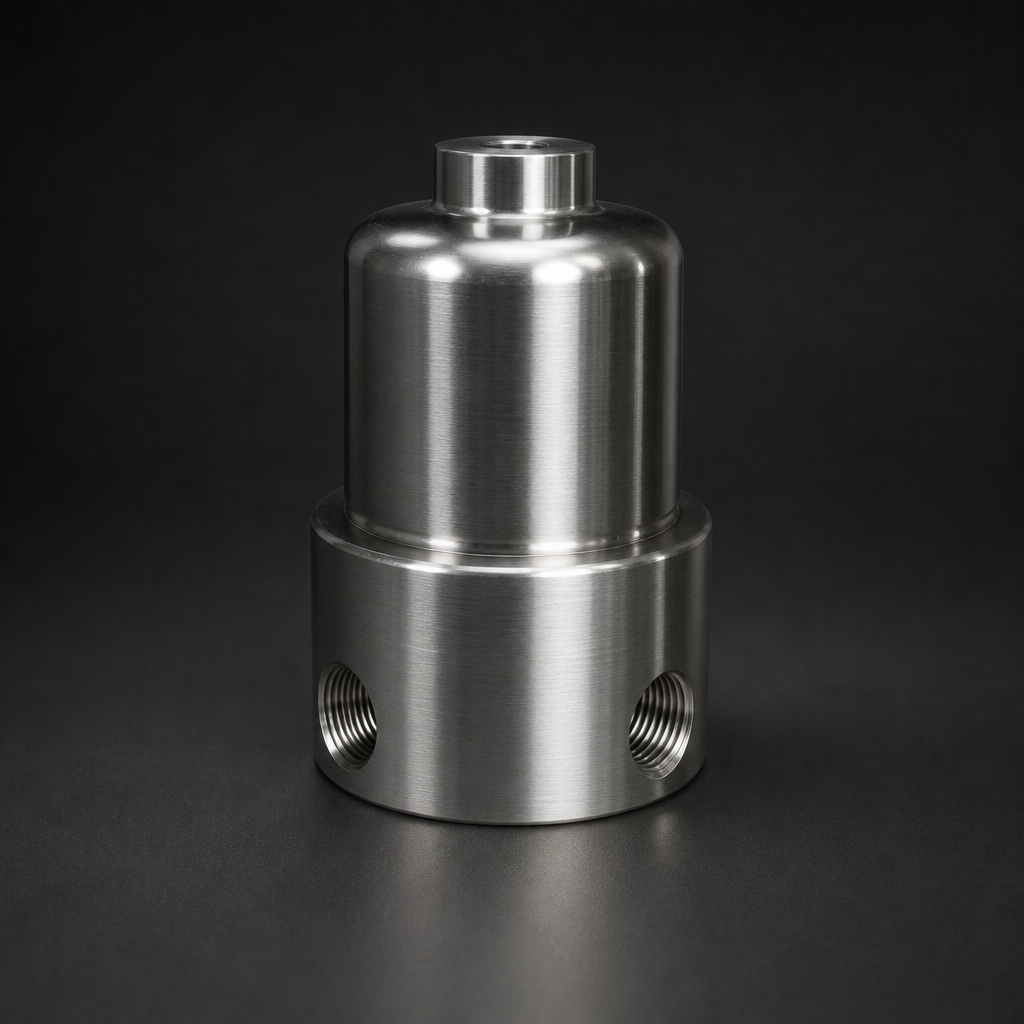
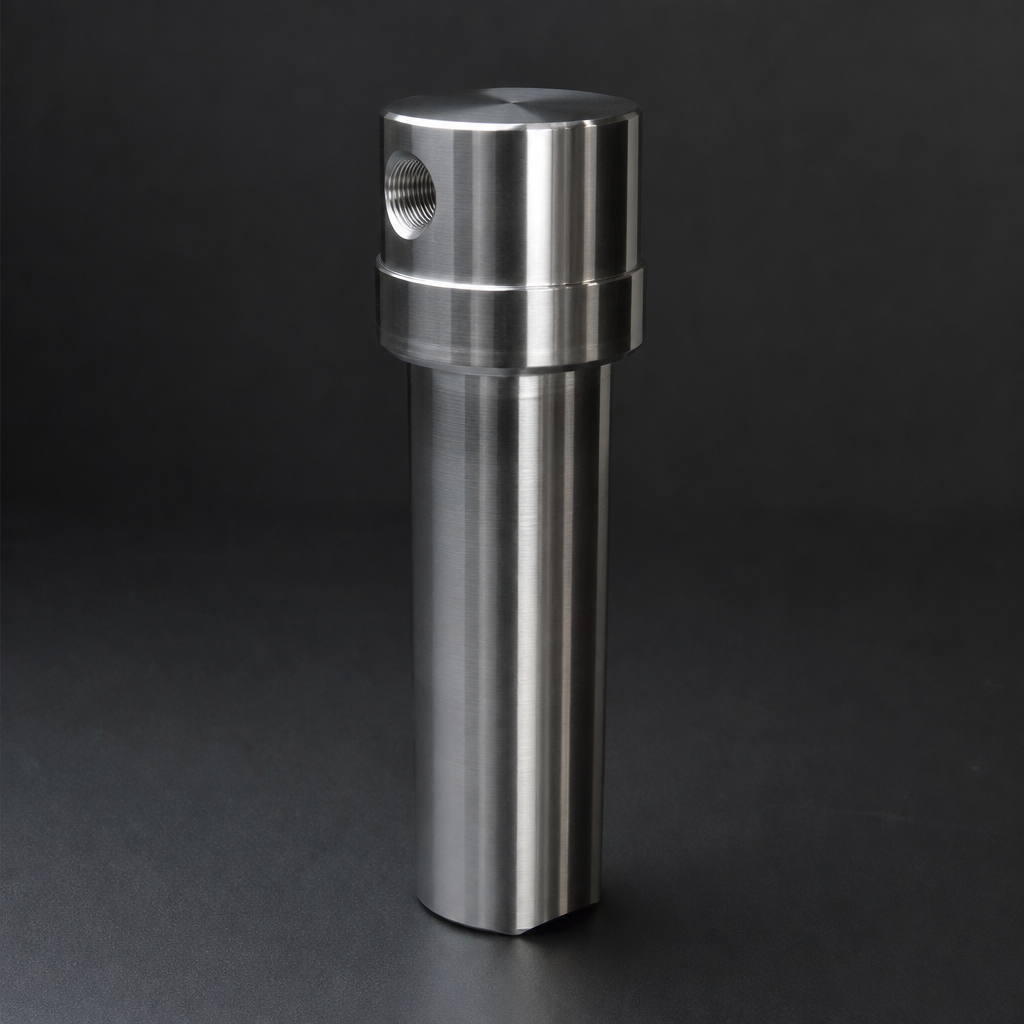
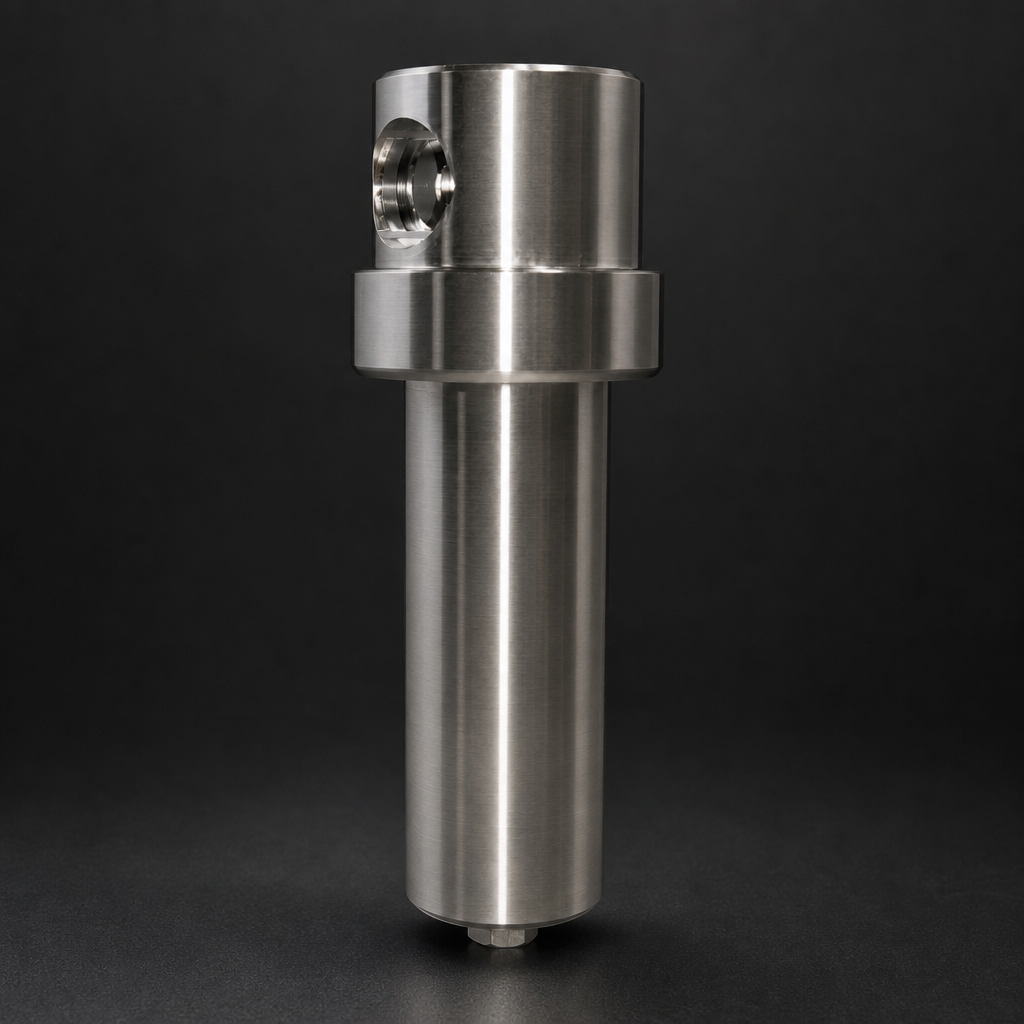
Das RF-H-152 Hochdruck-Filtergehäuse aus Edelstahl von R+F FilterElements, ausgelegt für 250 bar, nimmt RF-P Partikelfilterelemente mit einem Abscheidegrad von 99,99 % bei ≥ 0,3 µm auf — weit unterhalb des in der Norm festgelegten 10-µm-Schwellenwerts. Für Wasserstoff-Abgabestationen, die bei 350 bar oder 700 bar betrieben werden, bietet das RF-H-170 (ausgelegt für 400 bar) den erforderlichen Druckbereich am finalen Verwendungspunkt und schützt Abgabedüsen sowie Fahrzeuganschlüsse vor Partikeleinträgen.
Partikelfiltration in einer Wasserstoff-Konditionierungsstrecke ist unverzichtbar und sollte sowohl vor Druckregelungsstufen (zum Schutz der Ventilsitze) als auch unmittelbar vor dem Dispenser oder dem Endverbrauchsanschluss (als abschließender Schutzfilter) positioniert werden.
Flüssigwasser- und Aerosolabscheidung
Der ISO 14687-Wassergrenzwert von 5 µmol/mol entspricht einem Taupunkt von etwa −51 °C bei Atmosphärendruck. Das Erreichen dieses Trocknungsgrads ist in erster Linie eine Funktion des vorgelagerten Trocknungsprozesses — typischerweise Druckwechsel-Adsorptions-(PSA-)- oder Temperaturwechsel-Adsorptions-(TSA-)Trockner. Die Koaleszenzfiltration spielt dabei jedoch eine entscheidende unterstützende Rolle.
Flüssiges Wasser und Ölaerosole, die aus Verdichtungsstufen mitgerissen werden, können ein Molekularsieb-Trockenbett rasch sättigen, seine effektive Kapazität verringern und die Regenerationsintervalle verkürzen. Die vorgelagerte Installation eines Koaleszenzfilters schützt das Adsorptionsmittel und verlängert die Standzeit erheblich. Die RF-C Koaleszenzfilterelemente von R+F FilterElements — gefertigt aus Borosilikat-Glasmikrofaser — erreichen einen Abscheidegrad von 99,99 % bei ≥ 0,1 µm und sind in den Gehäusen RF-H-150 und RF-H-152 für den Prozessgasbetrieb erhältlich.
Es ist wichtig zu beachten, dass Koaleszenzfiltration flüssigphasiges Wasser und Aerosole entfernt. Sie kann den Wasserdampfgehalt nicht unter den Sättigungspunkt bei der jeweiligen Betriebstemperatur und dem jeweiligen Betriebsdruck senken. Die Dampfphasentrocknung auf den von ISO 14687 geforderten Taupunkt von −51 °C erfordert eine dedizierte Trocknungsstufe; Filtration allein ist hierfür nicht ausreichend.
Einen detaillierten Vergleich der Elementtypen und ihrer geeigneten Anwendungen finden Sie in unserem Leitfaden zu Koaleszenz- vs. Partikelfilterelemente.
Was Filtration nicht leisten kann: Chemische Verunreinigungen
Kohlenmonoxid — Der Katalysatorkiller
CO ist die Verunreinigung, die am häufigsten darüber entscheidet, ob eine Wasserstoffquelle für den Einsatz in PEM-Brennstoffzellen geeignet ist. Bei Konzentrationen über 0,2 µmol/mol adsorbiert CO bevorzugt am Platin-Anodenkatalysator, blockiert aktive Zentren und verursacht einen raschen, steilen Abfall der Zellspannung. Selbst kurze Überschreitungen dieses Grenzwerts können zu Leistungseinbußen führen, deren Rückbildung bei sauberem Wasserstoff Stunden dauert.
Durch Dampf-Methan-Reformierung (SMR) erzeugter Wasserstoff enthält nach dem Wassergas-Shift-Reaktor typischerweise 1–3 % CO — fünf Größenordnungen über dem ISO 14687-Grenzwert. Das Erreichen von 0,2 µmol/mol erfordert selektive Oxidationsreaktoren (PROX), Methanisierung oder Palladium-Membranreinigung. Keines dieser Verfahren ist ein Filtrationsprozess. Ein Partikel- oder Koaleszenzfilter, der in einem CO-belasteten Strom eingesetzt wird, lässt CO-Moleküle vollständig ungehindert passieren; es handelt sich um gasförmige Spezies ohne physikalische Größe oder Phasenunterschied, den ein Filtermedium nutzen könnte.
Ingenieure, die Wasserstoff-Konditionierungsstrecken für reformierten Wasserstoff auslegen, müssen eine dedizierte CO-Entfernungsstufe vorsehen. Die Filtration wird dieser Stufe nachgeschaltet, nicht als Ersatz dafür.
Schwefelverbindungen — Irreversible Vergiftung im Parts-per-Billion-Bereich
Der ISO 14687-Gesamtschwefelgrenzwert von 0,004 µmol/mol (4 ppb) spiegelt die extreme Empfindlichkeit von Platin- und Platin-Ruthenium-Katalysatoren gegenüber Schwefelvergiftung wider. Im Gegensatz zur CO-Vergiftung, die teilweise reversibel ist, bildet Schwefel stabile Oberflächenverbindungen mit Platin, die die Katalysatoraktivität dauerhaft verringern. Eine einzige Grenzwertüberschreitung kann bleibende Schäden an einem Brennstoffzellen-Stack im Wert von mehreren zehntausend Euro verursachen.
Die Schwefelentfernung bei diesen Konzentrationen erfordert Festbett-Adsorption mittels Zinkoxid-(ZnO-)Schutzschichten, mit spezifischen Adsorptionsmitteln imprägnierter Aktivkohle oder Kombinationen aus beidem. Diese Betten müssen sorgfältig auf Basis der erwarteten Schwefelbeladung und des erforderlichen Wartungsintervalls dimensioniert werden, da der Durchbruch katastrophal und nicht graduell erfolgt.
R+F FilterElements bietet RF-DIA Einweg-Inline-Adsorber mit Aktivkohlefüllung für die Feinreinigung von Spurenmengen organischer Schwefelverbindungen in Niederdruckanwendungen an. Für die sub-ppb-Schwefelgehalte, die ISO 14687 im Hochdruck-Wasserstoffbetrieb fordert, ist jedoch ein zweckgebundenes Festbett-Adsorptionssystem mit validierter Durchbruchsüberwachung die geeignete Lösung. Die RF-DIA-Einheiten dienen als abschließende Schutzbarriere gegen Spurenkontaminationen und nicht als primäre Schwefelentfernungsstufe.
Ammoniak, Formaldehyd und halogenierte Verbindungen
Diese Verunreinigungen sind vor allem für Wasserstoff relevant, der durch Elektrolyse erzeugt wird (wo Ammoniak aus gelöstem Stickstoff im Wassereinsatz entstehen kann) oder aus Biomassevergasung stammt. Alle drei sind bei den für Wasserstoff-Konditionierungsstrecken typischen Temperaturen und Drücken gasförmig und passieren Partikel- und Koaleszenzfilter ohne jegliche Abscheidung.
Ammoniak bei Konzentrationen über 0,1 µmol/mol schädigt das Ionomer in der Membran-Elektroden-Einheit und kann die Kathodenkatalysatorschicht kontaminieren. Die Entfernung erfordert säureimprägnierte Aktivkohlebetten oder Wasserwäsche vor der Verdichtung. Formaldehyd und halogenierte Verbindungen werden gleichermaßen durch Adsorption an Aktivkohle behandelt, wobei das spezifische Adsorptionsmittel je nach Verunreinigungsart und -konzentration ausgewählt wird.
Bei Wasserstoff aus alkalischer oder PEM-Elektrolyse sind die primären Verunreinigungen Wasser, Sauerstoff und Partikel — allesamt direkt durch Filtration adressierbar. Dies macht elektrolytischen Wasserstoff zu einer deutlich einfacheren Konditionierungsaufgabe als reformierten Wasserstoff. Unser Artikel zur Wasserstoff-Elektrolyse-Filtration behandelt die spezifischen Anforderungen an Elektrolyseur-Ausgangsströme im Detail.
Filtration ist notwendig, aber nicht hinreichend
Auslegung einer normkonformen Wasserstoff-Konditionierungsstrecke
Eine gut ausgelegte Wasserstoff-Konditionierungsstrecke für die ISO 14687-Konformität folgt einer logischen Abfolge, in der jede Stufe die Verunreinigungen adressiert, für deren Entfernung sie geeignet ist:
- Grobflüssigkeitsabscheidung — Abscheider oder Zentrifugalabscheider zur Entfernung von freiem Flüssigwasser und Kompressoröl-Mitriss vor dem Hauptfilterstrang.
- Koaleszenzfiltration — RF-C Filterelemente in einem RF-H-150- oder RF-H-152-Gehäuse zur Abscheidung von Aerosolen und feinen Flüssigkeitstropfen zum Schutz nachgelagerter Adsorptionsbetten.
- Chemische Behandlungsstufe — PROX-Reaktor, Methanisierungseinheit oder PSA-Reiniger zur CO-Entfernung (bei reformiertem Wasserstoff); Schwefel-Schutzschicht; Ammoniakwäsche je nach Wasserstoffquelle.
- Trocknung — PSA- oder TSA-Trockner zur Erreichung des von ISO 14687 geforderten Taupunkts von −51 °C.
- Abschließende Partikelfiltration — RF-P Filterelemente in einem RF-H-170-Gehäuse (für Hochdruck-Abgabe) als Schutzfilter zur Abscheidung von Partikeln, die innerhalb der Konditionierungsstrecke selbst entstehen.
- Spurenreinigung durch Adsorption — RF-DIA Inline-Adsorber als abschließende Schutzbarriere gegen organische Spurenverunreinigungen, wo erforderlich.
Die genaue Konfiguration hängt von der Wasserstoffquelle, dem Betriebsdruck, dem Volumenstrom und dem spezifischen Verunreinigungsprofil des Eingangsgases ab. Das Ingenieurteam von R+F FilterElements unterstützt bei der Dimensionierung und Auswahl für die Filtrationsstufen dieser Strecke. Nutzen Sie den Online-Auslegungsassistenten für eine erste Einschätzung oder kontaktieren Sie uns direkt für eine detaillierte Anwendungsanalyse.
Use our free Engineering Tool to get a filtration recommendation for your specific application in under 2 minutes.
Auswahl der richtigen R+F-Produkte für den Wasserstoffbetrieb
Alle Gehäuse und Filterelemente von R+F FilterElements für den Wasserstoffbetrieb sind standardmäßig aus 316L-Edelstahl mit FKM/Viton-Dichtungen gefertigt — Werkstoffe, die auf Verträglichkeit mit trockenem Wasserstoff und Beständigkeit gegen Wasserstoffversprödung bei den jeweiligen Betriebsdrücken ausgewählt wurden. Die nachstehende Tabelle fasst die empfohlenen Produkte für jede Filtrationsstufe einer Wasserstoff-Konditionierungsstrecke zusammen.
| Stufe | Empfohlenes Gehäuse | Empfohlenes Filterelement | Max. Druck | Hauptfunktion |
|---|---|---|---|---|
| Koaleszenz (vor Trockner) | RF-H-152 | RF-C (Koaleszenz, Borosilikat) | 250 bar | Aerosol- und Flüssigwasserabscheidung |
| Partikel (vor chemischer Behandlung) | RF-H-150 | RF-P (Partikel, 0,3 µm) | 100 bar | Feststoffpartikelabscheidung; Schutz der Adsorptionsbetten |
| Abschluss-Schutzfilter (Hochdruck-Abgabe) | RF-H-170 | RF-P (Partikel, 0,3 µm) | 400 bar | Abschließende Partikelschutzfiltration vor dem Dispenser |
| Spurenreinigung durch Adsorption | RF-DIA (Inline) | Aktivkohlefüllung | Anwendungsabhängig | Entfernung von organischen Schwefelspuren und Kohlenwasserstoffen |
Alle Produkte sind bei R+F FilterElements GmbH erhältlich und können auf Wunsch mit ATEX-konformen Zubehörteilen für die Wasserstoff-Zonenklassifizierung spezifiziert werden. Vollständige Produktdokumentation einschließlich Werkstoffzertifikaten und Druckprüfprotokollen ist auf Anfrage erhältlich.
Wichtige Erkenntnisse für Ingenieure
- Filtration ist notwendig, aber nicht hinreichend für die ISO 14687-Konformität. Sie adressiert Partikel und flüssiges Wasser wirksam; gasförmige chemische Verunreinigungen kann sie nicht entfernen.
- CO- und Schwefelentfernung erfordern katalytische oder adsorptive Behandlungsstufen, die separat vom Filterstrang ausgelegt und validiert werden müssen.
- Koaleszenzfiltration vor Trocknern und Adsorptionsbetten ist entscheidend für den Schutz dieser Anlagen und die langfristige Aufrechterhaltung ihrer Leistung.
- Hochdruckgehäuse (RF-H-152, RF-H-170) sind für Wasserstoff-Abgabeanwendungen erforderlich; Standard-Druckluftfiltergehäuse sind für diesen Betrieb nicht ausgelegt.
- Die Wasserstoffquelle bestimmt die Behandlungsstrecke: Elektrolytischer Wasserstoff erfordert zur Erfüllung der ISO 14687-Grenzwerte eine deutlich einfachere Konditionierung als reformierter Wasserstoff.
R+F FilterElements liefert die Partikel- und Koaleszenzfiltrationsstufen für Ihr Wasserstoff-Qualitätssystem — mit vollständiger Materialrückverfolgbarkeit für die Audit-Konformität.
Anforderungen besprechen →- Die nachstehende Tabelle fasst die wichtigsten Verunreinigungsgrenzwerte aus ISO 14687:2019 (Typ I, Klasse D — die am häufigsten referenzierte Klasse für Brennstoffzellenfahrzeuge) zusammen.
- ISO 14687 begrenzt den Gesamtpartikelgehalt auf 1 mg/kg Wasserstoff, mit besonderem Fokus auf Partikel ab 10 µm.
- CO ist die Verunreinigung, die am häufigsten darüber entscheidet, ob eine Wasserstoffquelle für den Einsatz in PEM-Brennstoffzellen geeignet ist.
- Grobflüssigkeitsabscheidung