Why Oil Is the Silent Killer of Your Nitrogen Generator
On-site nitrogen generation has become the preferred supply strategy for many industrial facilities — eliminating cylinder logistics, reducing cost per Nm³, and providing a continuous, reliable N2 source. Yet a significant proportion of nitrogen generators fail to deliver their rated purity within the first two years of operation, and the root cause is almost always the same: oil contamination in the feed air.
Whether your system uses pressure-swing adsorption (PSA) with carbon molecular sieves (CMS) or a hollow-fibre membrane module, the separation mechanism is exquisitely sensitive to hydrocarbon contamination. Understanding why — and specifying the correct nitrogen generator pre-filter train — is the single most cost-effective investment you can make in your N2 supply infrastructure.
How PSA and Membrane Nitrogen Generators Work
Pressure-Swing Adsorption (PSA)
PSA systems use two vessels packed with carbon molecular sieve, a specially engineered form of activated carbon with a precise pore structure. Compressed air is fed alternately through each vessel: oxygen, CO₂, and water vapour are preferentially adsorbed onto the CMS surface, allowing nitrogen to pass through at purities of 95–99.999%. The off-line vessel is simultaneously regenerated by depressurisation and purging with a fraction of the product N2.
The CMS pore structure is measured in angstroms. Oil molecules — even in aerosol form at concentrations as low as 0.01 mg/m³ — are large enough to block these pores permanently. Unlike water vapour, which desorbs during regeneration, hydrocarbons bind irreversibly to the carbon surface. Once contaminated, a CMS bed cannot be regenerated in the field; the entire vessel charge must be replaced.
Hollow-Fibre Membrane Systems
Membrane nitrogen generators pass compressed air through bundles of semi-permeable hollow fibres. Oxygen, water vapour, and CO₂ permeate through the fibre walls faster than nitrogen, which is collected at the bore outlet. Membrane systems are simpler and more compact than PSA, though typically limited to purities below 99.5%.
Oil aerosols and vapour coat the inner surface of the hollow fibres, reducing permeability and selectivity. The result is a progressive decline in both N2 purity and flow capacity. Unlike CMS beds, membrane modules cannot be cleaned or regenerated — replacement is the only remedy, at a cost that typically exceeds the capital value of several years of proper pre-filtration.
The Three-Stage Pre-Filtration Requirement
ISO 8573-1 defines compressed air quality classes for particulate, water, and oil content. For nitrogen generator feed air, the target is typically Class 1 oil (≤ 0.01 mg/m³ total oil) and Class 1 or 2 particulate. Achieving this from typical rotary screw compressor output — which may contain 2–5 mg/m³ of oil aerosol plus oil vapour — requires a three-stage approach.
Stage 1: Bulk Particulate Removal
A coarse particulate filter (typically 1 µm or 3 µm rated) removes pipe scale, rust particles, and bulk liquid water that would otherwise overload the downstream coalescing stage. This stage protects the coalescing element from premature blinding and extends its service life significantly.
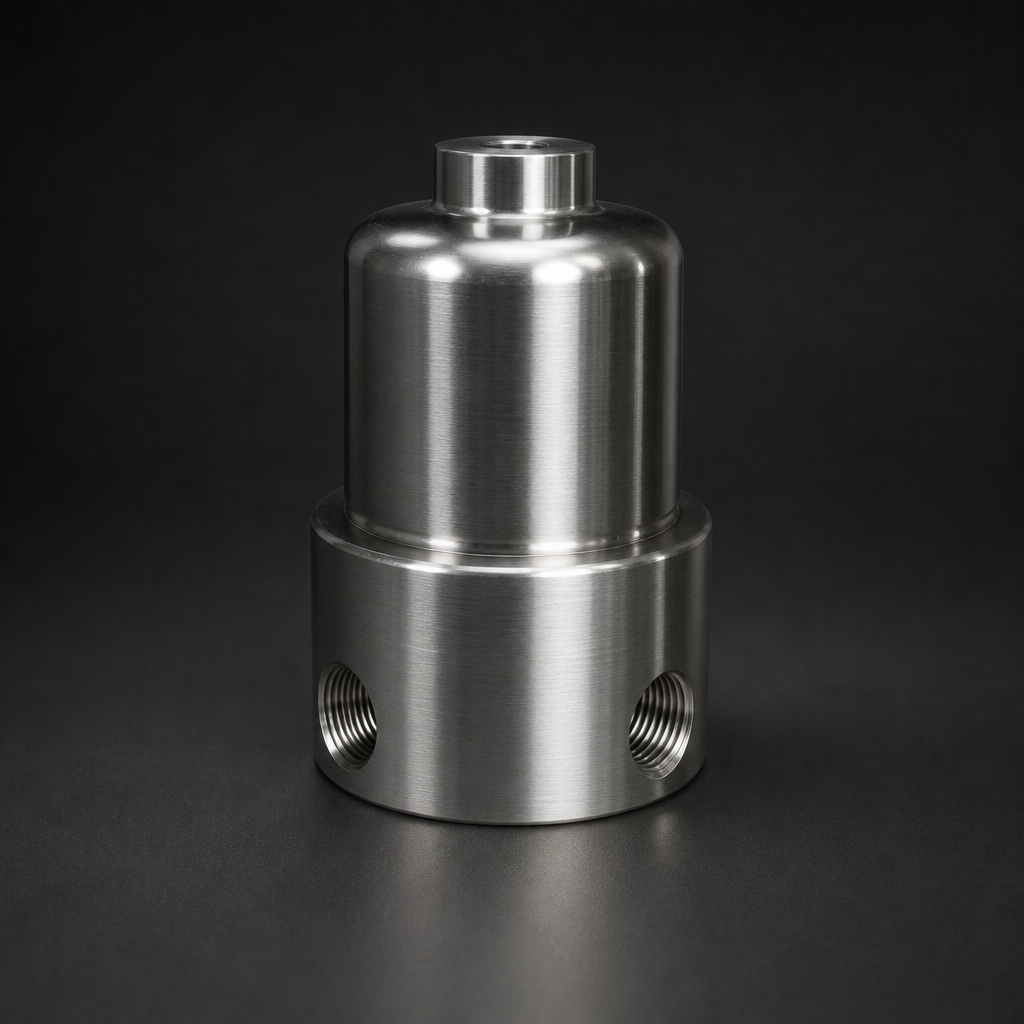
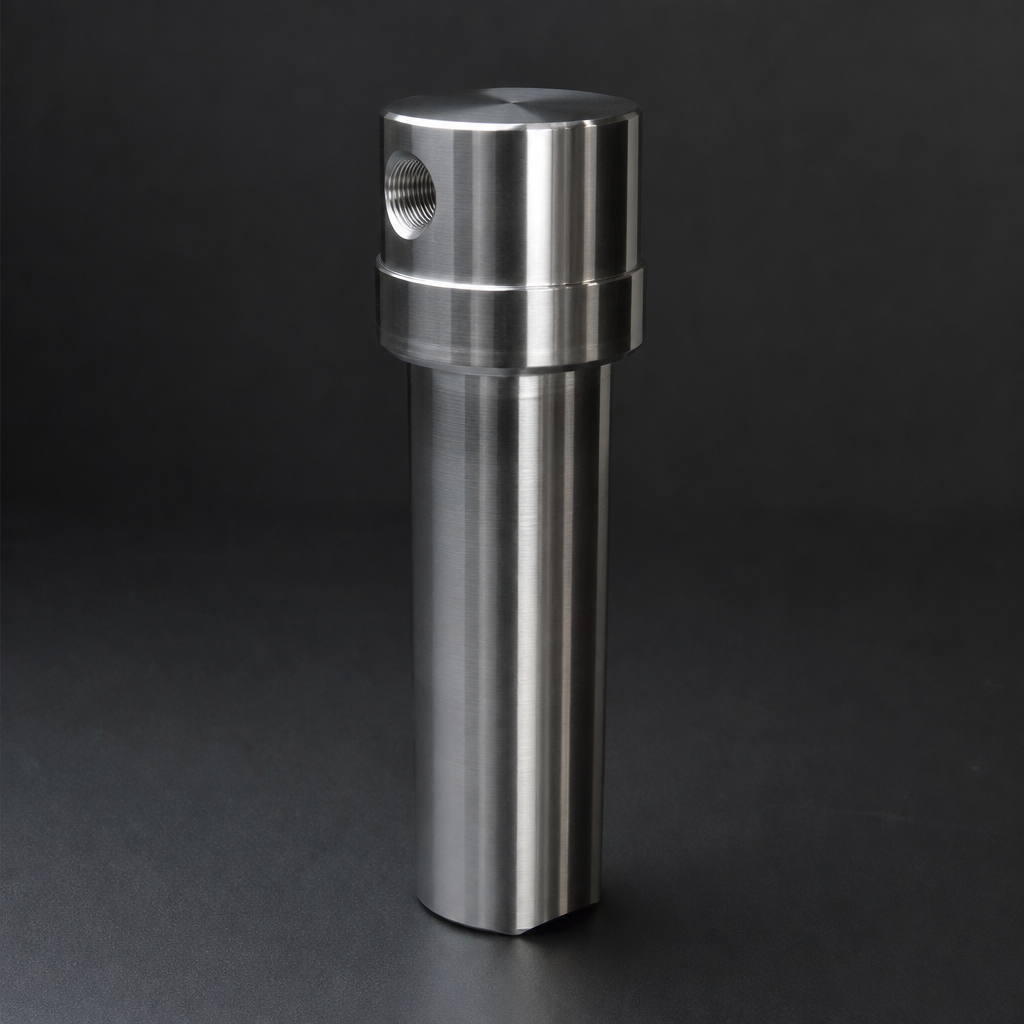
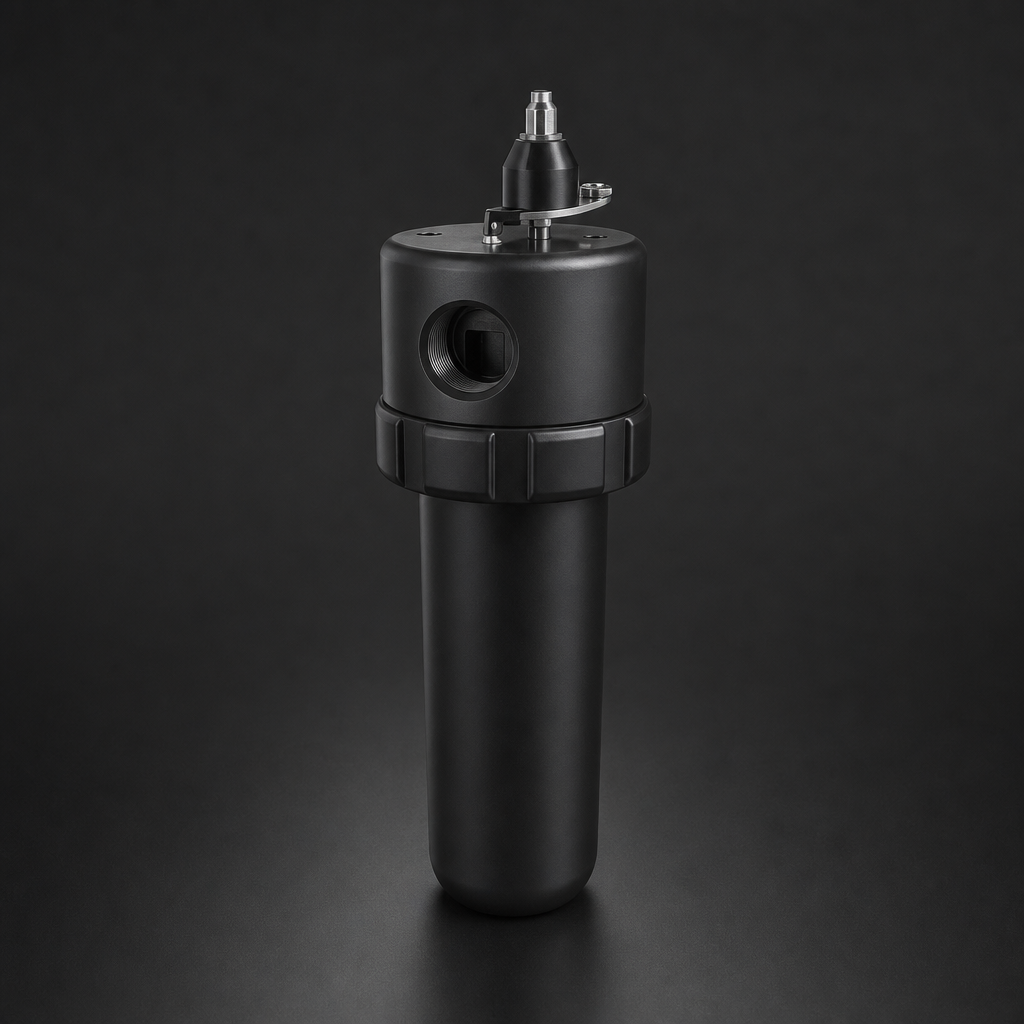
R+F FilterElements' RF-P series particulate elements achieve 99.99% efficiency at ≥ 0.3 µm, housed in the RF-H compressed air filter range. For flow rates up to 12,000 Nm³/h, the RF-H-310 to RF-H-395 series provides the correct housing size.
Stage 2: High-Efficiency Coalescing
The coalescing stage is the heart of the pre-filter train. A high-efficiency coalescing element captures sub-micron oil aerosols — the droplets that pass straight through bulk separators — and coalesces them into larger droplets that drain to the sump for automatic removal.
R+F's RF-C coalescing elements use borosilicate glass microfibre media with 99.99% efficiency at ≥ 0.1 µm, delivering a residual oil aerosol content of ≤ 0.01 mg/m³ — meeting ISO 8573-1 Class 1 for oil aerosol. Elements are available in sizes 12032, 12057, 25064, 25178, 51230, and 51476 to match the full range of RF-H housings.
Stage 3: Activated Carbon Adsorption
Even after high-efficiency coalescing, oil vapour remains in the air stream. Oil vapour is a gaseous phase hydrocarbon that passes through coalescing media without being captured. For PSA nitrogen filtration in particular, oil vapour is just as damaging to CMS beds as aerosol — it adsorbs onto the carbon surface and progressively reduces N2 purity.
An activated carbon adsorber downstream of the coalescing stage reduces total oil (aerosol + vapour) to ≤ 0.003 mg/m³, meeting ISO 8573-1 Class 1 for total oil. R+F's RF-AC adsorption elements are available in the same housing sizes as the RF-C coalescing elements, allowing a compact, matched three-stage installation. For point-of-use or space-constrained applications, the RF-DIA disposable inline adsorber provides activated carbon adsorption in a compact, tool-free format.
Recommended Pre-Filter Configuration
The table below summarises the recommended three-stage pre-filter train for nitrogen generator duty, with the corresponding R+F product codes and ISO 8573-1 outlet quality at each stage.
| Stage | Function | R+F Element | Housing Series | Outlet Quality (ISO 8573-1) |
|---|---|---|---|---|
| 1 — Particulate | Bulk particulate & liquid water removal | RF-P (1 µm or 3 µm) | RF-H-310 to RF-H-395 | Class 2 particulate |
| 2 — Coalescing | Sub-micron oil aerosol removal | RF-C (0.1 µm, 99.99%) | RF-H-310 to RF-H-395 | Class 1 oil aerosol (≤ 0.01 mg/m³) |
| 3 — Adsorption | Oil vapour removal | RF-AC activated carbon | RF-H-310 to RF-H-395 | Class 1 total oil (≤ 0.003 mg/m³) |
Note: All RF-H housings are rated to 17 bar and 120 °C, suitable for standard compressed air systems. Automatic drain valves are recommended on all three stages to prevent liquid re-entrainment.
oil contamination in the feed air
The Cost Argument: Filters vs. CMS Bed Replacement
The economics of proper pre-filtration are compelling. Consider a mid-sized PSA nitrogen generator with two vessels each containing 150 kg of carbon molecular sieve. A typical CMS bed replacement — including the sieve material, vessel cleaning, labour, and system downtime — costs between €8,000 and €20,000 per event, depending on generator size and site access. Larger systems with multiple vessels can exceed €50,000 per replacement cycle.
By contrast, a correctly specified three-stage pre-filter train for a generator consuming 500 Nm³/h of feed air — using RF-H-350 housings with RF-P, RF-C, and RF-AC elements — represents a capital cost of approximately €1,500–€2,500, with annual element replacement costs of €400–€800. The payback period against a single avoided CMS replacement is measured in weeks, not years.
For membrane nitrogen generator filter applications, the calculation is similar. A replacement membrane module for a 50 Nm³/h generator typically costs €3,000–€8,000. A three-stage pre-filter train for the same flow rate costs a fraction of that — and a single module replacement pays for a decade of filter maintenance.
The Hidden Cost: Off-Spec Nitrogen
Beyond the direct cost of component replacement, contaminated nitrogen generators impose a further cost that is often overlooked: off-spec product gas. A PSA system with partially contaminated CMS beds may continue to produce nitrogen, but at a purity below the rated specification. In food packaging, electronics manufacturing, or pharmaceutical blanketing applications, off-spec N2 can result in product spoilage, yield loss, or regulatory non-compliance — costs that dwarf the price of a filter element.
Sizing Your Nitrogen Generator Pre-Filter
Pre-filter sizing for PSA nitrogen filtration must account for the feed air flow rate, not the product N2 flow rate. PSA systems typically consume 3–5 Nm³ of feed air per Nm³ of product nitrogen (depending on purity); membrane systems consume 4–10 Nm³/Nm³. A generator rated at 100 Nm³/h of N2 at 99% purity may require 350–500 Nm³/h of feed air — and the pre-filter train must be sized for this higher flow.
Key sizing parameters for the RF-H compressed air filter range:
- Flow rate: Match to feed air Nm³/h at operating pressure
- Operating pressure: Typically 6–10 bar for PSA/membrane systems; RF-H housings rated to 17 bar
- Temperature: Compressed air after aftercooler and refrigerant dryer is typically 7–15 °C above ambient; RF-H rated to 120 °C
- Pressure drop budget: Each filter stage adds 0.1–0.3 bar at rated flow; total pre-filter train pressure drop should not exceed 0.5 bar to avoid compressor energy penalty
R+F FilterElements' online sizing wizard allows you to select the correct housing and element combination for your specific feed air conditions, with pressure drop calculations at actual operating flow.
Use our free Engineering Tool to get a filtration recommendation for your specific application in under 2 minutes.
Installation and Maintenance Best Practices
Positioning
The pre-filter train should be installed as close as practicable to the nitrogen generator inlet, downstream of the refrigerant dryer (or desiccant dryer if fitted). Installing upstream of the dryer wastes filter capacity on bulk liquid water that the dryer would remove anyway. A final coalescing stage immediately before the generator inlet provides additional protection against any condensation in the pipework between dryer and generator.
Drain Management
Automatic float drains or electronic timed drains are essential on the particulate and coalescing stages. Manual drains that are not regularly operated allow liquid to accumulate in the sump and re-entrain into the air stream — negating the coalescing element's performance. Zero-loss drains are preferred in applications where compressed air energy cost is significant.
Element Replacement Intervals
For nitrogen generator pre-filter duty, R+F recommends annual element replacement as a minimum, or when differential pressure across any stage reaches 0.35 bar — whichever occurs first. In environments with high ambient oil contamination (e.g., near engine test cells or heavy machining), six-monthly replacement may be appropriate. Differential pressure gauges or electronic ΔP indicators fitted to each housing provide a reliable service indicator.
Dew Point Monitoring: The Complementary Safeguard
Pre-filtration addresses oil contamination, but water vapour is an equally important feed air quality parameter for PSA nitrogen filtration. CMS beds adsorb water vapour preferentially over oxygen — high moisture loading reduces N2 purity and shortens regeneration cycle life. A refrigerant dryer delivering a pressure dew point of +3 °C is the minimum requirement; a desiccant dryer to −40 °C PDP is recommended for high-purity (≥ 99.9%) PSA systems.
Continuous dew point monitoring at the generator inlet, combined with differential pressure monitoring across the pre-filter train, provides a complete picture of feed air quality and early warning of any deterioration. For guidance on compressed air quality standards and measurement, see our article on ISO 8573-1 compressed air quality classes.
Specifying the Right Pre-Filter for Your Application
R+F FilterElements offers the complete three-stage pre-filter solution for nitrogen generator applications, from the RF-H-310 compact housing for small laboratory generators up to the RF-H-395 large-body housing for industrial-scale PSA systems consuming thousands of Nm³/h of feed air. All housings accept the full range of RF-C coalescing, RF-P particulate, and RF-AC adsorption elements, allowing a single housing series to serve all three stages with common spare parts.
For applications where space is constrained, the RF-H series supports multi-element configurations that increase flow capacity without increasing the housing footprint. Stainless steel housing options are available for corrosive environments or where hygiene standards require it.
To discuss your nitrogen generator pre-filter requirements or to obtain a quotation, visit the compressed air filter product range or contact R+F FilterElements directly. Our engineering team can review your compressor specification, generator data sheet, and site conditions to recommend the optimum pre-filter configuration.
- PSA systems use two vessels packed with carbon molecular sieve, a specially engineered form of activated carbon with a precise pore structure.
- Class 1 or 2 particulate
- The table below summarises the recommended three-stage pre-filter train for nitrogen generator duty, with the corresponding R+F product codes and ISO 8573-1 outlet quality at each stage.
- The economics of proper pre-filtration are compelling.
Summary
Oil contamination — both aerosol and vapour — permanently destroys the separation media in PSA and membrane nitrogen generators. A three-stage pre-filter train comprising a particulate filter, high-efficiency coalescing filter, and activated carbon adsorber is the industry-standard solution for protecting your N2 investment. The cost of correct pre-filtration is a small fraction of a single CMS bed or membrane module replacement, making it one of the highest-return maintenance investments available to nitrogen generator operators.
R+F FilterElements' RF-H housing range with RF-C, RF-P, and RF-AC elements provides a complete, matched solution for nitrogen generator pre-filter duty across all flow rates and pressures encountered in industrial compressed air systems.