If your oil-sealed vacuum pump is consuming more oil than expected, the culprit is almost certainly your exhaust stream. Every time an oil-sealed rotary vane or rotary screw vacuum pump exhausts, it carries a fine mist of oil droplets with it — droplets that represent both a direct operating cost and a potential environmental compliance issue. For many facilities running continuous vacuum processes, this translates to 0.3–0.5 litres of oil lost per pump per day, or well over 100 litres per year per pump.
The good news is that a properly specified coalescing exhaust filter can recover more than 99% of that oil, returning it to the pump sump and dramatically reducing both oil consumption and exhaust emissions. This article explains how vacuum pump exhaust oil mist forms, how coalescing filtration recovers it, and how to calculate the return on investment for your installation.
Why Oil-Sealed Vacuum Pumps Lose Oil Through the Exhaust
Oil-sealed vacuum pumps rely on a thin film of oil to seal the clearances between the rotor, vanes, and pump body. This oil is continuously circulated, cooled, and recirculated — but a portion of it inevitably becomes entrained in the gas stream as a fine aerosol. The droplet size distribution is typically in the range of 0.1–5 µm, which means the mist is largely invisible to the naked eye and passes straight through coarse mesh or felt separators.
Several factors increase oil carryover:
- High pump speed — faster rotation generates more turbulence and finer droplets
- Elevated oil temperature — thinner oil at higher temperatures atomises more readily
- Worn or degraded oil — oxidised oil has different surface tension characteristics
- High gas throughput — greater flow velocity carries more droplets through the internal separator
- Incorrect oil grade — using a lower-viscosity oil than specified increases carryover
Most pump manufacturers fit a basic internal oil separator, but these are designed to protect the pump from gross oil loss rather than to achieve high-efficiency recovery. Residual oil concentrations leaving the pump exhaust port are typically 5–50 mg/m³ — far above what is acceptable for discharge to atmosphere in many jurisdictions, and representing a significant ongoing cost.
How Coalescing Exhaust Filters Recover Oil
A coalescing exhaust filter works by forcing the oil-laden exhaust gas through a depth-loading borosilicate glass microfibre element. As the fine oil droplets pass through the tortuous fibre matrix, they collide with fibres and with each other, gradually coalescing into larger droplets. Once the droplets are large enough, gravity pulls them down the element surface and they drain into a sump at the base of the housing, from where they are returned to the pump sump via a drain line.
The key performance metric is coalescing efficiency, typically expressed as the percentage of inlet oil mass that is recovered. High-quality vacuum-grade coalescing elements achieve efficiencies of 99% or greater, reducing outlet oil concentrations to below 1 mg/m³. This is not only a significant cost saving — it also ensures compliance with workplace air quality standards and environmental discharge limits.
Vacuum pump exhaust filters differ from standard compressed air coalescing filters in several important respects:
- Temperature rating — vacuum pump exhausts can reach 80–120 °C continuously; elements must be rated accordingly
- Pressure drop tolerance — the filter must not create excessive back-pressure on the pump exhaust, which would reduce pump performance
- Oil drainage design — the housing must allow collected oil to drain freely back to the pump without re-entrainment
- Element binder chemistry — standard borosilicate elements use organic binders that degrade at elevated temperatures; vacuum-grade elements use a silica binder rated to 200 °C
The R+F FilterElements Vacuum Exhaust Filter Range
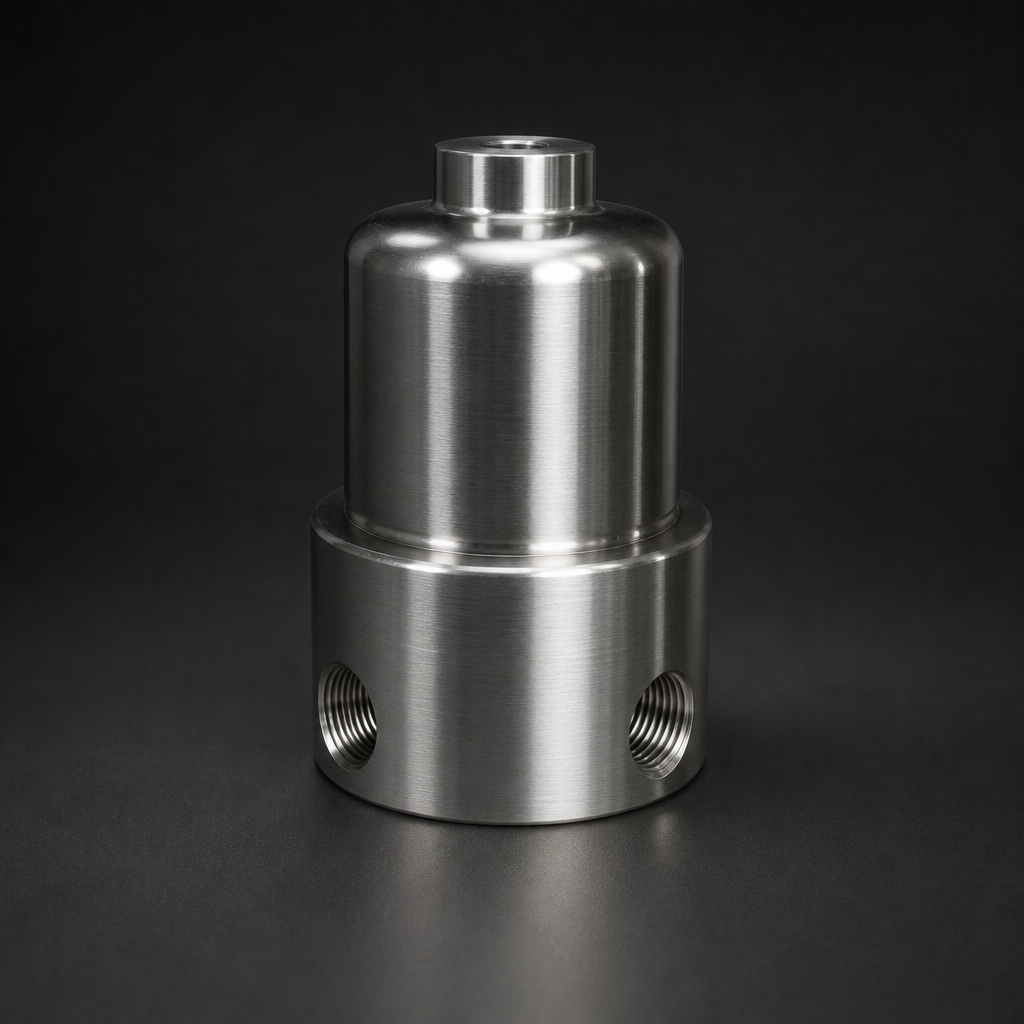
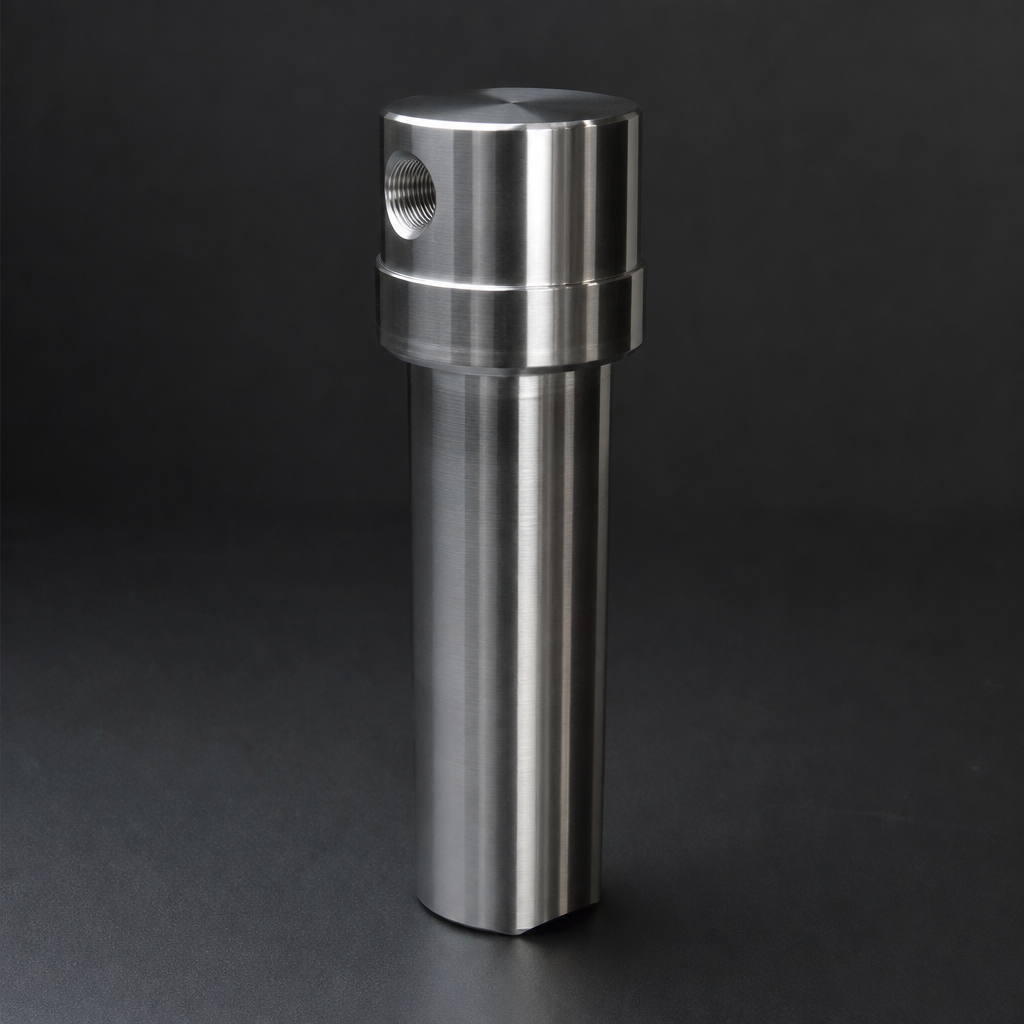
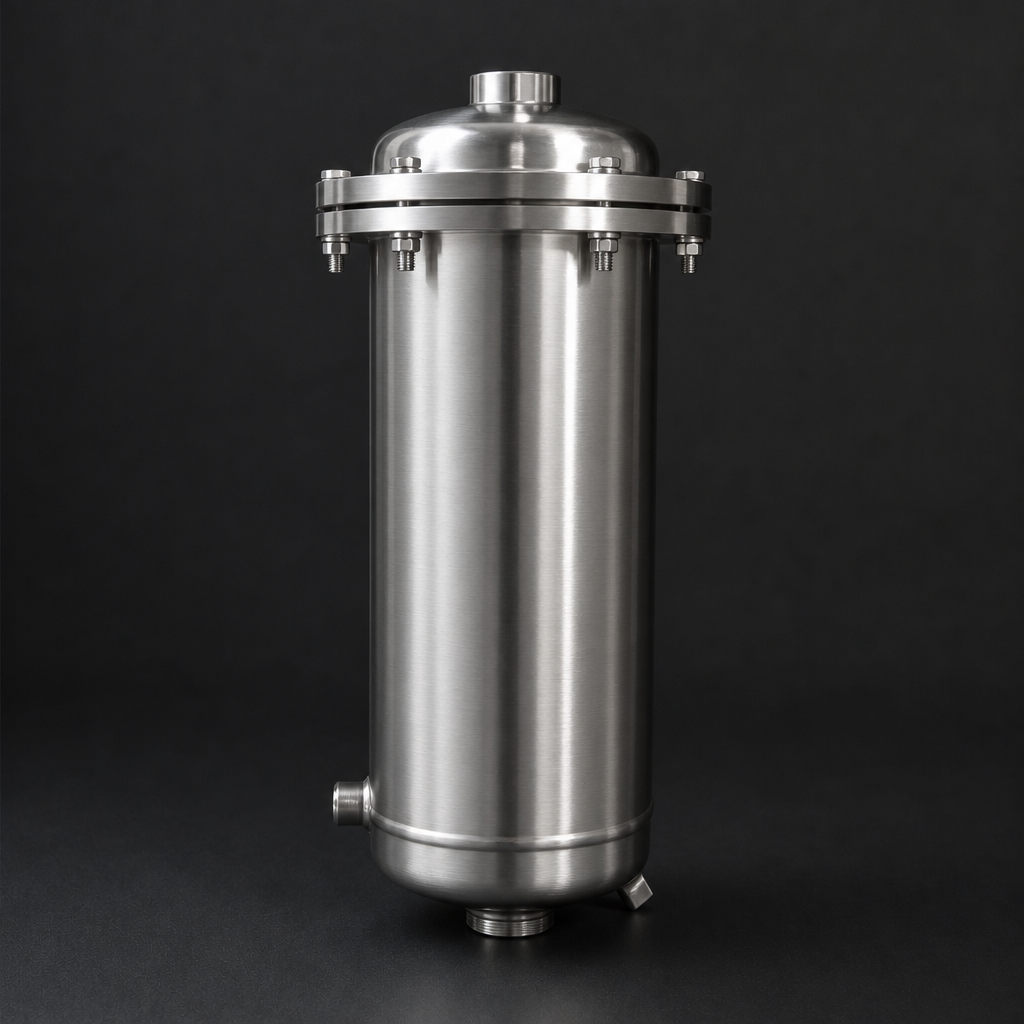
R+F FilterElements offers its own range of vacuum pump exhaust filters specifically engineered for oil-sealed pump applications. The RF-H-420 to RF-H-456 series covers free air delivery rates from 5 m³/h up to 765 m³/h, accommodating everything from small laboratory pumps to large industrial vacuum systems.
Housings are available in aluminium for standard applications and 316L stainless steel for aggressive environments or where hygiene requirements apply. Multi-element designs (1 to 16 elements) allow the range to scale to very high flow rates without excessive pressure drop.
The filter elements used in this range are the RF-CS series — vacuum-specific coalescing elements with a silica binder that maintains structural integrity at continuous operating temperatures up to 200 °C. This is a critical distinction from standard RF-C compressed air elements, which use an organic binder rated to 100 °C.
RF-H-420 to RF-H-456 Series — Key Specifications
| Model | Max Flow (m³/h FAD) | No. of Elements | Housing Material | Max Temp (°C) | Connection |
|---|---|---|---|---|---|
| RF-H-420 | 5–25 | 1 | Aluminium | 120 | G¾" / G1" |
| RF-H-430 | 25–80 | 1–2 | Aluminium | 120 | G1" / G1½" |
| RF-H-440 | 80–200 | 2–4 | Aluminium / 316L SS | 150 | G1½" / G2" |
| RF-H-447S | 150–350 | 4–8 | 316L Stainless Steel | 200 | DN50 / DN80 flange |
| RF-H-456 | 350–765 | 8–16 | 316L Stainless Steel | 200 | DN80 / DN100 flange |
All models in the range are supplied with FKM/Viton seals as standard, providing compatibility with the mineral and synthetic oils used in the majority of oil-sealed vacuum pumps. EPDM and PTFE seal options are available for specialist applications.
Reduced pump maintenance frequency
Calculating the Return on Investment
The financial case for fitting a high-efficiency exhaust filter is straightforward to quantify. The following worked example is based on a single oil-sealed rotary vane pump running continuously in a pharmaceutical manufacturing environment.
Example ROI Calculation — Single Pump, Continuous Operation
| Parameter | Value | Notes |
|---|---|---|
| Oil consumption without exhaust filter | 0.4 L/day | Typical for 40 m³/h pump |
| Annual oil loss (unfiltered) | 146 L/year | 365 days × 0.4 L |
| Vacuum pump oil cost | £18/litre | Synthetic grade |
| Annual oil cost (unfiltered) | £2,628/year | 146 L × £18 |
| Recovery efficiency (RF-H-430 + RF-CS element) | >99% | Coalescing grade |
| Oil recovered annually | ~144 L/year | Returned to pump sump |
| Annual oil saving | £2,592/year | 144 L × £18 |
| Filter unit cost (RF-H-430) | ~£380 | Indicative; contact R+F for quote |
| Annual element replacement cost | ~£95 | One element per year typical |
| Simple payback period | <3 months | Based on oil saving alone |
This calculation considers only the direct oil cost saving. In practice, the total benefit is higher when you account for:
- Reduced pump maintenance frequency — recovered oil is cleaner than make-up oil, reducing internal wear
- Avoided disposal costs — oil-contaminated exhaust condensate requires specialist disposal
- Regulatory compliance — avoiding potential fines or enforcement action for oil mist emissions
- Improved workplace air quality — reducing oil aerosol concentrations in the vicinity of the pump
For facilities operating multiple vacuum pumps, the savings scale proportionally. A plant with ten pumps of similar size could realistically save £25,000 or more per year in oil costs alone.
Use our free Engineering Tool to get a filtration recommendation for your specific application in under 2 minutes.
Sizing and Selection Guidance
Correct sizing of a vacuum pump exhaust filter is essential to achieve the stated recovery efficiency without creating excessive back-pressure. The key sizing parameter is the free air delivery (FAD) of the pump — the volumetric flow rate of gas being pumped, expressed at atmospheric conditions.
It is important not to confuse FAD with the pump's displacement volume. The actual gas throughput depends on the process being evacuated and the operating pressure. For sizing purposes, use the pump's maximum FAD rating as stated on the nameplate or in the pump datasheet.
R+F FilterElements provides a sizing wizard that allows you to input your pump FAD, exhaust temperature, and oil type to receive a recommended filter model and element grade. Alternatively, the technical team can assist with selection for multi-pump installations or non-standard applications — contact us at the enquiry page.
Installation Best Practice
To achieve maximum oil recovery and element service life, observe the following installation guidelines:
- Mount vertically with the drain port at the bottom — this allows collected oil to drain freely by gravity
- Connect the drain port back to the pump oil sump using a small-bore tube with a sight glass — this allows you to verify that oil is being recovered
- Allow a thermal break if the pump exhaust temperature exceeds 100 °C — a short length of flexible hose between the pump exhaust port and the filter inlet reduces thermal stress on the housing
- Do not restrict the outlet — the filter outlet should discharge to atmosphere or to a low-resistance duct; any back-pressure reduces pump performance
- Monitor differential pressure — a loaded element will show increasing pressure drop; replace when differential pressure reaches the manufacturer's recommended limit (typically 350 mbar for vacuum-grade elements)
Element Service Life and Replacement
The service life of a vacuum pump exhaust filter element depends primarily on the oil carryover rate and the cleanliness of the oil. In a well-maintained pump running clean synthetic oil, a single RF-CS element in an RF-H-430 housing will typically last 6–12 months before differential pressure rises to the replacement threshold.
Factors that shorten element life include:
- Degraded or contaminated pump oil — carbon particles and oxidation products blind the element fibres
- Water contamination — condensed water in the exhaust stream can cause element swelling and premature blockage
- Process gas contamination — reactive gases or particulates from the process can load the element rapidly
If element life is shorter than expected, it is worth investigating the root cause rather than simply increasing replacement frequency. A pump oil analysis service can identify contamination issues before they cause premature element failure or pump damage.
Replacement elements for the full RF-H-420 to RF-H-456 range are available from R+F FilterElements. The RF-CS element range is stocked in all standard sizes, with typical lead times of 2–3 working days for UK and European destinations.
Compliance and Environmental Considerations
Oil mist emissions from vacuum pump exhausts are subject to increasing regulatory scrutiny across Europe. The EU Industrial Emissions Directive and national workplace exposure limit (WEL) regulations set limits on oil aerosol concentrations in workplace air. In the UK, the EH40 workplace exposure limit for mineral oil mist is 1 mg/m³ (8-hour TWA) — a level that can be exceeded in the immediate vicinity of an unfiltered pump exhaust.
Fitting a high-efficiency coalescing exhaust filter is the most cost-effective way to ensure compliance. The R+F vacuum exhaust filter range is designed to reduce outlet oil concentrations to below 1 mg/m³, providing a clear compliance margin under normal operating conditions.
For applications where the exhaust is ducted to atmosphere outside the building, local authority environmental permits may also apply. R+F FilterElements can provide test data and performance certificates to support permit applications on request.
- Elevated oil temperature
- coalescing efficiency
- R+F FilterElements offers its own range of vacuum pump exhaust filters specifically engineered for oil-sealed pump applications.
- Reduced pump maintenance frequency
Summary
Vacuum pump oil consumption through the exhaust is a significant and often overlooked operating cost. A coalescing exhaust filter from the R+F FilterElements RF-H-420 to RF-H-456 series, fitted with RF-CS vacuum-grade elements, can recover more than 99% of exhaust oil — delivering a payback period of under three months in typical applications, while simultaneously improving workplace air quality and supporting environmental compliance.
The investment case is compelling for any facility operating oil-sealed vacuum pumps on a continuous or semi-continuous basis. Use the R+F sizing wizard to identify the correct model for your pump, or contact the technical team for a tailored recommendation.