
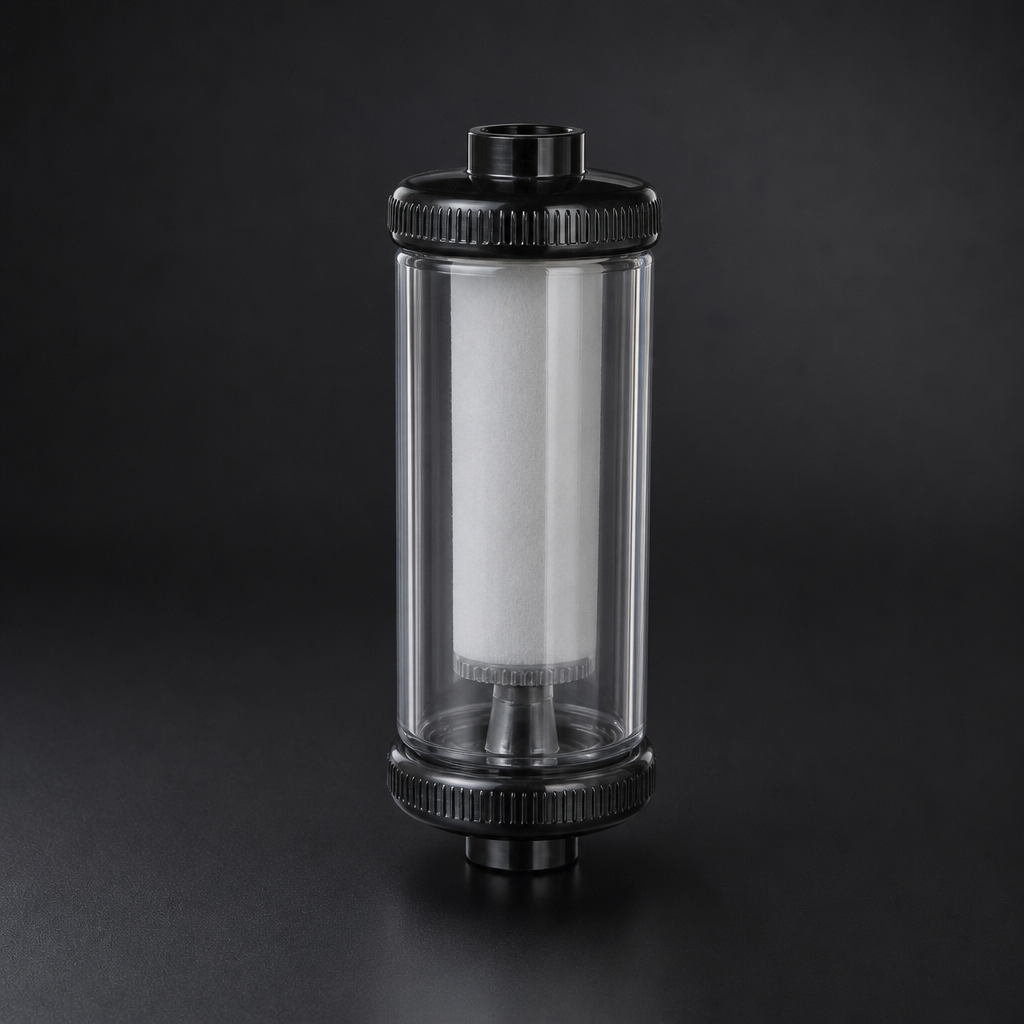
Oil Contamination in Compressed Air — Causes, Consequences, and Filtration Solutions
Oil contamination in compressed air is one of the most widespread and underestimated quality problems in industrial facilities. The source is almost always the compressor — the solution is always multi-stage filtration.
Recognise the Symptoms
- Oily residue on pneumatic equipment, valves, or cylinders
- Product contamination or rejection in food, pharma, or electronics production
- Discolouration or taste issues in direct-contact applications (packaging, food processing)
- Premature failure of pneumatic seals and O-rings
- Failed ISO 8573-1 air quality testing
- Odour in compressed air lines
Root Causes
Oil-injected compressor without adequate aftertreatment
the compressor's internal separator removes bulk oil but passes 2–5 mg/m³ oil aerosol downstream
No coalescing filter or wrong filter grade
particulate filters do not remove oil aerosol. Only coalescing elements with appropriate efficiency ratings capture sub-micron droplets
Oil vapour not addressed
coalescing filters remove liquid aerosol but cannot capture oil in gaseous form. Activated carbon adsorption is required for oil vapour removal below 0.003 mg/m³
Saturated or bypassed filter elements
once the element reaches its dirt-holding capacity, oil passes through unfiltered. Missing DP monitoring means the problem goes undetected
Aftercooler or dryer malfunction
elevated air temperature increases oil vapour concentration and reduces coalescing efficiency
Diagnostic Checklist
- 1What type of compressor is in use? Oil-injected screw compressors are the primary source of oil contamination
- 2Is there a coalescing filter installed downstream of the aftercooler/dryer?
- 3What efficiency grade is the coalescing element? Check the element marking or datasheet
- 4When was the element last changed? Compare hours in service vs. recommended interval
- 5Is there an activated carbon stage for oil vapour removal?
- 6What ISO 8573-1 class does your application require? Compare with what your current system delivers
- 7Has the compressed air been tested? Oil concentration measurement confirms the actual contamination level
Find the right filter for this problem
Enter your operating data and let our tools point you to the right element and housing — or send us your details for a tailored recommendation.
Element Finder
RecommendedIdentify the right filter element for your medium and duty in under 60 seconds — recommended starting point.
Find your elementUse Housing Selector
Select the matching housing — material, pressure rating, connections and drain.
Select a housingRequest a Consultation
Prefer a person? Send your operating data and we will recommend the right configuration.
Send enquiryRelated Applications
Describe Your Situation — We Will Find the Right Solution
Every filtration problem has specific root causes that require specific solutions. Send us your operating conditions and we will provide a tailored recommendation.