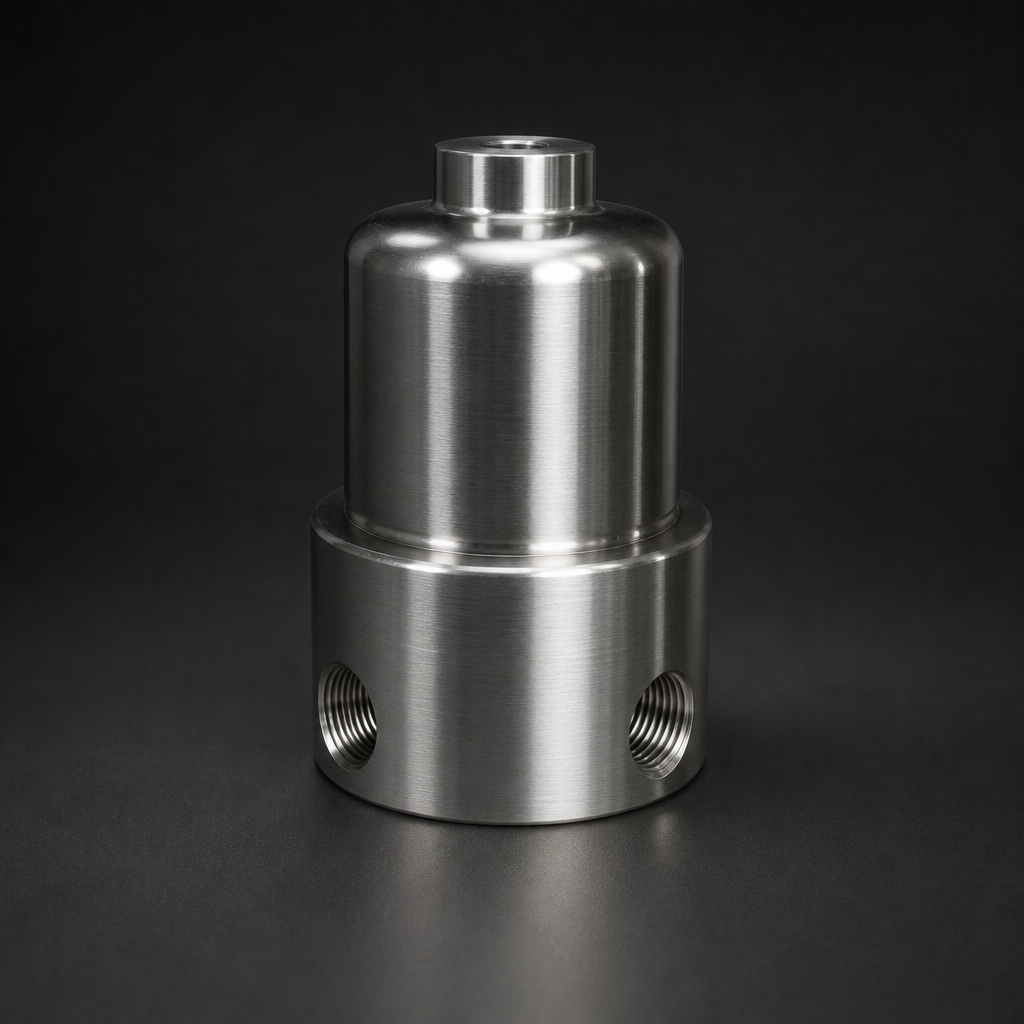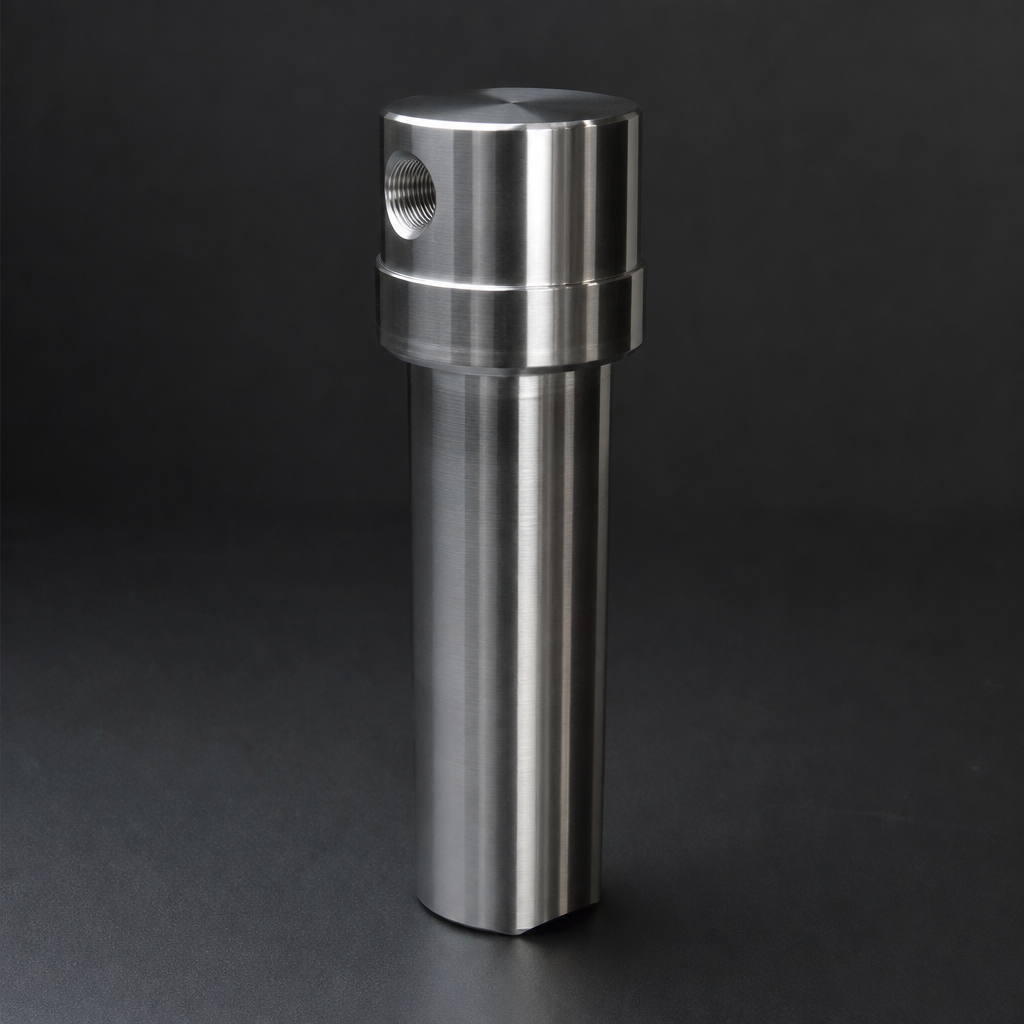
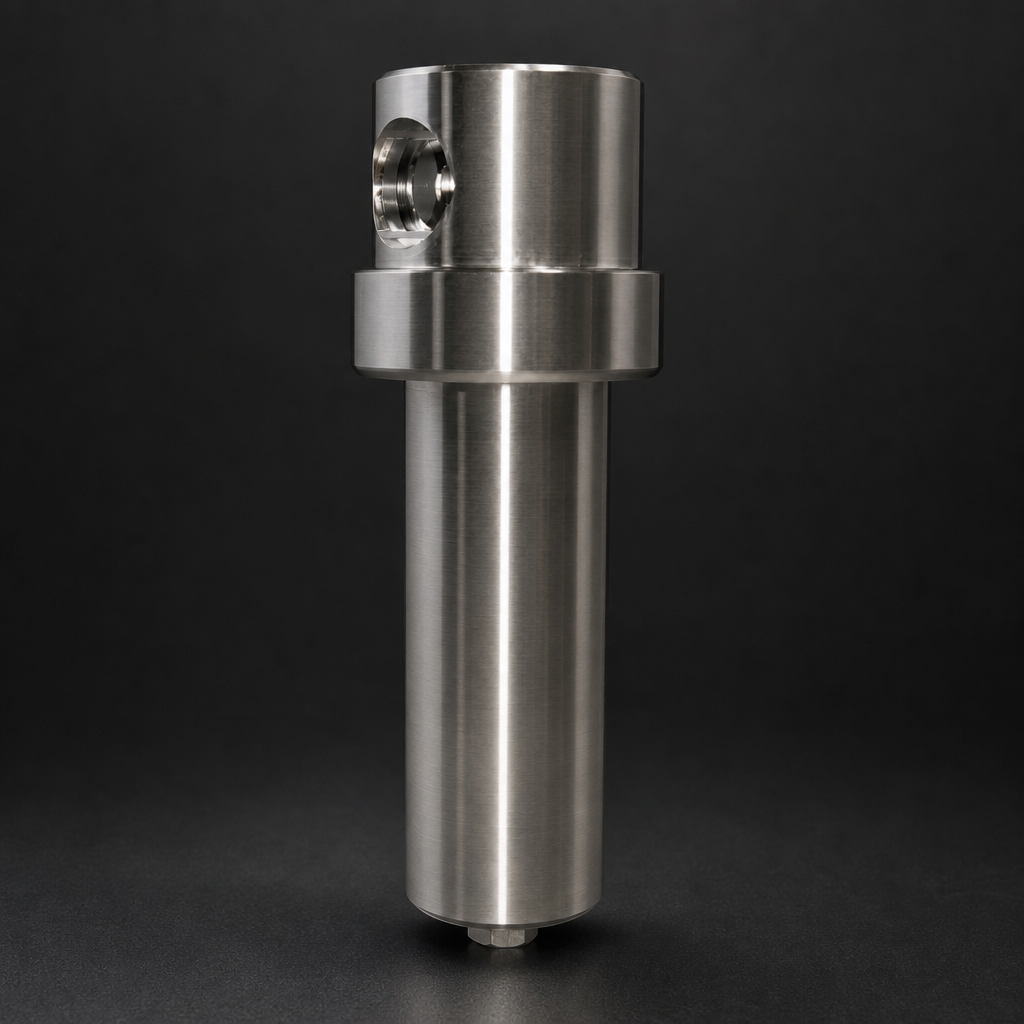
When a filter housing fails in a sour-gas pipeline or a high-pressure hydrogen application, the consequences extend far beyond a simple maintenance call. Material traceability, certification integrity, and pressure-rated construction are not optional extras — they are the engineering foundation that keeps personnel safe and processes compliant. This guide explains what to look for when specifying a 316L stainless steel filter housing for demanding process gas duties, and how R+F FilterElements addresses each requirement.
Why 316L? The Metallurgical Case for Low-Carbon Austenitic Steel
Standard 316 stainless steel contains up to 0.08 % carbon. In welded assemblies exposed to temperatures between 425 °C and 860 °C, carbon migrates to grain boundaries and forms chromium carbides — a phenomenon known as sensitisation. The resulting chromium-depleted zones are highly susceptible to intergranular corrosion, particularly in chloride-bearing or acidic process streams.
316L limits carbon to 0.03 % maximum, effectively eliminating sensitisation risk in most welded fabrications. Combined with 2–3 % molybdenum content, 316L offers superior resistance to pitting and crevice corrosion compared with 304 or 316 grades. For process gas filtration — where the housing may contact hydrogen sulphide, carbon dioxide, chlorinated hydrocarbons, or aggressive condensates — 316L is the baseline material of choice.
The R+F FilterElements process gas filter housing range is constructed exclusively from 316L stainless steel bar stock and forgings, with no cast components in the pressure-retaining envelope.
Weld-Free Construction and NACE MR-01-75 Compliance
Sour service — defined as exposure to wet hydrogen sulphide (H₂S) — introduces a specific failure mode: sulphide stress cracking (SSC). Welds and heat-affected zones are particularly vulnerable because residual tensile stresses and microstructural changes from the welding thermal cycle create ideal conditions for hydrogen embrittlement.
NACE MR-01-75 (now incorporated into ISO 15156) sets hardness limits and material requirements specifically to prevent SSC. Compliance requires that all pressure-retaining components, including welds, meet maximum hardness values — typically 22 HRC for austenitic stainless steels in the as-welded condition.
R+F FilterElements housings such as the RF-H-150 (rated to 100 bar) and RF-H-160 (rated to 250 bar) use machined-from-bar 316L bodies with no circumferential welds in the pressure envelope. This construction approach inherently satisfies NACE MR-01-75 hardness requirements and removes the need for PWHT qualification records.
Material Traceability: From Mill to Installation
Traceability means being able to link every pressure-retaining component back to its original mill heat number and the corresponding material test report (MTR). Without this chain of custody, a housing cannot be verified as conforming to the specified material grade — a critical gap in regulated industries such as oil and gas, pharmaceuticals, and food processing.
EN 10204-3.1 is the European standard for material test reports. A 3.1 certificate is issued by the manufacturer's own inspection department, independent of the production department, and certifies that the material meets the specified requirements. It includes chemical composition, mechanical properties, and heat treatment records — all linked to the specific heat number stamped on the component.
R+F FilterElements supplies EN 10204-3.1 material certificates as standard for all process gas housings. Each housing body carries a serial number that links directly to the MTR, enabling full traceability from the installed unit back to the steel mill. This documentation package is essential for pressure system inspection records under the Pressure Systems Safety Regulations (PSSR) in the UK and equivalent national regulations across the EU.
Need help selecting the right filter housing for your process?
CE Marking Under the Pressure Equipment Directive 2014/68/EU
The Pressure Equipment Directive (PED) 2014/68/EU governs the design, manufacture, and conformity assessment of pressure equipment placed on the EU market. Filter housings fall under Article 4 of the PED, with the applicable conformity assessment module depending on the pressure-volume product (PS × V) and the fluid category.
For process gas applications involving flammable, toxic, or oxidising gases (Group 1 fluids under the PED), the thresholds for CE marking are lower than for Group 2 (non-hazardous) fluids. Many process gas filter housings rated above 0.5 bar require CE marking and a Declaration of Conformity.
| Housing Model | Pressure Rating | CE / PED Status | NACE MR-01-75 | Typical Application |
|---|---|---|---|---|
| RF-H-150 | 100 bar | CE marked (PED Cat. I–II) | Compliant | Compact process gas, natural gas |
| RF-H-160 | 250 bar | CE marked (PED Cat. III) | Compliant | Medium-pressure gas, hydrogen |
| RF-H-170 | 400 bar | CE marked (PED Cat. III) | Compliant | High-pressure analyser, HP gas |
| Exotic material variants | Up to 1400 bar | SEP / CE on request | Material-dependent | Aggressive media, offshore |
For lower-pressure or smaller-volume housings that fall below the PED thresholds, R+F FilterElements applies Sound Engineering Practice (SEP) — the PED's own designation for equipment that does not require CE marking but must still be designed and manufactured to recognised engineering standards. SEP housings are supplied with full material documentation and pressure test certificates.
Use our free Engineering Tool to get a filtration recommendation for your specific application in under 2 minutes.
Exotic Material Options for Aggressive Media
316L stainless steel covers the majority of process gas filtration duties, but certain media demand higher corrosion resistance or specific mechanical properties. R+F FilterElements offers housings in the following exotic alloys through its specialty housing range:
- Titanium Grade 2: Outstanding resistance to chloride-induced pitting and crevice corrosion; preferred for offshore seawater injection and chlorinated process streams. Approximately 45 % lighter than 316L at equivalent strength.
- Hastelloy C-276: Nickel-molybdenum-chromium alloy with exceptional resistance to oxidising and reducing acids, wet chlorine, and hypochlorite. Widely specified for chemical processing and flue gas desulphurisation.
- Monel 400: Nickel-copper alloy with high resistance to hydrofluoric acid and fluorine-bearing compounds; used in alkylation units and HF acid service.
- Inconel 625: Nickel-chromium-molybdenum alloy retaining strength at elevated temperatures; suitable for high-temperature gas streams and sour service at elevated pressures.
All exotic material housings are supplied with EN 10204-3.1 certificates and, where required, NACE MR-01-75 compliance documentation. Seal materials are selected to match the process fluid: FKM/Viton for hydrocarbon service, EPDM for oxygen-compatible duties, and PTFE for aggressive chemical environments.
Seal Selection and Customisation
The filter housing seal is the most maintenance-sensitive component in the assembly. R+F FilterElements offers four standard elastomer options:
- NBR: General hydrocarbon service, rated to 100 °C
- FKM/Viton: Aggressive hydrocarbons, solvents, and high-temperature service to 200 °C
- EPDM: Oxygen-compatible service; mandatory for O₂ applications
- PTFE: Chemically inert across virtually all process fluids, rated to 260 °C
Beyond seal material, housings can be configured with specific connection standards (ASME B16.5 flanges, DIN flanges, NPT or BSP threaded ports), surface finishes (electropolished internals for pharmaceutical or semiconductor applications), and integral bypass or differential pressure indicator ports. The full process gas filter housing range is detailed on the product pages, with engineering support available for non-standard configurations.
- Standard 316 stainless steel contains up to 0.
- Sour service — defined as exposure to wet hydrogen sulphide (H₂S) — introduces a specific failure mode: sulphide stress cracking (SSC).
- Traceability means being able to link every pressure-retaining component back to its original mill heat number and the corresponding material test report (MTR).
- The Pressure Equipment Directive (PED) 2014/68/EU governs the design, manufacture, and conformity assessment of pressure equipment placed on the EU market.
Selecting the Right Filter Element for Certified Housings
A certified housing is only as effective as the filter element it contains. For process gas duties, R+F FilterElements recommends coalescing elements (RF-C series) for liquid aerosol and oil mist removal, and particulate elements (RF-P series) for solid contamination. Both achieve 99.99 % efficiency at ≥ 0.1 µm and ≥ 0.3 µm respectively, using borosilicate glass microfibre media.
For sour gas or H₂S-bearing streams, K-type elements with chemically resistant binders are specified. For high-temperature duties above 100 °C, S-type elements rated to 200 °C are available. Sintered metal elements extend the operating envelope to 450 °C for extreme-temperature applications. All elements are compatible with the full R+F FilterElements element range.
Related Reading
- Material Compatibility for Aggressive Gas Filtration
- Hydrogen Electrolysis Filtration — Protecting Electrolyser Stacks
- ISO 8573-1 Compressed Air Quality Classes Explained
Try our Engineering Sizing Tool → or discuss your requirements with our team.