When a process gas filter housing fails in service — whether through stress corrosion cracking, pitting, or weld-zone degradation — the consequences extend far beyond downtime. In regulated industries such as oil and gas, pharmaceuticals, and specialty chemicals, the material of construction must be fully traceable, independently certified, and compliant with applicable pressure equipment legislation. For many engineers, the question is not simply "which stainless steel?" but "can you prove it?"
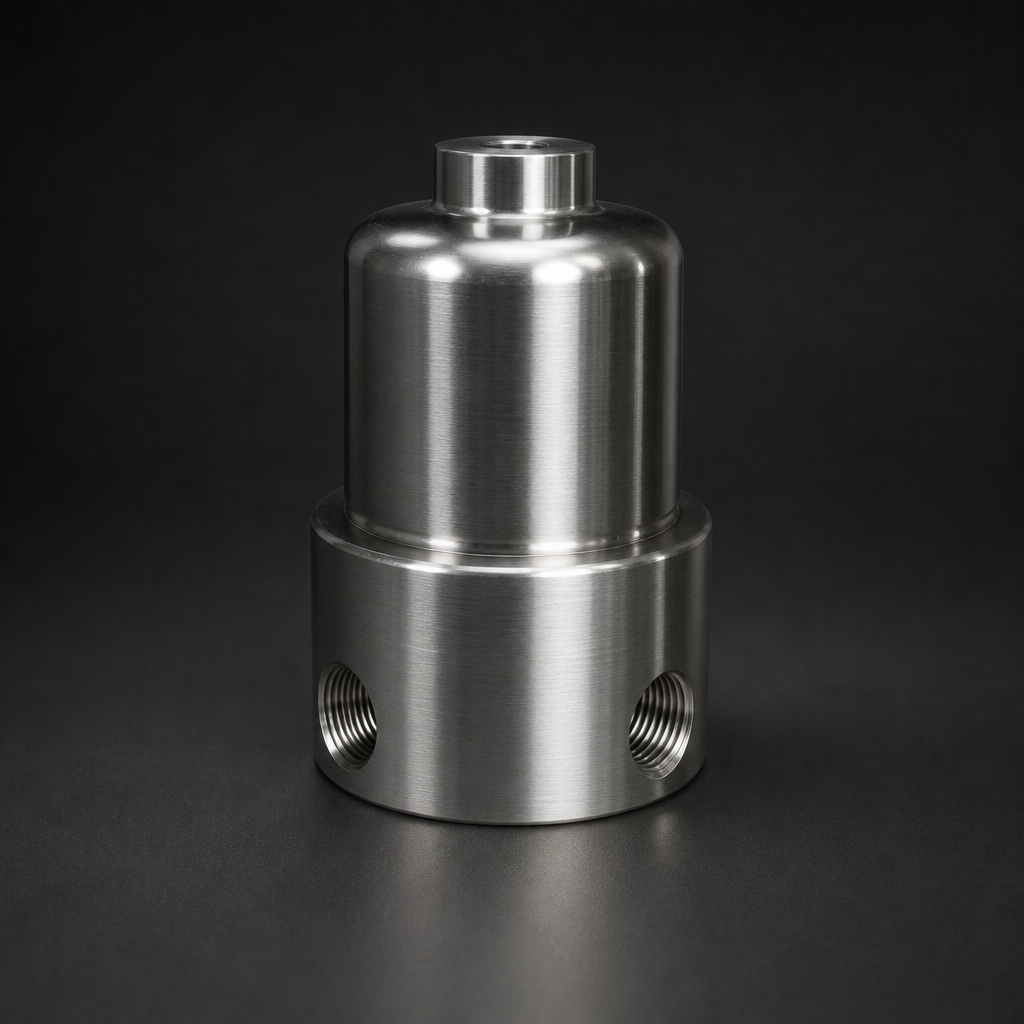
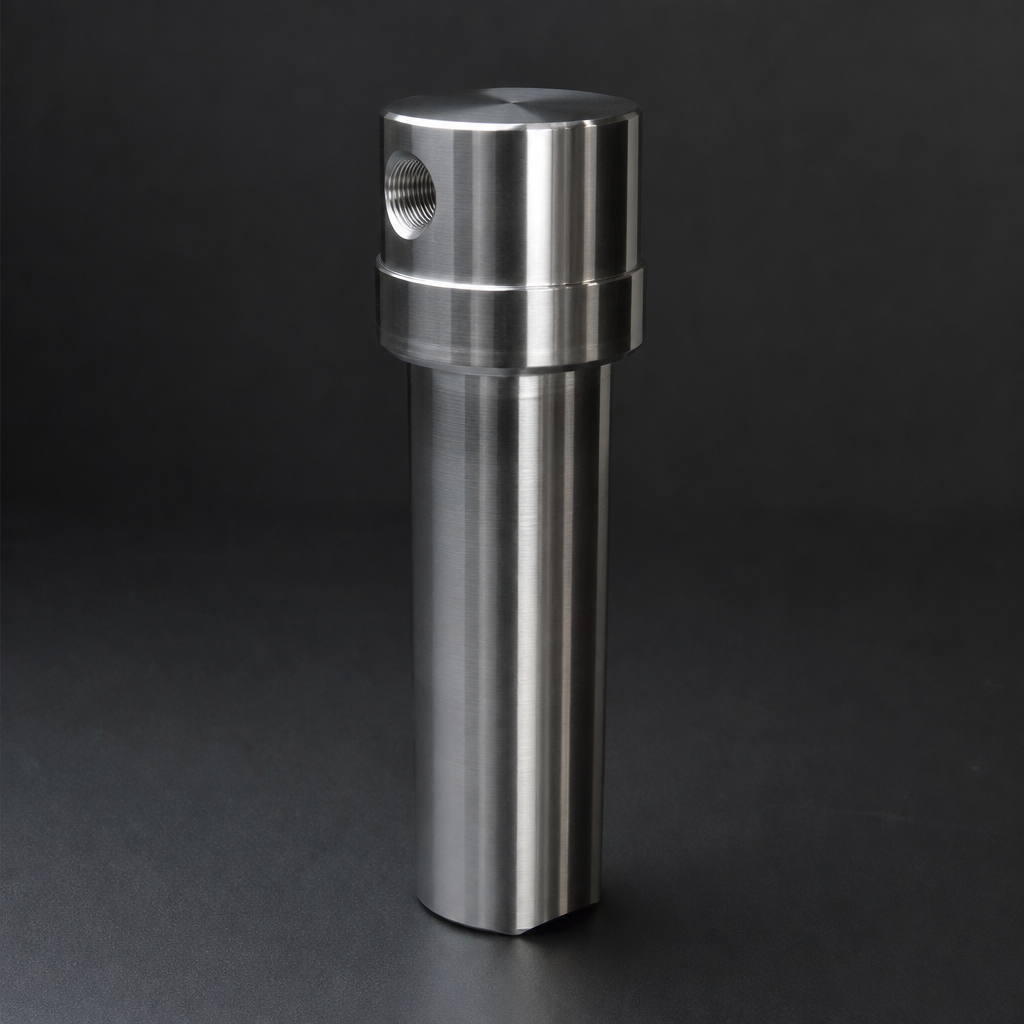
This guide explains what material traceability and certification mean in practice for 316L stainless steel filter housings, which standards apply, and how R+F FilterElements housings — including the RF-H-150 and RF-H-160 process gas filter range — are designed to meet these requirements from the outset.
Why 316L — and Why the "L" Matters
Standard 316 stainless steel contains up to 0.08 % carbon. In welded assemblies, carbon migrates to grain boundaries during the heat-affected zone cooling cycle, forming chromium carbides and depleting the surrounding matrix of the chromium needed for corrosion resistance — a phenomenon known as sensitisation. The result is intergranular corrosion that can progress rapidly in chloride-bearing or acidic process streams.
316L limits carbon to a maximum of 0.03 %, effectively eliminating sensitisation risk. For filter housings that may be exposed to sour gas (H₂S), chloride-containing natural gas condensate, or aggressive cleaning agents, this distinction is critical. The R+F specialty housing range uses 316L exclusively for all wetted parts.
Material Certification: EN 10204-3.1 Explained
EN 10204 defines the types of inspection documents that material suppliers must provide. For pressure-retaining components in process plant, the relevant level is 3.1: a certificate issued by the material manufacturer's own authorised inspector, confirming that the material meets the specified requirements and providing actual test results — not just a declaration of conformity.
A valid EN 10204-3.1 certificate for a 316L housing body will include:
- Heat (melt) number and cast number
- Chemical composition (actual values, not just "meets 316L")
- Mechanical properties: tensile strength, yield strength, elongation
- Heat treatment condition
- Inspector's signature and stamp
R+F FilterElements retains 3.1 certificates for all housing bodies and can supply them as part of the documentation package on request. This is standard practice for process gas filter housings supplied into oil and gas or chemical plant.
NACE MR0175 / ISO 15156 — Sour Service Compliance
NACE MR0175 (now harmonised as ISO 15156) defines the materials and hardness limits acceptable for equipment in H₂S-containing environments. For 316L stainless steel, the standard permits use in sour service provided the material meets specific hardness limits (typically ≤ 22 HRC / 237 HB for austenitic grades) and the heat treatment is correctly documented.
Weld-free construction eliminates the heat-affected zone entirely, removing the primary source of hardness exceedance in welded 316L. The RF-H-150 housing uses a machined-from-bar body with no circumferential welds on pressure-retaining surfaces, making NACE compliance straightforward to demonstrate.
Need help selecting the right certified filter housing?
CE Marking and the Pressure Equipment Directive (PED 2014/68/EU)
Any pressure vessel or pressure accessory placed on the European market must comply with the Pressure Equipment Directive 2014/68/EU (PED). For filter housings, the applicable conformity assessment route depends on the pressure-volume product (PS × V) and the fluid category (gas or liquid, hazardous or non-hazardous).
Process gas filter housings handling flammable or toxic gases typically fall into Category III or IV under the PED, requiring involvement of a Notified Body (NB) in the conformity assessment. CE marking on a housing confirms that:
- The design has been assessed against the Essential Safety Requirements of the PED
- Materials are appropriate for the rated pressure and temperature
- Pressure testing has been carried out and documented
- A Declaration of Conformity (DoC) has been issued
R+F FilterElements supplies CE-marked housings with full PED documentation for European installations. For export projects, equivalent documentation for ASME or other regional standards can be discussed — contact the team via the enquiry page.
Use our free Engineering Tool to get a filtration recommendation for your specific application in under 2 minutes.
Serial Number Traceability: From Melt to Installation
Each R+F FilterElements housing carries a unique serial number engraved on the body. This number links to a manufacturing record that includes:
- The EN 10204-3.1 material certificate for the bar stock used
- Machining batch and operator records
- Pressure test certificate (hydrostatic or pneumatic, as specified)
- Final inspection record
- CE Declaration of Conformity (where applicable)
This documentation package can be supplied in full at the time of delivery, or held on file and retrieved on request. For plant operators running asset management systems, the serial number provides the anchor point for the housing's entire service history.
| Housing Model | Max Pressure | Material | NACE Compliant | CE / PED |
|---|---|---|---|---|
| RF-H-150 | 100 bar | 316L SS, weld-free | Yes | Yes |
| RF-H-160 | 250 bar | 316L SS, weld-free | Yes | Yes |
| RF-H-170 | 400 bar | 316L SS, weld-free | Yes | Yes |
| Exotic / HP variants | Up to 1400 bar | Duplex, Hastelloy, Inconel | On request | On request |
Exotic Materials: When 316L Is Not Enough
For particularly aggressive service conditions — high chloride concentrations, elevated temperatures above 150 °C, or strong reducing acids — 316L may not provide adequate corrosion resistance. R+F FilterElements can supply housings in exotic alloys including:
- Duplex 2205 (1.4462): Higher strength and pitting resistance than 316L; suitable for chloride-rich environments up to ~250 °C
- Super Duplex 2507 (1.4410): For severe chloride service and higher pressures
- Hastelloy C-276: Outstanding resistance to oxidising and reducing acids, wet chlorine, and H₂S
- Inconel 625: High-temperature corrosion resistance; used in steam and high-temperature gas applications
All exotic material housings are supplied with the same EN 10204-3.1 certification and serial number traceability as standard 316L units. Explore the full specialty housing range or use the Engineering Sizing Tool to identify the right material for your process conditions.
Filter Elements for Certified Housings
A certified housing is only as effective as the element inside it. For process gas applications in 316L housings, R+F FilterElements recommends:
- RF-C coalescing elements: Borosilicate glass microfibre, 99.99% efficiency ≥ 0.1 µm, for liquid aerosol and oil mist removal
- RF-P particulate elements: 99.99% efficiency ≥ 0.3 µm, for solid particle removal in dry gas streams
- K-type elements: Sour gas rated, compatible with H₂S service in NACE-compliant housings
See the full filter element range for compatibility data and sizing guidance. For ISO 8573-1 purity class requirements, the ISO 8573-1 guide provides a useful reference for element selection.
- Standard 316 stainless steel contains up to 0.
- EN 10204 defines the types of inspection documents that material suppliers must provide.
- NACE MR0175 (now harmonised as ISO 15156) defines the materials and hardness limits acceptable for equipment in H₂S-containing environments.
- Any pressure vessel or pressure accessory placed on the European market must comply with the Pressure Equipment Directive 2014/68/EU (PED).
Related Reading
- Coalescing vs Particulate Filter Elements — Which Do You Need?
- Hydrogen Electrolysis Filtration — Protecting Electrolyser Stacks
- Oxygen Filtration Safety — Why Hydrocarbon Contamination Is a Critical Risk
Try our Engineering Sizing Tool → or discuss your requirements with our team.