When a gas stream contains contamination, the instinctive response is often to fit a filter. But not all contamination is particulate — and fitting a mechanical filter upstream of a vapour problem will do nothing except create a pressure drop. Understanding the fundamental difference between filtration and adsorption is the first step towards specifying the right equipment for your process.
The Fundamental Difference: Interception vs. Binding
Mechanical filtration works by physical interception. As gas passes through a filter medium — borosilicate glass microfibre in a coalescing element, or a sintered matrix in a particulate element — solid particles and liquid aerosols are captured by impaction, interception, and diffusion. The contamination is physically stopped and held in the medium. Once the medium is saturated, it must be replaced.
Adsorption works by an entirely different mechanism. The gas stream passes through a bed of porous solid material — activated carbon, molecular sieve, or silica gel — and certain molecules are attracted to and held on the surface of that material by van der Waals forces or chemical bonding. The target contaminant is not filtered out; it is bound to the adsorbent. This is why adsorbers can remove vapours and dissolved gases that would pass straight through any mechanical filter.
When to Use a Filter
Specify a mechanical filter when your contamination is:
- Solid particulate — rust, pipe scale, compressor wear debris, catalyst fines
- Liquid aerosol — compressor oil mist, water droplets, condensed hydrocarbons
- Bulk liquid slugs — requiring a coalescing element with a liquid drain
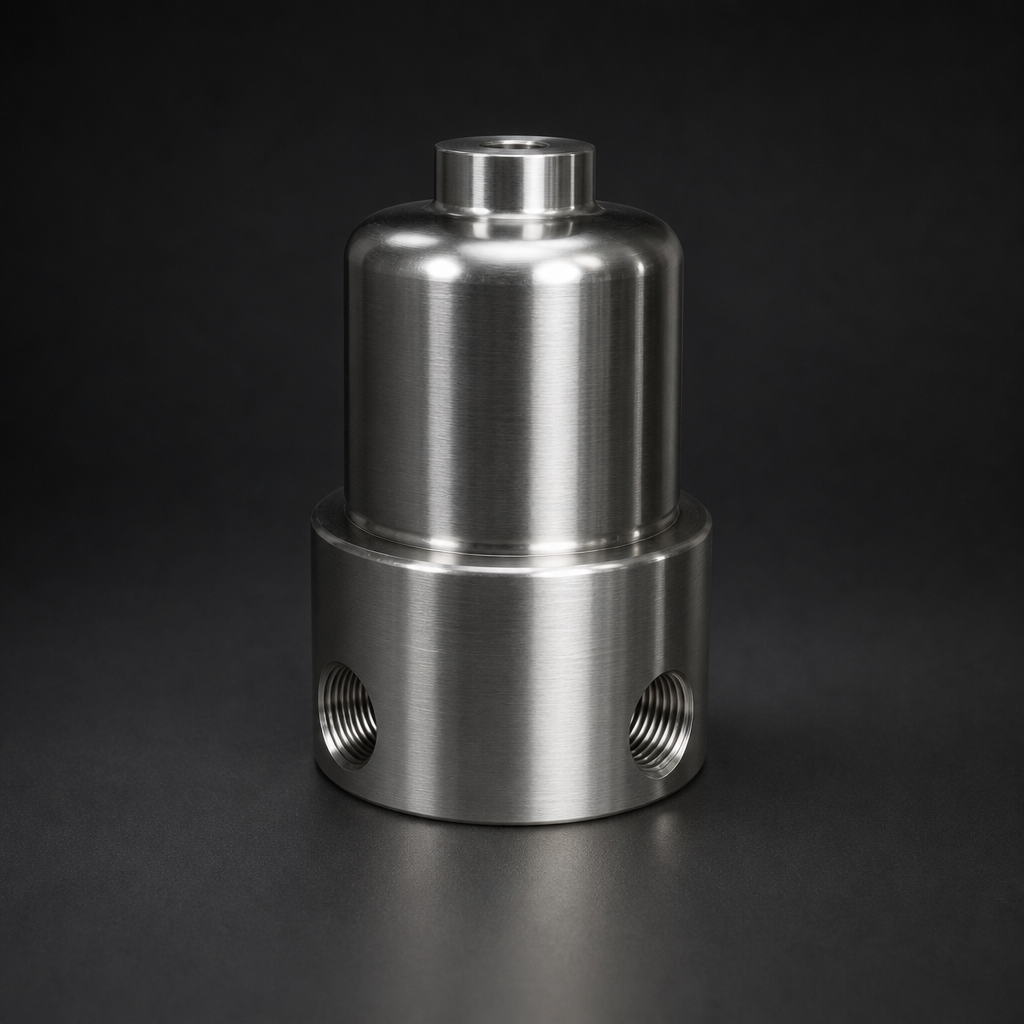
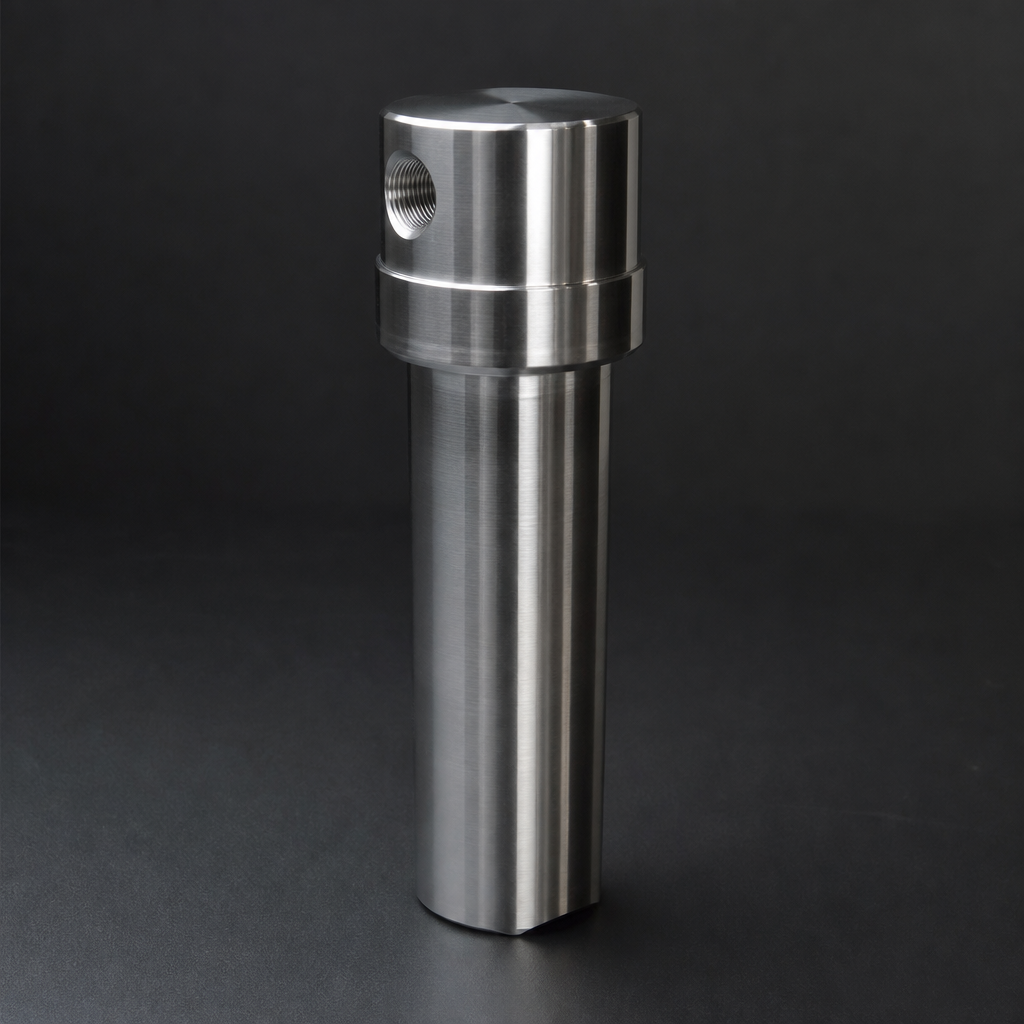
For compressed air and process gas applications, R+F FilterElements offers coalescing elements (RF-C series) achieving 99.99% efficiency at ≥ 0.1 µm, and particulate elements (RF-P series) achieving 99.99% efficiency at ≥ 0.3 µm. These are available in a range of housings from the compact RF-H-150 process gas housing through to large-body compressed air filters handling flows up to 12,000 Nm³/h.
For point-of-use protection — instrument inlets, analyser sample lines, valve actuators — the RF-DIL disposable inline filter provides a compact, maintenance-free solution. No tools, no drains, no housing to clean: simply replace the cartridge at the scheduled interval.
When to Use an Adsorber
Specify an adsorber when your contamination is:
- Hydrocarbon vapour — residual compressor oil vapour below the aerosol threshold, solvent vapours
- Moisture vapour — water vapour at dew points that a coalescing filter cannot reach
- Odour compounds — mercaptans, sulphur compounds, volatile organics
- Acid gases — H₂S, CO₂, HCl in specialty applications
- Mercury vapour — in natural gas processing
The choice of adsorbent medium depends on the target contaminant:
| Adsorbent Medium | Target Contaminants | Typical Application | Regenerable? |
|---|---|---|---|
| Activated carbon | Hydrocarbons, oil vapour, odours, VOCs | Compressed air, food & beverage, instrument gas | No (disposable) |
| 13X Molecular sieve | H₂O vapour, CO₂ | Hydrogen drying, cryogenic feed gas | Yes (thermal) |
| Silica gel | Moisture vapour | Instrument air, general drying | Yes (thermal) |
| Specialty impregnated carbon | H₂S, mercury vapour, HCl | Natural gas, biogas, chemical process | No |
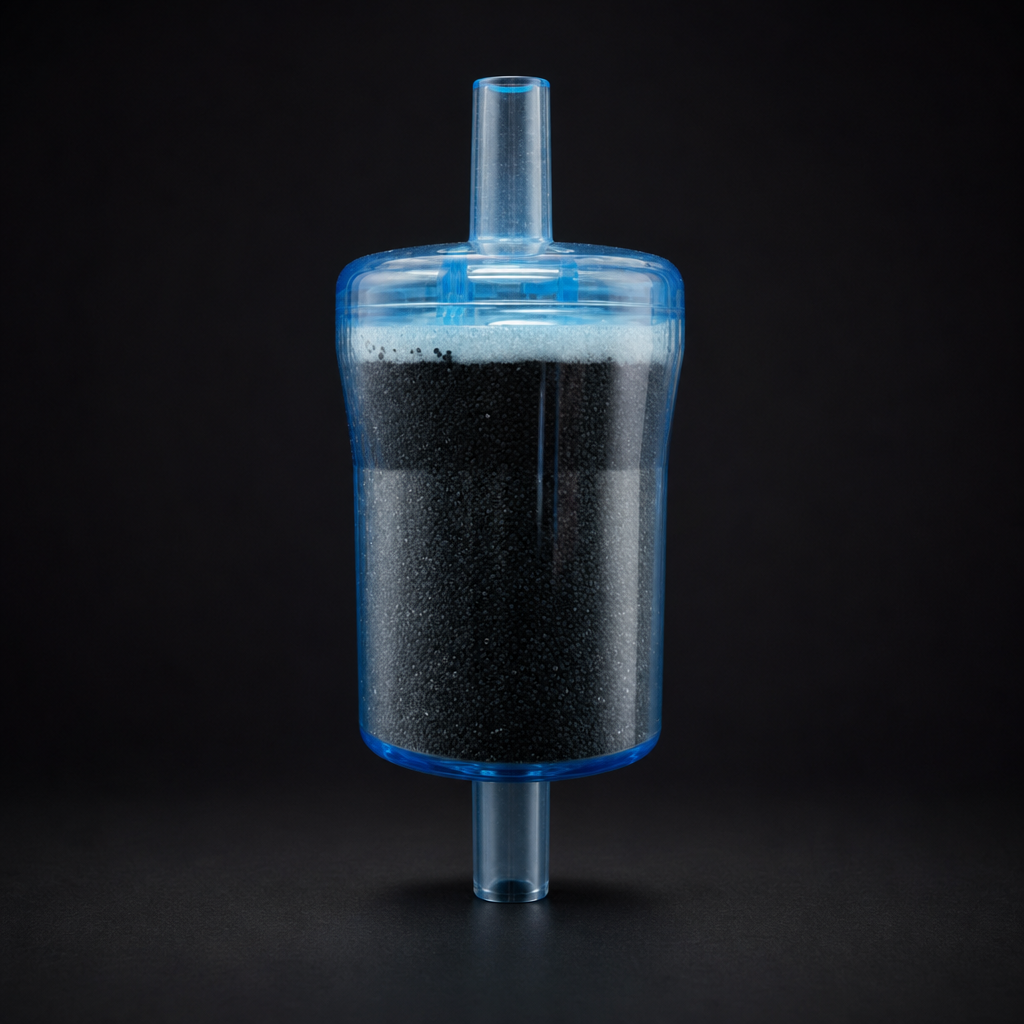
For point-of-use adsorption, the RF-DIA disposable inline adsorber uses the same compact form factor as the RF-DIL filter but is filled with activated carbon or molecular sieve media. It is ideal for protecting sensitive analysers from hydrocarbon vapour or moisture that would otherwise foul the detector. For higher-volume or refillable applications, R+F FilterElements offers dedicated adsorber housings compatible with the RF-AC activated carbon element range.
Is the contamination load high or the flow rate large?
Key Performance Figures
Use our free Engineering Tool to get a filtration recommendation for your specific application in under 2 minutes.
The Decision Tree: Filter, Adsorber, or Both?
Use this logic to select the right technology for your application:
- Is there solid particulate or liquid aerosol present? → Yes: fit a particulate or coalescing filter (RF-P or RF-C element). No: skip to step 2.
- Is there vapour-phase contamination (oil vapour, moisture, odour, acid gas)? → Yes: fit an adsorber (RF-DIA or RF-AC). No: filtration alone is sufficient.
- Are both present? → Fit a coalescing filter upstream of the adsorber. This is the most common configuration in compressed air and process gas systems.
- Is the contamination load high or the flow rate large? → Consider a refillable adsorber housing rather than a disposable inline unit, to reduce long-term media cost.
For compressed air systems, the standard multi-stage sequence is: coalescing filter → activated carbon adsorber → particulate after-filter. This sequence is described in ISO 8573-1 compressed air quality classes and is the basis for achieving Class 1 oil content (<0.01 mg/m³).
Disposable Inline vs. Refillable Housings
For low-flow, point-of-use applications — instrument sample lines, valve actuators, analyser inlets — the RF-DIL and RF-DIA disposable inline range offers the simplest solution. There is no housing to maintain, no drain to check, and no tools required for element replacement. The entire cartridge is replaced as a unit.
For higher-flow applications or where media cost is a concern, refillable adsorber housings are the better choice. The R+F specialty housing range includes vessels designed for granular adsorbent media, with top-fill access and bottom drain for spent media removal. These are available in 316L stainless steel for process gas service and can be sized for flows from a few Nm³/h up to several hundred Nm³/h.
The RF-H-150 compact process gas housing is also used in single-element adsorber configurations where a cartridge-style RF-AC element is preferred over loose granular media — offering the convenience of cartridge replacement with the robustness of a permanent housing rated to 100 bar.
Practical Selection Guide
When specifying equipment, gather the following data before selecting technology:
- Gas composition and contaminant identity (particle, aerosol, vapour, or dissolved gas)
- Inlet contamination concentration and required outlet specification
- Flow rate (Nm³/h or m³/h free air), operating pressure (bar g), and temperature (°C)
- Required service interval or media life
- Whether regeneration is feasible (thermal or pressure-swing) or disposable media is preferred
The R+F Engineering Sizing Tool guides you through this selection process and recommends the appropriate housing and element combination based on your operating conditions. For complex multi-stage systems or specialty gas applications, the R+F FilterElements engineering team can review your process data and propose a validated configuration.
- Mechanical filtration works by physical interception.
- Specify a mechanical filter when your contamination is:
- Specify an adsorber when your contamination is:
- Is there solid particulate or liquid aerosol present?
Related Reading
- Coalescing vs. Particulate Filter Elements — Which Do You Need?
- ISO 8573-1 Compressed Air Quality Classes Explained
- Inline Adsorbers: A Practical Guide to Disposable Gas Purification
Try our Engineering Sizing Tool → or discuss your requirements with our team.