Warum die Wasserstoffbeimischung die Gasnetzfiltration grundlegend verändert
In ganz Europa entwickelt sich die Wasserstoffbeimischung in bestehende Erdgasinfrastrukturen rasch von Pilotprojekten zur gängigen Politik. Beimischungsziele von bis zu 20 Vol.-% Wasserstoff (H₂ vol.) werden bereits in mehreren nationalen Netzprogrammen erprobt, wobei das Vereinigte Königreich, Deutschland und die Niederlande eine Vorreiterrolle einnehmen. Für Netzbetreiber und Anlagenplaner ist dieser Übergang keine bloße Anpassung der Brennstoffzusammensetzung — er verändert grundlegend die mechanischen, chemischen und kontaminationsbezogenen Anforderungen an jedes Filtrationsgerät im System.
Standardausrüstungen für die Erdgasfiltration — vielfach ausgelegt auf Kohlenstoffstahlgehäuse, NBR-Dichtungen und reine Partikelfilterelemente — wurden nie mit Wasserstoff im Blick entwickelt. Mit steigenden H₂-Konzentrationen werden die Risiken der Wasserstoffversprödung, beschleunigter Elastomerdegradation und unzureichender Kontaminationsentfernung sehr real. Eine fehlerhafte Filtration in einem wasserstoffhaltigen Netz ist nicht nur ein Effizienzproblem — es ist eine Frage der Sicherheit und der Anlagenintegrität.
Dieser Artikel beschreibt die wichtigsten Filtrationsauswirkungen der Wasserstoffbeimischung, erläutert die Werkstoffkompatibilitätsprobleme, mit denen Betreiber konfrontiert sind, und zeigt, wie die richtigen Filtergehäuse und -elemente für den gemischten H₂/CH₄-Betrieb ausgewählt werden.
Der Rahmen der Wasserstoffbeimischung
Unter Wasserstoffbeimischung versteht man die Einspeisung von grünem oder blauem Wasserstoff in bestehende Erdgas- (überwiegend Methan, CH₄) Pipelines und Verteilnetze. Bei niedrigen Konzentrationen — typischerweise 2–5 Vol.-% — sind die Auswirkungen auf Verbrennungsgeräte und die Rohrintegität vergleichsweise gering. Wenn die Beimischungsziele jedoch in Richtung 10–20 Vol.-% steigen, verschieben sich die physikalischen und chemischen Eigenschaften des Gasgemischs in einer Weise, die für Filtrationsingenieure von erheblicher Bedeutung ist:
- Geringeres Molekulargewicht: Wasserstoff (M = 2 g/mol) senkt das mittlere Molekulargewicht des Gemischs erheblich und erhöht die Gasgeschwindigkeit durch die Filterelemente bei gleichem Volumenstrom.
- Höhere Diffusivität: H₂ diffundiert etwa viermal schneller als Methan durch poröse Materialien, was die Leistung von Koaleszenzelementen beeinflusst und das Permeationsrisiko durch Elastomerdichtungen erhöht.
- Breitere Entflammungsgrenzen: Ein wasserstoffangereichertes Gasgemisch weist einen breiteren Entflammungsbereich auf (4–75 Vol.-% H₂ in Luft gegenüber 5–15 Vol.-% bei Methan), was die Folgen jedes Leckpfades durch degradierte Dichtungen oder Gehäuseverbindungen verschärft.
- Versprödungsanfälligkeit: Atomarer Wasserstoff kann in ferritische und martensitische Stähle eindiffundieren und deren Duktilität sowie Bruchzähigkeit verringern — ein Phänomen, das als Wasserstoffversprödung (HE) bekannt ist.
Jeder dieser Faktoren hat direkte Konsequenzen für die Auslegung, Installation und Wartung von Filtrationsausrüstungen.
Das Problem der Wasserstoffversprödung bei Filtergehäusen
Die Wasserstoffversprödung ist wohl das gravierendste Werkstoffkompatibilitätsproblem für Netzbetreiber, die auf Mischgasbetrieb umstellen. Kohlenstoffstahl — der dominierende Werkstoff in bestehenden Erdgas-Filtergehäusen — ist besonders anfällig. Atomarer Wasserstoff, der unter Druck an der Metalloberfläche entsteht, diffundiert in das Stahlgitter und reichert sich an Korngrenzen und Fehlstellen an. Mit der Zeit verringert dies die Rissfortschrittsbeständigkeit des Stahls und kann zu Sprödbrüchen bei Spannungen weit unterhalb der Nennstreckgrenze des Werkstoffs führen.
Das Risiko ist nicht theoretischer Natur. Industriestandards wie ASME B31.12 (Wasserstoffrohrleitungen und -pipelines) und ISO 15649 schränken den Einsatz von Kohlenstoffstahl in Hochdruck-Wasserstoffanwendungen ausdrücklich ein und verlangen eine sorgfältige Werkstoffqualifikation selbst bei moderaten H₂-Partialdrücken. Bei Mischgas mit 20 % H₂ und einem Leitungsdruck von 70 bar beträgt der Wasserstoffpartialdruck 14 bar — ein Niveau, bei dem die Versprödung anfälliger Stähle gut dokumentiert ist.
Die Lösung besteht darin, Filtergehäuse aus austenitischem Edelstahl vorzuschreiben, der eine kubisch-flächenzentrierte (kfz) Kristallstruktur aufweist, die von Natur aus widerstandsfähiger gegen Wasserstoffversprödung ist als die kubisch-raumzentrierte (krz) Struktur von Kohlenstoff- und niedriglegierten Stählen. Der Werkstoff 316L — mit seinem niedrigen Kohlenstoffgehalt und dem Molybdänzusatz — ist die bevorzugte Wahl für die wasserstoffkompatible Prozessgasfiltration.
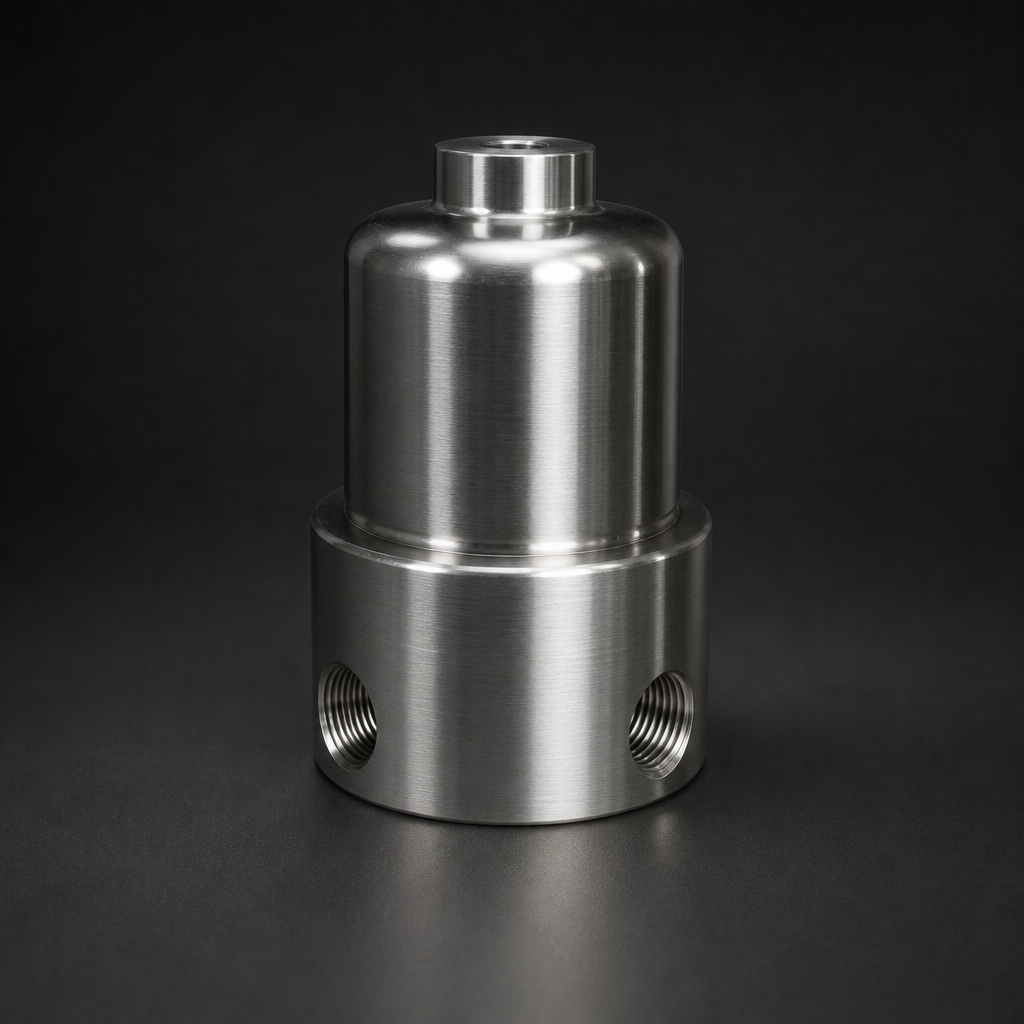
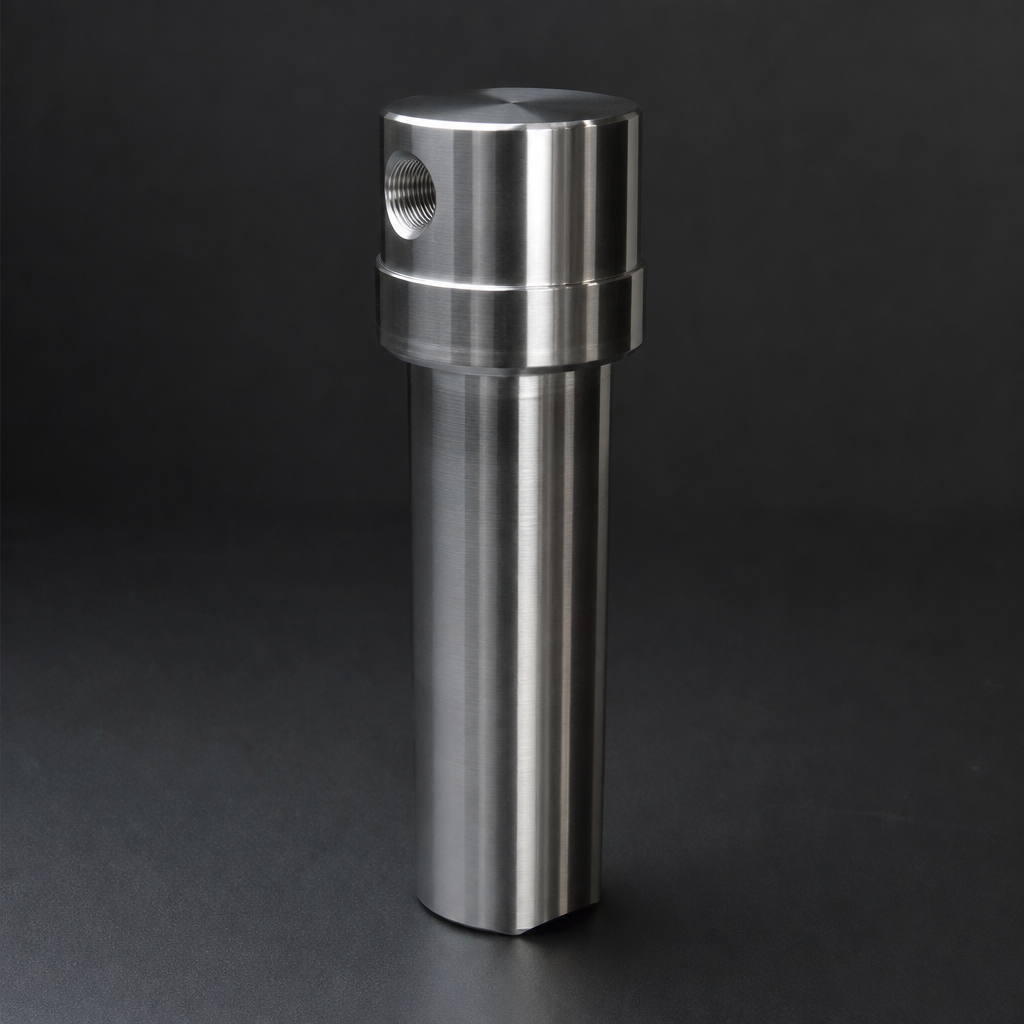
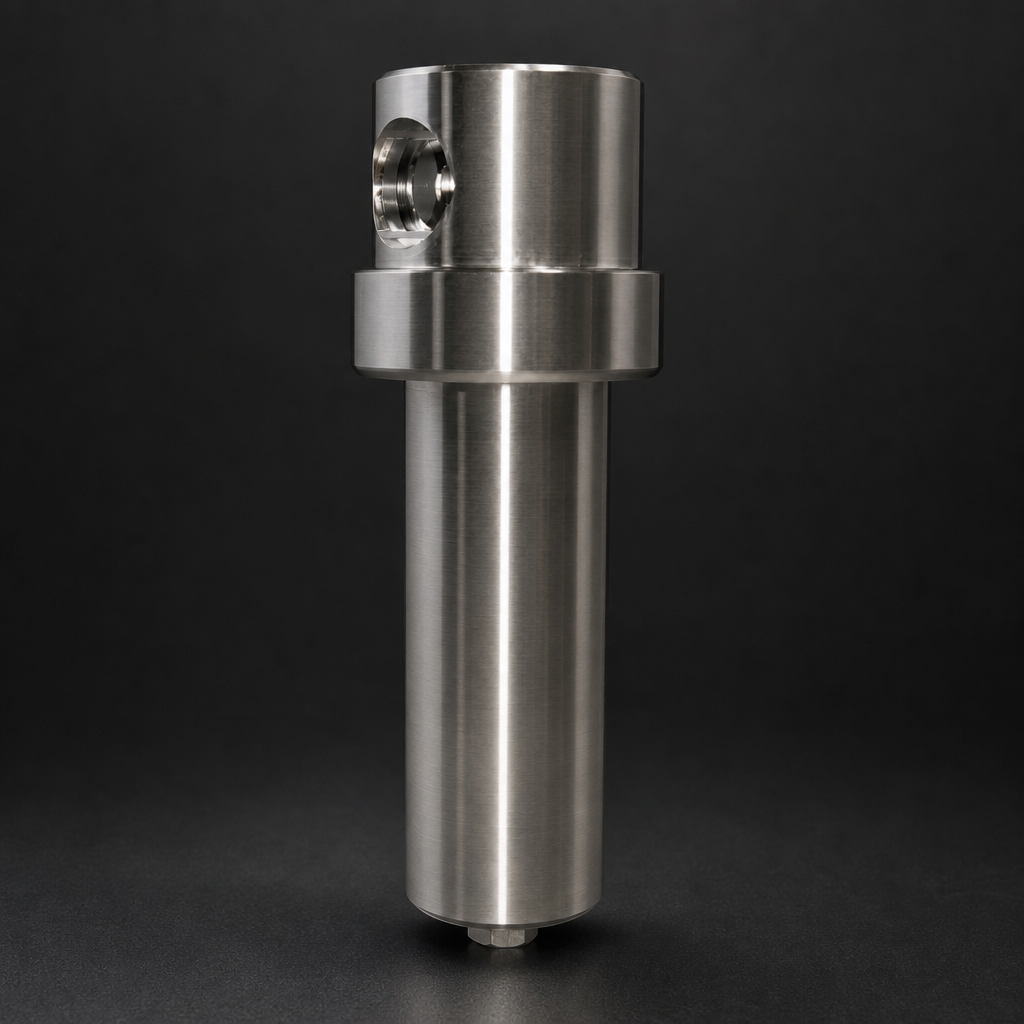
R+F FilterElements bietet eine eigene Baureihe von Prozessgasgehäusen aus 316L-Edelstahl, die speziell für den Wasserstoff- und Wasserstoff-Mischgasbetrieb geeignet sind. Das RF-H-150 (ausgelegt für 100 bar) und das RF-H-160 (ausgelegt für 250 bar) sind kompakte, hochintegre Gehäuse für anspruchsvolle Prozessgasanwendungen, einschließlich H₂/CH₄-Gemischen. Für Hochdruckmess- und Analysatorschutzaufgaben bietet das RF-H-170 (ausgelegt für 400 bar) eine zusätzliche Sicherheitsreserve. Alle Gehäuse sind bei R+F FilterElements mit vollständiger Werkstoffnachverfolgbarkeit und Druckprüfzertifizierung erhältlich.
Entdecken Sie die vollständige R+F Prozessgas-Filtergehäusebaureihe oder nutzen Sie den Online-Auslegungsassistenten, um das passende Gehäuse für Ihre Betriebsbedingungen zu ermitteln.
Dichtungsdegradation: Warum NBR für H₂-Gemische ungeeignet ist
Elastomerdichtungen sind die zweite wesentliche Schwachstelle in wasserstoffhaltigen Gassystemen. Standard-Nitrilkautschuk-Dichtungen (NBR) — weit verbreitet in Erdgas-Filtrationsausrüstungen — sind aus zwei Gründen für den Wasserstoffbetrieb schlecht geeignet:
- Hohe Gaspermeation: Die geringe Molekülgröße und die hohe Diffusivität von Wasserstoff ermöglichen eine deutlich höhere Permeationsrate durch NBR als bei Methan. Dies kann zu Gasansammlungen hinter Dichtungen und bei schneller Druckentlastung zu Schäden durch explosive Dekompression führen.
- Quellung und Degradation: Längere Exposition gegenüber wasserstoffangereichertem Gas kann dazu führen, dass NBR quillt, verhärtet oder reißt, wodurch die Dichtungsintegrität von Filtergehäusen beeinträchtigt und das Leckagerisiko erhöht wird.
Die bevorzugten Dichtungswerkstoffe für den Wasserstoff-Mischgasbetrieb sind FKM (Viton) und PTFE. FKM bietet eine ausgezeichnete Beständigkeit gegen Wasserstoffpermeation und behält seine mechanischen Eigenschaften über einen weiten Temperaturbereich (bis 200 °C). PTFE ist zwar kein Elastomer, aber chemisch inert gegenüber Wasserstoff und wird in statischen Dichtungsanwendungen eingesetzt, bei denen seine geringe Reibung und chemische Beständigkeit vorteilhaft sind (ausgelegt für 260 °C).
R+F FilterElements liefert seine Prozessgasgehäuse für wasserstoffkompatible Konfigurationen standardmäßig mit FKM- oder PTFE-Dichtungsoptionen. Bestätigen Sie bei der Auslegung von Ausrüstungen für den H₂/CH₄-Mischgasbetrieb stets den Dichtungswerkstoff mit Ihrem Lieferanten — und gehen Sie nie davon aus, dass ein für den Erdgasbetrieb geliefertes Gehäuse die richtigen Dichtungen für die Wasserstoffbeimischung enthält.
Elementwechselintervalle überprüfen:
Auswahl von Filterelementen für H₂/CH₄-Mischgas
Neben dem Gehäusewerkstoff und der Dichtungskompatibilität muss auch das Filterelement selbst korrekt für den Wasserstoff-Mischgasbetrieb ausgelegt sein. Die wichtigsten Auswahlkriterien sind:
Partikelabscheidung
Die Wasserstoffeinspeisung in Erdgasnetze bringt neue Kontaminationsquellen mit sich. Elektrolytisch erzeugter Wasserstoff (grünes H₂) kann Spurenfeuchte, Sauerstoff und Partikel aus dem Elektrolyseur-Stack mitführen. In Pipelines eingespeister Wasserstoff kann zudem Eisenoxidablagerungen und Rückstände aus bestehenden Kohlenstoffstahlrohrleitungen mobilisieren — insbesondere in der Übergangsphase, wenn bestehende Infrastrukturen erstmals mit H₂ in Berührung kommen. Ein hocheffizienter Partikelfilter ist daher zwingend erforderlich, und zwar vorgeschaltet zu jeder empfindlichen Ausrüstung (Druckregler, Messsysteme, Analysator-Probenaufbereitung).
Die Partikelfilterelemente der RF-P-Baureihe von R+F FilterElements (Borosilikat-Glasmikrofaser, 99,99 % Abscheidegrad ≥ 0,3 µm) sind in verschiedenen Größen erhältlich, die mit den Gehäusen RF-H-150 und RF-H-160 kompatibel sind. Die RF-P-Elemente verwenden inerte Borosilikat-Filtermedien ohne organische Bindemittel und sind damit chemisch kompatibel mit wasserstoffangereicherten Gasströmen.
Koaleszenz zur Flüssigaerosol-Abscheidung
Flüssigaerosol-Kontamination — Kompressoröl-Carryover, kondensierte Kohlenwasserstoffe und Wasser — bleibt in Mischgasnetzen ein relevantes Thema, insbesondere an Übergabe- und Messpunkten. Koaleszenzfilterelemente sind erforderlich, um submikrone Flüssigaerosole abzuscheiden, die Partikelfilter nicht erfassen können.
Die Koaleszenzfilterelemente der RF-C-Baureihe (Borosilikat-Glasmikrofaser, 99,99 % Abscheidegrad ≥ 0,1 µm) sind für den Wasserstoff-Mischgasbetrieb geeignet. Wie bei den RF-P-Elementen bestehen keine Kompatibilitätsprobleme der inerten Glasmikrofaser-Filtermedien mit H₂. Das Elementgehäuse und das Drainagesystem müssen jedoch für den Wasserstoffbetrieb aus 316L-Edelstahl ausgeführt sein — nicht aus Aluminium oder Kohlenstoffstahl.
Adsorption zur Entfernung von Spurenverunreinigungen
Bei einigen Wasserstoffbeimischungsanwendungen — insbesondere wenn die H₂-Quelle die Dampf-Methan-Reformierung (SMR) ist oder wenn das Erdgas höhere Kohlenwasserstoffe enthält — kann eine Adsorptionsbehandlung zur Entfernung von Spurenverunreinigungen erforderlich sein. Die RF-AC-Aktivkohleelemente und RF-DIA-Einweg-Inline-Adsorber von R+F FilterElements sind für diese Aufgabe erhältlich und erzielen Restölkonzentrationen unter 0,003 mg/m³.
Technische Spezifikationsübersicht
| Parameter | Standard-Erdgasbetrieb | H₂/CH₄-Mischgasbetrieb (≤20 % H₂) |
|---|---|---|
| Gehäusewerkstoff | Kohlenstoffstahl oder Aluminium | 316L-Edelstahl (zwingend erforderlich) |
| Dichtungswerkstoff | NBR (Standard) | FKM oder PTFE (zwingend erforderlich) |
| Filterelement-Medium | Glasmikrofaser oder Synthesefaser | Borosilikat-Glasmikrofaser (inertes Bindemittel) |
| Empfohlenes Gehäuse (≤100 bar) | Kohlenstoffstahlgehäuse | RF-H-150 (316L-Edelstahl, 100 bar) |
| Empfohlenes Gehäuse (≤250 bar) | Legierungsstahlgehäuse | RF-H-160 (316L-Edelstahl, 250 bar) |
| Partikelfilterelement | RF-P-Baureihe (Standard) | RF-P-Baureihe (H₂-kompatibel, 99,99 % ≥ 0,3 µm) |
| Koaleszenzelement | RF-C-Baureihe (Standard) | RF-C-Baureihe (H₂-kompatibel, 99,99 % ≥ 0,1 µm) |
| Anwendbare Normen | EN 12186, ISO 8573-1 | ASME B31.12, ISO 15649, EN 12186 |
Use our free Engineering Tool to get a filtration recommendation for your specific application in under 2 minutes.
Druckverlustbetrachtungen im Wasserstoff-Mischgasbetrieb
Eine häufig übersehene Folge der Wasserstoffbeimischung ist ihr Einfluss auf den Druckverlust am Filter. Da Wasserstoff eine wesentlich geringere Dichte als Methan aufweist (0,09 kg/m³ gegenüber 0,72 kg/m³ unter Normbedingungen), hat ein Mischgasstrom bei einem gegebenen Massenstrom einen höheren Volumenstrom als reines Erdgas. Dies erhöht die Leerrohrgeschwindigkeit durch das Filterelement und steigert den Druckverlust über das Gehäuse.
Für Netzbetreiber, die bestehende Erdgas-Filterstationen für die Wasserstoffbeimischung nachrüsten, ist es unerlässlich, den Druckverlust bei der neuen Gaszusammensetzung und den neuen Strömungsbedingungen neu zu berechnen. In einigen Fällen kann ein größeres Gehäuse oder der Einsatz zusätzlicher Filterelemente in Parallelschaltung erforderlich sein, um einen akzeptablen Druckverlust innerhalb des Betriebsbereichs des Netzes zu gewährleisten. Der Online-Auslegungsassistent von R+F FilterElements unterstützt Mehrkomponenten-Gasgemische und kann zur Überprüfung des Druckverlusts für H₂/CH₄-Gemische über die gesamte RF-H-Gehäusebaureihe verwendet werden.
Inspektions- und Wartungsintervalle
Der Wasserstoff-Mischgasbetrieb ist aus mehreren Gründen anspruchsvoller für Filterelemente als der reine Erdgasbetrieb:
- Höhere Gasgeschwindigkeiten (geringere Dichte) erhöhen die Partikelbeladungsrate der Filtermedien.
- Der Trocknungseffekt von Wasserstoff kann dazu führen, dass Elastomerdichtungen schneller verhärten und reißen als im Methan-Betrieb.
- Die Mobilisierung von Rohrleitungsablagerungen während des Übergangs zum Mischgasbetrieb kann in den ersten Betriebsmonaten zu einer raschen Verblockerung der Elemente führen.
R+F FilterElements empfiehlt, die Elementwechselintervalle während der ersten 12 Monate des Wasserstoff-Mischgasbetriebs um etwa 30–50 % zu verkürzen und anschließend anhand der tatsächlichen Differenzdrucküberwachungsdaten neu zu bewerten. Alle RF-H-Prozessgasgehäuse sind standardmäßig mit Differenzdruckanzeigeranschlüssen ausgestattet, die eine kontinuierliche Überwachung ohne Prozessunterbrechung ermöglichen.
Für Hinweise zur Elementauswahl und zur Planung von Wechselintervallen wenden Sie sich an das Ingenieurteam von R+F FilterElements über die Anfragseite oder per E-Mail an [email protected].
Einhaltung von Vorschriften und Normen
Betreiber, die Wasserstoffbeimischungsprojekte planen, müssen sich in einem sich wandelnden regulatorischen Umfeld zurechtfinden. Für die Auswahl von Filtrationsausrüstungen relevante Normen und Richtlinien umfassen:
- ASME B31.12:2019 — Wasserstoffrohrleitungen und -pipelines: definiert Werkstoffqualifikationsanforderungen für den Wasserstoffbetrieb, einschließlich Einschränkungen für Kohlenstoffstahl bei erhöhten H₂-Partialdrücken.
- ISO 15649:2001 — Erdöl- und Erdgasindustrie — Rohrleitungen: bietet allgemeine Hinweise zur Werkstoffauswahl für Gasrohrleitungen.
- EN 12186:2014 — Gasversorgungssysteme — Gasdruckregelanlagen für Transport und Verteilung: regelt die Ausrüstungsanforderungen für Gasnetzstationen, einschließlich Filtration.
- DVGW G 260/G 262 (Deutschland): Deutsche technische Regeln für Gasqualität und Wasserstoffbeimischung in Erdgasnetzen, mit Festlegung maximaler H₂-Konzentrationen und Ausrüstungsanforderungen.
- IGE/TD/3 (Vereinigtes Königreich): Leitfaden des Institution of Gas Engineers and Managers für Stahlrohrleitungen zur Hochdruckgasübertragung, mit wasserstoffspezifischen Anhängen.
R+F FilterElements kann als in Deutschland ansässiger Filtrationsspezialist, der nach europäischen Ingenieurstandards arbeitet, vollständige Werkstoffzertifizierungen und Druckprüfdokumentationen zur Unterstützung von Nachweisen zur Einhaltung von Vorschriften bereitstellen. Alle RF-H-Edelstahlgehäuse werden gemäß der Druckgeräterichtlinie (PED 2014/68/EU) gefertigt und geprüft.
Praktische Schritte für Netzbetreiber
Wenn Sie ein Erdgasnetz auf die Wasserstoffbeimischung vorbereiten, hilft die folgende Filtrations-Audit-Checkliste dabei, Ausrüstungen zu identifizieren, die aufgerüstet oder ersetzt werden müssen:
- Vorhandene Gehäusewerkstoffe prüfen: Identifizieren Sie alle Kohlenstoffstahl-Filtergehäuse im Netz. Diese müssen vor Beginn der H₂-Beimischung durch 316L-Edelstahl-Äquivalente ersetzt werden.
- Dichtungsspezifikationen prüfen: Bestätigen Sie den Dichtungswerkstoff in jedem Filtergehäuse. Ersetzen Sie NBR-Dichtungen durch FKM oder PTFE, bevor die Beimischung beginnt.
- Druckverlust neu berechnen: Verwenden Sie die tatsächliche Mischgaszusammensetzung und die Strömungsbedingungen, um zu überprüfen, ob vorhandene Gehäuse und Elemente korrekt dimensioniert sind.
- Elementwechselintervalle überprüfen: Planen Sie während der Übergangsphase häufigere Elementwechsel ein.
- Differenzdrucküberwachung installieren: Stellen Sie sicher, dass alle Filtergehäuse mit DP-Anzeigern oder -Transmittern ausgestattet sind, um eine zustandsbasierte Instandhaltung zu ermöglichen.
- Frühzeitig mit Ihrem Filtrationslieferanten in Kontakt treten: Die Materialbeschaffungszeiten für 316L-Edelstahlgehäuse können erheblich sein. Planen Sie die Beschaffung weit im Voraus der geplanten Beimischungsstarttermine.
R+F FilterElements steht Netzbetreibern in jeder Phase dieses Prozesses zur Seite — vom ersten Ausrüstungsaudit bis zur abschließenden Inbetriebnahme. Besuchen Sie die Seite für Wasserstoff-Filtrationslösungen für weitere Informationen, oder erkunden Sie die Prozessgas-Filtergehäusebaureihe, um mit der Auslegung der Ausrüstung für Ihr Projekt zu beginnen.
- Geringeres Molekulargewicht:
- austenitischem Edelstahl
- Quellung und Degradation:
- Neben dem Gehäusewerkstoff und der Dichtungskompatibilität muss auch das Filterelement selbst korrekt für den Wasserstoff-Mischgasbetrieb ausgelegt sein.