If you have ever opened a rotary evaporator vacuum pump only to find the oil has turned a murky, solvent-laden brown, you already understand the core problem with laboratory vacuum filtration. Solvent vapours — acetone, ethanol, dichloromethane, toluene — are drawn directly through the vacuum line and into the pump body. Without adequate protection, they dissolve into the pump oil, strip lubrication from seals, and accelerate wear at a rate that can reduce pump service life from years to months. The same issue affects vacuum ovens, freeze dryers, and any other laboratory instrument that relies on a rotary vane or diaphragm pump to maintain sub-atmospheric pressure.
This article explains why conventional cold traps often fall short, how coalescing filtration provides a more reliable and lower-maintenance alternative, and which R+F FilterElements products are best suited to protecting laboratory vacuum pumps in demanding chemical environments.
Why Solvent Vapours Are So Destructive to Vacuum Pumps
A rotary evaporator operates by reducing the pressure above a solvent so that it boils at a lower temperature. The evaporated solvent must go somewhere — and in a typical laboratory setup, a significant fraction passes through the condenser and continues into the vacuum line as vapour. Even with a well-maintained condenser, volatile solvents such as diethyl ether (boiling point 34 °C) or acetonitrile (82 °C) will not fully condense at room temperature and will reach the pump in vapour form.
Once inside a rotary vane pump, solvent vapour condenses in the oil sump. The consequences are cumulative:
- Oil dilution: Solvent reduces oil viscosity, causing metal-to-metal contact between vanes and the pump body.
- Seal degradation: Many solvents attack NBR and neoprene seals, causing swelling, cracking, and loss of vacuum integrity.
- Corrosion: Halogenated solvents such as chloroform or DCM hydrolyse in the presence of moisture to form hydrochloric acid, which attacks internal metal surfaces.
- Emulsification: Water vapour combined with solvent creates emulsions that are difficult to remove during routine oil changes.
The result is a pump that requires frequent oil changes, loses ultimate vacuum performance, and eventually fails prematurely — at significant cost in both parts and laboratory downtime.
Cold Traps: Useful but Limited
The traditional response to solvent contamination is a cold trap placed between the evaporator and the pump. A cold trap works by cooling the vapour stream to a temperature at which the solvent condenses and is retained in a glass or stainless steel vessel. Liquid nitrogen traps can achieve temperatures below −100 °C and are highly effective for most common laboratory solvents.
However, cold traps have practical limitations that make them unsuitable as a sole protection strategy in many laboratories:
- Cryogen cost and handling: Liquid nitrogen requires specialist storage, regular replenishment, and safe handling procedures. Dry ice/acetone baths are cheaper but less effective and require constant preparation.
- Warm-up risk: If a cold trap warms up while still under vacuum — for example, during a power cut or at the end of a run — trapped solvent re-evaporates and is drawn directly into the pump.
- Maintenance burden: Cold traps must be emptied, cleaned, and dried regularly. In a busy laboratory running multiple evaporations per day, this becomes a significant time commitment.
- Incomplete capture: Very volatile solvents (diethyl ether, pentane) may not be fully captured even at dry ice temperatures, and aerosol droplets carried mechanically through the line bypass condensation entirely.
For these reasons, many laboratories are moving towards coalescing filtration as either a replacement for, or a complement to, cold traps — particularly for routine solvent evaporation work where cryogenic cooling is impractical.
How Coalescing Filtration Protects Laboratory Vacuum Pumps
A coalescing filter works on a different principle from a cold trap. Rather than cooling the vapour stream, it passes the gas through a fine-fibre matrix — typically borosilicate glass microfibre — that captures liquid aerosol droplets and causes them to coalesce into larger droplets that drain by gravity into a sump. The cleaned gas stream continues to the pump, while the collected liquid is retained in the filter housing.
For laboratory vacuum filtration, this approach offers several advantages:
- No cryogens required — the filter operates at ambient temperature.
- Continuous protection without warm-up risk.
- Effective capture of both aerosol droplets and fine mist that would bypass a cold trap.
- Compact installation directly in the vacuum line.
The key requirement for laboratory use is chemical resistance. Standard filter housings designed for compressed air applications use aluminium bodies and NBR seals — neither of which is suitable for halogenated solvents or aggressive organic compounds. Laboratory vacuum filtration demands housings in 316L stainless steel with FKM (Viton) or PTFE seals, and filter elements with chemically inert binders.
Use chemically resistant tubing for connections:
R+F FilterElements: The RF-H-420S Series for Laboratory Vacuum
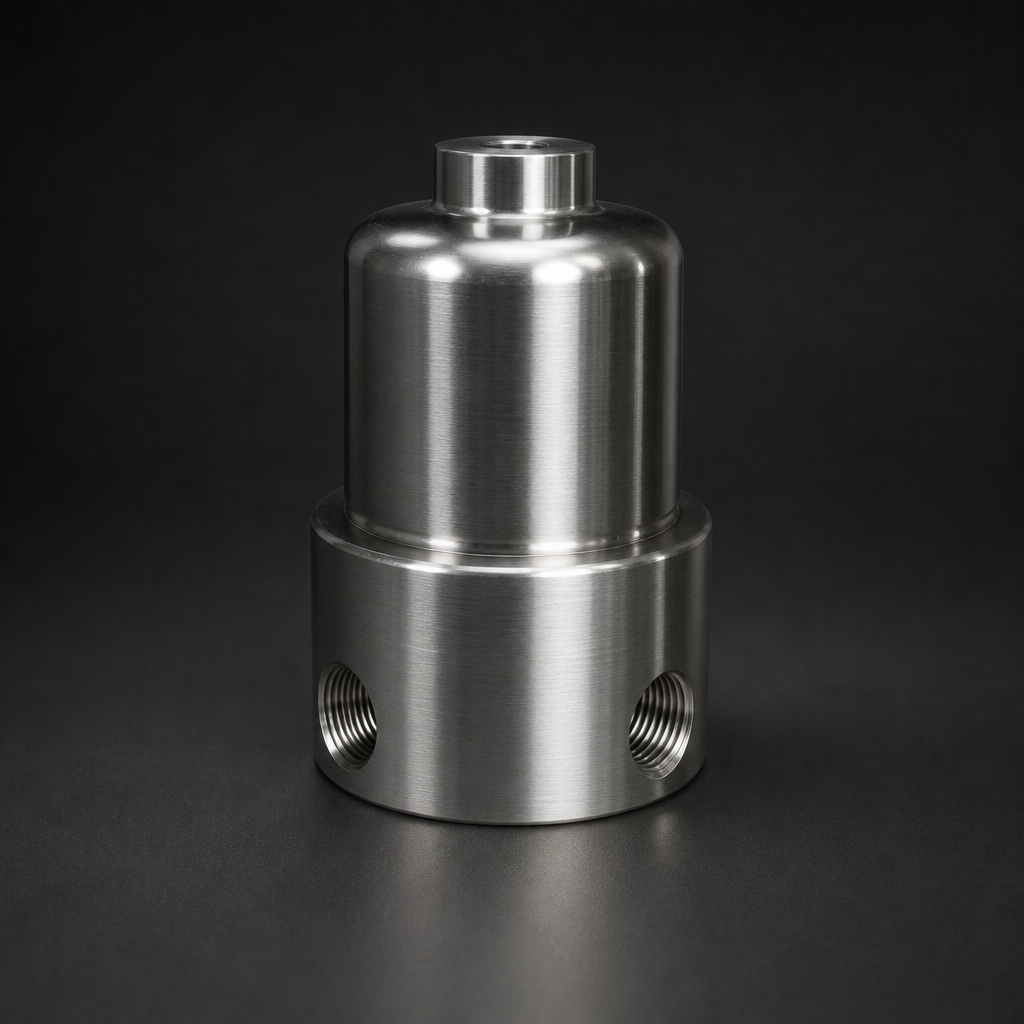
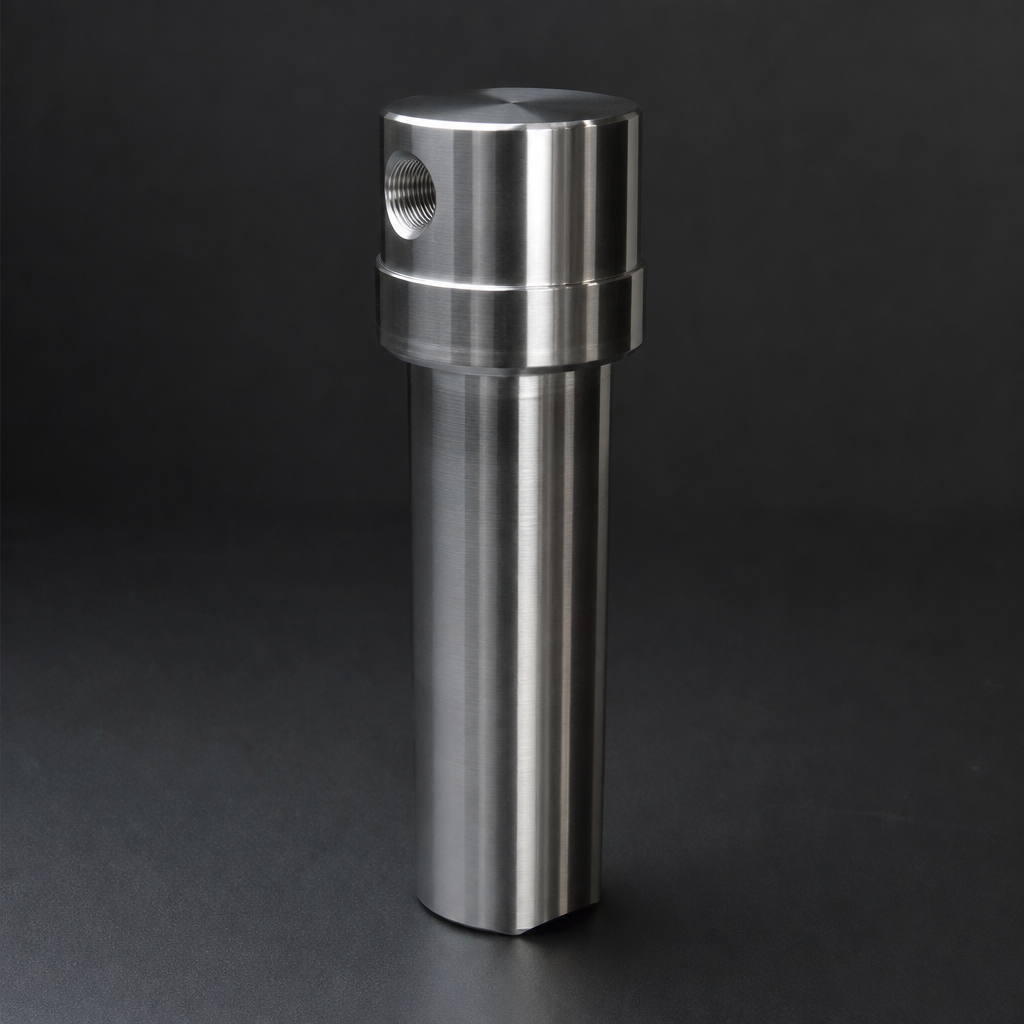
R+F FilterElements offers its own range of vacuum pump exhaust and inlet filters specifically designed for chemically demanding applications. The RF-H-420S series uses 316L stainless steel housings throughout, making it compatible with the full range of common laboratory solvents including halogenated compounds, ketones, esters, and aromatic hydrocarbons.
The RF-H-420S accepts RF-CS vacuum filter elements — a silica-bonded borosilicate glass microfibre element rated to 200 °C continuous service. The silica binder replaces the resin binders used in standard compressed air elements, which can dissolve or swell on contact with organic solvents. This makes the RF-CS element the correct choice for any application where solvent vapours are present in the vacuum stream.
For rotary evaporator protection, the RF-H-420S is typically installed on the inlet side of the vacuum pump, between the evaporator manifold and the pump inlet port. This position intercepts solvent aerosols before they reach the pump oil. A second unit on the exhaust side can capture any oil mist expelled from the pump, preventing laboratory air contamination — a requirement in many institutional and pharmaceutical laboratories.
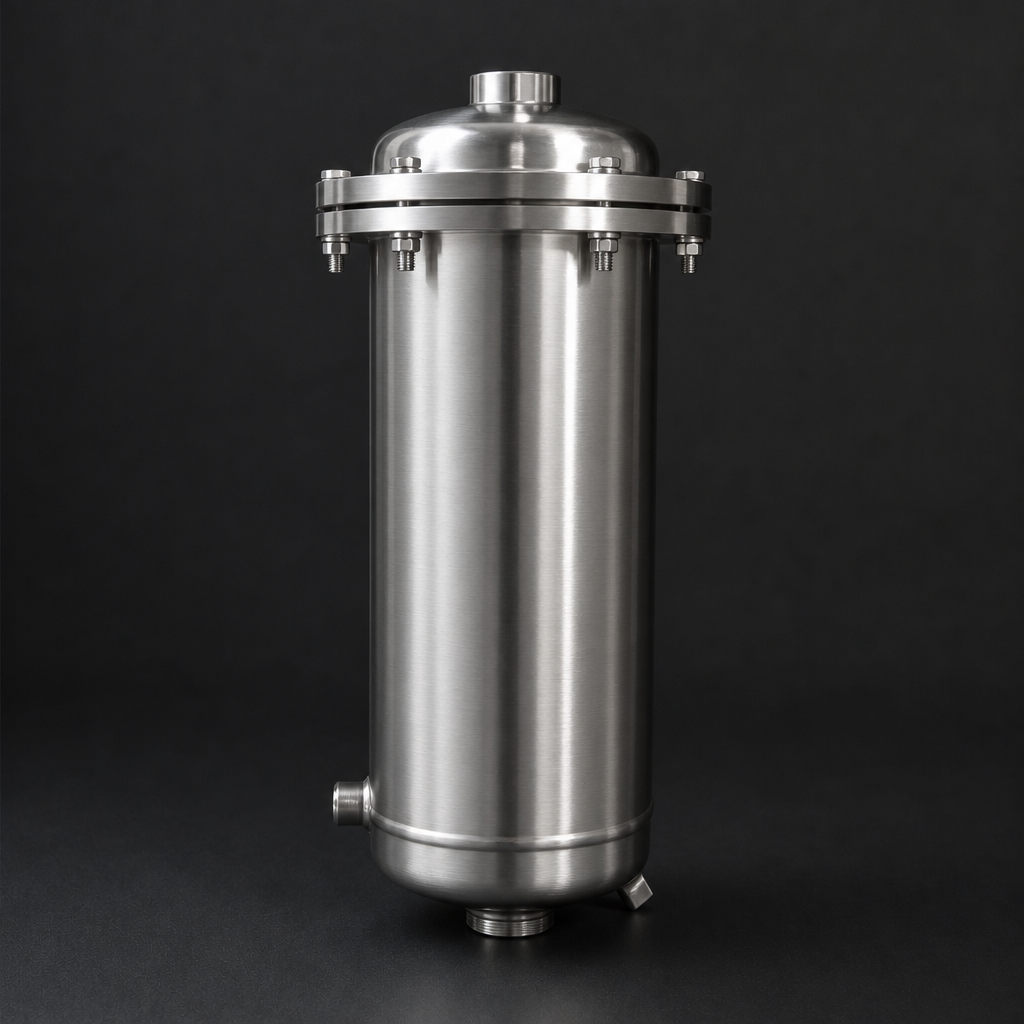
Where a higher flow capacity is needed — for example, in a central vacuum system serving multiple evaporators simultaneously — the RF-H-447S multi-element stainless steel housing provides flow rates up to 765 m³/h free air delivery with up to 16 filter elements in a single body. This makes it suitable for pilot-scale evaporation rigs and central laboratory vacuum networks.
Technical Comparison: Cold Trap vs Coalescing Filter for Laboratory Vacuum
| Parameter | Cold Trap (Dry Ice/Acetone) | Cold Trap (Liquid Nitrogen) | RF-H-420S Coalescing Filter |
|---|---|---|---|
| Operating temperature | −78 °C | −196 °C | Ambient (up to 200 °C with RF-CS element) |
| Cryogen required | Yes (dry ice) | Yes (LN₂) | No |
| Warm-up re-evaporation risk | High | High | None |
| Aerosol capture | Partial | Partial | ≥99.99% ≥0.1 µm |
| Housing material | Glass / SS | Glass / SS | 316L stainless steel |
| Seal material options | N/A | N/A | FKM, PTFE, EPDM |
| Maintenance interval | After every run | After every run | Element change (typically 3–12 months) |
| Halogenated solvent compatibility | Yes (glass) | Yes (glass) | Yes (316L SS + FKM/PTFE seals) |
Use our free Engineering Tool to get a filtration recommendation for your specific application in under 2 minutes.
Vacuum Oven Applications: Different Challenges, Same Solution
Vacuum ovens present a slightly different contamination profile. Rather than continuous solvent evaporation, a vacuum oven typically operates in batch cycles — loading a sample, pulling vacuum, heating to drive off residual solvent or moisture, then venting and unloading. The vacuum pump is exposed to a concentrated burst of vapour at the start of each cycle as the oven reaches its target pressure.
In pharmaceutical drying applications, the solvents involved may include isopropanol, methanol, ethyl acetate, or acetone — all of which will contaminate pump oil if not intercepted. In materials science and electronics manufacturing, vacuum ovens are used for curing, degassing, and annealing, where the off-gases may include silicone vapours, plasticisers, or flux residues.
For vacuum oven protection, R+F FilterElements recommends the RF-H-420S with an RF-CS-S element (the S-type, rated to 200 °C) to handle the elevated temperatures that can occur when the oven vents hot gas into the vacuum line. The stainless steel housing withstands repeated thermal cycling without the dimensional changes that can cause seal leakage in aluminium housings.
Where the process involves particularly aggressive chemistry — for example, acid vapours from battery electrode drying — the RF-H-420S with PTFE seals provides the highest level of chemical resistance available in the R+F vacuum range. PTFE seals are rated to 260 °C and are resistant to virtually all laboratory solvents and acids.
Selecting the Right RF-CS Element Grade
R+F FilterElements offers the RF-CS vacuum element in several grades to match different laboratory requirements:
- RF-CS (standard): Silica-bonded borosilicate glass microfibre, rated to 200 °C. Suitable for most organic solvent applications.
- RF-CS-S (S-type): Higher-temperature variant for applications where the gas stream may exceed 100 °C — for example, directly downstream of a heated vacuum oven.
- RF-CS sintered metal: For applications requiring element integrity at temperatures up to 450 °C, or where the element must withstand solvent washing and reuse.
Element sizing follows the standard R+F element coding system. For the RF-H-420S single-element housing, the correct element size is the 25064 format (25 mm OD, 64 mm length). For larger multi-element housings such as the RF-H-447S, elements in the 51230 or 51476 format are used depending on the required flow capacity.
Replacement elements are available directly from R+F FilterElements and are designed as drop-in replacements requiring no tools beyond a standard housing wrench. Element change intervals depend on solvent loading — in a high-throughput evaporation laboratory, quarterly changes are typical; in lower-use environments, annual changes may be sufficient. A differential pressure indicator fitted to the housing provides a reliable signal for condition-based maintenance.
Installation Guidance for Laboratory Vacuum Lines
Correct installation is essential to achieve the full protective benefit of laboratory vacuum filtration. Key points to observe:
- Install on the pump inlet, not the evaporator outlet: Placing the filter as close as possible to the pump inlet maximises the length of vacuum line available for natural condensation before the filter, reducing the liquid load on the element.
- Ensure the housing is vertical with the drain port at the bottom: Coalesced liquid must drain by gravity into the sump. A horizontal or inverted installation will cause liquid to accumulate in the element and reduce its service life.
- Use chemically resistant tubing for connections: PTFE or stainless steel tubing is recommended for solvent-laden vacuum lines. PVC tubing can absorb solvents and become brittle over time.
- Fit a manual drain valve: The RF-H-420S housing includes a drain port that should be fitted with a manual or automatic drain valve to allow collected solvent to be removed without breaking vacuum.
- Consider a second filter on the exhaust: Oil mist expelled from the pump exhaust is a health and safety concern in enclosed laboratory spaces. An RF-H-420S fitted with a standard RF-CS element on the pump exhaust captures oil mist before it enters the laboratory atmosphere.
For guidance on sizing the correct housing for your specific pump flow rate, the R+F FilterElements sizing wizard accepts pump displacement volume and operating pressure as inputs and returns the recommended housing and element combination.
Regulatory and Safety Considerations
In pharmaceutical and regulated research environments, vacuum pump protection is not merely a maintenance issue — it is a contamination control requirement. Cross-contamination between batches via the vacuum system is a recognised risk in GMP manufacturing, and many quality systems require documented evidence that the vacuum line is protected against back-contamination.
The RF-H-420S series is constructed from 316L stainless steel with electropolished internal surfaces, making it compatible with pharmaceutical cleaning validation protocols. Material certificates (EN 10204 3.1) are available on request for all wetted components, supporting documentation requirements under EU GMP Annex 1 and FDA 21 CFR Part 211.
For further information on the full R+F vacuum pump exhaust filter range, including multi-element housings and high-temperature variants, visit the product pages or contact the R+F FilterElements technical team at process-gas-filter.com/contact.
- A rotary evaporator operates by reducing the pressure above a solvent so that it boils at a lower temperature.
- Cryogen cost and handling:
- laboratory vacuum filtration
- R+F FilterElements offers its own range of vacuum pump exhaust and inlet filters specifically designed for chemically demanding applications.
Summary
Solvent vapour contamination is the primary cause of premature vacuum pump failure in laboratory environments. Cold traps provide useful protection but carry inherent risks — particularly the warm-up re-evaporation hazard — and impose a significant maintenance burden in high-throughput laboratories. Coalescing filtration using chemically resistant stainless steel housings and silica-bonded filter elements offers a more reliable, lower-maintenance alternative that is well suited to both rotary evaporator and vacuum oven applications.
R+F FilterElements offers its own range of 316L stainless steel vacuum filter housings — the RF-H-420S series — with RF-CS vacuum elements rated to 200 °C and available with FKM or PTFE seals for compatibility with the full range of laboratory solvents. Whether you are protecting a single bench-top evaporator or a central laboratory vacuum network, the R+F vacuum range provides a solution sized to your flow requirements.
To discuss your specific application or request a quotation, contact R+F FilterElements GmbH at process-gas-filter.com/contact.