
Hydrogen Injection into Engine Air Intakes — Stopping KOH Carry-Over from On-Board Electrolysers
Small alkaline electrolysers feeding hydrogen into diesel or gas engine intakes carry caustic KOH solution into the lines. A compact two-stage package — liquid knock-out plus KOH-mist stage, optional membrane barrier — keeps the intake and engine free of lye.
Reconnaître les symptômes
- Liquid in the hydrogen line between electrolyser and air intake
- White deposits or corrosion at the intake filter or manifold
- Aluminium parts and plastic bowls attacked by caustic solution
- Foaming or overfilled electrolyte tank precedes liquid events
Causes
Electrolyte carry-over: overfilled tank, foaming, or gas leaving the cell too fast
KOH attacks aluminium, many plastics and Viton seals
No drain point
liquid travels down the line to the engine
Liste de contrôle diagnostic
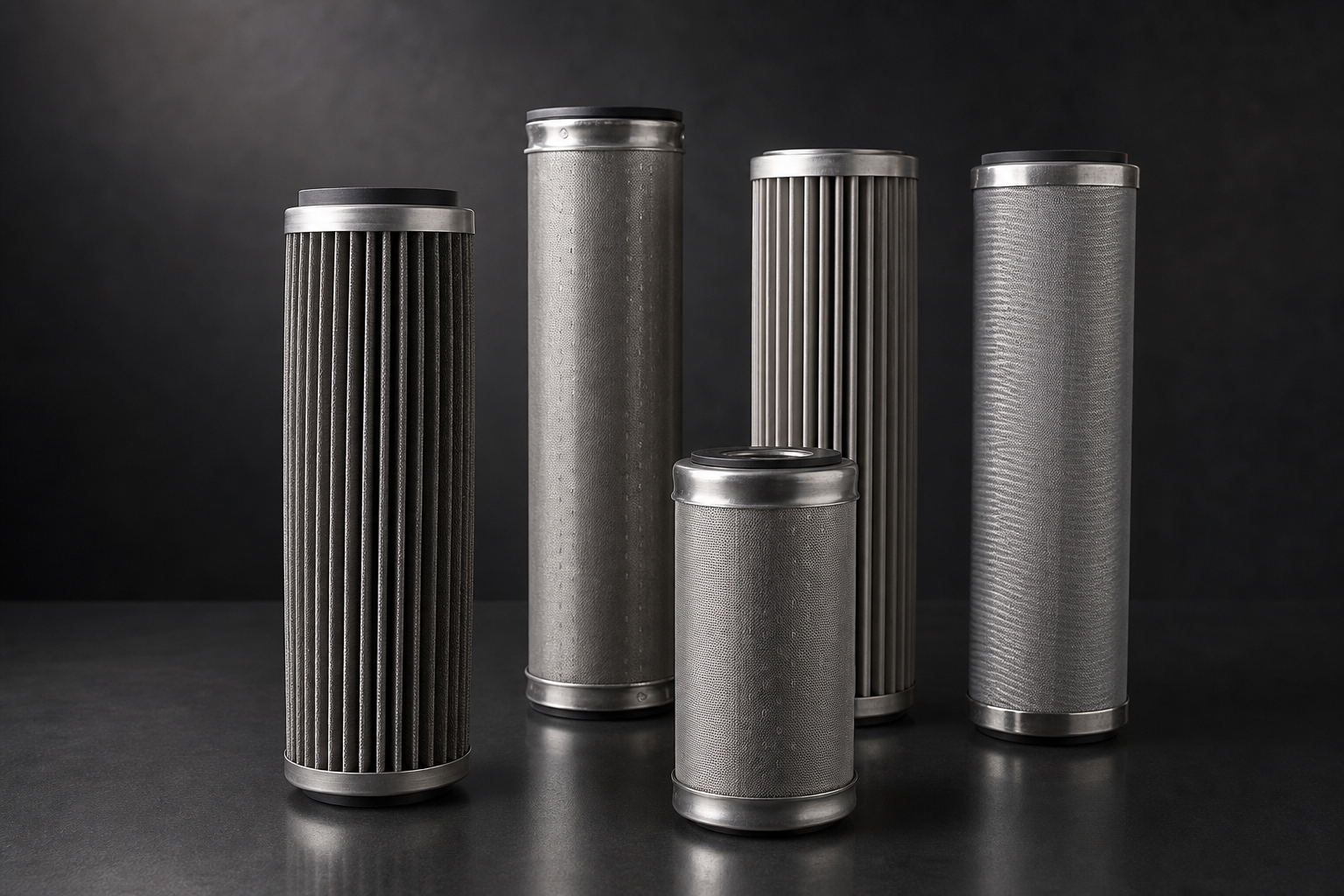
- 1Stage 1 — liquid knock-out: RF-H-130 (316L, ¼″ NPT, ¼″ NPT drain, solid PTFE gasket) with sintered stainless element RF-SS-25064-025
- 2Stage 2 — KOH mist: RF-H-130 with sintered PTFE element RF-TF-25064-003 (depth filter, not a fine coalescer)
- 3Option — final liquid barrier: RF-M-GMS170 PTFE membrane separator
- 4At 1–2 L/min the pressure drop is far below a 10 psi (0.7 bar) limit; one housing type for all stages
- 5Sintered elements can be cleaned ultrasonically and reused; keep one spare element per filter
- 6Field-test first: log ΔP, inspect elements and seals after 4–8 weeks — no lifetime commitment for KOH service; filters are not flame arresters
Trouver le filtre approprié pour ce problème
Saisissez vos données de fonctionnement — nos outils vous guident vers l'élément et le corps appropriés. Ou envoyez-nous vos données pour une recommandation sur mesure.
Recherche d'élément
RecommandéL'élément filtrant approprié pour votre fluide et votre application en moins de 60 secondes — point de départ recommandé.
Trouver l'élémentUtiliser la sélection de corps
Choisir le corps approprié — matériau, classe de pression, raccords et purge.
Sélectionner le corpsDemander un conseil
Vous préférez un contact personnel ? Envoyez vos données de fonctionnement et nous recommandons la configuration appropriée.
Envoyer une demandeApplications associées
Lectures complémentaires
Décrivez votre situation — nous trouvons la solution appropriée
Chaque problème de filtration a des causes spécifiques qui nécessitent des solutions spécifiques. Envoyez-nous vos conditions de fonctionnement et nous établirons une recommandation sur mesure.