
High Consumable Costs from Disposable Elements — When Cleanable Sintered Elements Pay Off
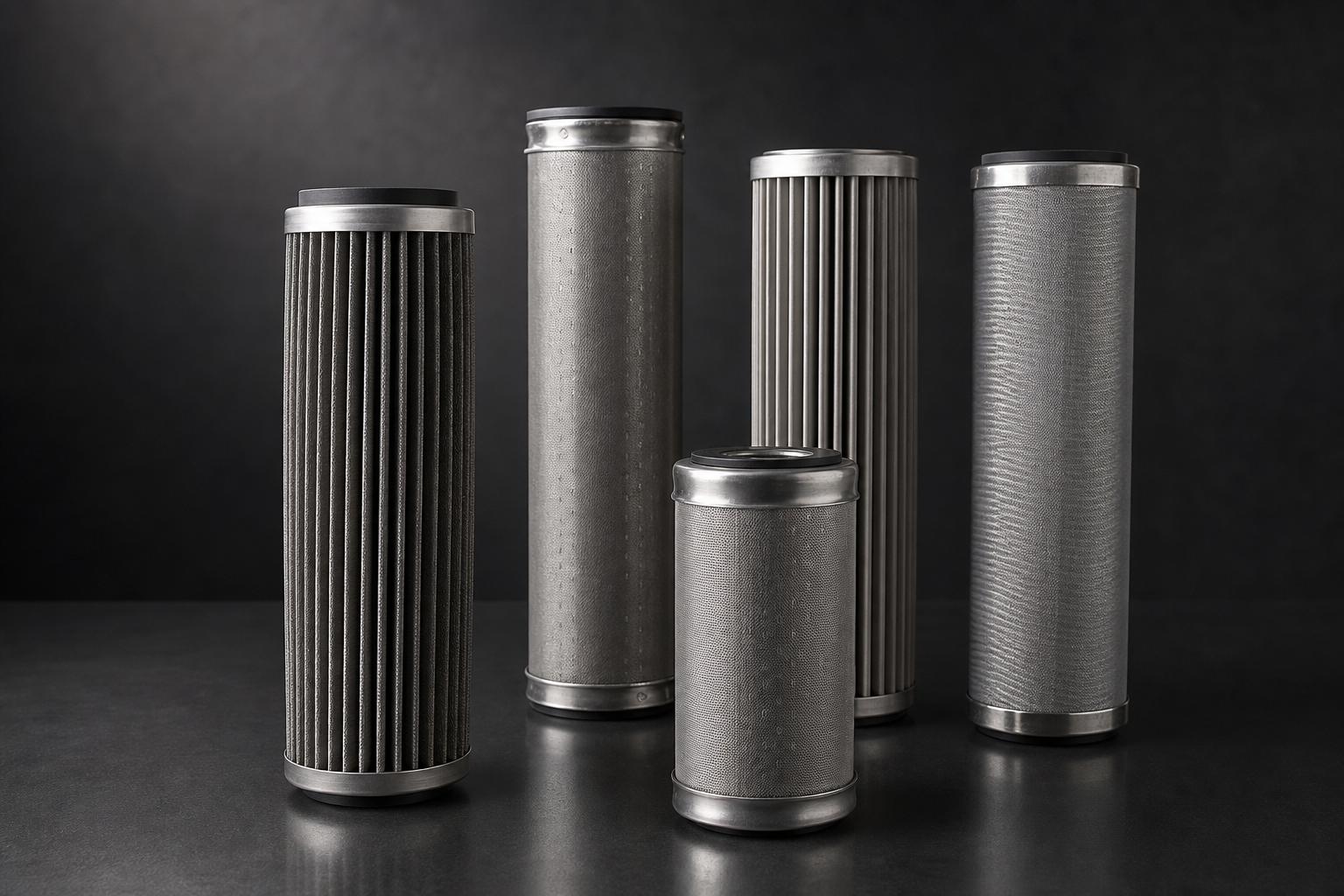
Glass-microfibre coalescing elements are consumables: they are changed at regular intervals and cannot be cleaned. Where the task is mainly particle or droplet retention, sintered stainless steel or PTFE elements are often the better choice — they can be ultrasonically cleaned and reused. One spare element per filter allows rotation without downtime.
Recognise the Symptoms
- Frequent element changes cause high consumable costs and disposal volume
- Elements are changed on a fixed schedule although they are only loaded with particles
- Handling and disposal of elements contaminated with caustic or other aggressive media
- Downtime because no spare element is in stock when the differential pressure rises
- Test benches and pilot plants with frequent rebuilds that need many element changes
Root Causes
Coalescing elements used where a particle filter would do
glass-microfibre coalescers are designed for fine aerosol removal and are not cleanable; if the task is mainly particle or droplet retention, a sintered element is often sufficient
Coalescers are consumables by design
depending on loading, coalescing elements are typically changed about every three months; they cannot be cleaned or regenerated
Media not suited to the medium
elements attacked by the process medium have to be replaced early
No rotation concept
without a spare element, every change means downtime and urgent ordering
Diagnostic Checklist
- 1Is the task particle and droplet retention — or true fine-aerosol coalescing? Only the latter requires a coalescing element
- 2Which retention is needed? Sintered stainless steel is available in 1, 3, 10, 25 and 100 µm, sintered PTFE in 3, 10 and 25 µm
- 3Is the medium compatible with stainless steel or PTFE — and with the housing seal?
- 4Is an ultrasonic bath available, and how are cleaning liquid and residues handled?
- 5After cleaning, inspect the element and check that the differential pressure returns close to the value of a new element
- 6Keep one spare element per filter for rotation: one in service, one being cleaned
- 7Where a coalescer remains necessary, record change dates and differential pressure to optimise the change interval
Find the right filter for this problem
Enter your operating data and let our tools point you to the right element and housing — or send us your details for a tailored recommendation.
Element Finder
RecommendedIdentify the right filter element for your medium and duty in under 60 seconds — recommended starting point.
Find your elementUse Housing Selector
Select the matching housing — material, pressure rating, connections and drain.
Select a housingRequest a Consultation
Prefer a person? Send your operating data and we will recommend the right configuration.
Send enquiryDescribe Your Situation — We Will Find the Right Solution
Every filtration problem has specific root causes that require specific solutions. Send us your operating conditions and we will provide a tailored recommendation.