
KOH Removal from Hydrogen Gas — Materials, Media and Why Testing Comes First
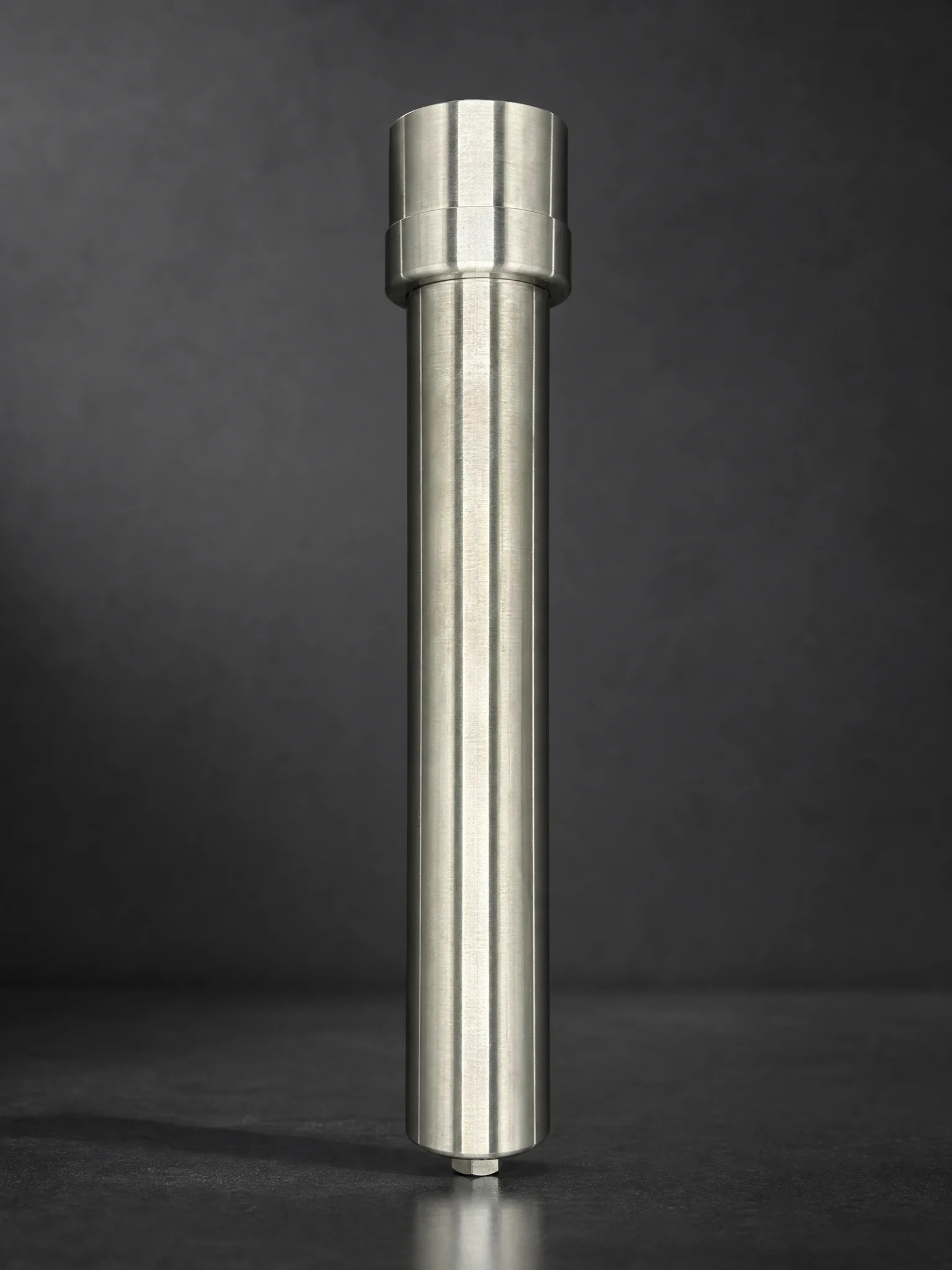
KOH droplets and aerosol carried over from an alkaline electrolyser attack glass fibre, elastomers and lesser metals. For caustic duty we combine a 316L housing with a solid PTFE gasket and sintered PTFE or stainless steel elements. Because long-term behaviour in concentrated KOH depends strongly on the individual process, we recommend a defined test under your own operating conditions before series use.
Recognise the Symptoms
- Trace potassium hydroxide (KOH) aerosol carried over from an alkaline electrolyser or caustic scrubber into the hydrogen stream
- White or crystalline caustic deposits appearing downstream of an existing filter — a sign the media is not holding the droplets
- Discolouration, swelling or shortened life of glass-microfibre elements in caustic service
- Corrosion of housing internals, seals, or drains not rated for alkaline media
- Swollen or leaking O-rings — NBR and FKM (Viton) are not suited to KOH
- Saturated hydrogen near ambient pressure that must be cleaned without introducing new corrosion points
Root Causes
Glass microfibre is attacked by caustic
borosilicate glass fibre and its binders are not suited to concentrated KOH (e.g. 30 %); for caustic duty we specify sintered PTFE or sintered stainless steel elements
Elastomer seals degrade in caustic service
NBR and standard FKM (Viton) swell and fail in KOH; a solid PTFE gasket is required for a caustic-resistant assembly
Carbon or plated steel housings corrode
an alkaline medium demands a 316L stainless steel body and drain hardware; lesser materials pit and fail
No drainable sump
separated caustic liquid must be collected and drained safely rather than re-entrained; a housing without a low-point drain lets liquid contact the element and downstream pipework
Sintered elements are depth filters, not fine coalescers
they retain droplets and particles reliably, but where sub-micron aerosol has to be removed a demister, coalescing or membrane concept must be evaluated for the specific process
Diagnostic Checklist
- 1Specify 316L stainless steel for housing, drain and fittings
- 2Replace NBR/FKM O-rings with a solid PTFE gasket
- 3Select sintered PTFE (RF-TF) or sintered stainless steel (RF-SS) elements instead of glass microfibre
- 4Ensure the housing has a drainable sump / low-point drain for safe caustic collection
- 5Confirm KOH concentration, maximum temperature, operating pressure and actual flow so housing and element are sized correctly
- 6Plan a defined test: log differential pressure, then remove and inspect elements and seals after a set operating time
- 7Decide disposable vs. cleanable — sintered PTFE and stainless steel elements can be ultrasonically cleaned and reused; keep one spare element per filter for rotation
Find the right filter for this problem
Enter your operating data and let our tools point you to the right element and housing — or send us your details for a tailored recommendation.
Element Finder
RecommendedIdentify the right filter element for your medium and duty in under 60 seconds — recommended starting point.
Find your elementUse Housing Selector
Select the matching housing — material, pressure rating, connections and drain.
Select a housingRequest a Consultation
Prefer a person? Send your operating data and we will recommend the right configuration.
Send enquiryDescribe Your Situation — We Will Find the Right Solution
Every filtration problem has specific root causes that require specific solutions. Send us your operating conditions and we will provide a tailored recommendation.