Green hydrogen production is scaling rapidly, and two electrolyser technologies are leading the charge: proton exchange membrane (PEM) electrolysis and alkaline electrolysis. Both split water into hydrogen and oxygen using electrical energy, but the chemistry, operating pressures, and downstream contamination profiles differ substantially. For engineers specifying filtration systems, understanding those differences is not optional — it is fundamental to protecting equipment, meeting purity targets, and avoiding costly process upsets.
This article walks through the filtration requirements of each technology and explains how to match the right filter elements to your electrolyser type. For a broader introduction to hydrogen production filtration, see our article on hydrogen electrolysis filtration.
How the Two Technologies Differ
Alkaline electrolysis is the more established of the two. It uses a liquid electrolyte — typically a 25–30 % potassium hydroxide (KOH) solution — to conduct ions between electrodes separated by a porous diaphragm. The process operates at relatively low pressures (1–30 bar) and produces hydrogen that is saturated with KOH aerosols, water vapour, and fine particulate matter from electrode wear.
PEM electrolysis uses a solid polymer membrane as the electrolyte. There is no liquid caustic in the gas stream, which significantly simplifies downstream gas treatment. However, PEM systems typically operate at higher pressures — sometimes exceeding 80 bar — and the membrane itself can shed microscopic polymer fragments. Trace levels of dissolved ionic contaminants from the water feed are also a concern.
Alkaline Electrolysis: The KOH Challenge
In an alkaline electrolyser, hydrogen gas exits the cell saturated with fine KOH droplets and mist. If this caustic carryover is not removed before the gas enters downstream equipment — compressors, dryers, storage vessels, or fuel cells — it will cause rapid corrosion, contaminate catalysts, and degrade seals. KOH removal is therefore the primary filtration objective in any alkaline system.
Coalescing filter elements are the workhorse here. A properly specified coalescing stage captures submicron KOH aerosols by drawing them through a fine glass microfibre matrix, where droplets merge and drain to a sump for disposal. R+F FilterElements offers its own range of RF-C coalescing elements, engineered specifically for aggressive gas-phase environments. For alkaline electrolysis duty, the K-type construction is the appropriate choice: the K-type uses wetted materials selected for resistance to strong alkalis, including KOH at elevated temperatures.
A typical alkaline filtration train will include:
- A coalescing stage (RF-C, K-type) immediately downstream of the electrolyser to capture bulk KOH aerosols and liquid water
- A particulate stage (RF-P elements) to remove solid debris from electrode wear and diaphragm degradation
- An activated carbon stage (RF-AC elements) if trace organic contamination from seals or lubricants is a concern
Learn more about how coalescing elements work in our dedicated guide: coalescence filters explained.
PEM Electrolysis: High Pressure and Membrane Debris
PEM electrolysers present a different set of filtration challenges. Without caustic liquid in the gas stream, the contamination profile is considerably cleaner — but the operating pressures are higher, and the consequences of filter failure are more severe.
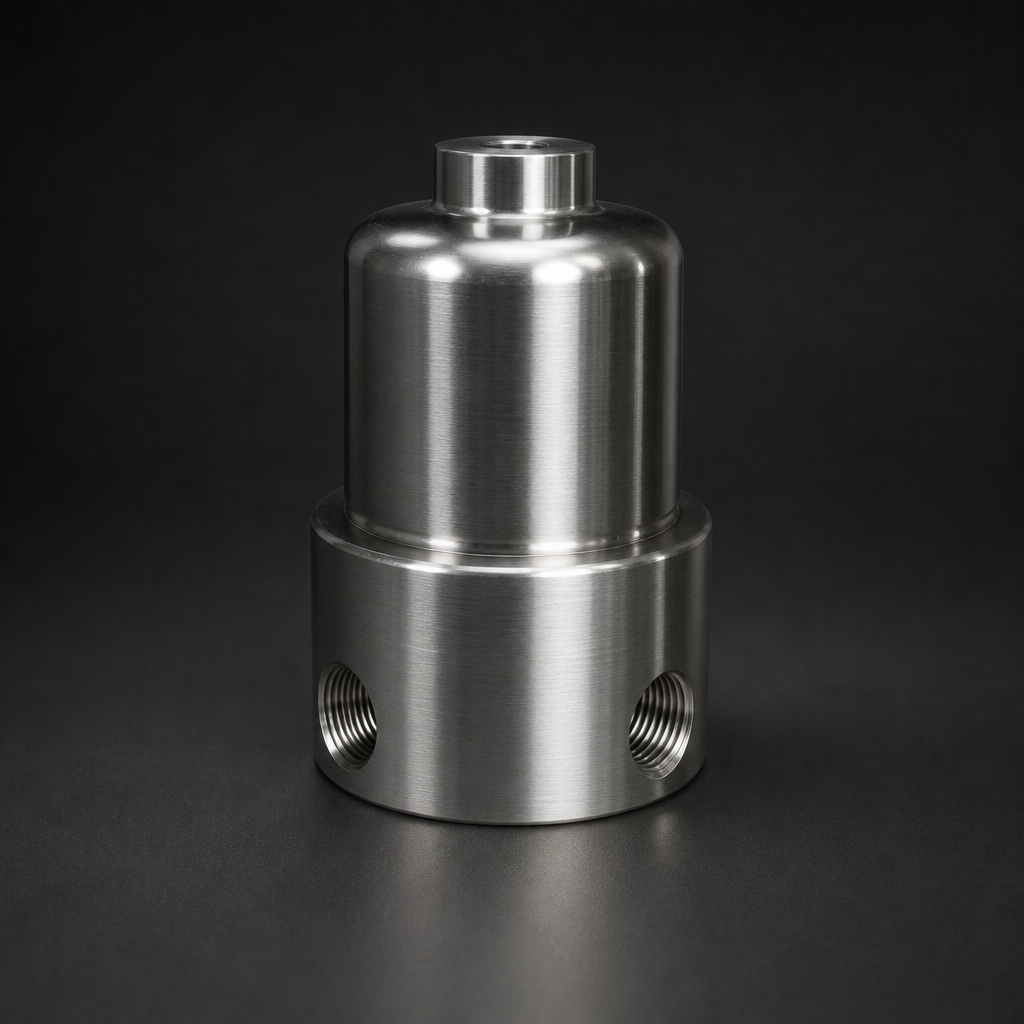
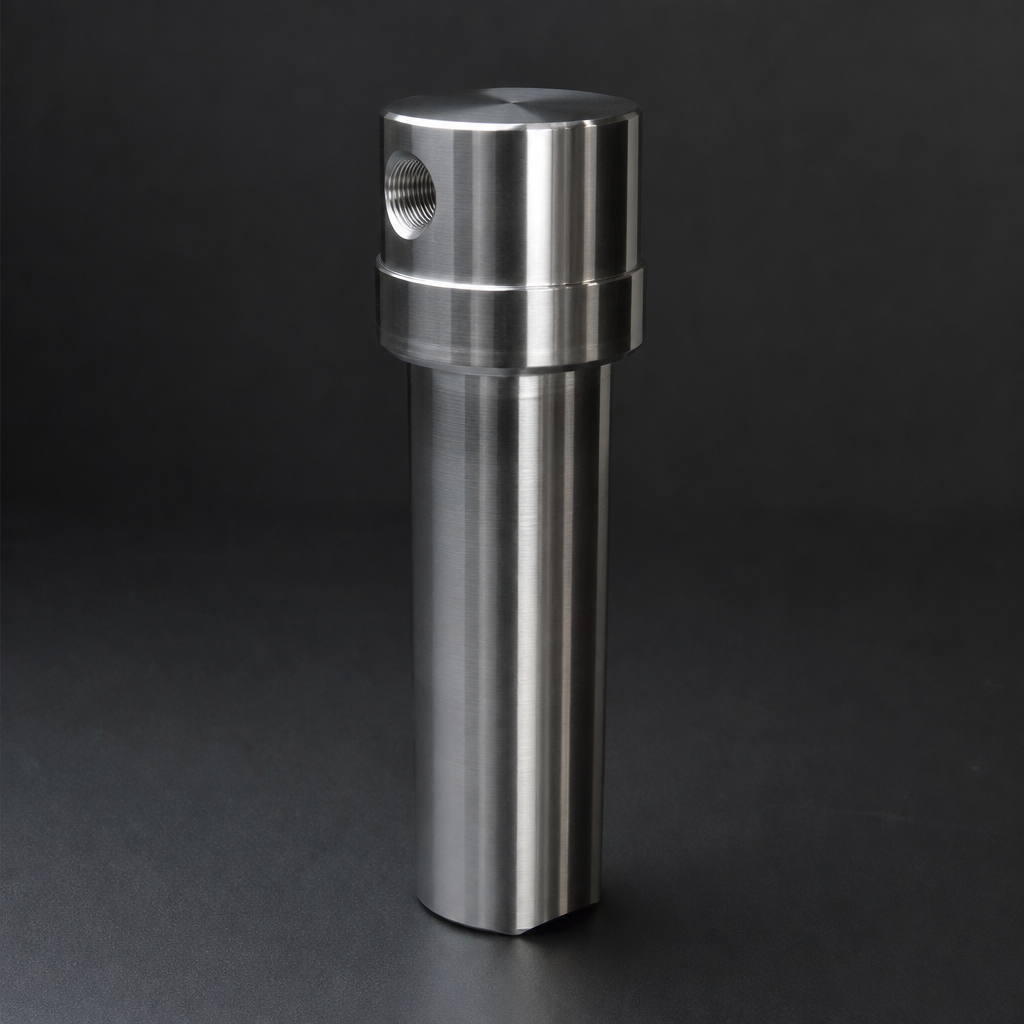
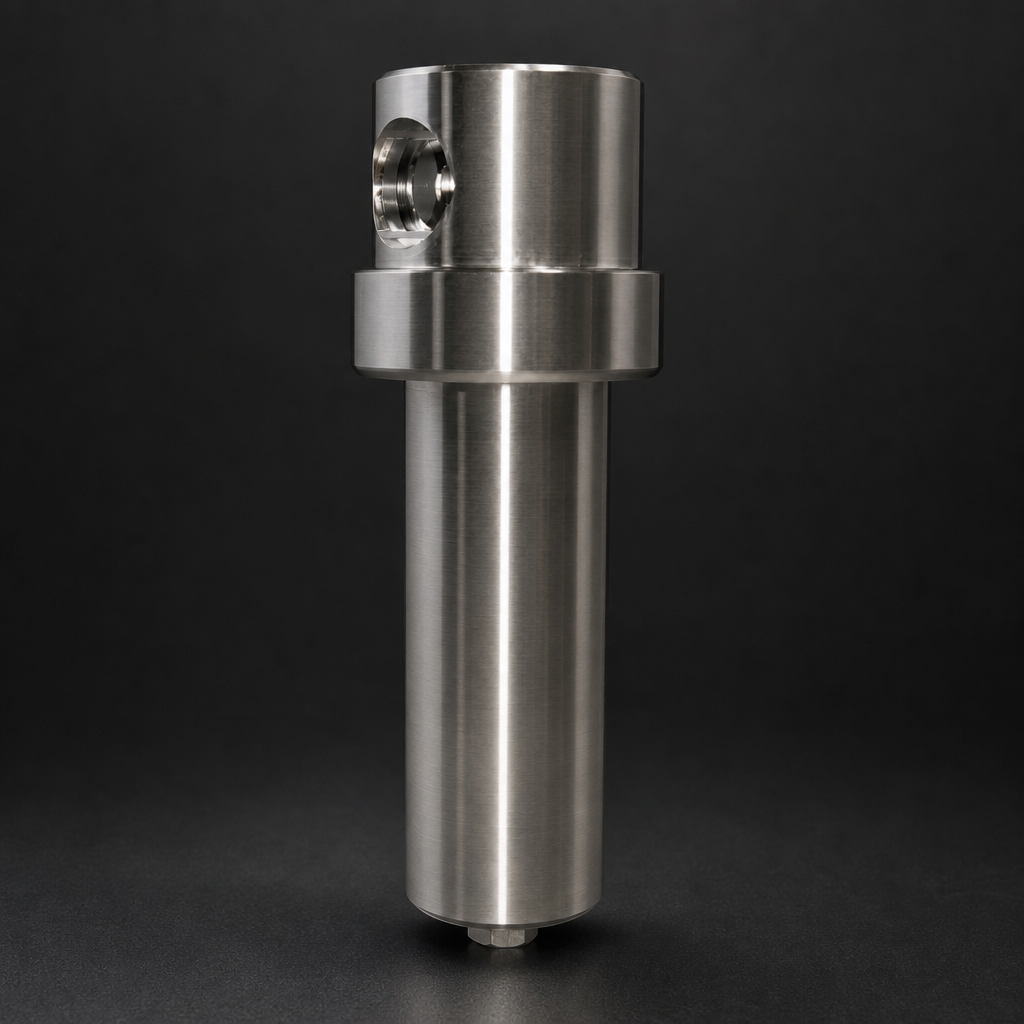
Modern PEM systems routinely operate at 30–80 bar, with some designs pushing beyond 100 bar. At these pressures, filter housings must be rated accordingly. R+F FilterElements offers the RF-H-152 housing, designed for high-pressure hydrogen service. The RF-H-152 is constructed from materials compatible with hydrogen embrittlement risk and pressure-tested to meet the demands of PEM electrolyser installations. For standard process gas duties at lower pressures, the RF-H-150 housing is available from R+F FilterElements.
The primary particulate concern in PEM systems is membrane fragment carryover — very fine polymer particles that can foul downstream equipment. A high-efficiency particulate stage using RF-P elements provides the necessary capture efficiency. A coalescing stage is still recommended to remove entrained water droplets, though the duty is far less aggressive than in alkaline service.
Use our free Engineering Tool to get a filtration recommendation for your specific application in under 2 minutes.
Side-by-Side Comparison
| Parameter | Alkaline Electrolysis | PEM Electrolysis |
|---|---|---|
| Electrolyte type | Liquid KOH (25–30 %) | Solid polymer membrane |
| Typical operating pressure | 1–30 bar | 30–100+ bar |
| Primary contaminant | KOH aerosols & mist | Membrane debris, water droplets |
| Coalescing stage required? | Yes — critical duty | Yes — lighter duty |
| Particulate stage required? | Yes | Yes — primary concern |
| Material compatibility requirement | Alkali-resistant (K-type) | Standard or H₂-compatible |
| Recommended housing | RF-H-150 | RF-H-152 (high-pressure H₂) |
| Activated carbon stage? | Case-by-case | Rarely required |
Key Performance Figures
- Alkaline electrolysis is the more established of the two.
- In an alkaline electrolyser, hydrogen gas exits the cell saturated with fine KOH droplets and mist.
- PEM electrolysers present a different set of filtration challenges.
Specifying the Right Solution
Selecting filter elements for an electrolyser installation requires more than matching a flow rate to a housing size. Material compatibility, pressure rating, and contaminant type must all be considered together. For guidance on matching element grades to purity targets, our ISO 8573-1 quality classes guide provides a useful framework, and our pressure drop and filter sizing tool helps avoid under-specification.
For applications involving aggressive gas streams beyond hydrogen — including oxygen produced at the anode — material compatibility becomes even more critical. Our article on material compatibility for aggressive gases covers the key considerations in detail.
R+F FilterElements offers its own range of filter elements and housings suitable for both PEM and alkaline electrolyser applications. The team is available to review your specific process conditions and recommend the most appropriate configuration — whether you are commissioning a new electrolyser or retrofitting filtration to an existing system.
Whether you are working with a PEM or alkaline system, R+F FilterElements can help you select the correct coalescing elements, particulate grades, and pressure-rated housings for your application. Contact us with your process data for a tailored recommendation.
Get in touch with our filtration engineers →