Die Produktion von grünem Wasserstoff wächst rasant, und zwei Elektrolyseur-Technologien führen dabei die Entwicklung an: die Protonenaustauschmembran-Elektrolyse (PEM) und die alkalische Elektrolyse. Beide Verfahren spalten Wasser mithilfe elektrischer Energie in Wasserstoff und Sauerstoff auf, unterscheiden sich jedoch erheblich in Chemie, Betriebsdrücken und nachgeschalteten Verunreinigungsprofilen. Für Ingenieure, die Filtrationsanlagen auslegen, ist das Verständnis dieser Unterschiede keine Option — es ist grundlegende Voraussetzung, um Anlagen zu schützen, Reinheitsziele zu erreichen und kostspielige Prozessstörungen zu vermeiden.
Dieser Artikel erläutert die Filtrationsanforderungen beider Technologien und zeigt, wie die richtigen Filterelemente dem jeweiligen Elektrolyseurtyp zugeordnet werden. Eine umfassendere Einführung in die Filtration bei der Wasserstofferzeugung bietet unser Artikel zur Filtration bei der Wasserstoff-Elektrolyse.
Unterschiede zwischen den beiden Technologien
Die alkalische Elektrolyse ist die etabliertere der beiden Technologien. Sie verwendet einen flüssigen Elektrolyten — typischerweise eine 25–30%ige Kaliumhydroxid-Lösung (KOH) — um Ionen zwischen Elektroden zu leiten, die durch ein poröses Diaphragma getrennt sind. Der Prozess läuft bei vergleichsweise niedrigen Drücken (1–30 bar) ab und erzeugt Wasserstoff, der mit KOH-Aerosolen, Wasserdampf und feinen Partikeln aus dem Elektrodenverschleiß gesättigt ist.
Die PEM-Elektrolyse verwendet eine feste Polymermembran als Elektrolyt. Da kein flüssiges Ätzmedium im Gasstrom vorhanden ist, vereinfacht sich die nachgeschaltete Gasaufbereitung erheblich. Allerdings arbeiten PEM-Systeme typischerweise bei höheren Drücken — mitunter über 80 bar — und die Membran selbst kann mikroskopisch kleine Polymerfragmente abgeben. Auch Spuren gelöster ionischer Verunreinigungen aus dem Speisewasser sind zu berücksichtigen.
Alkalische Elektrolyse: Die Herausforderung durch KOH
In einem alkalischen Elektrolyseur verlässt Wasserstoffgas die Zelle gesättigt mit feinen KOH-Tröpfchen und -Nebel. Wird dieser ätzende Mitreißstoff nicht entfernt, bevor das Gas in nachgeschaltete Anlagen gelangt — Kompressoren, Trockner, Speicherbehälter oder Brennstoffzellen — führt dies zu rascher Korrosion, Katalysatorvergiftung und Dichtungsschäden. Die KOH-Abscheidung ist daher das primäre Filtrationsziel in jedem alkalischen System.
Koaleszenzfilterelemente sind hier das zentrale Mittel. Eine korrekt ausgelegte Koaleszenzstufe erfasst submikrone KOH-Aerosole, indem sie diese durch eine feine Glasmikrofasermatrix leitet, wo Tröpfchen zusammenwachsen und in einen Sammelbehälter ablaufen. R+F FilterElements bietet eine eigene Reihe von RF-C-Koaleszenzelementen an, die speziell für aggressive Gasphasenumgebungen entwickelt wurden. Für den Einsatz in der alkalischen Elektrolyse ist die K-Typ-Ausführung die geeignete Wahl: Der K-Typ verwendet benetzte Materialien, die für die Beständigkeit gegenüber starken Laugen — einschließlich KOH bei erhöhten Temperaturen — ausgewählt wurden.
Eine typische Filtrationsstrecke für alkalische Elektrolyse umfasst:
- Eine Koaleszenzstufe (RF-C, K-Typ) unmittelbar nachgeschaltet zum Elektrolyseur zur Abscheidung von KOH-Aerosolen und flüssigem Wasser
- Eine Partikelstufe (RF-P-Elemente) zur Abscheidung fester Partikel aus Elektrodenverschleiß und Diaphragmadegradation
- Eine Aktivkohlestufe (RF-AC-Elemente), sofern Spuren organischer Verunreinigungen aus Dichtungen oder Schmiermitteln zu erwarten sind
Mehr über die Funktionsweise von Koaleszenzelementen erfahren Sie in unserem Leitfaden: Koaleszenzfilter erklärt.
PEM-Elektrolyse: Hochdruck und Membranpartikel
PEM-Elektrolyseure stellen andere Filtrationsanforderungen. Da kein ätzender Flüssiganteil im Gasstrom vorhanden ist, ist das Verunreinigungsprofil deutlich sauberer — jedoch sind die Betriebsdrücke höher, und die Folgen eines Filterversagens sind gravierender.
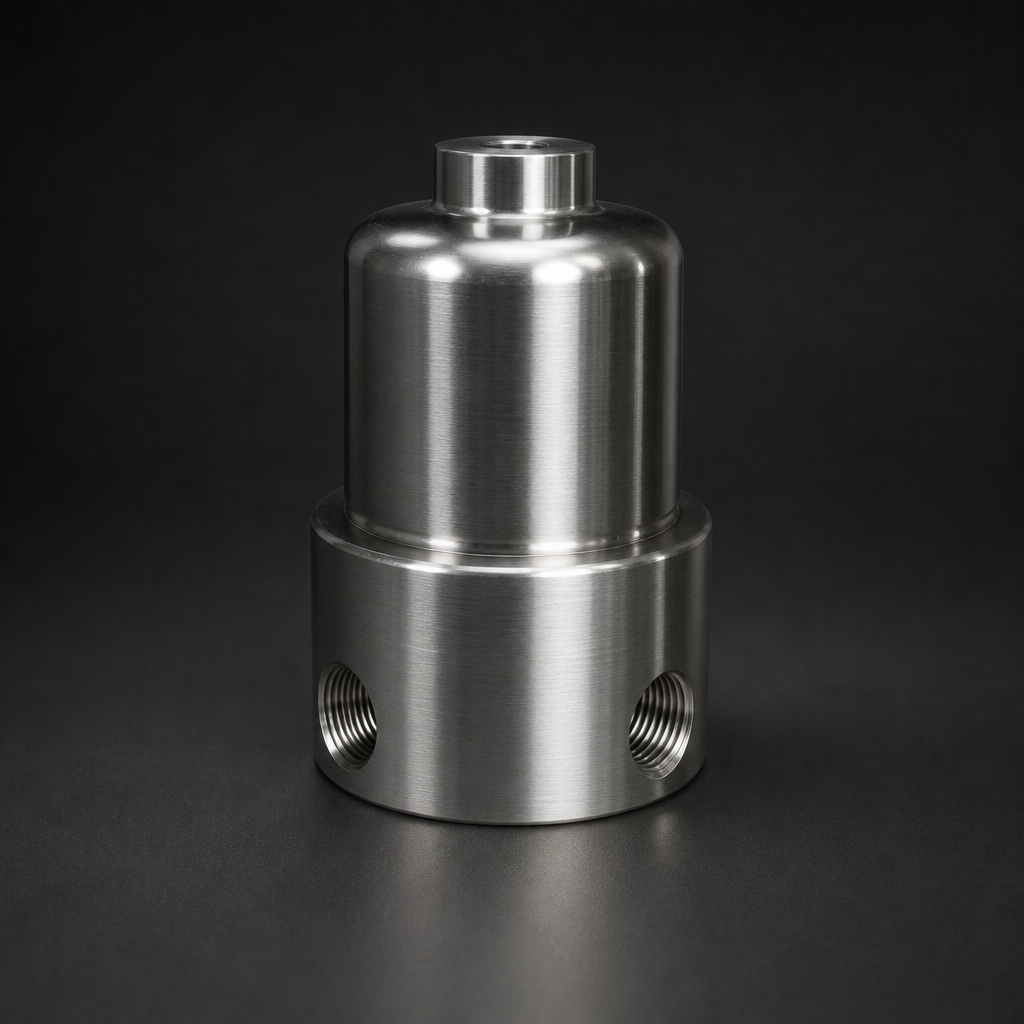
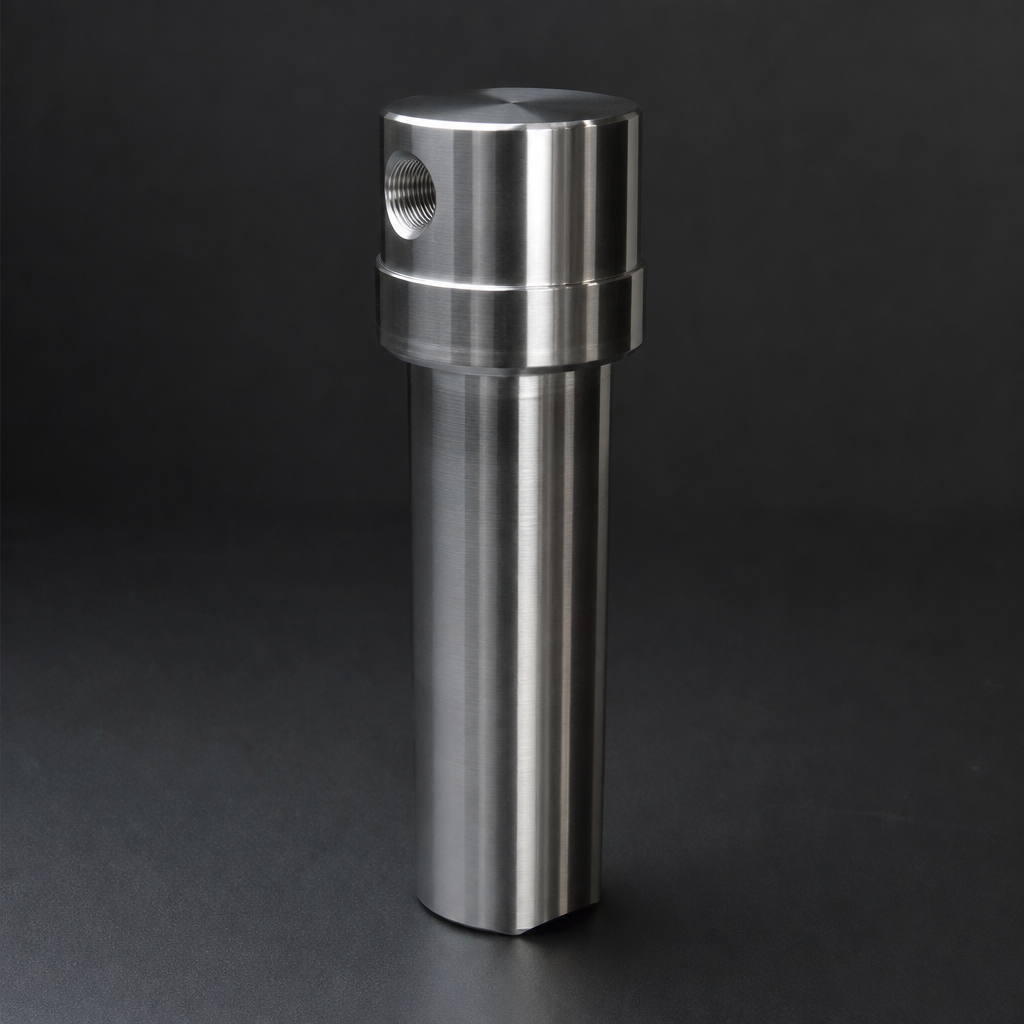
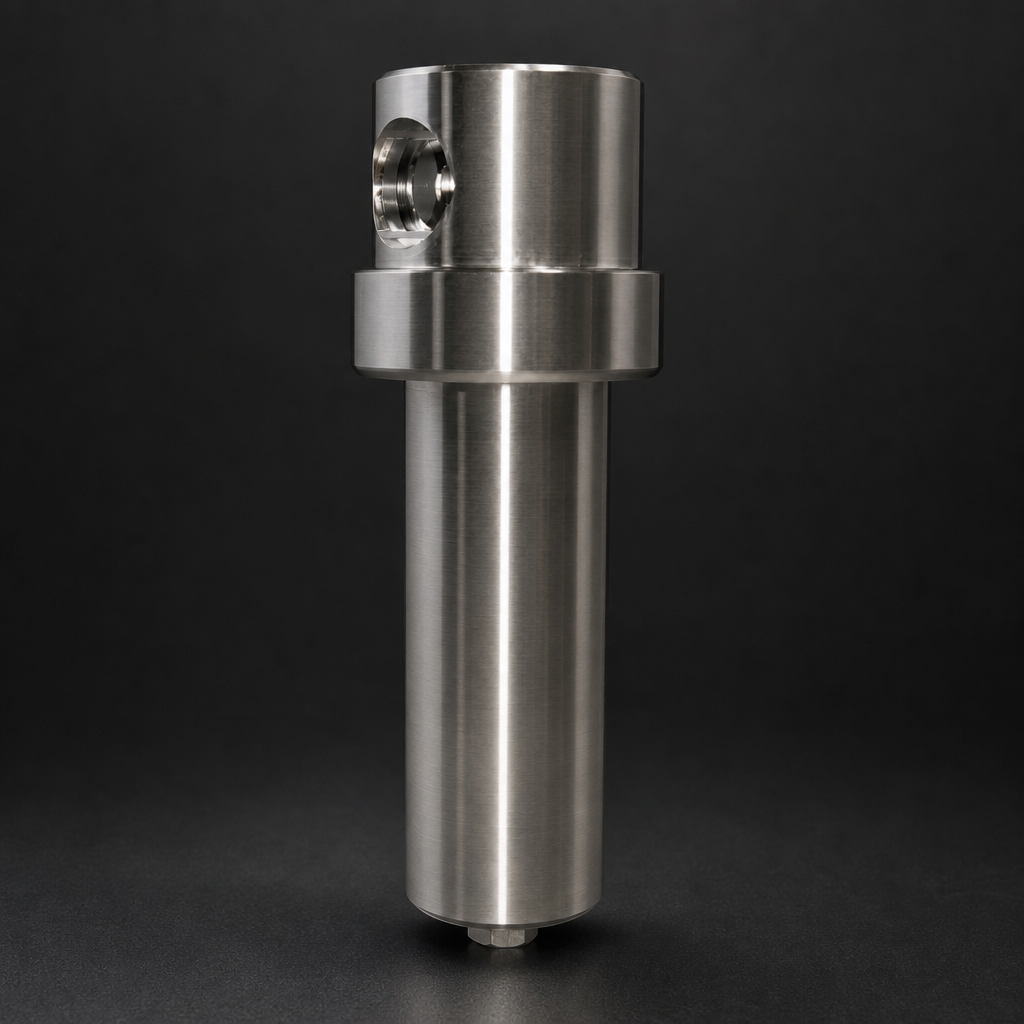
Moderne PEM-Systeme arbeiten routinemäßig bei 30–80 bar, einige Ausführungen überschreiten 100 bar. Bei diesen Drücken müssen Filtergehäuse entsprechend ausgelegt sein. R+F FilterElements bietet das RF-H-152-Gehäuse an, das für den Hochdruck-Wasserstoffbetrieb konzipiert ist. Das RF-H-152 ist aus Materialien gefertigt, die dem Risiko der Wasserstoffversprödung standhalten, und druckgeprüft, um den Anforderungen von PEM-Elektrolyseur-Installationen zu genügen. Für Standard-Prozessgasanwendungen bei niedrigeren Drücken steht das RF-H-150-Gehäuse von R+F FilterElements zur Verfügung.
Die primäre Partikelproblematik bei PEM-Systemen ist der Mitreißstoff von Membranfragmenten — sehr feine Polymerpartikel, die nachgeschaltete Anlagen verschmutzen können. Eine hocheffiziente Partikelstufe mit RF-P-Elementen bietet den erforderlichen Abscheidegrad. Eine Koaleszenzstufe wird weiterhin empfohlen, um mitgerissene Wassertröpfchen abzuscheiden, wenngleich die Beanspruchung deutlich geringer ist als im alkalischen Betrieb.
Protonenaustauschmembran-Elektrolyse (PEM)
Use our free Engineering Tool to get a filtration recommendation for your specific application in under 2 minutes.
Direkter Vergleich
| Parameter | Alkalische Elektrolyse | PEM-Elektrolyse |
|---|---|---|
| Elektrolyttyp | Flüssiges KOH (25–30 %) | Feste Polymermembran |
| Typischer Betriebsdruck | 1–30 bar | 30–100+ bar |
| Hauptverunreinigung | KOH-Aerosole & -Nebel | Membranpartikel, Wassertröpfchen |
| Koaleszenzstufe erforderlich? | Ja — kritische Beanspruchung | Ja — geringere Beanspruchung |
| Partikelstufe erforderlich? | Ja | Ja — primäre Anforderung |
| Anforderung an Materialverträglichkeit | Laugenbeständig (K-Typ) | Standard oder H₂-kompatibel |
| Empfohlenes Gehäuse | RF-H-150 | RF-H-152 (Hochdruck H₂) |
| Aktivkohlestufe? | Einzelfallabhängig | Selten erforderlich |
Wichtige Leistungskennwerte
- Die alkalische Elektrolyse ist die etabliertere der beiden Technologien.
- In einem alkalischen Elektrolyseur verlässt Wasserstoffgas die Zelle gesättigt mit feinen KOH-Tröpfchen und -Nebel.
- PEM-Elektrolyseure stellen andere Filtrationsanforderungen.
Die richtige Lösung auslegen
Die Auswahl von Filterelementen für eine Elektrolyseur-Installation erfordert mehr als die Zuordnung eines Volumenstroms zu einer Gehäusegröße. Materialverträglichkeit, Druckstufe und Verunreinigungstyp müssen gemeinsam betrachtet werden. Zur Orientierung bei der Zuordnung von Elementgüten zu Reinheitszielen bietet unser Leitfaden zu ISO 8573-1-Qualitätsklassen einen nützlichen Rahmen; unser Druckverlust- und Filterauslegungstool hilft, eine Unterdimensionierung zu vermeiden.
Bei Anwendungen mit aggressiven Gasströmen jenseits von Wasserstoff — einschließlich des an der Anode erzeugten Sauerstoffs — wird die Materialverträglichkeit noch kritischer. Unser Artikel zur Materialverträglichkeit bei aggressiven Gasen behandelt die wesentlichen Gesichtspunkte ausführlich.
R+F FilterElements bietet eine eigene Reihe von Filterelementen und Gehäusen, die sowohl für PEM- als auch für alkalische Elektrolyseur-Anwendungen geeignet sind. Das Team steht zur Verfügung, um Ihre spezifischen Prozessbedingungen zu prüfen und die am besten geeignete Konfiguration zu empfehlen — ob bei der Inbetriebnahme eines neuen Elektrolyseurs oder bei der Nachrüstung einer bestehenden Anlage.
Ob PEM- oder alkalisches System — R+F FilterElements unterstützt Sie bei der Auswahl der richtigen Koaleszenzelemente, Partikelgüten und druckgeprüften Gehäuse für Ihre Anwendung. Kontaktieren Sie uns mit Ihren Prozessdaten für eine maßgeschneiderte Empfehlung.
Kontakt zu unseren Filtrationsingenieuren aufnehmen →