Argon and other inert gases are the invisible workhorses of modern industry. From shielding molten weld pools to blanketing semiconductor wafers during deposition, their purity is not a preference — it is a process requirement. Yet even gas supplied at 99.999% purity from the cylinder can arrive at the point of use contaminated by moisture, particulate, and trace hydrocarbons picked up along the way. Understanding where contamination enters the supply chain, and how to remove it reliably, is the first step towards consistent, defect-free results.
Why Inert Gas Purity Matters More Than You Think
The term "inert" refers to chemical reactivity, not to the gas's tolerance for contamination. Argon, nitrogen, helium, and neon will not react with your process — but the moisture, oil aerosols, and particulate they carry most certainly will. The consequences vary by application, but they are rarely trivial:
- Welding and metal fabrication: Moisture and oxygen in shielding gas cause porosity, spatter, and oxide inclusions in the weld bead. Even a few parts per million of water vapour can produce visible porosity in aluminium TIG welds.
- Heat treatment and bright annealing: Protective atmosphere furnaces rely on argon or nitrogen to prevent surface oxidation. Contaminated gas leads to discolouration, scale, and rejected parts.
- Semiconductor and electronics manufacturing: Deposition, etching, and packaging processes demand gas purity at the parts-per-billion (ppb) level. A single contamination event can destroy an entire wafer batch.
- Analytical instrumentation: Carrier gases for gas chromatography and ICP-MS must be free of hydrocarbons and moisture to avoid baseline drift and false readings.
In each of these environments, the cost of contamination — in scrap, rework, downtime, or failed qualification — far exceeds the cost of proper filtration. The question is not whether to filter, but where and how.
Where Contamination Enters the Inert Gas Supply
Contamination in an inert gas system rarely comes from a single source. It accumulates across the supply chain, and each stage introduces a different type of contaminant.
The Cylinder and Bulk Supply
High-purity argon from a reputable supplier is typically very clean at the point of fill. However, cylinders that have been returned, refilled, or stored for extended periods can harbour residual moisture adsorbed onto the internal walls. Bulk liquid argon systems introduce additional risk at the vaporiser, where ambient moisture can ingress if seals degrade.
Pressure Regulators and Valves
Diaphragm regulators and needle valves contain elastomeric seals that can off-gas trace hydrocarbons, particularly when new or at elevated temperatures. Brass-bodied regulators may also introduce particulate from internal corrosion or machining residue.
Distribution Pipework
Stainless steel tubing is the preferred material for high-purity gas distribution, but even electropolished 316L tubing will adsorb and release moisture during pressure cycles. Flexible hoses with polymer liners are a significant source of hydrocarbon contamination and should be avoided in critical applications.
Compressors and Boosters
Where argon or nitrogen is recompressed — for example, in gas recovery systems or high-pressure cylinder filling — oil-lubricated compressors introduce aerosol oil contamination. Even oil-free compressors generate particulate from wear of piston rings and valve seats.
Filtration Requirements by Application
The appropriate filtration strategy depends on the purity level required and the nature of the contamination present. The table below summarises typical requirements across the main inert gas applications:
| Application | Key Contaminants | Target Purity | Recommended Filtration |
|---|---|---|---|
| MIG/TIG Welding | Moisture, particulate | < 10 ppm H₂O, < 1 µm particulate | Coalescing + particulate filter |
| Bright Annealing / Heat Treatment | Moisture, oxygen, hydrocarbons | < 5 ppm H₂O, < 1 ppm O₂ | Coalescing + adsorption filter |
| Semiconductor Deposition / Etch | Moisture, hydrocarbons, metals (ppb) | < 1 ppb H₂O, < 1 ppb THC | High-purity coalescing + SilcoNert-coated housing |
| GC / ICP-MS Carrier Gas | Hydrocarbons, moisture | < 0.1 ppm THC, < 1 ppm H₂O | Activated carbon adsorber + particulate filter |
| Laser Cutting (assist gas) | Moisture, oil aerosol | < 10 ppm H₂O, oil-free | Coalescing filter |
Semiconductor and electronics manufacturing:
Choosing the Right Filter Housing for Inert Gas Service
Inert gas filtration imposes specific demands on filter housings that differ from standard compressed air applications. The housing must be compatible with the gas, rated for the operating pressure, and — in critical applications — constructed from materials that do not contribute contamination of their own.
Material Compatibility
For most welding and heat treatment applications, 316L stainless steel housings are the appropriate choice. Stainless steel is chemically inert, easy to clean, and compatible with all common inert gases including argon, nitrogen, helium, and carbon dioxide blends. Aluminium housings, while suitable for compressed air, are not recommended for high-purity inert gas service due to the risk of particulate generation from internal corrosion in the presence of trace moisture.
Pressure Rating
Argon and nitrogen are commonly distributed at pressures between 10 and 300 bar, depending on whether the source is a cylinder, a manifold, or a bulk liquid system. Filter housings must be rated for the maximum operating pressure with an appropriate safety margin.
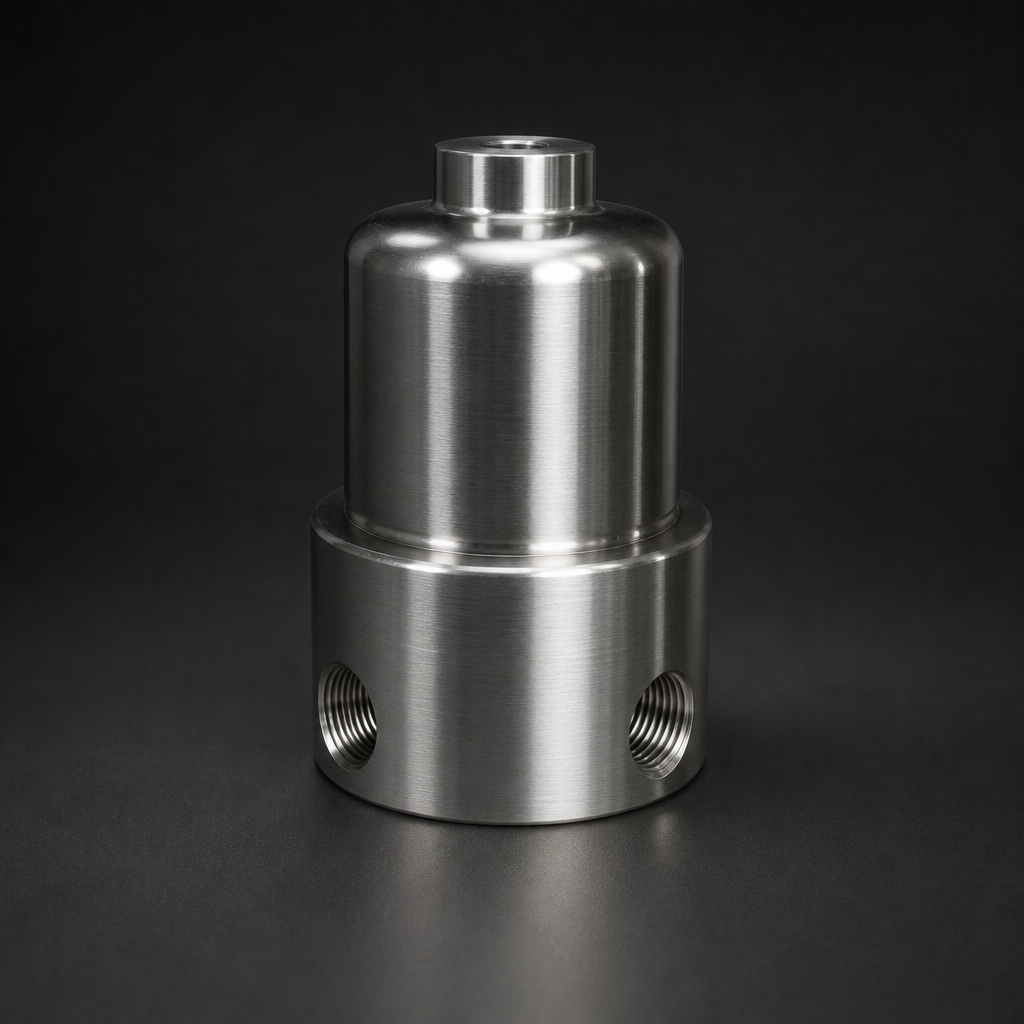
R+F FilterElements offers a range of stainless steel instrumentation and process gas filter housings specifically designed for high-pressure inert gas service. The RF-H-110-SN is a compact 316L stainless steel housing with SilcoNert® 2000 internal coating, designed for ultra-pure and semiconductor applications where even trace metal contamination from the housing surface must be eliminated. SilcoNert® is an inert silicon-based coating that prevents adsorption of reactive trace species onto the stainless steel surface — critical when working at ppb purity levels.
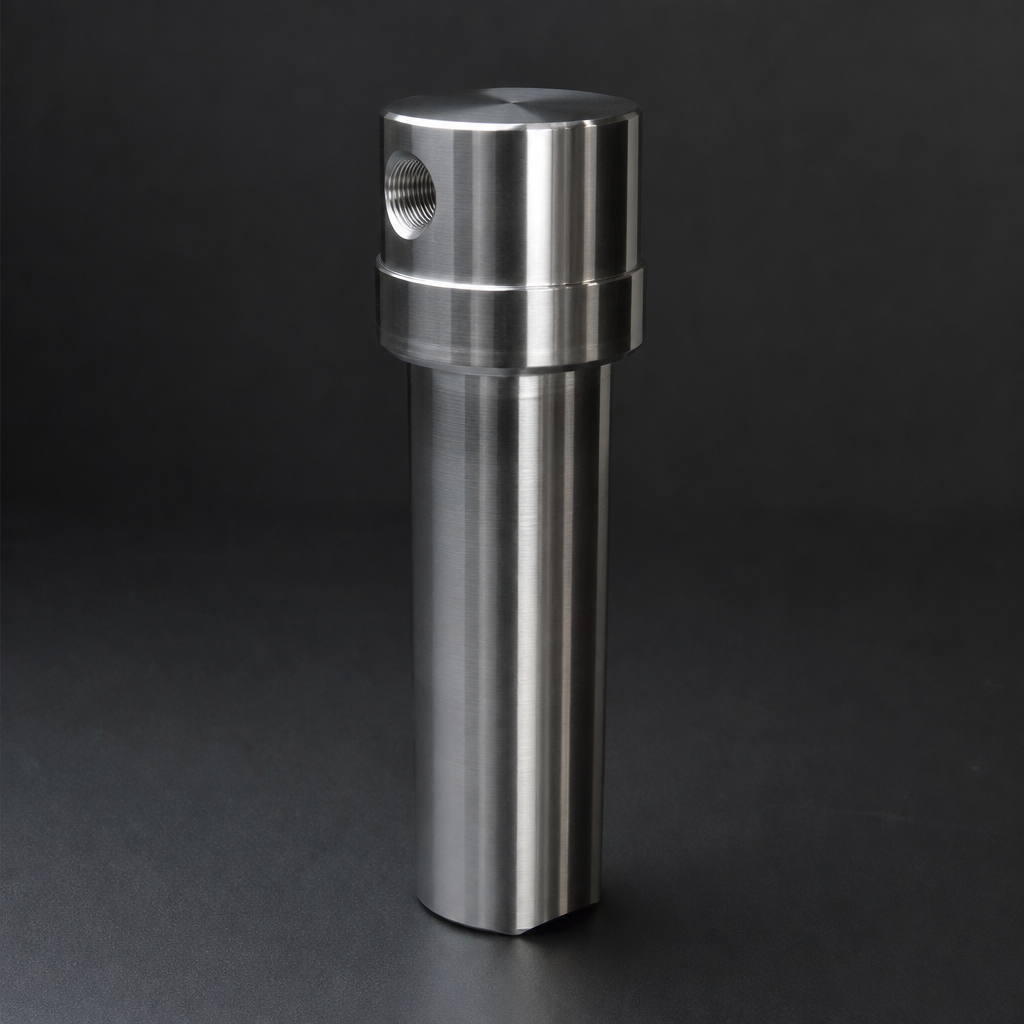
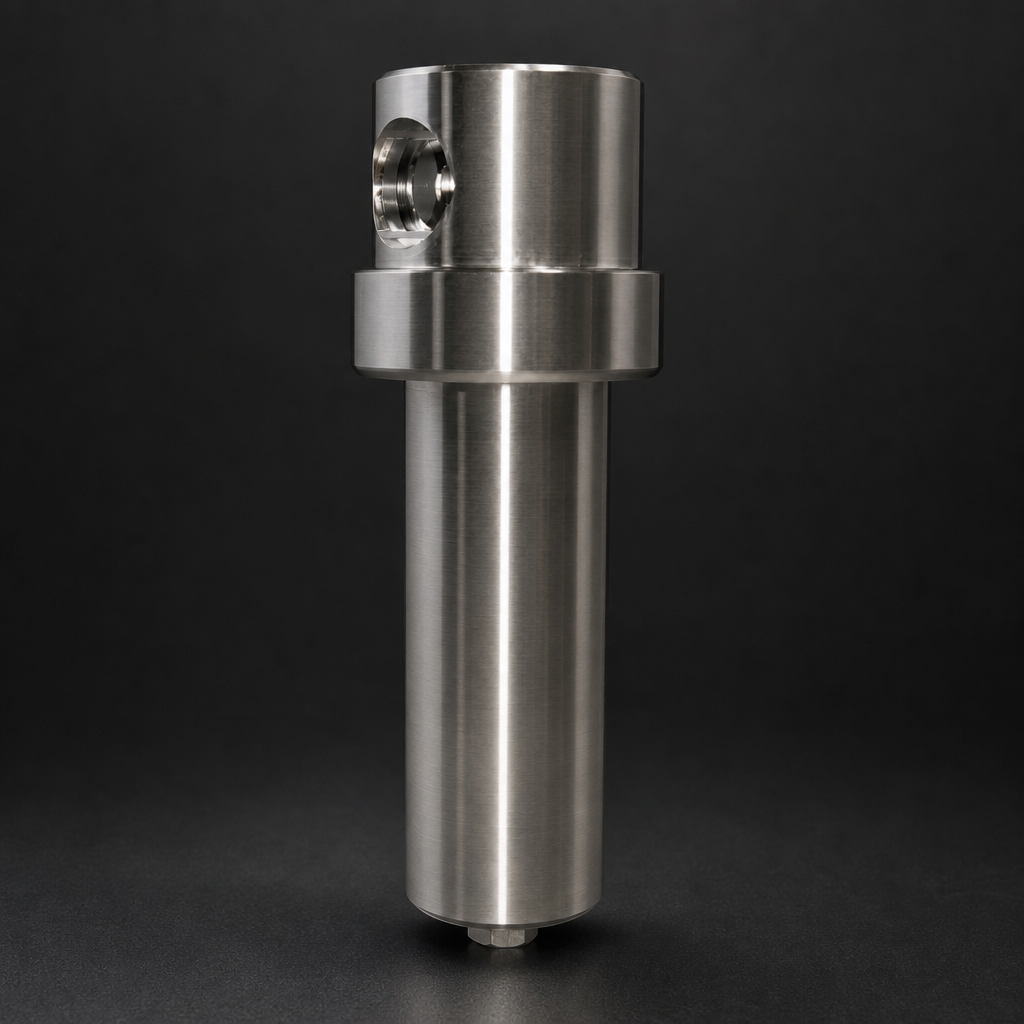
For higher-pressure applications, the RF-H-150 process gas filter housing is rated to 100 bar and constructed from 316L stainless steel with a compact body suitable for installation close to the point of use. Where pressures up to 250 bar are required — for example, in cylinder manifold systems or high-pressure gas supply to semiconductor tools — the RF-H-160 process gas housing provides the necessary pressure rating in the same robust stainless steel construction.
Filter Elements for Inert Gas Applications
The filter element is the active component of the filtration system, and its selection is as important as the housing. For inert gas service, the element must achieve the required removal efficiency without introducing contamination of its own — particularly hydrocarbons from binders, adhesives, or potting compounds.
Coalescing Elements (RF-C Series)
Coalescing elements are the primary tool for removing liquid aerosols — oil mist, water droplets, and condensed hydrocarbons — from gas streams. R+F's RF-C coalescing elements use borosilicate glass microfibre media with 99.99% efficiency for particles and aerosols ≥ 0.1 µm. The microfibre structure captures sub-micron aerosols by diffusion and interception, coalescing them into larger droplets that drain by gravity to the sump.
For inert gas service, the RF-C element's low extractable content is particularly important. The borosilicate glass media contains no organic binders, and the element construction avoids adhesives that could off-gas into the process stream.
Particulate Elements (RF-P Series)
Where the primary concern is solid particulate — pipe scale, valve seat debris, or compressor wear particles — RF-P particulate elements provide 99.99% efficiency for particles ≥ 0.3 µm. These elements are available in a range of micron ratings to match the cleanliness requirement of the application.
Activated Carbon Adsorbers (RF-AC and RF-DIA Series)
For applications requiring removal of trace hydrocarbons — analytical carrier gases, semiconductor process gases, or heat treatment atmospheres — activated carbon adsorption is the appropriate technology. R+F's RF-AC adsorption elements and RF-DIA disposable inline adsorbers use high-activity coconut-shell activated carbon to reduce total hydrocarbon content to below 0.003 mg/m³.
Use our free Engineering Tool to get a filtration recommendation for your specific application in under 2 minutes.
Semiconductor and Ultra-High-Purity Applications
Semiconductor manufacturing represents the most demanding end of the inert gas purity spectrum. Processes such as chemical vapour deposition (CVD), atomic layer deposition (ALD), and ion implantation require carrier and purge gases with moisture and hydrocarbon content measured in parts per billion. At these purity levels, conventional filtration is necessary but not sufficient — the filter housing itself must not contribute contamination.
This is the application for which the RF-H-110-SN was developed. The SilcoNert® 2000 coating creates a chemically inert barrier between the gas stream and the stainless steel substrate, preventing adsorption of moisture and trace reactive species onto the metal surface. This is particularly important during pressure cycling, where adsorbed species can be released back into the gas stream as pressure drops.
In semiconductor fab environments, filter housings are typically installed at the point of use — immediately upstream of the process tool — to minimise the length of unfiltered distribution pipework. A typical installation might include a coalescing filter to remove any aerosol contamination from the distribution system, followed by an RF-H-110-SN with a high-efficiency particulate element to provide a final barrier against sub-micron particles before the gas enters the tool.
Welding Gas Filtration: A Practical Guide
For welding applications, the purity requirements are less extreme than semiconductor manufacturing, but the consequences of contamination are immediately visible in weld quality. The most common contaminants in welding shielding gas are moisture and particulate, both of which can be effectively removed with a simple two-stage filtration system.
A coalescing filter installed at the cylinder manifold or bulk supply outlet removes liquid water and oil aerosols. A downstream particulate filter — or a combined coalescing/particulate unit — removes solid debris from the distribution system. For aluminium TIG welding, where porosity sensitivity is highest, a desiccant dryer or molecular sieve adsorber may be added to reduce moisture to below 5 ppm.
The RF-H-150 stainless steel process gas housing, fitted with an RF-C coalescing element, is well suited to welding gas filtration at pressures up to 100 bar. Its compact body and standard face-seal connections make it straightforward to install in-line with existing cylinder regulators or manifold systems.
Installation and Maintenance Considerations
Even the best filter system will underperform if installed or maintained incorrectly. The following points apply specifically to inert gas filtration:
- Orientation: Coalescing filters must be installed vertically with the drain at the bottom to allow coalesced liquid to drain by gravity. Horizontal installation traps liquid in the element and reduces efficiency.
- Purging: After element replacement or any maintenance that opens the housing, the system should be purged with clean inert gas before returning to service. This removes atmospheric moisture and oxygen that entered during the maintenance window.
- Element replacement: Elements should be replaced on a scheduled basis — typically annually or when differential pressure across the filter reaches the manufacturer's recommended limit. In high-purity applications, elements should be replaced more frequently to prevent breakthrough of adsorbed contaminants.
- Leak testing: All connections should be leak-tested after installation and after any maintenance. Even a small leak in an inert gas system can allow atmospheric moisture and oxygen to ingress, particularly when the system is depressurised.
For guidance on selecting the correct filter for your specific inert gas application, R+F FilterElements' engineering team can provide sizing and specification support. Use the online sizing wizard for an initial recommendation, or contact the team directly for complex or high-purity applications.
Summary: Getting Inert Gas Filtration Right
Argon and inert gas filtration is not a single-solution problem. The correct approach depends on the application, the operating pressure, the purity level required, and the nature of the contamination present. For welding and heat treatment, a coalescing filter at the supply point is often sufficient. For semiconductor and analytical applications, a multi-stage system with SilcoNert-coated housings and high-efficiency elements is required.
R+F FilterElements offers a complete range of stainless steel filter housings and elements for inert gas service, from the compact RF-H-110-SN for ultra-pure semiconductor applications to the RF-H-150 and RF-H-160 process gas housings for industrial use. All housings are constructed from 316L stainless steel and are available with a range of seal materials to suit the operating temperature and gas composition.
Investing in the correct filtration system at the design stage is always more cost-effective than diagnosing contamination problems after they have caused process failures. If you are specifying a new inert gas system or reviewing an existing installation, the R+F FilterElements team is available to provide technical support and product recommendations tailored to your application.
- Welding and metal fabrication:
- Contamination in an inert gas system rarely comes from a single source.
- The appropriate filtration strategy depends on the purity level required and the nature of the contamination present.
- Inert gas filtration imposes specific demands on filter housings that differ from standard compressed air applications.