What makes borosilicate glass microfibre special?
When engineers specify filter elements for demanding gas applications — high temperatures, corrosive chemicals, ultra-fine aerosols — one filter media consistently outperforms all alternatives: borosilicate glass microfibre.
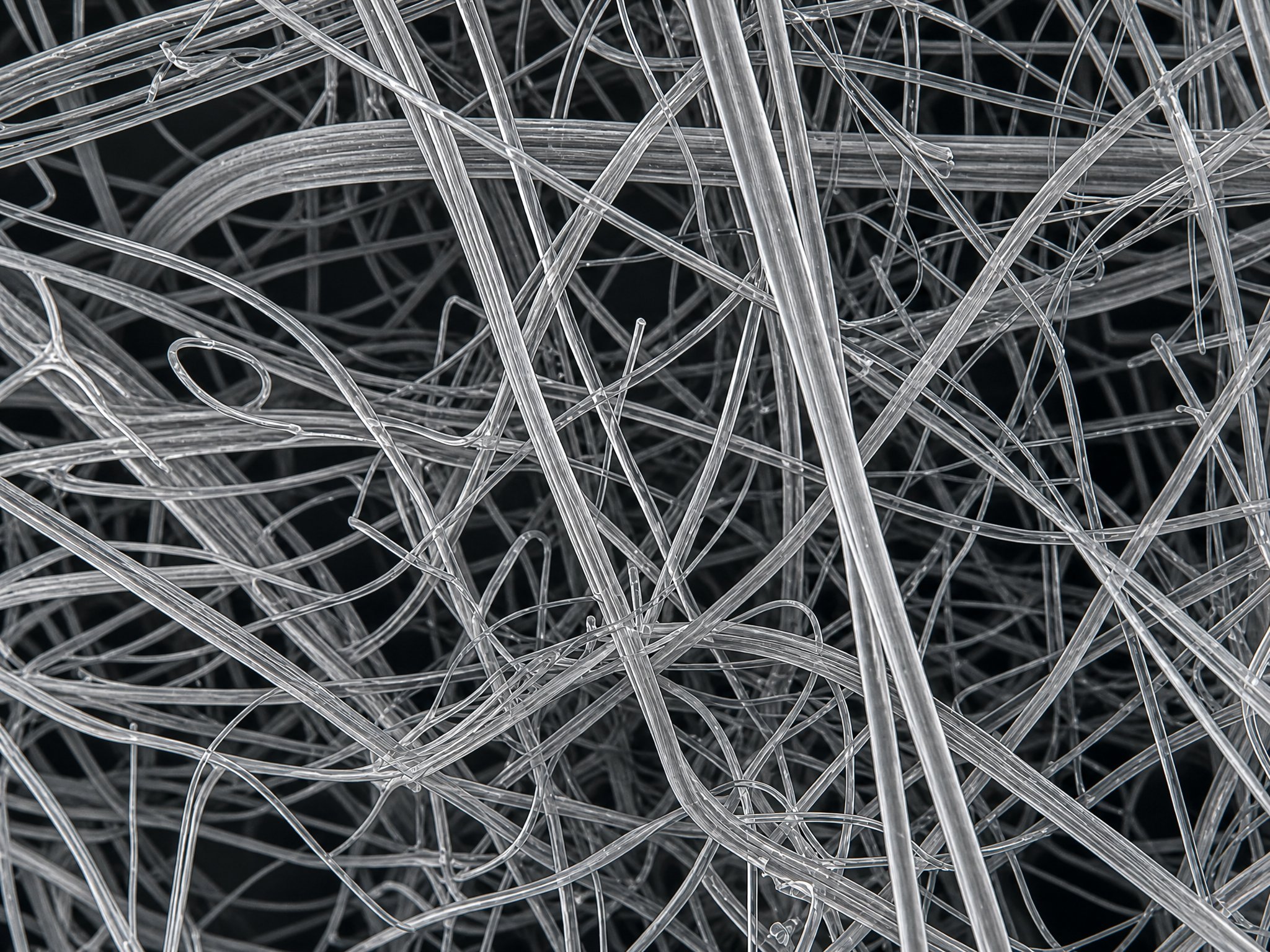
Unlike cellulose or synthetic polymer media, glass microfibre is drawn from borosilicate glass — the same family of glass used in laboratory equipment and pharmaceutical containers, prized for its exceptional thermal and chemical stability.
The key advantages — from an end-user perspective
Why should you care about the filter media inside your elements? Because the media determines how well your system performs, how long the element lasts, and whether it can survive your specific operating conditions.
Thermal stability
Borosilicate glass does not soften, degrade, or lose structure at temperatures that would destroy cellulose (max. 80°C) or synthetic media (max. 120°C). Continuous duty at 500°C is standard.
Chemical inertness
Resistant to virtually all acids (except hydrofluoric), alkalis, organic solvents, and aggressive process gases. The media will not swell, dissolve, or weaken in service.
Sub-micron precision
Fibre diameters from 0.1 to 5 µm create a true depth-filtration matrix. Sub-micron aerosols are captured by Brownian motion and inertial impaction — not just sieving.
Low pressure drop
The open fibre structure provides excellent flow-through with minimal resistance, reducing energy costs and extending element service life.
Depth filtration vs. surface filtration
This is one of the most important distinctions in filtration technology — and it is where glass microfibre elements truly excel.
Surface filters (like membranes or woven mesh) capture contaminants on their outer face. Once the surface is loaded, pressure drop rises rapidly and the element must be replaced.
Depth filters use the entire volume of the media to capture particles. Contaminants are trapped throughout multiple layers of progressively finer fibres. The result: higher dirt-holding capacity, longer service life, and more consistent efficiency over the element's lifetime.
Why depth filtration matters
Glass microfibre coalescing elements typically last 3–5 times longer than equivalent cellulose elements in the same application. The depth filtration mechanism distributes the contaminant load across the full media thickness, not just the surface.
Where is borosilicate glass microfibre used?
The unique combination of thermal stability, chemical resistance, and sub-micron efficiency makes glass microfibre the media of choice across a wide range of industries:
- Natural gas processing — coalescing filters for liquid aerosol removal at pipeline pressure and temperature
- Hydrogen production — protecting fuel cells, electrolysers, and storage systems from electrolyte mist and particles. Read more →
- Petrochemical processes — filtration of hot, aggressive process gases containing acid mist, catalyst fines, or condensable hydrocarbons
- Compressed air systems — high-efficiency coalescing for oil aerosol removal to ISO 8573-1 Class 1. ISO 8573-1 guide →
- Analyser protection — ensuring clean, dry sample gas reaches sensitive instruments. Instrumentation filtration →
- Vacuum pump exhaust — capturing oil mist from rotary vane and screw pumps. Vacuum filtration guide →
Glass microfibre vs. alternative media
| Property | Glass Microfibre | Cellulose | Synthetic (PP/PE) |
|---|---|---|---|
| Max. temperature | 500°C | 80°C | 120°C |
| Acid resistance | Excellent | Poor | Good |
| Alkali resistance | Good | Poor | Good |
| Organic solvent resistance | Excellent | Poor | Variable |
| Achievable efficiency | 99.99% @ 0.3 µm | 98% @ 1 µm | 99.5% @ 0.5 µm |
| Typical service life | 12–24 months | 3–6 months | 6–12 months |
| Coalescing capability | Excellent | Moderate | Good |
Key Takeaway
Media treatments — hydrophobic and oleophobic coatings
Raw glass microfibre is naturally hydrophilic — it attracts and holds moisture. While this is ideal for coalescing applications (where you want liquid to be captured and drained), some applications require the opposite behaviour.
Hydrophobic treatments repel water, allowing gas to pass through while blocking liquid water. This is essential in natural gas dehydration and compressed gas drying applications.
Oleophobic treatments repel oil-based liquids, used in applications where hydrocarbon aerosol must be separated from the gas without saturating the element.
Choosing the right treatment
The choice between untreated (coalescing), hydrophobic, and oleophobic media depends on your specific application. Our engineering team can help you select the right combination. Try the Engineering Tool →
Quality standards and testing
Glass microfibre filter elements are tested and certified to international standards that give end users confidence in performance:
- ISO 12500-1 — oil aerosol testing for coalescing filter elements
- ISO 12500-3 — solid particulate testing
- ISO 16889 — multi-pass filtration efficiency testing
- ISO 8573-1 — compressed air quality classification (purity classes)
Every RF FilterElements coalescing and particulate element is tested to these standards, ensuring consistent, verified performance across every batch.
Selecting the right glass microfibre element
Choosing the correct element involves matching three factors to your application:
1. Filtration duty
Coalescing (liquid aerosol removal), particulate (solid particle removal), or combined? Each duty requires a different media structure and grade.
2. Operating conditions
Temperature, pressure, flow rate, and chemical environment determine the media grade, binder system, and end-cap materials required.
3. Housing compatibility
Filter elements must match the housing dimensions, seal type, and flow direction. Our elements are available for all major housing types.
Need help selecting the right glass microfibre element?
Our filtration engineers can recommend the optimal element grade, size, and configuration for your specific process conditions.