Warum Wasserstoffleitungen eine dedizierte Vorfiltration erfordern
Wasserstoff ist das leichteste Element im Periodensystem, doch die Verunreinigungen, die er durch eine Rohrleitung transportiert, sind alles andere als trivial. Ob Sie eine dedizierte H2-Transportleitung, ein gemischtes Erdgas-/Wasserstoffnetz oder einen Grüner-Wasserstoff-Produktionskreislauf betreiben — drei Verunreinigungskategorien gefährden zuverlässig nachgelagerte Anlagen:
- Rohrleitungspartikel — Walzzunder, Schweißspritzer, Rostpartikel und Baustellenrückstände, die sich während der Inbetriebnahme ansammeln und während der gesamten Betriebsdauer weiter abgelöst werden.
- Verdichterölcarryover — Schmierölaerosole und -dämpfe aus Kolben- oder Schraubenverdichtern, die bei unkontrolliertem Austrag Katalysatorbetten verschmutzen, Brennstoffzellen kontaminieren und die Messgenauigkeit beeinträchtigen.
- Eingeschleppte Feuchtigkeit — flüssiges Wasser und Wasserdampf, die beim Druckprüfen, beim Beimischen von reformiertem oder elektrolytischem Wasserstoff oder durch jahreszeitliche Temperaturwechsel in erdverlegten Leitungen eingetragen werden.
Jeder dieser Verunreinigungsstoffe greift einen anderen Teil Ihrer Anlage an. Partikel erodieren Verdichterventile und -sitze. Ölcarryover vergiftet Custody-Transfer-Durchflussmesser und Druckregler. Feuchtigkeit fördert Spannungsrisskorrosion in hochfesten Stahlbauteilen und gefriert in Druckentlastungsventilen. Ein einstufiger Filter löst selten alle drei Probleme gleichzeitig — weshalb eine fachgerecht ausgelegte, gestufte Filtrationsstrategie vor jedem Verdichterstationseingang und jedem Custody-Transfer-Messskid unerlässlich ist.
Die spezifischen Risiken an Verdichtereinlässen
Kolbenverdichter im Wasserstoffbetrieb reagieren besonders empfindlich auf Einlassverunreinigungen. Anders als Turbomaschinen sind sie auf präzisionsgeläppte Ventilplatten und Kolbenringe angewiesen, die nahezu keinen abrasiven Eintrag tolerieren. Ein 50-µm-Eisenoxidpartikel, der mit Rohrleitungsgeschwindigkeit anströmt, kann einen Ventilsitz innerhalb von Minuten beschädigen — mit der Folge von Blow-by, verringertem volumetrischem Wirkungsgrad und letztlich einem erzwungenen Stillstand.
Ölcarryover aus einer vorgelagerten Verdichterstufe verschärft das Problem. Bereits bei Konzentrationen von nur 1 mg/m³ kann Schmieröl auf heißen Ventiloberflächen polymerisieren und kohlenstoffhaltige Ablagerungen bilden, die ein vollständiges Schließen des Ventils verhindern. Das Ergebnis ist ein fortschreitender Verlust des Verdichtungsverhältnisses, den Betreiber häufig fälschlicherweise als mechanischen Verschleiß und nicht als Filtrationsproblem diagnostizieren.
Für den Schutz von Wasserstoffverdichtereinlässen empfiehlt R+F FilterElements einen zweistufigen Ansatz: ein Grobpartikelfilter zur Abscheidung von Feststoffen über 3 µm, gefolgt von einer hocheffizienten Koaleszenzstufe zur Erfassung von Ölaerosolen im Submikronbereich und flüssigen Wassertröpfchen. Beide Stufen müssen für den Betriebsdruck ausgelegt und mit der geringen Molekülmasse und hohen Diffusivität von Wasserstoff kompatibel sein.
Custody-Transfer-Messung: Wo Verunreinigungen Geld kosten
Die Custody-Transfer-Messung — der Punkt, an dem Wasserstoff den kommerziellen Eigentümer wechselt — ist wohl der verunreinigungsempfindlichste Ort in jedem Rohrleitungssystem. Ultraschall- und Coriolis-Durchflussmesser im H2-Betrieb sind auf enge Toleranzen kalibriert; selbst ein dünner Ölfilm auf einer Ultraschallwandlerfläche kann den Messerfaktor um 0,1–0,3 % verschieben, was sich bei kommerziellen Durchflussraten unmittelbar in finanziellen Verlusten niederschlägt.
Druckregler und Regelventile unmittelbar hinter Messskids sind ebenso gefährdet. Partikelverunreinigungen verursachen Sitzerosion und Leckagen; Feuchtigkeit führt zur Hydratbildung bei Hochdruck-Entspannungsanwendungen. Die Vorfiltration vor dem Messskid ist daher nicht nur eine Wartungsüberlegung — sie ist in den meisten Wasserstoffhandelsverträgen eine kommerzielle und vertragliche Anforderung.
Die Wasserstoff-Filtrationslösungen von R+F FilterElements sind mit dieser kommerziellen Realität im Blick entwickelt worden und bieten Gehäuse und Filterelemente, die die Reinheitsanforderungen der ISO 14687 (Wasserstoffkraftstoffqualität) und die Druckstufen von Hochdruck-Transportnetzen erfüllen.
Feuchtigkeit aus Beimischbetrieb
Wasserstoff-Beimischnetze — bei denen H2 typischerweise mit 5 bis 20 Vol.-% in bestehende Erdgasinfrastruktur eingespeist wird — bringen eine zusätzliche Feuchtigkeitsherausforderung mit sich. Elektrolytisch erzeugter Wasserstoff aus PEM- oder alkalischen Elektrolyseuren verlässt den Elektrolyseur wasserdampfgesättigt. Obwohl am Elektrolyseurausgang in der Regel ein Trockner installiert ist, können Durchbruchereignisse und Trocknerregenerationszyklen Feuchtigkeitsschübe in den Beimischpunkt einleiten.
Unterhalb des Beimischpunkts ändert sich der Taupunkt des Gasgemisches mit der Zusammensetzung. Sinkt die Rohrwandtemperatur unter den neuen Taupunkt — in erdverlegten Abschnitten im Winter keine Seltenheit — kondensiert flüssiges Wasser und sammelt sich an Tiefpunkten an. Dieses Wasser gelangt dann als Schwall zur nächsten Verdichterstation oder zum nächsten Messskid, wo es Wasserschlag, Instrumentenschäden und Korrosion verursachen kann.
Ein Koaleszenzfilter an jedem Verdichterstationseingang und vor jedem Messskid bildet die letzte Verteidigungslinie gegen diese Feuchtigkeitsschübe. Das R+F Prozessgas-Filterprogramm umfasst Gehäuse, die speziell für diesen Einsatz ausgelegt sind, mit automatischen Ablassventilen und hoher Flüssigkeitsaufnahmekapazität, um intermittierenden Schwallbetrieb ohne Bypass zu bewältigen.
Empfohlene R+F Produkte für den Wasserstoff-Rohrleitungsbetrieb
R+F FilterElements bietet ein eigenes Programm an Edelstahlfiltergehäusen und Spezialfilterlementen, die für den Einsatz in Wasserstoffleitungen entwickelt wurden. Die folgenden Produkte eignen sich besonders für Verdichtereinlass- und Messvorfiltrationsanwendungen:
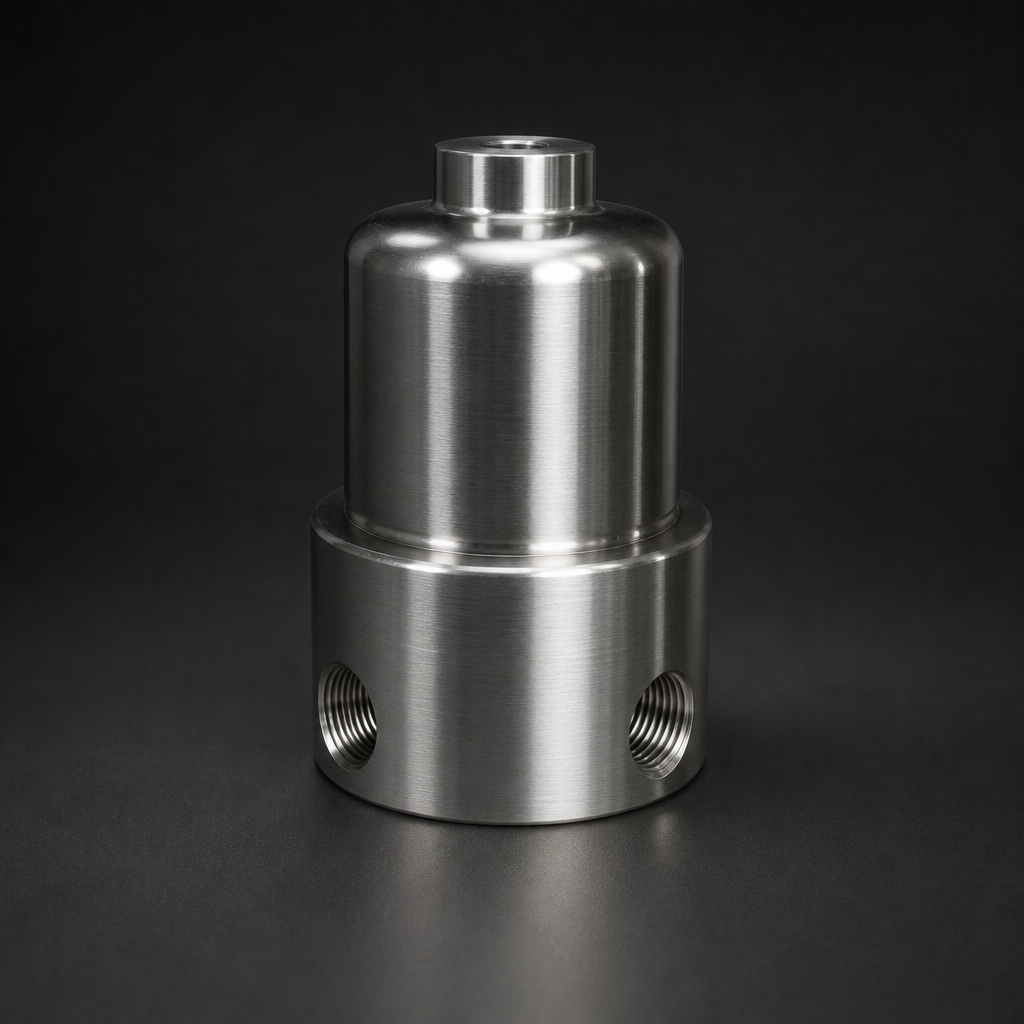
RF-H-150 — Kompaktes Prozessgasgehäuse
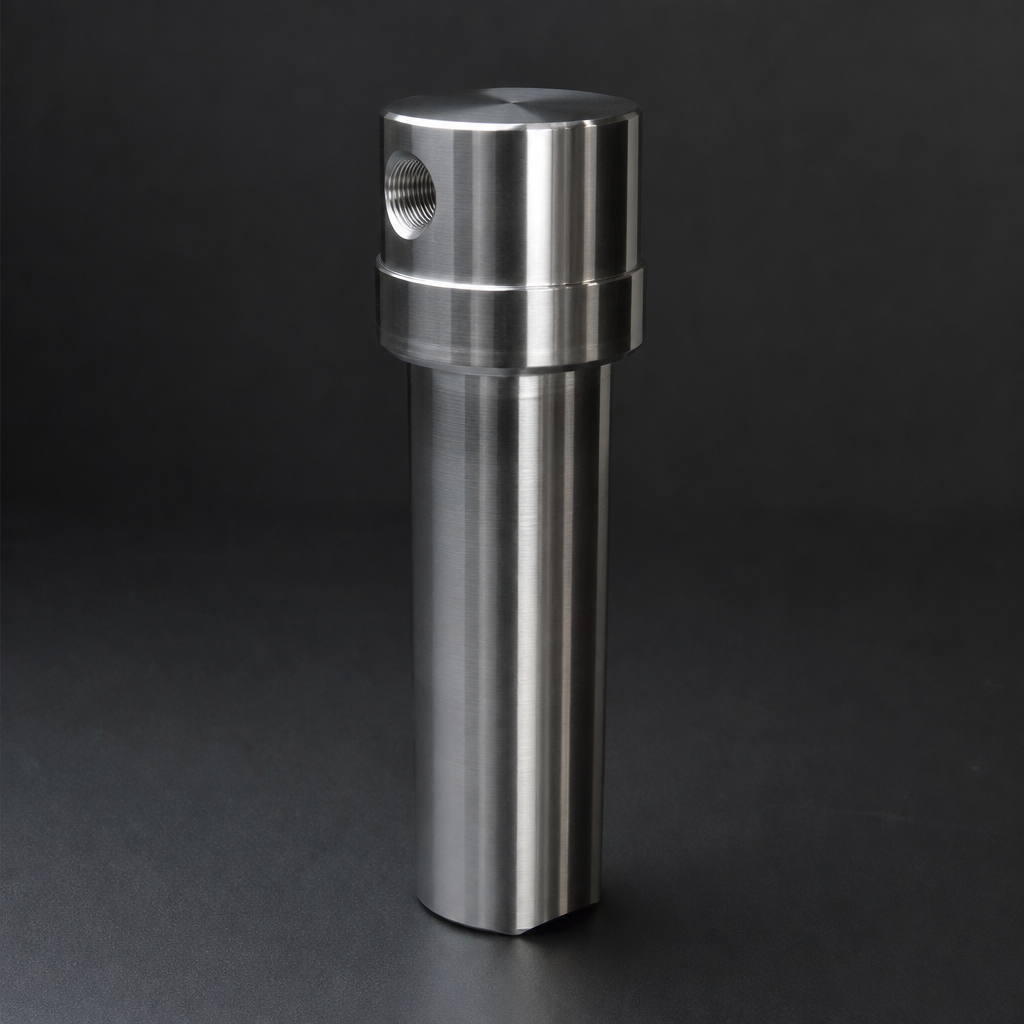
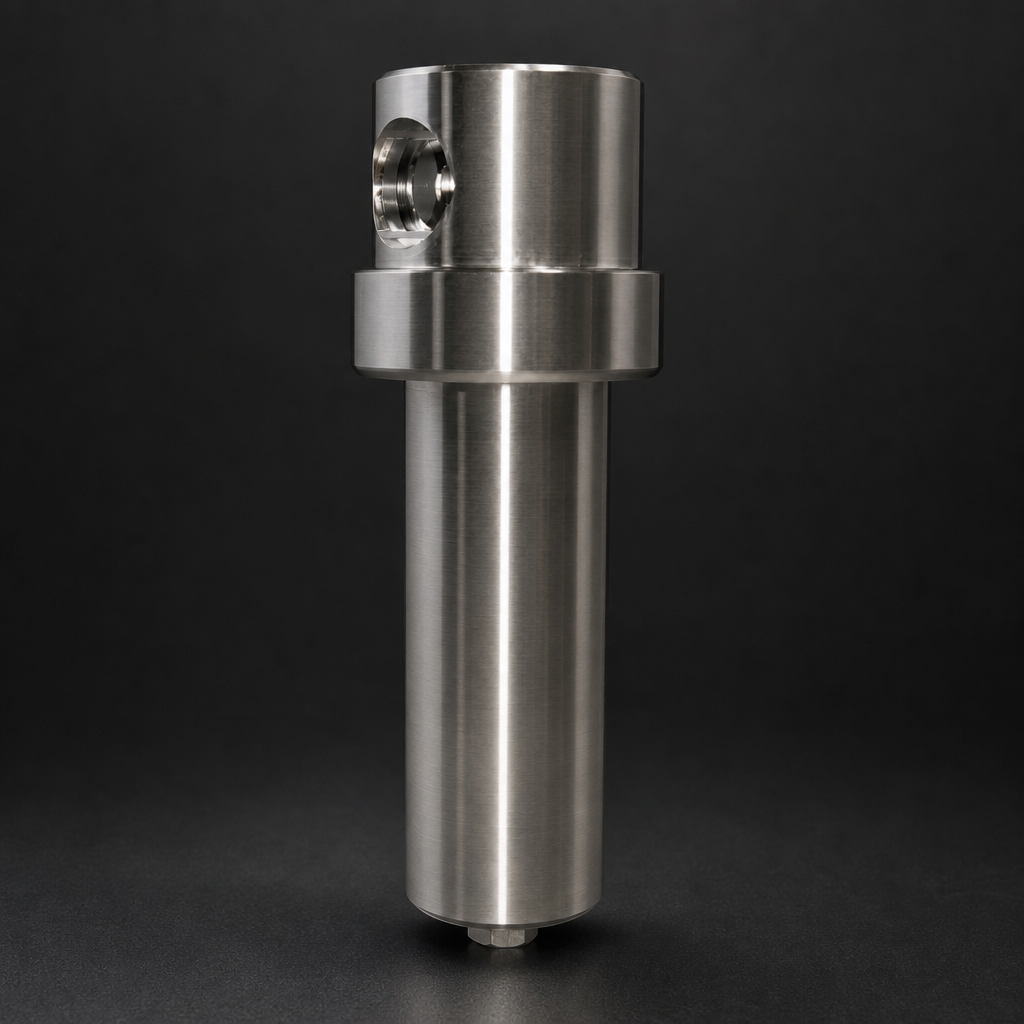
Das RF-H-150 ist ein Gehäuse aus 316L-Edelstahl mit einer Druckstufe von 100 bar und damit geeignet für Wasserstoff-Mitteldruck-Transportleitungen mit Betriebsdrücken bis 80 bar(g). Der kompakte Körper nimmt Standard-RF-C-Koaleszenzelemente und RF-P-Partikelelemente auf; die vollverschweißte Bauweise eliminiert potenzielle Leckagepfade, die im Wasserstoffbetrieb nicht akzeptabel sind. Das RF-H-150 ist mit FKM/Viton-Dichtungen für Betriebstemperaturen bis 200 °C oder mit PTFE-Dichtungen erhältlich, wenn chemische Verträglichkeit mit Spurengaskomponenten erforderlich ist.
RF-H-160 — Mitteldruck-Prozessgasgehäuse
Wo Betriebsdrücke bis 250 bar erreicht werden — typisch für Hochdruck-Wasserstoffspeicher und Transportsammelleitungen — bietet das RF-H-160 die erforderliche Druckstufe in einem 316L-Edelstahlkörper. Das RF-H-160 nimmt K-Typ-Elemente für Sauergas- oder Mischgasbetrieb auf, bei dem Schwefelwasserstoff als Spurenverunreinigung vorhanden sein kann, und ist mit dem RF-GMS-170-Membranabscheider für die absolute Flüssigkeitsabscheidung vor empfindlicher Messtechnik kompatibel.
RF-C Koaleszenzelemente
Die RF-C-Koaleszenzelemente von R+F verwenden Borosilikat-Glasmikrofasermedien und erreichen einen Abscheidegrad von 99,99 % für Aerosole ≥ 0,1 µm. Im Wasserstoffbetrieb führt die geringe Dichte des Trägergases dazu, dass konventionelle Koaleszenzmechanismen weniger effizient sind als bei Druckluft — die RF-C-Elemente sind mit optimierter Faserpackungsdichte ausgelegt, um dies zu kompensieren und den Nennabscheidegrad über den gesamten Wasserstoff-Durchflussbereich aufrechtzuerhalten.
RF-P Partikelelemente
Das RF-P-Partikelfilterlementsortiment bietet einen Abscheidegrad von 99,99 % für Partikel ≥ 0,3 µm und ist in sechs Standardgrößen (12032, 12057, 25064, 25178, 51230, 51476) erhältlich, die auf die RF-H-Gehäuseserie abgestimmt sind. Für den Einsatz am Wasserstoffverdichtereinlass werden am häufigsten die Größen 25178 und 51230 spezifiziert, da sie die erforderliche Durchflusskapazität für typische Einlassbedingungen an Verdichterstationen bieten.
Technischer Spezifikationsvergleich
| Parameter | RF-H-150 | RF-H-160 |
|---|---|---|
| Max. Betriebsdruck | 100 bar(g) | 250 bar(g) |
| Gehäusewerkstoff | 316L Edelstahl | 316L Edelstahl |
| Kompatible Elemente | RF-C, RF-P, RF-AC | RF-C, RF-P, RF-CS (K-Typ) |
| Dichtungsoptionen | NBR, FKM, PTFE | FKM, PTFE |
| Max. Temperatur | 200 °C (FKM-Dichtungen) | 200 °C (FKM-Dichtungen) |
| Ablasstyp | Manuell oder automatisch | Manuell oder automatisch |
| Typische Anwendung | Verdichtereinlass, Beimischskid | Hochdrucksammelleitung, Messvorfilter |
| H2-Kompatibilität | Ja (vollverschweißter Körper) | Ja (vollverschweißter Körper) |
Use our free Engineering Tool to get a filtration recommendation for your specific application in under 2 minutes.
Dichtwerkstoffauswahl für den Wasserstoffbetrieb
Die geringe Molekülgröße von Wasserstoff macht die Dichtwerkstoffauswahl zu einem kritischen Faktor. Standard-NBR-Dichtungen (Nitrilkautschuk) sind für Niederdruck-Wasserstoffanwendungen bei Umgebungstemperatur bis 100 °C akzeptabel, jedoch werden FKM/Viton-Dichtungen für den Rohrleitungsbetrieb stark bevorzugt, wo Temperaturen schwanken können und schnelle Druckentlastungsereignisse bei weicheren Elastomeren zu Explosive-Decompression-Schäden führen können. Für Ultrahochdruckanwendungen über 200 bar bieten PTFE-Dichtungen die beste Kombination aus chemischer Beständigkeit und Druckentlastungsresistenz.
R+F FilterElements setzt FKM-Dichtungen als Standard für alle Wasserstoff-Rohrleitungsgehäuse ein und kann auf Anfrage PTFE-gedichtete Varianten liefern. Der Dichtwerkstoff ist im Produktcodesuffix klar ausgewiesen, sodass die Kompatibilitätsprüfung bei Beschaffung und Wartungsplanung unkompliziert möglich ist.
Auslegung Ihres Wasserstoff-Rohrleitungsfilters
Die korrekte Filterauslegung für den Wasserstoffbetrieb erfordert sorgfältige Berücksichtigung der Gasdichte unter Betriebsbedingungen. Da Wasserstoff bei gleichem Druck und gleicher Temperatur etwa 14-mal leichter als Luft ist, wird ein allein auf Volumenstrom ausgelegtes Gehäuse hinsichtlich der tatsächlichen Gasgeschwindigkeit durch das Filterelement erheblich unterdimensioniert sein. R+F FilterElements empfiehlt die Auslegung auf Massenstrom oder auf den tatsächlichen Volumenstrom bei Betriebsdruck und -temperatur unter Verwendung der in den Produktdatenblättern veröffentlichten Korrekturfaktoren.
Für Verdichtereinlassanwendungen sollte der Filter für den maximalen Verdichterdurchsatz beim minimal erwarteten Einlassdruck ausgelegt werden — typischerweise der niedrigste Druck im Rohrleitungsbetriebsbereich. Dies stellt sicher, dass der Filter in Spitzenlastzeiten, wenn die Leitung den niedrigsten Druck aufweist und der Verdichter am stärksten belastet ist, keine Drossel darstellt.
Der Online-Auslegungsassistent von R+F akzeptiert Wasserstoff als Gasart und berechnet die empfohlene Gehäuse- und Elementkombination auf Basis Ihrer Durchfluss-, Druck- und Temperatureingaben. Für komplexe mehrstufige Installationen oder Custody-Transfer-Anwendungen kann das R+F-Ingenieurteam ein detailliertes Filtrationsaudit und einen Auslegungsbericht erstellen — kontaktieren Sie uns über die Anfragenseite oder per E-Mail an [email protected].
Installations- und Wartungshinweise
Wasserstoff-Rohrleitungsfilter sollten möglichst mit vertikaler Elementachse installiert werden, damit koaleszierte Flüssigkeit schwerkraftbedingt in den Sumpf ablaufen kann. Automatische Ablassventile werden für unbemannte Verdichterstationen dringend empfohlen; manuelle Ablässe sind nur akzeptabel, wenn die Station mindestens täglich besucht wird und die Flüssigkeitsansammlungsraten gering sind.
Differenzdruckmessgeräte oder -transmitter über jede Filterstufe liefern den primären Wartungsauslöser. Für den Wasserstoffbetrieb empfiehlt R+F einen Wechsel-Differenzdruck von 0,5 bar für Koaleszenzelemente und 0,7 bar für Partikelelemente — niedriger als die entsprechenden Druckluft-Grenzwerte, da die geringe Dichte von Wasserstoff bedeutet, dass ein gegebener Differenzdruck eine proportional höhere Geschwindigkeit durch das Element und ein größeres Risiko der Rückmitnahme koaleszierter Flüssigkeit darstellt.
Alle Wartungsarbeiten an Wasserstofffiltern müssen den standortspezifischen Feuergefährlichkeits- und Beengte-Räume-Verfahren folgen. Die Gehäuse RF-H-150 und RF-H-160 sind für einen werkzeugunterstützten Elementwechsel ohne Ausbau des Gehäuses aus der Rohrleitung ausgelegt, was die Isolationsdauer minimiert und das Risiko des Lufteintritts in das Wasserstoffsystem reduziert.
Fazit: Ein gestufter Ansatz amortisiert sich
Die Kosten eines korrekt spezifizierten Wasserstoff-Rohrleitungsfiltrationssystems — typischerweise zwei Stufen RF-H-Gehäuse mit RF-C-Koaleszenz- und RF-P-Partikelfilterlementen — sind ein Bruchteil der Kosten eines einzelnen Verdichterventilaustauschs oder einer Custody-Transfer-Messgerät-Neukalibrierung. Berücksichtigt man das kommerzielle Risiko durch Messungenauigkeiten und die Sicherheitsimplikationen unkontrollierter Wasserstofffreisetzungen infolge von Dichtungs- oder Ventilschäden, ist die wirtschaftliche Argumentation für eine robuste Vorfiltration überwältigend.
R+F FilterElements, ein in Deutschland ansässiger Filtrationsspezialist, der nach europäischen Ingenieurstandards arbeitet, bietet ein eigenes Programm wasserstoffkompatibler Filtergehäuse und -elemente, die speziell für die Anforderungen von Rohrleitungs- und Beimischinfrastruktur entwickelt wurden. Ob Sie einen neuen Grüner-Wasserstoff-Einspeisepunkt in Betrieb nehmen oder eine bestehende Verdichterstation mit Filtration nachrüsten — das R+F-Team unterstützt Sie bei der Auswahl, Auslegung und Spezifikation der richtigen Lösung.
Entdecken Sie das vollständige R+F Wasserstoff-Filtrationsprogramm oder durchsuchen Sie das Prozessgas-Filterprogramm, um das passende Gehäuse für Ihre Betriebsbedingungen zu finden.
- Kolbenverdichter im Wasserstoffbetrieb reagieren besonders empfindlich auf Einlassverunreinigungen.
- Die Custody-Transfer-Messung — der Punkt, an dem Wasserstoff den kommerziellen Eigentümer wechselt — ist wohl der verunreinigungsempfindlichste Ort in jedem Rohrleitungssystem.
- Wasserstoff-Beimischnetze — bei denen H2 typischerweise mit 5 bis 20 Vol.
- R+F FilterElements bietet ein eigenes Programm an Edelstahlfiltergehäusen und Spezialfilterlementen, die für den Einsatz in Wasserstoffleitungen entwickelt wurden.