
Coalescing Filters in Heated Sample Lines — Choosing Element and Housing by Temperature
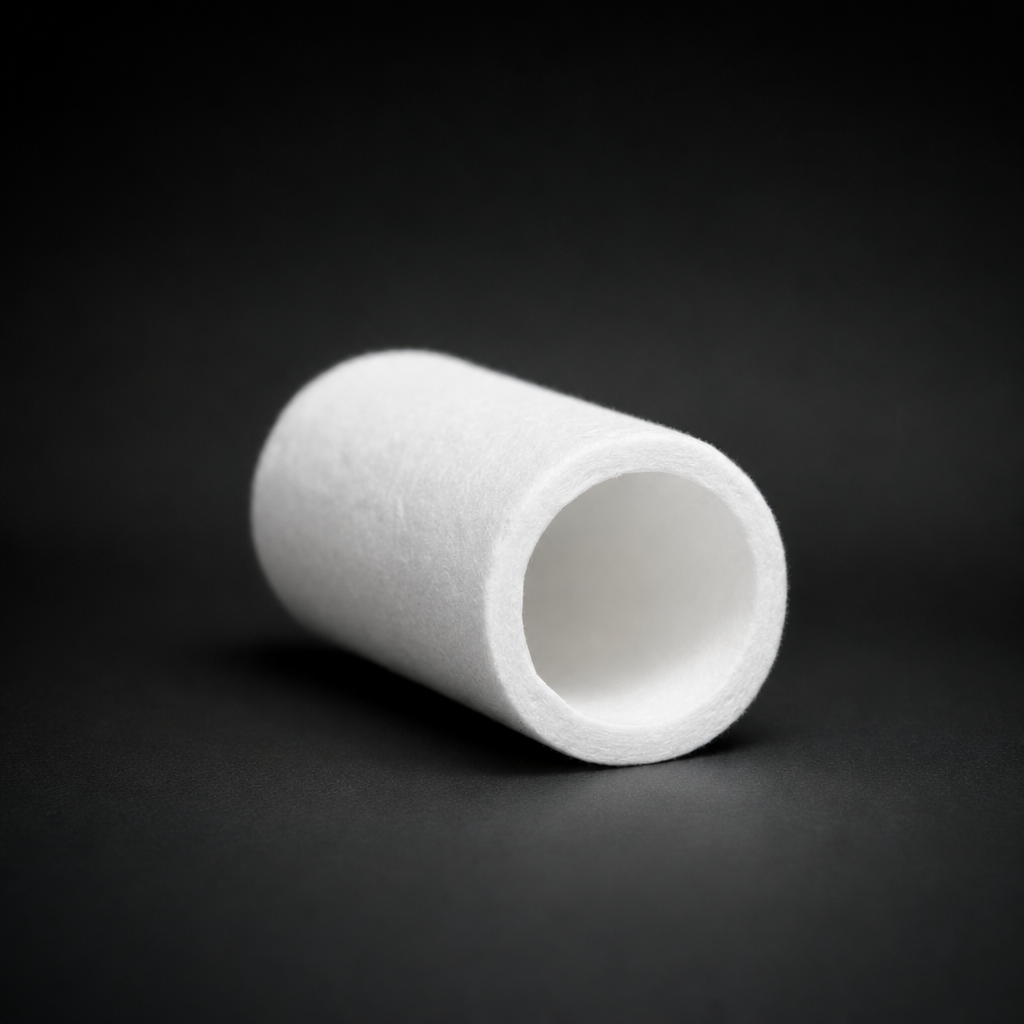
Heated sample lines keep water and hydrocarbons above their dew point so the analyser sees the real composition. Standard coalescing elements are rated to +150 °C. Above that, silica-bonded elements such as RF-CS-12057-HE are used — and the housing and seal limits decide how hot the filter stage can really run.
Recognise the Symptoms
- Coalescing elements in heated lines lose strength, discolour or release fibres
- Binder odour or deposits downstream of the filter after heating up
- Condensate forms in the filter housing because it is not heated with the line
- Membrane separators fail in hot sample streams
- Seals harden or leak after operation at high temperature
Root Causes
Standard coalescing element above its rating
standard elements are specified from −50 to +150 °C
Housing or seal limit ignored
a silica-bonded element does not raise the limit of the housing (stainless steel 200 °C) or the seal
Unheated filter housing in a heated line
the housing becomes the coldest point and condenses the sample
Membrane separator placed in the hot section
RF-M-GMS170 is rated to 100 °C
Cold spots at fittings and drains between line heating and housing
Diagnostic Checklist
- 1Measure the real sample temperature at the filter, not only the line set-point
- 2Up to +150 °C: RF-C-12057-HE (borosilicate glass microfibre, 99.99 % @ 0.01 µm)
- 3Above +150 °C: RF-CS-12057-HE (silica-bonded, up to 500 °C) — the housing limit of 200 °C for stainless steel and the seal limit apply
- 4Keep the filter at line temperature: insulate or use the heatable RF-HH-122ST housing (¼″ NPT side, 2 bar, 200 °C)
- 5Place the membrane separator only where the sample is below 100 °C
- 6Change coalescing elements every 3 months or earlier when the differential pressure rises
Find the right filter for this problem
Enter your operating data and let our tools point you to the right element and housing — or send us your details for a tailored recommendation.
Element Finder
RecommendedIdentify the right filter element for your medium and duty in under 60 seconds — recommended starting point.
Find your elementUse Housing Selector
Select the matching housing — material, pressure rating, connections and drain.
Select a housingRequest a Consultation
Prefer a person? Send your operating data and we will recommend the right configuration.
Send enquiryFurther Reading
Describe Your Situation — We Will Find the Right Solution
Every filtration problem has specific root causes that require specific solutions. Send us your operating conditions and we will provide a tailored recommendation.